
Why Your CNC Quotes Keep Coming Back Higher Than Expected
You send out a drawing. You get a quote. Then the price jumps 40% when production starts because “the tolerance needs grinding” or “we can’t hold that with standard tooling.” Sound familiar?
I’ve worked with hundreds of engineers on CNC quoting, and the pattern is always the same: drawings missing critical information, tolerances tighter than necessary, and materials specified without considering machining costs. The result? Quotes that don’t reflect reality.
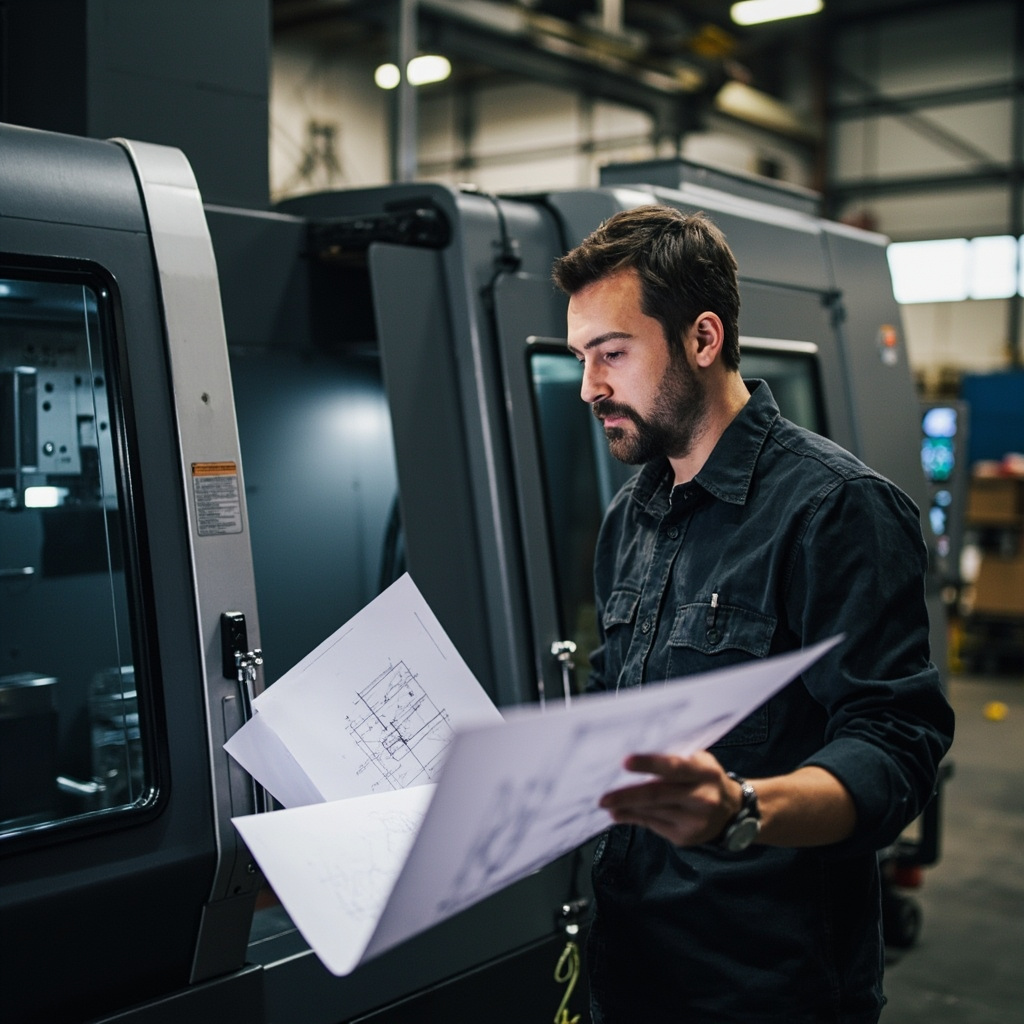
This guide covers what actually drives CNC machining costs and how to prepare your specs so you get accurate quotes the first time. No surprises, no scope creep, no awkward conversations about budget overruns.
Core Concepts & Fundamentals
CNC machining pricing breaks down into four main components:
Setup time — ming, fixturing, proving out the first article. This is a fixed cost whether you’re making 1 part or 100. Setup might run $50-$200/hour in machine time, and complex parts can require 2-8 hours of setup.
Cycle time — How long the machine runs to produce one part. This is the variable cost that scales with quantity. A part with 30 minutes of cycle time on a $100/hour machine costs $50 in machine time alone.
Material cost — The raw stock. But here’s what people miss: material cost includes the setup piece, the part itself, and the waste. A 100mm part might need 120mm of material to allow for workholding. That extra 20mm gets machined away — you’re paying for it.
Secondary operations — Deburring, finishing, , assembly. These can add 20-50% to the base machining cost depending on requirements.
Online CNC quote systems typically estimate based on volume, material, and basic geometry. They can’t see that your part needs a custom or a specialty cutter. That’s why human review matters for complex parts.
Key Processes & Technologies
Different CNC processes carry different cost implications. Understanding what you’re asking for helps you quote smarter.

| Процесс | Typical Tolerance | Относительная стоимость | Лучшее для | Ограничения |
|---|---|---|---|---|
| Трехкоординатное фрезерование | ±0.1mm standard, ±0.05mm tight | Low-Medium | Prismatic parts, simple contours | Cannot reach undercuts, limited tool access |
| 5-осевое фрезерование | ±0.05mm standard, ±0.025mm tight | Высокий | Complex geometry, single-setup parts | Higher machine rate, ming complexity |
| CNC Turning | ±0.05mm standard, ±0.0125mm tight | Низкий | Cylindrical parts, shafts, bushings | Requires rotational symmetry |
| Turn-Mill | ±0.025mm typical | Medium-High | Complex turned parts with milled features | Higher setup time, specialized equipment |
| Wire EDM | ±0,005 мм | Высокий | Hard materials, precision contours | Slow process, limited to through-cuts |
| Swiss Turning | ±0.0125mm typical | Средний | Small diameter, long parts | Part size limitations (typically <32mm diameter) |
The jump from 3-axis to 5-axis isn’t just machine rate — it’s also setup complexity and ming time. Don’t specify 5-axis if 3-axis plus a rotation does the job.
Промышленное применение
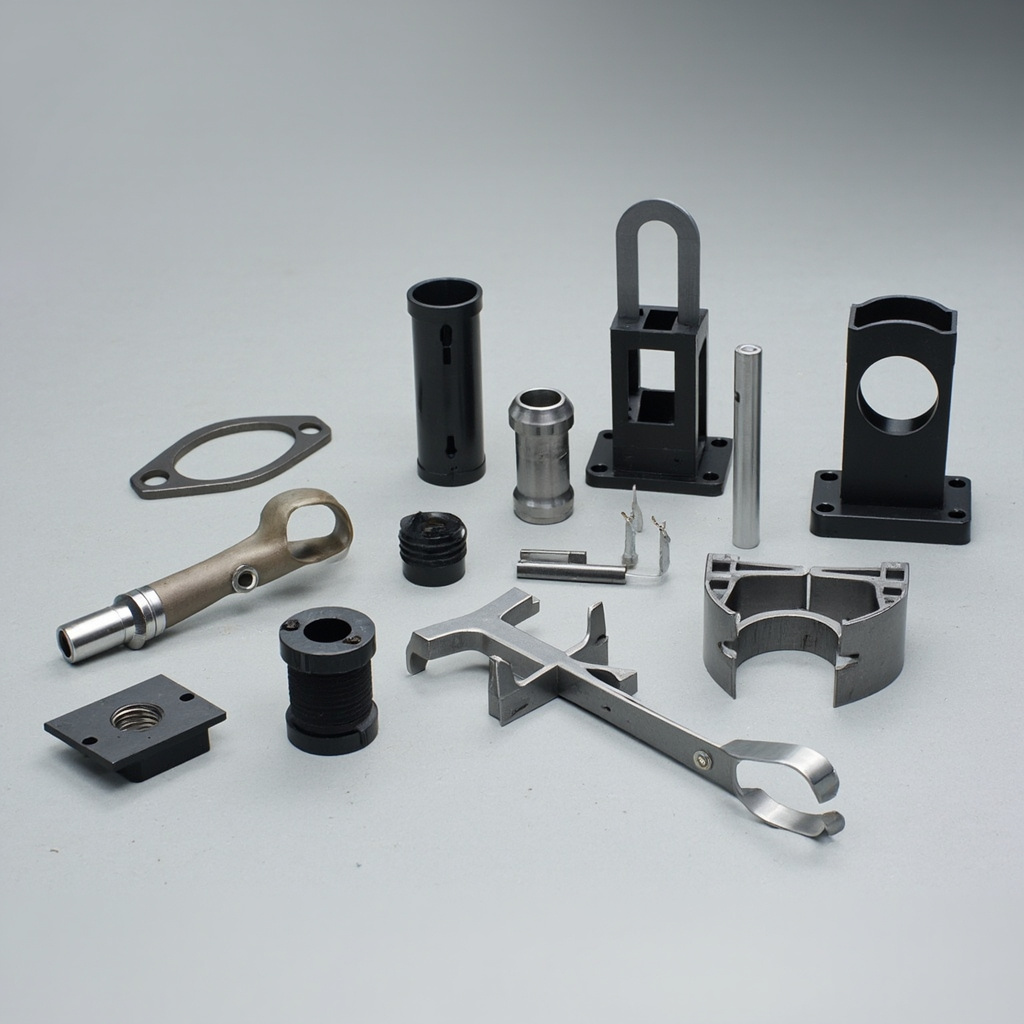
CNC machining serves practically every industry, but the requirements — and cost drivers — vary dramatically.
| Промышленность | Application | Материал | Key Requirement | nylonplastic.com Advantage |
|---|---|---|---|---|
| Аэрокосмическая промышленность | Structural brackets, fittings | 7075-T6 Aluminum, Ti-6Al-4V | AS9102 FAI, material traceability | AS9100 certified, full material certs |
| Медицина | Surgical instruments, implants | Ti-6Al-4V ELI, 316L SS, PEEK | Biocompatibility, ISO 13485 | Cleanroom finishing, passivation |
| Автомобили | Prototypes, racing components | 6061-T6, 7075-T6, 4140 steel | PPAP capability, tight tolerances | IATF 16949 certified processes |
| Электроника | Enclosures, heatsinks, connectors | 6061 Aluminum, Copper, Brass | EMI shielding, thermal management | Conductive finishes, precision features |
| Промышленное оборудование | Shafts, housings, gears | 1045 Steel, 4140, Cast Iron | Durability, wear resistance | Heat treatment, surface hardening |
| Роботизированная автоматизация | End effectors, mounting plates | 6061-T6, 7075-T6 Aluminum | Lightweight, precision mounting | Design-for-assembly optimization |
Each industry brings documentation requirements that affect pricing. Aerospace FAI packages, medical validation protocols, automotive PPAP — these aren’t line items on basic quotes, but they add real cost.
Material Selection — What Actually Works
Material choice is one of the biggest cost drivers in CNC machining. Not just material cost itself, but machinability, tool wear, and cycle time.
Aluminum 6061-T6 — The default for most machined parts. Easy to machine, decent strength, good corrosion resistance. Machines at high speeds with low tool wear. If you don’t need something specific, use 6061.
Aluminum 7075-T6 — When 6061 isn’t strong enough. Nearly twice the strength, but machines slower and work-hardens more easily. Costs 2-3x more than 6061 per pound.
Stainless Steel 304/316 — Corrosion resistance and decent machinability. 304 is standard; 316 adds molybdenum for better chemical resistance. Machines slower than aluminum, and tool life is shorter.
Stainless Steel 17-4 PH — Precipitation hardening grade. Heat treat after machining to reach high strength. Good for demanding applications but requires planning for heat treatment distortion.
Titanium Ti-6Al-4V — Low density, high strength, excellent corrosion resistance. Also: terrible thermal conductivity (heat concentrates at the cutting edge), work hardening, and aggressive tool wear. Expect cycle times 3-5x longer than aluminum and tool costs 5-10x higher.
Engineering Plastics (PEEK, Acetal, Nylon) — Machinable plastics with specific properties. PEEK handles high temperatures but costs $150-$400/kg. Acetal machines beautifully and is dimensionally stable. See our CNC machining materials guide for details.
Cost hierarchy (approximate relative material + machining cost):
– 6061 Aluminum: 1.0x (baseline)
– 7075 Aluminum: 1.5-2.0x
– Delrin/Acetal: 1.2-1.5x
– 304 Stainless: 2.0-2.5x
– 316 Stainless: 2.5-3.0x
– 17-4 PH SS: 3.0-4.0x
– Ti-6Al-4V: 5.0-8.0x
– PEEK: 6.0-10.0x
Cost & Performance Trade-offs
Getting quotes that match reality requires understanding where costs hide.
Tolerances drive cost exponentially:
– ±0.25mm: Standard machining, minimal impact
– ±0.10mm: Standard machining with attention, moderate cost impact
– ±0.05mm: Precision machining, significant cost increase
– ±0.025mm: Grinding or honing often required, major cost jump
– ±0.0125mm: Grinding, lapping, or honing required, highest cost
The tolerance envelope matters more than any single dimension. If 95% of features can be ±0.1mm and one critical feature needs ±0.025mm, specify that way. Don’t blanket-spec ±0.025mm everywhere.
Surface finish considerations:
– Ra 3.2μm (125 μin): As-machined, no extra cost
– Ra 1.6μm (63 μin): Standard machining, slight cost increase
– Ra 0.8μm (32 μin): Controlled machining, moderate cost increase
– Ra 0.4μm (16 μin): Grinding or polishing required, significant cost
– Ra <0.2μm: Lapping, honing, or superfinishing required, premium costQuantity effects:
Setup costs amortize over the run. A part with $500 setup and $100 cycle time costs:
– 1 part: $600 ($600 each)
– 10 parts: $1,500 ($150 each)
– 100 parts: $10,500 ($105 each)
– 1,000 parts: $100,500 ($100.50 each)
This is why литьё под давлением wins at high volumes — CNC’s linear cost scaling can’t match molding’s low per-part cost at sufficient quantity.
Quality Standards & Best Practices
Drawing quality determines quote accuracy. Here’s what to include:
Essential drawing elements:
1. Material specification — Not just “aluminum” — specify 6061-T6, 7075-T6, etc.
2. Tolerances — General tolerance block plus specific callouts on critical dimensions
3. Surface finish — Call out specific requirements, not blanket specs
4. Thread specifications — Include depth, class of fit, and any special requirements
5. Edge conditions — Break edges? Chamfer? Deburr only?
6. Finish/coating requirements — Specify before or after machining for dimensional reasons
7. Critical features — Identify what actually matters for function

GD&T usage:
Geometric Dimensioning and Tolerancing communicates requirements more precisely than ± tolerances. Position, profile, perpendicularity, and flatness controls often result in lower costs than tight ± tolerances because they define what matters functionally.
Design for CNC machining:
– Avoid deep pockets (tool reach limitations)
– Use standard hole sizes (standard drills available)
– Allow adequate corner radii (standard end mills)
– Design workholding features into the part
– Consider fixturing access in your design
– Standardize feature sizes where possible
Getting Started — Practical Steps
Here’s the workflow for getting accurate CNC quotes:
Step 1: Prepare Complete Documentation
– 3D CAD files (STEP or IGES preferred, native files if possible)
– 2D drawings with all specifications
– Material requirements with alternatives
– Quantity breakdown (prototype, bridge, production)
– Timeline requirements
Step 2: Request Quote
Submit to nylonplastic.com CNC services or other qualified shops. Include context — what does the part do? What’s critical? What can be flexible?
Step 3: Review Quote Details
A good quote breaks down:
– Setup time and cost
– Cycle time and cost
– Material cost
– Secondary operations
– Lead time
– Any assumptions or exclusions
Step 4: Clarify and Refine
If the quote seems high, ask why. Often, simple design changes can reduce cost significantly:
– Relax unnecessary tolerances
– Use standard feature sizes
– Change material to more machinable option
– Adjust quantities to hit price breaks
Step 5: Validate with First Article
Order a first article before committing to full production. This validates the quote, the process, and the part quality.
Заключение
Accurate CNC machining quotes come down to communication. The more complete your specifications, the more accurate your quotes. Sounds simple, but it requires thinking through what actually matters versus what’s just habit.
Tight tolerances everywhere, unspecified finishes, and “standard” material calls create quotes that don’t reflect reality. The shops that give accurate quotes are the ones who ask questions, suggest alternatives, and flag potential issues before pricing.
At nylonplastic.com, we review every quote request for manufacturability and cost optimization. Sometimes that means suggesting material alternatives, flagging tolerance stack-ups, or recommending process changes. The goal isn’t the lowest quote — it’s the quote that matches what you’ll actually pay when production runs.
Next time you need CNC machining, send complete specs. Include context about what matters functionally. Be open to material and process alternatives. And work with shops who ask questions instead of just sending numbers.
Связанные ресурсы
- CNC Machining Materials Guide — Material properties and machinability
- Варианты отделки поверхности — Post-machining finishes and treatments
- 3D Printing Services — Alternative for complex geometries or prototypes
- One-Stop Manufacturing Solution — Integrated services from design to delivery
Ready for an accurate CNC quote? Contact the team at nylonplastic.com with your drawings and requirements. We’ll review your design for manufacturability and provide a quote that reflects real production costs — no surprises.
ЧАСТО ЗАДАВАЕМЫЕ ВОПРОСЫ
When is CNC Machining Quotes: How to Get Accurate Pricing — Engineer’s Practical Guide the right choice?
CNC Machining Quotes: How to Get Accurate Pricing — Engineer’s Practical Guide is the right choice when the part requires machined accuracy, controlled surfaces, repeatable features, and a material that can be cut reliably.
What should be confirmed before ordering CNC Machining Quotes: How to Get Accurate Pricing — Engineer’s Practical Guide?
Перед началом производства подтвердите версию чертежа, марку материала, допуски, количество, критические размеры, качество обработки поверхности и требования к контролю.
What usually drives cost in CNC Machining Quotes: How to Get Accurate Pricing — Engineer’s Practical Guide?
Стоимость обычно определяется материалом, временем наладки, машинным временем, сложностью допусков, креплением, доступом к инструменту, отделкой, контролем и количеством заказа.
How can quality risk be reduced in CNC Machining Quotes: How to Get Accurate Pricing — Engineer’s Practical Guide?
Риск качества снижается за счет четкой маркировки критических элементов, отказа от излишне жестких допусков, раннего подтверждения технологичности и использования данных контроля важных размеров.

 English
 Dutch
Dutch German
 French
 Korean
 Russian
 Japanese
 Spanish
 Vietnamese
 Chinese
 Portuguese
 Arabic