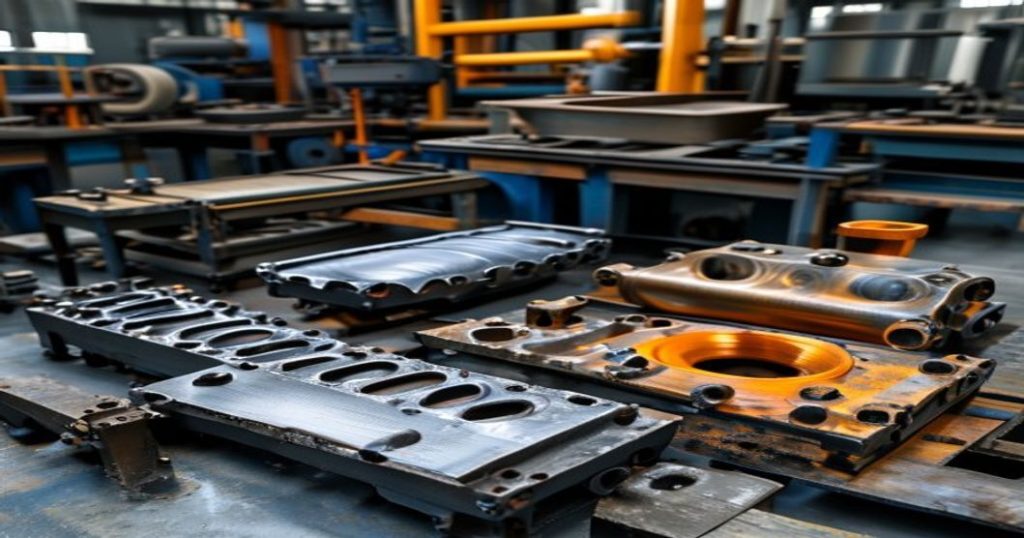
A CNC machining quote should identify material, drawing revision, quantity, tolerances and inspection scope so supplier offers can be compared on the same basis.
CNC machining quotes for plastic parts become more useful when the drawing, material stock, quantity, functional tolerances and inspection scope are defined together. Use this guide to prepare a comparable RFQ and identify the assumptions that need review before ordering.
What to Send for a Plastic Machining Quote
Send CAD or drawing revision, exact material or permitted alternative, critical fits, finish, quantity and destination. Nylon Plastic can review the material and manufacturing route and clarify the machining, inspection and delivery scope before quotation.
Request a plastic part quote review or read the engineering-plastic machining guide for material and process checks.
Why Your CNC Quotes Keep Coming Back Higher Than Expected
A quote can change when the drawing leaves tolerances, stock material, tool access or secondary work unresolved. Define those requirements before comparing the price.
Missing drawing information and unclear acceptance requirements can make two quotations cover different work. A technical review should identify the assumptions before the order is approved.
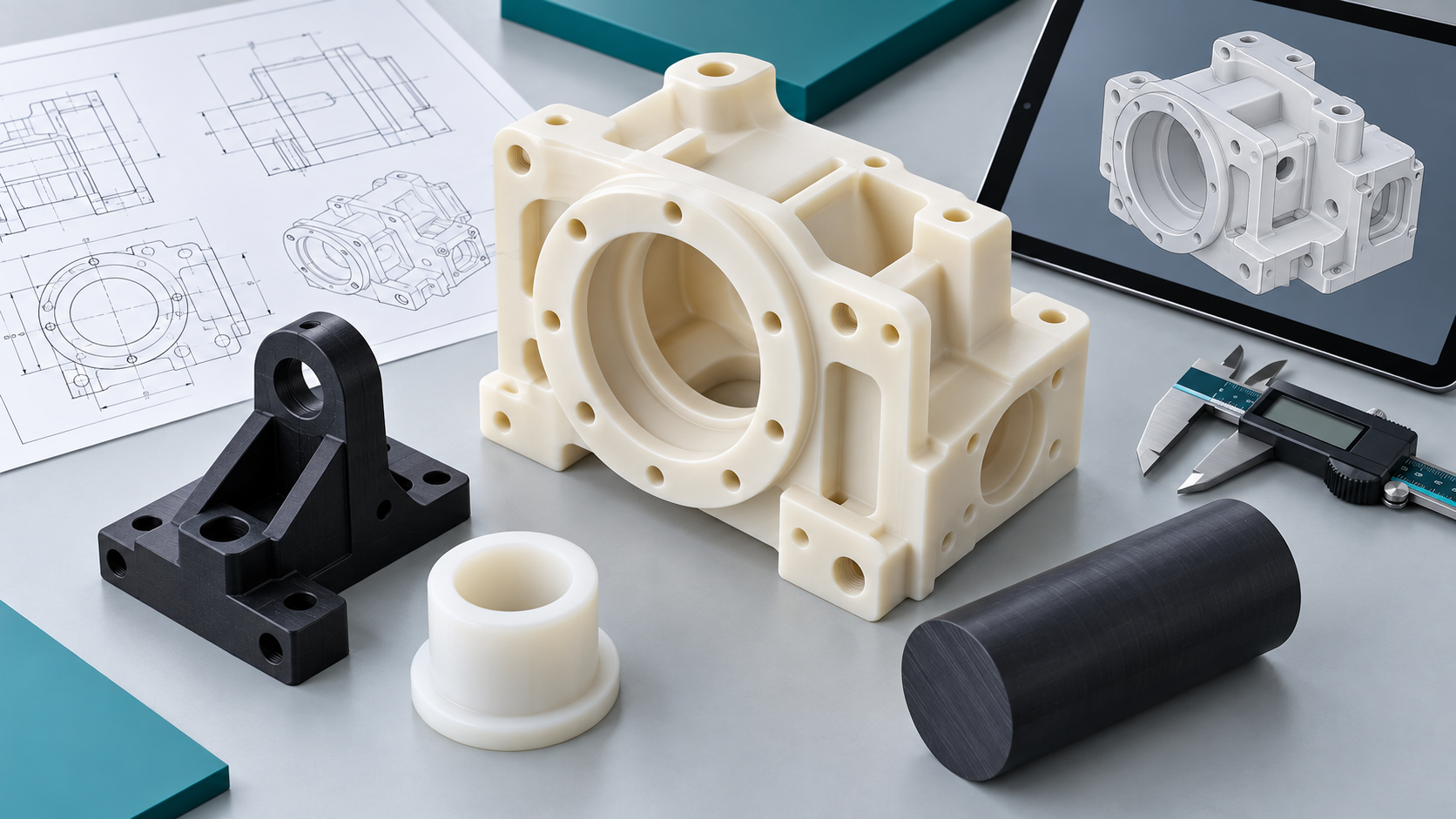
This guide covers what actually drives CNC machining costs and how to prepare your specs so you get accurate quotes the first time. Record assumptions, included work and change handling so the quotation remains reviewable.
Cost arithmetic and comparative figures are illustrations, not a Nylon Plastic price list or a guaranteed tolerance for your part. Confirm current material, machining and inspection requirements in the project quotation.
Core Concepts & Fundamentals
CNC machining pricing breaks down into four main components:
Setup time — ming, fixturing, proving out the first article. This is a fixed cost whether you’re making 1 part or 100. Setup might run $50-$200/hour in machine time, and complex parts can require 2-8 hours of setup.
Cycle time — How long the machine runs to produce one part. This is the variable cost that scales with quantity. A part with 30 minutes of cycle time on a $100/hour machine costs $50 in machine time alone.
Material cost — The raw stock. But here’s what people miss: material cost includes the setup piece, the part itself, and the waste. A 100mm part might need 120mm of material to allow for workholding. That extra 20mm gets machined away — you’re paying for it.
Secondary operations — Deburring, finishing, , assembly. These can add 20-50% to the base machining cost depending on requirements.
Online CNC quote systems typically estimate based on volume, material, and basic geometry. They can’t see that your part needs a custom or a specialty cutter. That’s why human review matters for complex parts.
Key Processes & Technologies
Different CNC processes carry different cost implications. Understanding what you’re asking for helps you quote smarter.

| Process | Typical Tolerance | Relative Cost | Best For | Limitations |
|---|---|---|---|---|
| 3-Axis Milling | ±0.1mm standard, ±0.05mm tight | Low-Medium | Prismatic parts, simple contours | Cannot reach undercuts, limited tool access |
| 5-Axis Milling | ±0.05mm standard, ±0.025mm tight | High | Complex geometry, single-setup parts | Higher machine rate, ming complexity |
| CNC Turning | ±0.05mm standard, ±0.0125mm tight | Low | Cylindrical parts, shafts, bushings | Requires rotational symmetry |
| Turn-Mill | ±0.025mm typical | Medium-High | Complex turned parts with milled features | Higher setup time, specialized equipment |
| Wire EDM | ±0.005mm | High | Hard materials, precision contours | Slow process, limited to through-cuts |
| Swiss Turning | ±0.0125mm typical | Medium | Small diameter, long parts | Part size limitations (typically <32mm diameter) |
The jump from 3-axis to 5-axis isn’t just machine rate — it’s also setup complexity and ming time. Don’t specify 5-axis if 3-axis plus a rotation does the job.
Industrial Applications
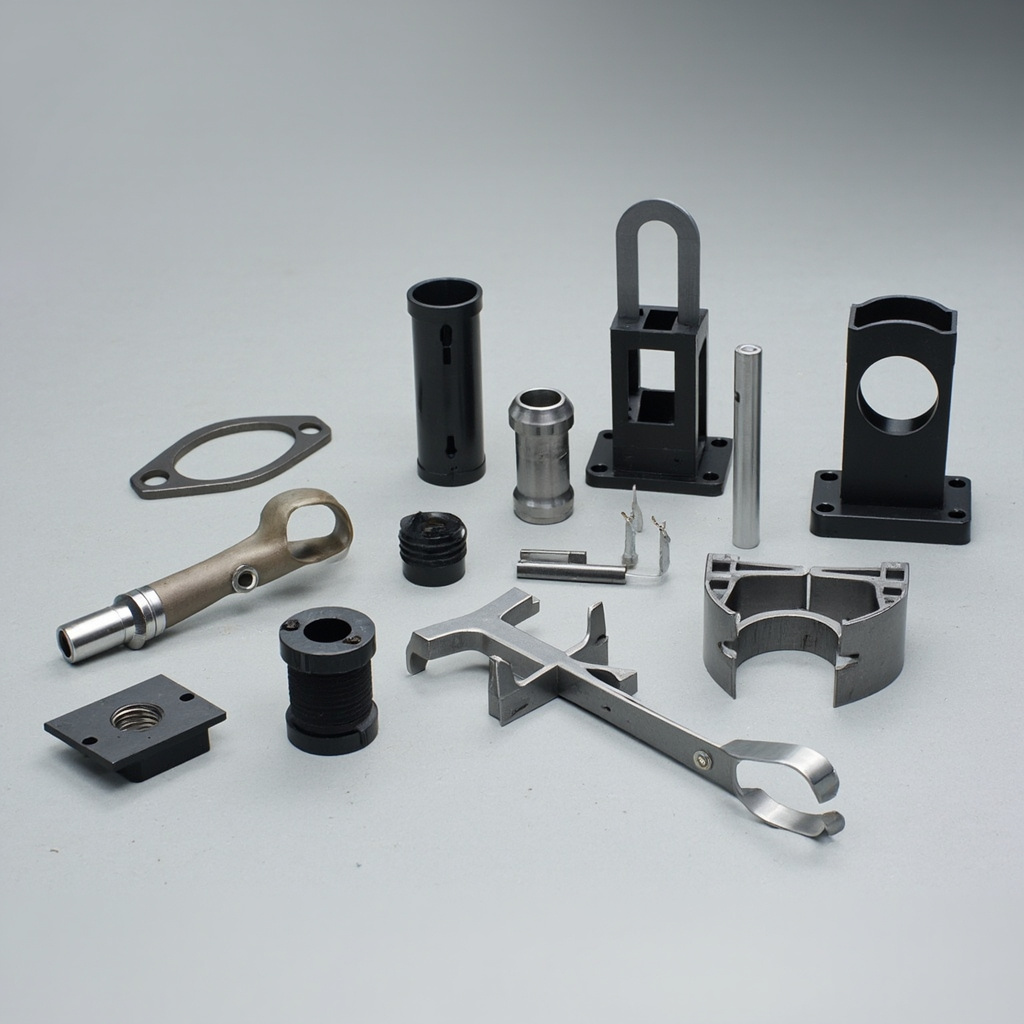
CNC machining serves practically every industry, but the requirements — and cost drivers — vary dramatically.
| Industry | Application | Material | Key Requirement | nylonplastic.com Advantage |
|---|---|---|---|---|
| Aerospace | Structural brackets, fittings | 7075-T6 Aluminum, Ti-6Al-4V | AS9102 FAI, material traceability | AS9100 certified, full material certs |
| Medical | Surgical instruments, implants | Ti-6Al-4V ELI, 316L SS, PEEK | Biocompatibility, ISO 13485 | Cleanroom finishing, passivation |
| Automotive | Prototypes, racing components | 6061-T6, 7075-T6, 4140 steel | PPAP capability, tight tolerances | IATF 16949 certified processes |
| Electronics | Enclosures, heatsinks, connectors | 6061 Aluminum, Copper, Brass | EMI shielding, thermal management | Conductive finishes, precision features |
| Industrial Equipment | Shafts, housings, gears | 1045 Steel, 4140, Cast Iron | Durability, wear resistance | Heat treatment, surface hardening |
| Robotic Automation | End effectors, mounting plates | 6061-T6, 7075-T6 Aluminum | Lightweight, precision mounting | Design-for-assembly optimization |
Each industry brings documentation requirements that affect pricing. Aerospace FAI packages, medical validation protocols, automotive PPAP — these aren’t line items on basic quotes, but they add real cost.
Material Selection — What Actually Works
Material choice is one of the biggest cost drivers in CNC machining. Not just material cost itself, but machinability, tool wear, and cycle time.
Aluminum 6061-T6 — The default for most machined parts. Easy to machine, decent strength, good corrosion resistance. Machines at high speeds with low tool wear. If you don’t need something specific, use 6061.
Aluminum 7075-T6 — When 6061 isn’t strong enough. Nearly twice the strength, but machines slower and work-hardens more easily. Costs 2-3x more than 6061 per pound.
Stainless Steel 304/316 — Corrosion resistance and decent machinability. 304 is standard; 316 adds molybdenum for better chemical resistance. Machines slower than aluminum, and tool life is shorter.
Stainless Steel 17-4 PH — Precipitation hardening grade. Heat treat after machining to reach high strength. Good for demanding applications but requires planning for heat treatment distortion.
Titanium Ti-6Al-4V — Low density, high strength, excellent corrosion resistance. Also: terrible thermal conductivity (heat concentrates at the cutting edge), work hardening, and aggressive tool wear. Expect cycle times 3-5x longer than aluminum and tool costs 5-10x higher.
Engineering Plastics (PEEK, Acetal, Nylon) — Machinable plastics with specific properties. PEEK handles high temperatures but costs $150-$400/kg. Acetal machines beautifully and is dimensionally stable. See our CNC machining materials guide for details.
Cost hierarchy (approximate relative material + machining cost):
– 6061 Aluminum: 1.0x (baseline)
– 7075 Aluminum: 1.5-2.0x
– Delrin/Acetal: 1.2-1.5x
– 304 Stainless: 2.0-2.5x
– 316 Stainless: 2.5-3.0x
– 17-4 PH SS: 3.0-4.0x
– Ti-6Al-4V: 5.0-8.0x
– PEEK: 6.0-10.0x
Cost & Performance Trade-offs
Getting quotes that match reality requires understanding where costs hide.
Tolerances drive cost exponentially:
– ±0.25mm: Standard machining, minimal impact
– ±0.10mm: Standard machining with attention, moderate cost impact
– ±0.05mm: Precision machining, significant cost increase
– ±0.025mm: Grinding or honing often required, major cost jump
– ±0.0125mm: Grinding, lapping, or honing required, highest cost
The tolerance envelope matters more than any single dimension. If 95% of features can be ±0.1mm and one critical feature needs ±0.025mm, specify that way. Don’t blanket-spec ±0.025mm everywhere.
Surface finish considerations:
– Ra 3.2μm (125 μin): As-machined, no extra cost
– Ra 1.6μm (63 μin): Standard machining, slight cost increase
– Ra 0.8μm (32 μin): Controlled machining, moderate cost increase
– Ra 0.4μm (16 μin): Grinding or polishing required, significant cost
– Ra <0.2μm: Lapping, honing, or superfinishing required, premium cost
Quantity effects:
Setup costs amortize over the run. A part with $500 setup and $100 cycle time costs:
– 1 part: $600 ($600 each)
– 10 parts: $1,500 ($150 each)
– 100 parts: $10,500 ($105 each)
– 1,000 parts: $100,500 ($100.50 each)
This is why injection molding wins at high volumes — CNC’s linear cost scaling can’t match molding’s low per-part cost at sufficient quantity.
Quality Standards & Best Practices
Drawing quality determines quote accuracy. Here’s what to include:
Essential drawing elements:
1. Material specification — Not just “aluminum” — specify 6061-T6, 7075-T6, etc.
2. Tolerances — General tolerance block plus specific callouts on critical dimensions
3. Surface finish — Call out specific requirements, not blanket specs
4. Thread specifications — Include depth, class of fit, and any special requirements
5. Edge conditions — Break edges? Chamfer? Deburr only?
6. Finish/coating requirements — Specify before or after machining for dimensional reasons
7. Critical features — Identify what actually matters for function

GD&T usage:
Geometric Dimensioning and Tolerancing communicates requirements more precisely than ± tolerances. Position, profile, perpendicularity, and flatness controls often result in lower costs than tight ± tolerances because they define what matters functionally.
Design for CNC machining:
– Avoid deep pockets (tool reach limitations)
– Use standard hole sizes (standard drills available)
– Allow adequate corner radii (standard end mills)
– Design workholding features into the part
– Consider fixturing access in your design
– Standardize feature sizes where possible
Make Plastic Machining Quotes Comparable
Stock grade and condition matter as much as the resin family. For nylon, identify cast or extruded stock, reinforcement and the required inspection condition. For other engineering plastics, state the exact approved stock or the requirements an alternative must meet. A molding-pellet datasheet does not by itself specify the machined stock.
| RFQ item | Specify for the plastic part | What the quote should clarify |
|---|---|---|
| Material | Grade, manufacturer, stock form, reinforcement, color and permitted alternatives | Offered stock and documents, plus any substitution requiring approval. |
| Geometry and tolerances | Drawing revision, datums, mating parts, critical fits and inspection condition | Tool access, fixture or dimensional questions requiring review. |
| Finish and edges | Functional roughness, visible surfaces, threads, burrs and edge requirements | Machining, deburring and any agreed secondary process. |
| Quantity and approval | Prototype/order quantities, annual demand and sample acceptance | Setup scope, sample work, inspection records and repeat-order basis. |
| Delivery | Destination, packaging and target timing | Included delivery terms, confirmed timing and any exclusions. |
Compare the same specification across quotations. If a supplier proposes a material or design alternative, keep that option separate from the drawing-compliant offer so the performance and cost tradeoff can be reviewed. A lower piece price can cover a different material, finish or inspection package.
For a production-intent prototype, state what it must prove and what will still need validation when molding begins. See our custom machined plastic parts and prototype manufacturing guides for those routes.
Getting Started — Practical Steps
Here’s the workflow for getting accurate CNC quotes:
Step 1: Prepare Complete Documentation
– 3D CAD files (STEP or IGES preferred, native files if possible)
– 2D drawings with all specifications
– Material requirements with alternatives
– Quantity breakdown (prototype, bridge, production)
– Timeline requirements
Step 2: Request Quote
Submit to nylonplastic.com CNC services or other qualified shops. Include context — what does the part do? What’s critical? What can be flexible?
Step 3: Review Quote Details
A good quote breaks down:
– Setup time and cost
– Cycle time and cost
– Material cost
– Secondary operations
– Lead time
– Any assumptions or exclusions
Step 4: Clarify and Refine
If the quote seems high, ask why. Often, simple design changes can reduce cost significantly:
– Relax unnecessary tolerances
– Use standard feature sizes
– Change material to more machinable option
– Adjust quantities to hit price breaks
Step 5: Validate with First Article
Order a first article before committing to full production. This validates the quote, the process, and the part quality.
Before You Request a CNC Quote
Use one drawing revision and the same material, finish, quantity and inspection requirements when comparing suppliers. Ask them to list assumptions, included work and proposed alternatives separately so you can review manufacturability and compare the total quoted scope.
FAQ
What information is required for an accurate CNC machining quote?
Provide CAD or the drawing revision, exact material or permitted alternative, critical dimensions, quantity, surface and edge requirements, inspection records and delivery destination. Include service conditions when material selection is part of the review.
Which drawing details most often change the quoted price?
Confirm the drawing version, material grade, tolerances, quantity, critical dimensions, surface finish, and inspection requirements before production starts.
What usually drives CNC machining cost higher than expected?
Cost is usually driven by material, setup time, machine time, tolerance difficulty, fixturing, tool access, finishing, inspection, and order quantity.
How can buyers reduce quoting and production risk?
Quality risk is reduced by marking critical features clearly, avoiding unnecessary tight tolerances, confirming manufacturability early, and using inspection data for important dimensions.
Request a CNC Machining Quote for Plastic Parts
Send: drawing/CAD revision, material target, critical dimensions, quantity, finish, inspection and destination. If you are still choosing the plastic, provide temperature, load, moisture and chemical exposure.
The review can return: material and route options, manufacturability questions and the scope to quote. Identify sample approval and any testing or specialist documents before ordering so they can be considered in the quoted work.