
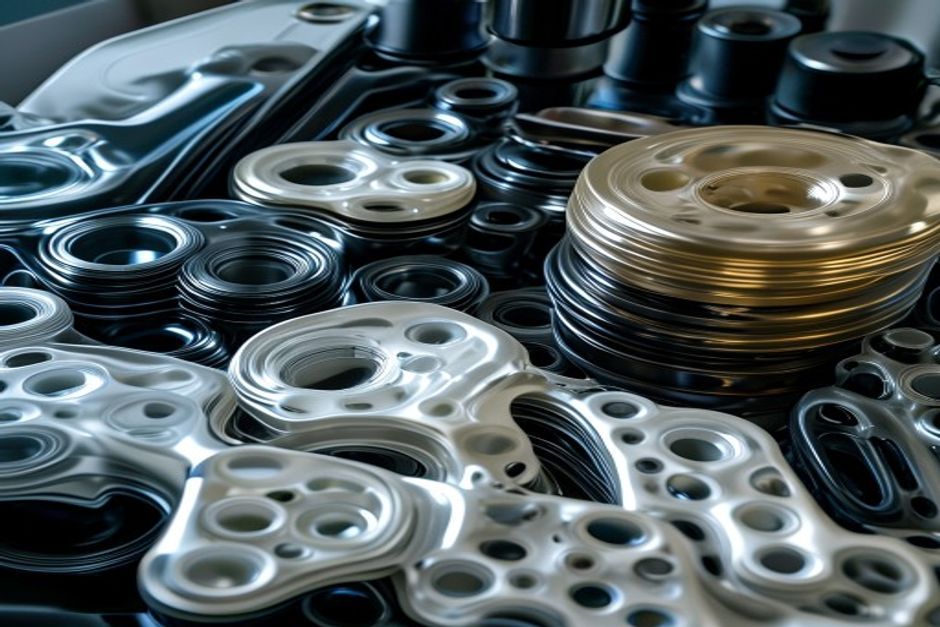
PTFE (Polytetrafluoroethylene) and PEEK (Polyether Ether Ketone) represent the pinnacle of engineering plastic technology. Both are classified as high-performance polymers, capable of operating in extreme environments that would destroy conventional engineering plastics.
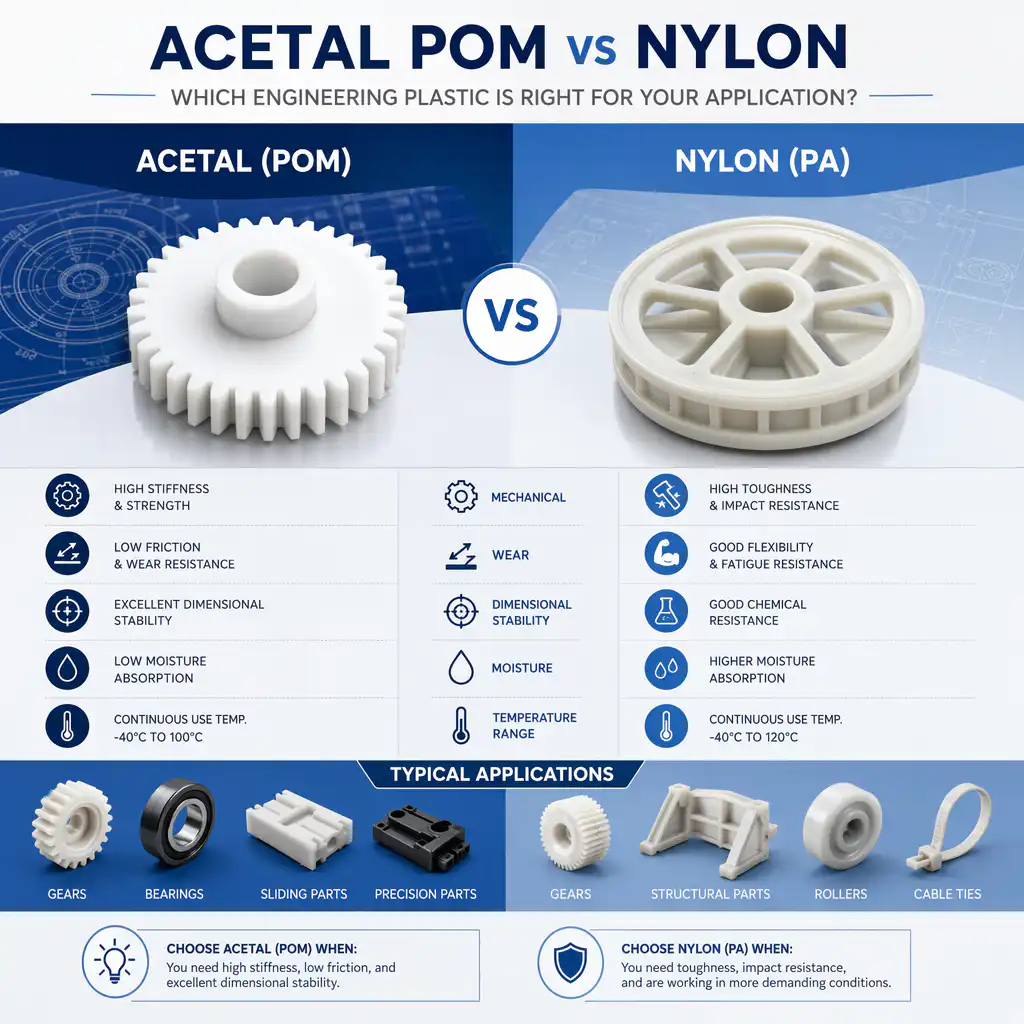

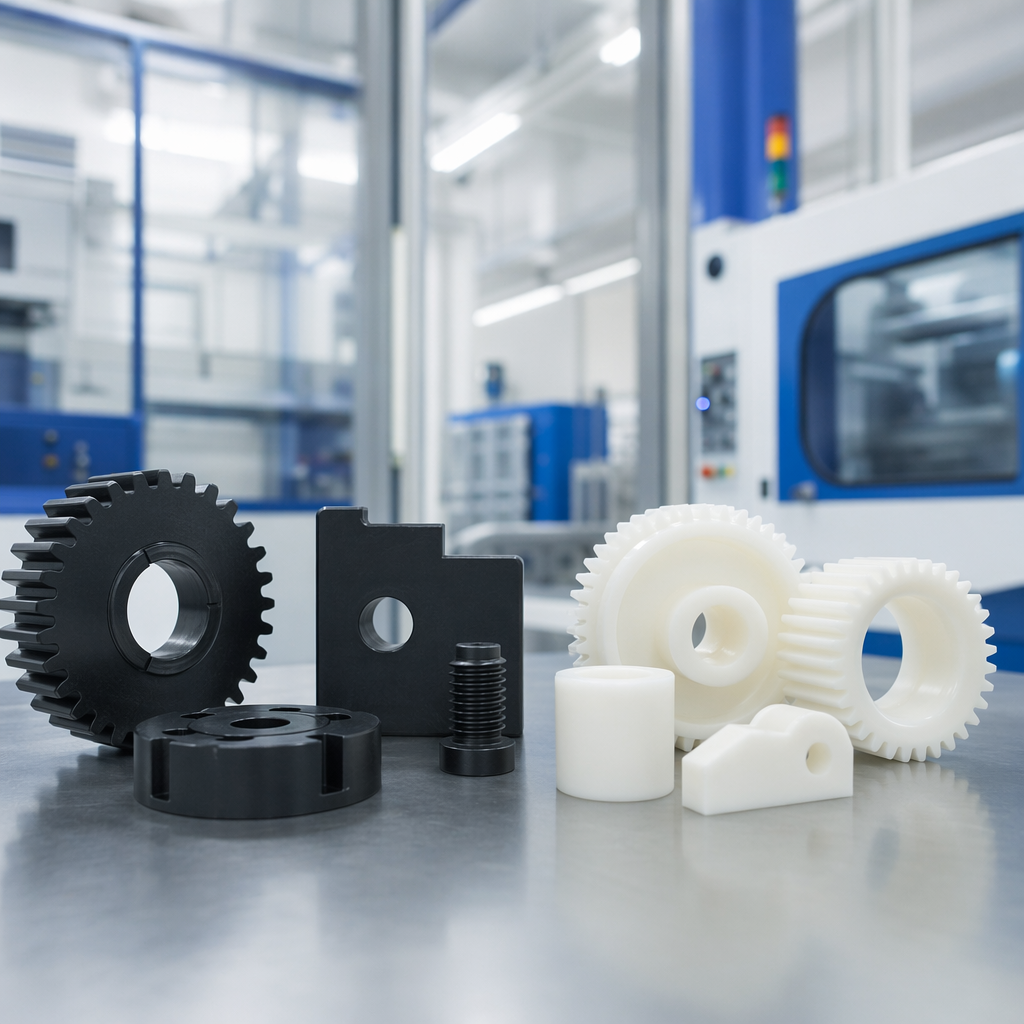
PTFE Properties
PTFE offers virtually complete chemical resistance (inert against all common chemicals except molten alkali metals and fluorine), temperature range from -200°C to +260°C, coefficient of friction of 0.05-0.10 (lowest of any solid material), and excellent electrical insulation properties.
PEEK Properties
PEEK provides tensile strength of 90-100 MPa (3-5x stronger than PTFE), temperature resistance up to 250°C continuous, excellent creep resistance at elevated temperatures, and radiation resistance for demanding applications. Carbon fiber reinforced PEEK reaches 200+ MPa tensile strength.
Selection Guide
Choose PTFE for chemical resistance and low friction. Choose PEEK for mechanical strength at temperature. For engineering applications, our PA66-CF30 provides excellent strength-to-weight ratio.
Source High-Performance Materials
As a specialized source manufacturer, we supply PTFE and PEEK in rod, sheet, and tube forms with full traceability. 聯絡我們 for pricing.
PTFE vs PEEK — Frequently Asked Questions
Which high-performance plastic has better chemical resistance?
PTFE (Teflon) offers virtually complete chemical inertness - unaffected by all common chemicals including concentrated acids, bases, organic solvents, and fuels at temperatures up to 260C. PEEK has excellent chemical resistance but can be degraded by concentrated sulfuric acid at elevated temperatures.
Which is stronger at high temperatures?
PEEK significantly outperforms PTFE at elevated temperatures. PEEK maintains tensile strength of 50-60 MPa at 250C, while PTFE softens dramatically above 200C. Carbon fiber reinforced PEEK maintains over 200 MPa tensile strength.
Where can I source PTFE and PEEK materials?
Nylonplastic is a specialized manufacturer established in 2005 with ISO9001/14001/45001/IATF16949 certifications. We supply PTFE and PEEK in rod, sheet, and tube forms. We also offer glass fiber and carbon fiber reinforced PEEK grades. Contact us for pricing and free samples.
取得免費報價
請填寫下列表格,我們的工程師會在 24 小時內回覆。.
常見問題
When is Acetal POM vs Nylon — Which Engineering Plastic Is Right for Your Application? a good option?
Acetal POM vs Nylon — Which Engineering Plastic Is Right for Your Application? is a good option when fast iteration, complex geometry, low tooling cost, or low-volume production is more important than molded-part unit cost.
What should be checked before choosing Acetal POM vs Nylon — Which Engineering Plastic Is Right for Your Application??
檢查零件尺寸、材料特性、表面光潔度、尺寸公差、受熱情況、負載方向,以及是否需要後加工。.
How does Acetal POM vs Nylon — Which Engineering Plastic Is Right for Your Application? compare with CNC machining?
3D 列印可以快速製造複雜的形狀,而 CNC 加工通常在精密表面、更小的公差和生產級材料方面更強。.
What affects the cost of Acetal POM vs Nylon — Which Engineering Plastic Is Right for Your Application??
成本取決於材料、建置量、列印時間、層高、支撐移除、精加工、檢查以及建置中的零件數量。.

 English
 Dutch
Dutch German
 French
 Korean
 Russian
 Japanese
 Spanish
 Vietnamese
 Chinese
 Portuguese
 Arabic