
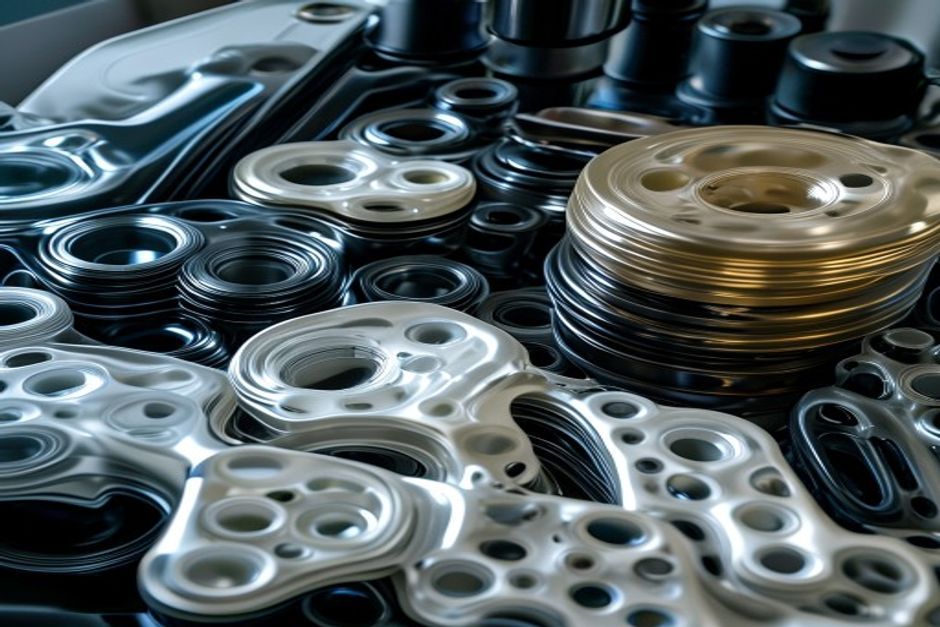
PTFE (Polytetrafluoroethylene) and PEEK (Polyether Ether Ketone) represent the pinnacle of engineering plastic technology. Both are classified as high-performance polymers, capable of operating in extreme environments that would destroy conventional engineering plastics.

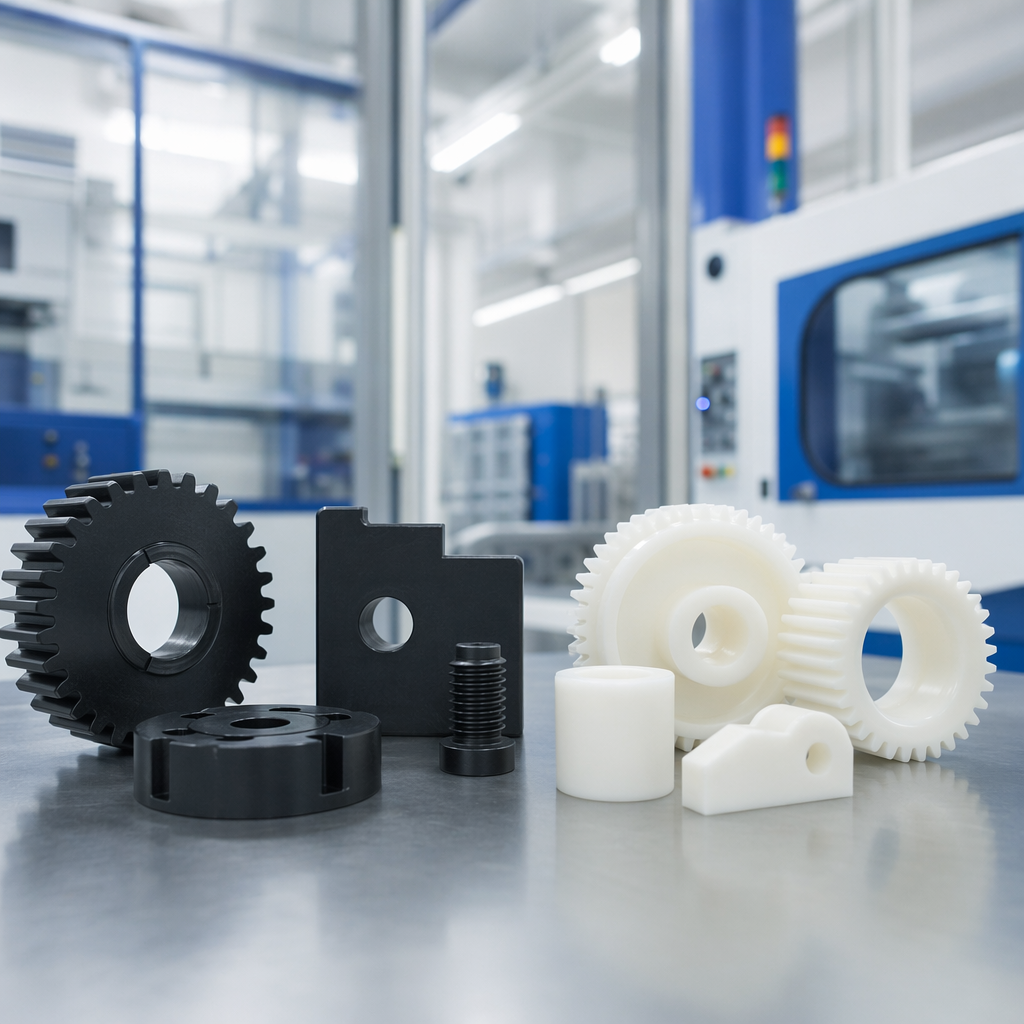
PTFE Properties
PTFE offers virtually complete chemical resistance (inert against all common chemicals except molten alkali metals and fluorine), temperature range from -200°C to +260°C, coefficient of friction of 0.05-0.10 (lowest of any solid material), and excellent electrical insulation properties.
PEEK Properties
PEEK provides tensile strength of 90-100 MPa (3-5x stronger than PTFE), temperature resistance up to 250°C continuous, excellent creep resistance at elevated temperatures, and radiation resistance for demanding applications. Carbon fiber reinforced PEEK reaches 200+ MPa tensile strength.
Selection Guide
Choose PTFE for chemical resistance and low friction. Choose PEEK for mechanical strength at temperature. For engineering applications, our PA66-CF30 provides excellent strength-to-weight ratio.
Source High-Performance Materials
As a specialized source manufacturer, we supply PTFE and PEEK in rod, sheet, and tube forms with full traceability. Contact us for pricing.
Get a Free Quote
Fill out the form below and our engineers will respond within 24 hours.
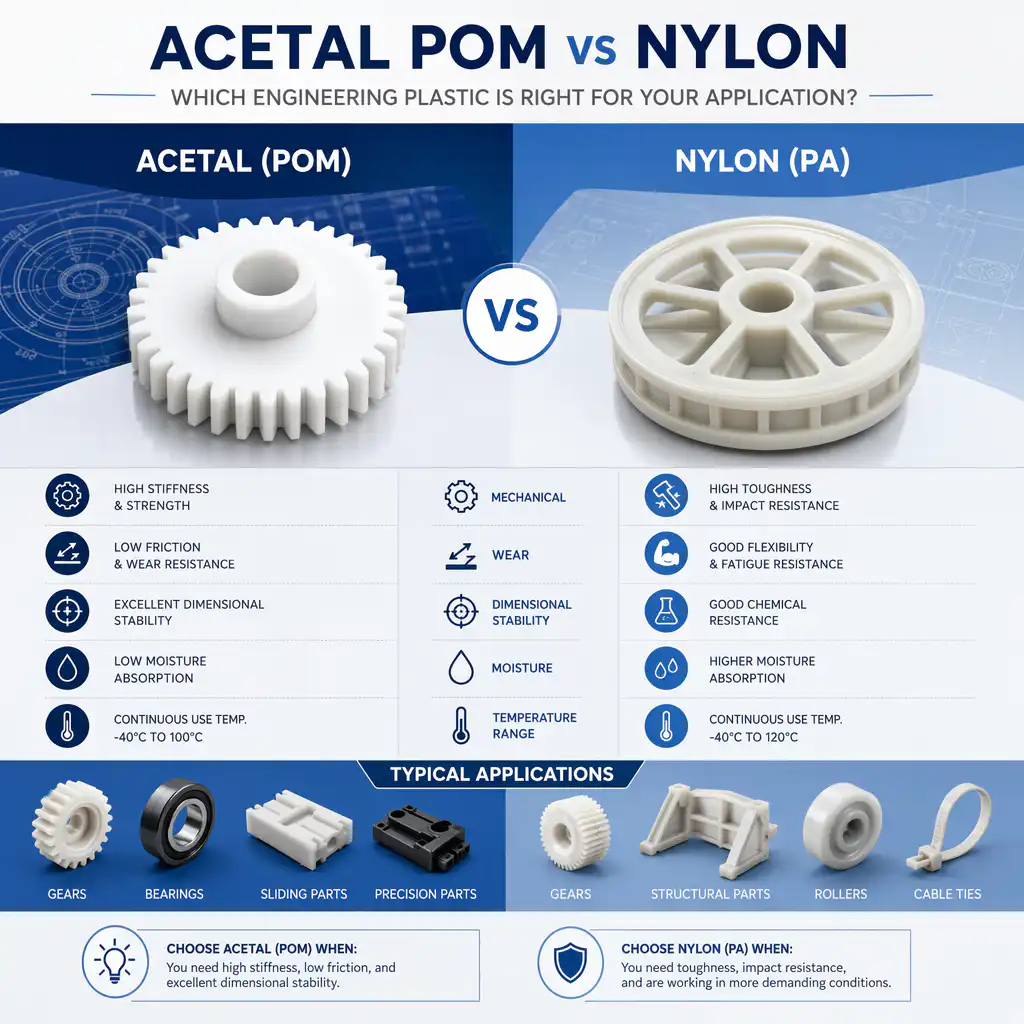
Acetal POM vs Nylon Decision Table
| Requirement | Acetal POM | Nylon |
|---|---|---|
| Friction and wear | Low friction, good sliding behavior and dimensional stability | Good wear options, often with higher moisture sensitivity |
| Moisture | Very low absorption for stable fits | Absorption can change dimensions and stiffness |
| Strength and heat | Balanced strength with a moderate temperature envelope | Broader reinforced and high-temperature grade choices |
| Process route | Injection molding or CNC with controlled burrs and stress | Dry resin, manage shrinkage and validate fiber orientation where filled |
Choose from the load, friction, moisture, heat and tolerance stack-up of the completed part. Test the actual mating surface, press fit, gear tooth or bushing rather than relying only on a resin datasheet.
FAQ
When is Acetal POM vs Nylon — Which Engineering Plastic Is Right for Your Application? a good option?
Acetal POM vs Nylon — Which Engineering Plastic Is Right for Your Application? is a good option when fast iteration, complex geometry, low tooling cost, or low-volume production is more important than molded-part unit cost.
What should be checked before choosing Acetal POM vs Nylon — Which Engineering Plastic Is Right for Your Application??
Check part size, material properties, surface finish, dimensional tolerance, heat exposure, load direction, and whether post-processing is required.
How does Acetal POM vs Nylon — Which Engineering Plastic Is Right for Your Application? compare with CNC machining?
3D printing can create complex shapes quickly, while CNC machining is often stronger for precise surfaces, tighter tolerances, and production-grade materials.
What affects the cost of Acetal POM vs Nylon — Which Engineering Plastic Is Right for Your Application??
Cost depends on material, build volume, print time, layer height, support removal, finishing, inspection, and the number of parts in the build.

