

Why Material Certifications Matter in Nylon Sourcing
Global engineering plastics buyers — from German automotive OEMs to Southeast Asian appliance manufacturers — face a common challenge: verifying that imported nylon granules meet the regulatory requirements of their target markets. A single non-compliant shipment can halt production lines worth thousands per hour.
Material certifications for nylon are not optional paperwork. They are legally binding documentation that confirms a resin’s composition, purity, and performance characteristics. For export-oriented manufacturers, understanding FDA, EU, NSF, and ISO certification requirements is essential for market access.
Nylon (polyamide) certifications typically cover three domains: food contact safety (FDA, EU 10/2011), health and hygiene (NSF, WRAS, KTW), and quality management (ISO 9001, IATF 16949). KSAN nylon granules provide full documentation packages for all major markets.
US FDA Food Contact Regulations for Nylon Resins
The US Food and Drug Administration regulates food contact materials under 21 CFR, with nylon specifically addressed in 21 CFR 177.1500 — the standard for “Nylon resins used in articles intended for repeated use in food service.”
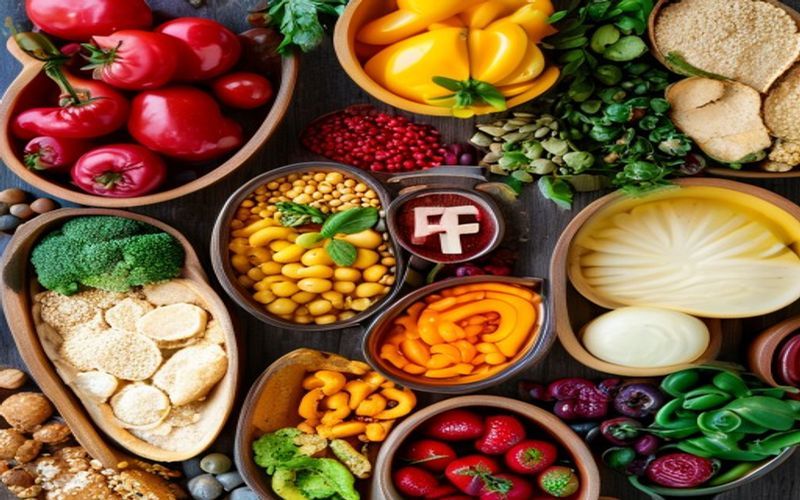
Under 21 CFR 177.1500, nylon resins must meet extractives limits under specific test conditions. Key parameters:
| Test Condition | Max Extractives Limit | Solvent Used |
|---|---|---|
| Distilled water, 205°F (96°C), 30 min | 0.5% | Distilled water |
| n-Heptane, 120°F (49°C), 30 min | 0.5% | n-Heptane |
| 95% Ethanol, 145°F (63°C), 30 min | 0.5% | 95% Ethanol |
| Distilled water, 120°F (49°C), 30 min | 0.5% | Distilled water |
EU Regulation 10/2011 for Food Contact Plastics
EU Regulation (EU) No 10/2011 harmonizes food contact plastic requirements across all 27 EU member states. For nylon resin manufacturers and converters, compliance requires:

- Declaration of Compliance (DoC) for each product grade
- Supporting Technical Documentation (STL) including migration test results
- Overall Migration Limit (OML) and Specific Migration Limits (SML) compliance
- Compliance verification under worst-case contact conditions
The key limitation of EU 10/2011 for nylon in actual food contact scenarios:
| Food Type | Max Temperature | Conditions |
|---|---|---|
| Aqueous foods | Up to 250°F (121°C) | Hot fill and fryable |
| Fatty foods | Up to 250°F (121°C) | With extraction limitations |
| Alcoholic beverages | Up to 150°F (66°C) | Limited extraction data |
| Dry foods | Room temperature only | No temperature restriction |
| 要求 | Threshold | 注意事項 |
|---|---|---|
| Overall Migration Limit (OML) | 60 mg/kg food | Total substances migrating |
| Specific Migration of caprolactam | 15 mg/kg food | PA6 monomer |
| Heavy metals (Pb, Cd, Hg, Cr VI) | Various SMLs | Each metal has individual limit |
| Primary Aromatic Amines (PAAs) | ND (0.01 mg/kg) | Not detectable by sensitive methods |
Medical Device Applications: FDA and ISO 10993
Nylon is widely used in medical devices — from surgical sutures to catheter tubing to implantable fixation devices. Medical-grade nylon requires compliance with multiple overlapping standards.

- ISO 10993 series: Biological evaluation of medical devices (biocompatibility testing)
- FDA 510(k): Premarket notification for Class II devices using nylon components
- USP Class VI: United States Pharmacopeia biological reactivity tests
- ISO 13485: Quality management systems for medical device manufacturers
For nylon-based medical devices, ISO 10993-5 (cytotoxicity) and ISO 10993-10 (sensitization) are the most critical biocompatibility tests. PA66-GF30 is commonly used in medical instrument housings, while medical-grade PA12 is specified for catheters and fluid delivery systems due to its flexibility and low moisture absorption.
Water and Plumbing Certifications
Nylon fittings, valves, and pipe supports used in drinking water systems require regional certifications confirming no harmful substance migration:

- NSF/ANSI 61: Drinking water system components — health effects
- WRAS (UK Water Regulations Advisory Scheme): Approval for water fittings in the UK market
- KTW-BWGL: German Federal Environment Agency testing for plastic materials in contact with drinking water
- ACS (Attestation de Conformité Sanitaire): French sanitary conformity certification
NSF/ANSI 61 testing evaluates extractable metals (barium, zinc, lead, cadmium) and organic compounds from finished products under worst-case exposure conditions. KSAN nylon grades tested to NSF/ANSI 61 are available for drinking water applications.
UL Flammability and Electrical Certifications
Nylon used in electrical enclosures, connectors, and wire insulation must meet flame retardancy standards:

- UL 94: Standard for safety of flammable plastic materials — V-0, V-1, V-2 ratings for nylon
- UL 746A: Polymeric materials — short-term property evaluations
- IEC 60335-1: Household appliances — glow wire testing at 750°C/850°C
- IEC 60695-2: Fire hazard testing — needle flame test
PA66 with 30% glass fiber (PA66-GF30) achieves UL 94 V-0 rating at 0.75mm thickness, making it suitable for electrical switchgear, circuit breakers, and appliance components requiring flame resistance. Unfilled PA66 typically achieves V-2 at 1.5mm.
常見問題
How do you know whether Nylon Material Certifications: FDA, EU, NSF, and ISO Standards fits a part?
Nylon Material Certifications: FDA, EU, NSF, and ISO Standards fits a part when its load capacity, temperature range, moisture exposure, wear behavior, and processing method match the real service conditions.
What properties should be checked for Nylon Material Certifications: FDA, EU, NSF, and ISO Standards?
Check strength, stiffness, impact resistance, heat resistance, moisture absorption, dimensional stability, friction, wear, and chemical compatibility.
What is the biggest selection risk for Nylon Material Certifications: FDA, EU, NSF, and ISO Standards?
The biggest risk is choosing from a datasheet value without considering actual environment, processing method, part geometry, and long-term use.
When should Nylon Material Certifications: FDA, EU, NSF, and ISO Standards be tested before production?
Testing is recommended when the part faces load, heat, chemicals, moisture, tight tolerances, regulatory requirements, or a new operating environment.


 English
  Dutch
Dutch  German
  French
  Korean
  Russian
  Japanese
  Spanish
  Vietnamese
  Chinese
  Portuguese
  Arabic