
Insert molding integrates metal components — threaded inserts, bushings, electrical contacts, or structural reinforcement — into a single injection-molded plastic part. Instead of assembling separate components after molding, you mold the plastic directly around the insert, creating a permanent mechanical bond. This approach eliminates secondary assembly operations and can dramatically reduce per-part cost.
How Insert Molding Works
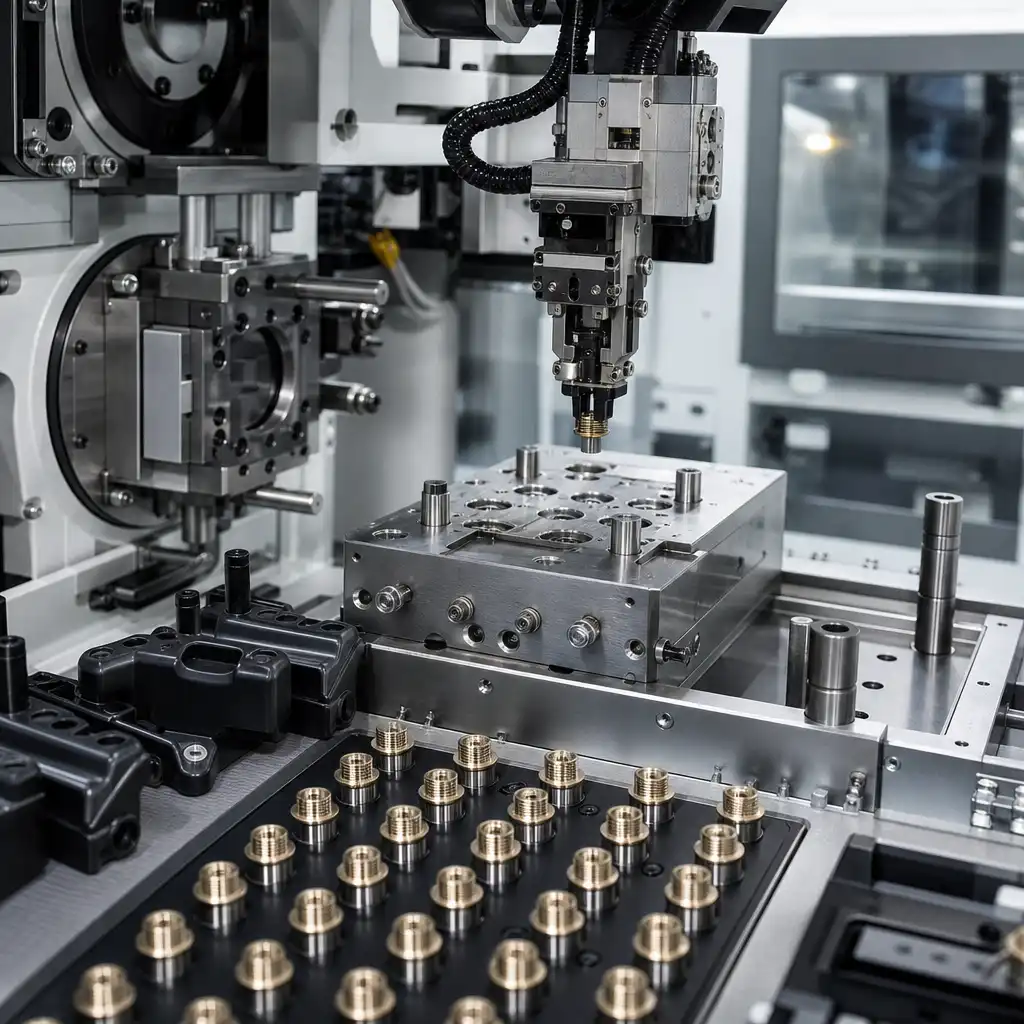
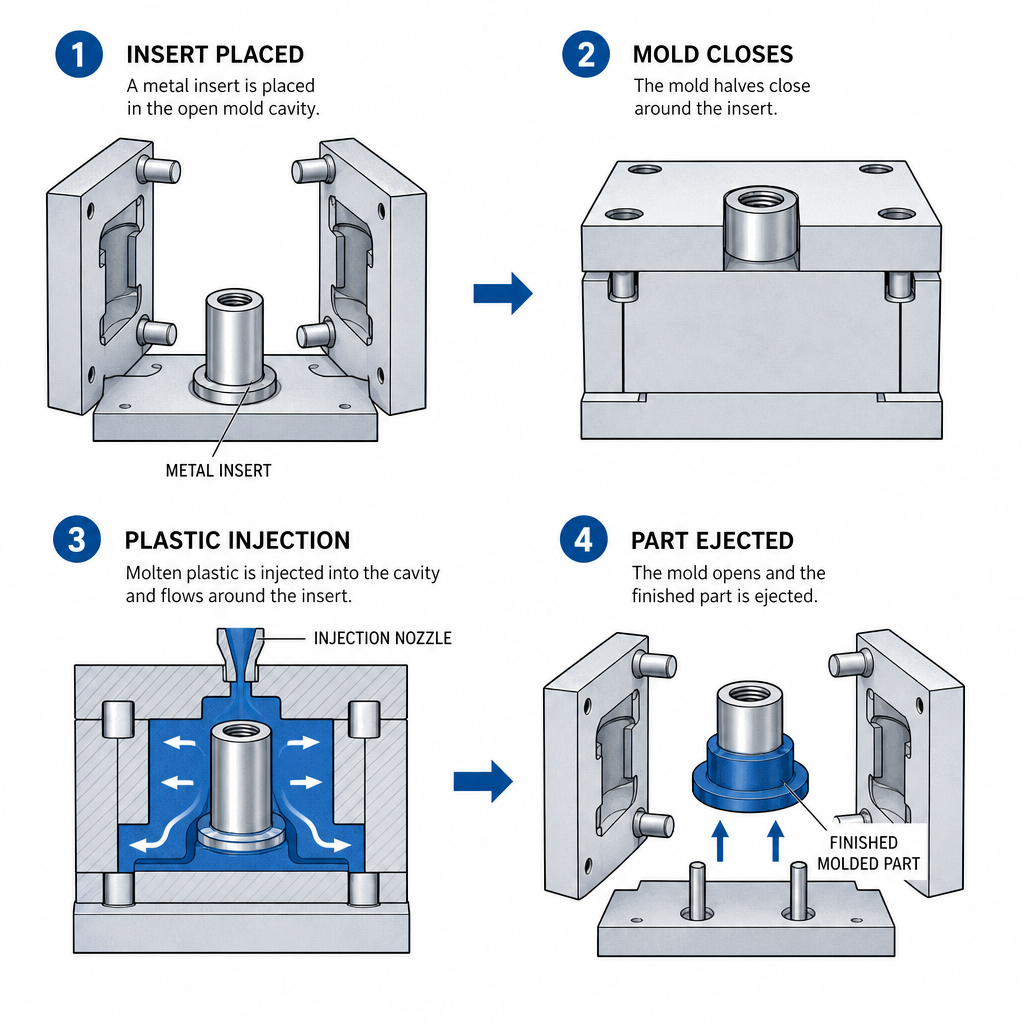
The process loads a pre-formed metal insert into the mold cavity before each injection cycle. The mold closes, molten plastic flows around the insert, and the part ejects with the insert permanently encapsulated. Key distinctions from standard injection molding: the insert must withstand mold clamp pressure without deforming, positioning accuracy of the insert in the cavity is critical to part functionality, and thermal expansion mismatch between metal and plastic must be accounted for in design.
Insert Types and Materials
| Insert Type | Common Materials | 典型應用 |
|---|---|---|
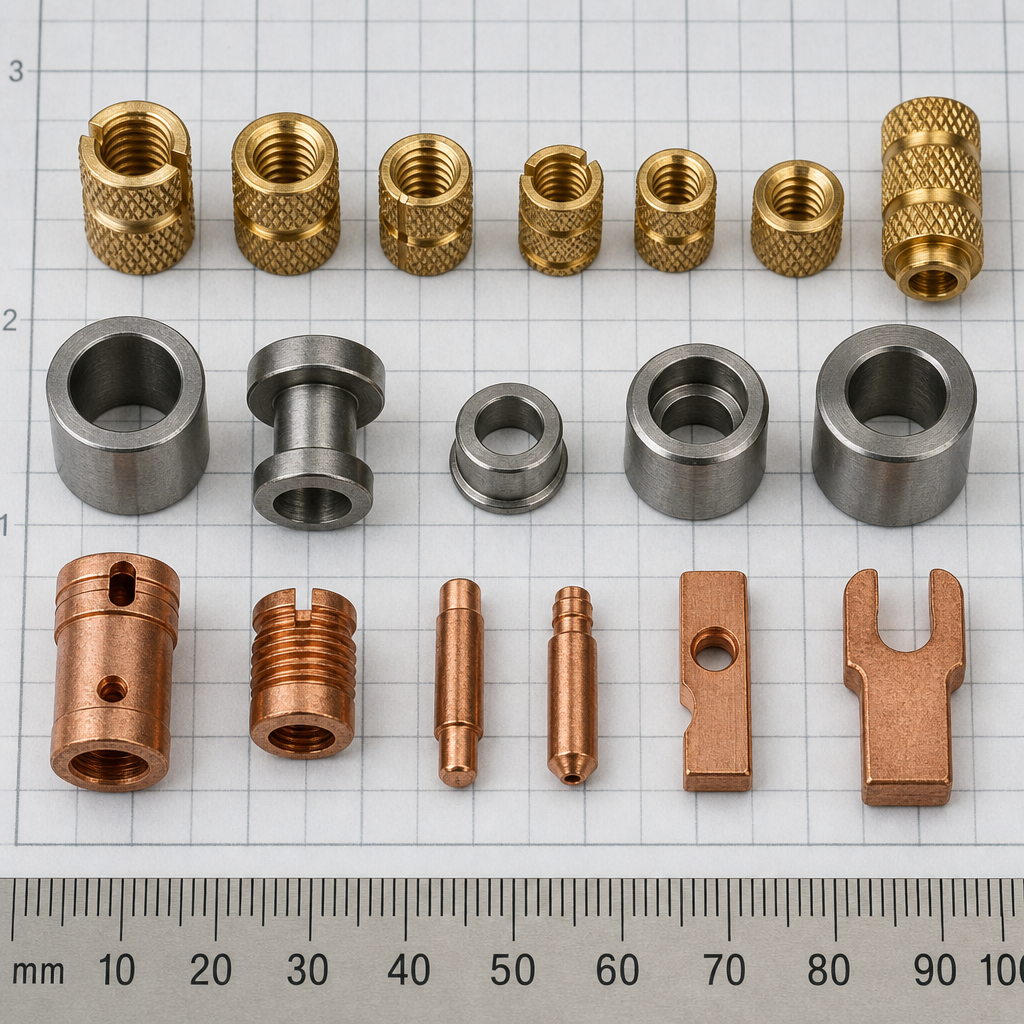
| Threaded Inserts | Brass, Stainless Steel | Fastener bosses, mounting points |
| Electrical Contacts | Copper, Brass, Phosphor Bronze | Connectors, switches, sensors |
| Bushings / Bearings | Sintered Bronze, Steel | Gear hubs, pivot points |
| Structural Inserts | Steel, Aluminum | Load-bearing frames, reinforcement |
Design Guidelines
- Insert preheating: Preheat metal inserts to near mold temperature (80-120°C for nylon) before loading. A cold insert causes rapid skin solidification and poor bonding.
- Knurling / undercuts: Inserts need mechanical retention features — diamond knurl, straight knurl, or undercut grooves. Plastic shrinks around the insert during cooling, locking it in place mechanically.
- Minimum wall thickness: Maintain at least 1.5x the insert diameter in plastic wall thickness around the insert to prevent sink marks and stress cracking.
- Flash prevention: Tolerances between insert OD and mold cavity must be tight (0.02-0.05mm) to prevent plastic flashing onto the insert surface.
材料相容性
Engineering plastics that work well with insert molding include nylon (PA6, PA66), PBT, PPS, and PEEK. For nylon specifically, the natural moisture absorption actually helps — the slight swelling post-molding increases grip around metal inserts over time. Glass-filled grades work well but require harder tool steel to resist abrasive wear at the insert contact points.
常見問題
How strong is the bond between insert and plastic?
With proper knurling and design, the mechanical bond typically exceeds the insert’s pull-out strength requirements by 2-3x. A properly designed M6 brass insert in nylon 6 can withstand over 500N of axial pull-out force. The limiting factor is usually the surrounding plastic, not the insert-to-plastic bond.
Can you overmold electronics or circuit boards?
Low-temperature processes using thermoplastic elastomers (TPE) or low-melt nylons can overmold PCBs, but standard nylon molding temperatures (230-280°C) would destroy most electronic components. For electronic overmolding, specialized low-temperature materials and process control are essential.
What’s the difference between insert molding and overmolding?
Insert molding encapsulates a metal or rigid component in a single shot. Overmolding involves a second material (usually a soft elastomer) molded over a previously molded rigid substrate — it’s a two-step process often used for ergonomic grips or seals.
What tolerances can you hold on insert placement?
With precision mold design, we typically hold insert positional accuracy within ±0.05mm. This requires careful insert loading fixtures, multi-cavity balancing, and in some cases robotic pick-and-place automation for high-volume production.
Need insert-molded parts?
We design and manufacture insert molds for threaded inserts, metal bushings, and custom metal-plastic hybrid components from prototype to production volumes.


 English
 Dutch
Dutch German
 French
 Korean
 Russian
 Japanese
 Spanish
 Vietnamese
 Chinese
 Portuguese
 Arabic