
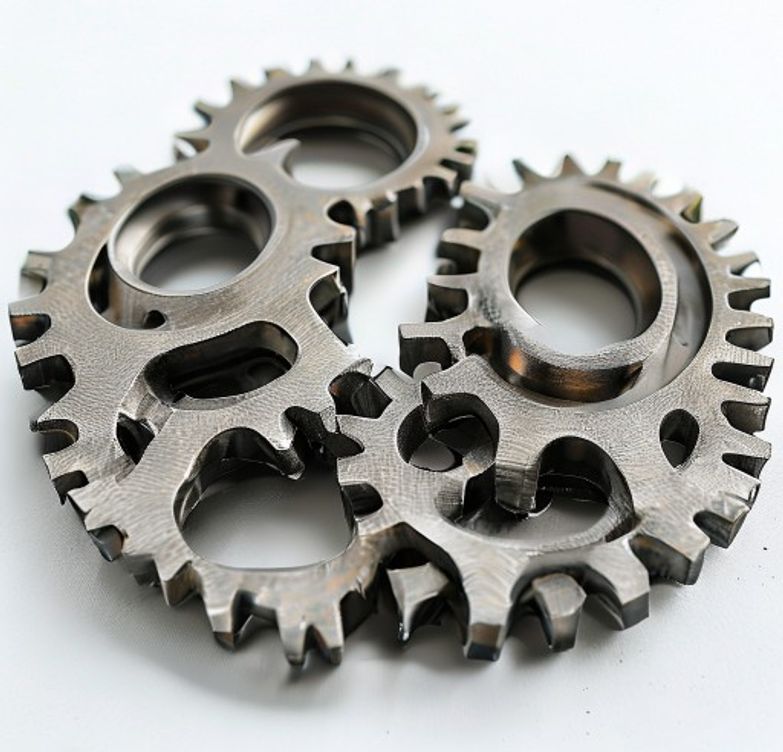
Head-to-head comparison of nylon and POM (acetal/delrin) for engineering applications — mechanical, thermal, chemical, wear, and processing differences.
Nylon vs. POM: Two Giants of Engineering Plastics
Nylon (polyamide) and POM (polyoxymethylene, also called acetal or Delrin) are the two most-used engineering thermoplastics for mechanical components. Both offer excellent wear resistance, low friction, and good dimensional stability — but their different molecular structures create distinct performance trade-offs that matter enormously in precision applications.
Choosing between nylon and POM is not trivial. A bearing that lasts 50,000 cycles in POM may fail in 8,000 cycles in nylon under the same load. Conversely, a gear housing exposed to automotive fluids will crack with POM but survive with PA66. This guide provides the data-driven comparison engineers need to make the right choice.
Mechanical Properties Comparison
Tensile and Flexural Properties:
| 財產 | PA6 | PA66 | POM (Homopolymer) | POM (Copolymer) |
|---|---|---|---|---|
| 拉伸強度 (MPa) | 80 | 82 | 70 | 62 |
| Tensile Modulus (GPa) | 2.8 | 3.0 | 2.8 | 2.5 |
| Flexural Strength (MPa) | 100 | 110 | 98 | 90 |
| 彎曲模量 (GPa) | 2.6 | 2.8 | 2.6 | 2.3 |
| 斷裂伸長率 (%) | 150 | 60 | 40 | 35 |
| 缺口 Izod (J/m) | 55 | 45 | 75 | 65 |
| Creep Modulus (1000h, 20 MPa) | 1.2 GPa | 1.4 GPa | 2.3 GPa | 2.0 GPa |
Key Insight: Creep Resistance — POM has significantly better creep resistance than nylon. Under sustained loading, POM retains more of its stiffness over time. For components under constant load (spring clips, retaining rings, fastener bushings), POM’s superior creep resistance often makes it the better choice despite similar initial strength.
耐衝擊性 — Nylon has higher unnotched impact resistance. But POM often outperforms nylon in notched impact tests because POM’s ductile failure mode absorbs more energy at the crack tip. For parts with stress concentrations (keyways, holes, threads), POM’s toughness at sharp notches is an advantage.
Fatigue Resistance — Nylon has superior fatigue resistance for repeated loading. In cyclic loading tests, nylon components survive 3-5× more cycles before failure than equivalent POM parts. Critical for components like conveyor belt guides, pump impellers, and hinge mechanisms.
Thermal and Environmental Performance
Thermal Properties:
| 財產 | PA6 | PA66 | POM |
|---|---|---|---|
| Melting Point (°C) | 225 | 265 | 175 |
| Continuous Service Temp (°C) | 100-115 | 130-150 | 90-100 |
| HDT @ 1.82 MPa (°C) | 65 | 90 | 95 |
| HDT @ 0.45 MPa (°C) | 170 | 250 | 160 |
| 熱膨脹 (×10-⁵/°C) | 8-9 | 8-9 | 11-12 |
POM’s thermal weakness — The 175°C melting point of POM is its thermal limitation. At temperatures above 100°C, POM loses mechanical strength rapidly. PA66-GF30 (HDT 250°C) operates at temperatures where POM would melt.
Moisture Absorption Comparison:
| 財產 | PA6 | PA66 | POM |
|---|---|---|---|
| Saturation Moisture (%) | 9.5% | 8.5% | 0.8% |
| Dimensional Change (saturation) | 1.5-2.0% | 1.3-1.8% | 0.2% |
POM wins decisively on moisture — At 0.8% maximum moisture absorption, POM is essentially dimensionally stable in humid environments. Nylon’s 8-9% absorption causes measurable swelling and property changes. For underwater or outdoor exposed applications without encapsulation, POM is often the only viable choice.
Nylon Moisture Effects Outdoor Plastic Selection Nylon Moisture Drying Guide CNC Machining Nylon Tips PC 3D Printing Guide
Chemical Resistance: Where Each Material Excels
Chemical Resistance Comparison:
| Chemical | Nylon (PA66) | POM |
|---|---|---|
| Gasoline/Fuels | 極佳 | 極佳 |
| Motor Oil | 極佳 | 極佳 |
| Brake Fluid | 良好 | Poor (swells) |
| Alcohol | 極佳 | 良好 |
| Ketones (Acetone) | 良好 | Poor (dissolves) |
| Weak Acids | Fair | 良好 |
| Strong Acids | Poor | Poor |
| Esters/Plasticizers | 極佳 | Poor |
| Hot Water (>60°C) | Poor | 良好 |
| Steam | Poor | Poor |
Critical Decision Points: – Brake fluid or glycol coolants: POM swells and cracks — use PA66 or PA12 – Hot water (>60°C): Nylon hydrolyzes — use POM or PVDF – Plasticizer migration (flexible cables, wire insulation): POM absorbs plasticizers — use PA12 – Automotive under-hood: PA66-GF30 for its heat resistance (180°C+) and fluid resistance – Consumer appliances: POM for its dimensional stability and surface finish
Wear and Friction Performance
Both materials offer low friction and good wear resistance — but with important differences:
| 財產 | PA6 | PA66 | POM |
|---|---|---|---|
| Coefficient of Friction (vs. steel, dry) | 0.25-0.40 | 0.20-0.35 | 0.15-0.35 |
| PV Limit (MPa·m/min) | 80-120 | 90-130 | 80-100 |
| Wear Factor (vs. steel, dry) | 15-40 | 10-30 | 1-3 |
| Machinability | 良好 | 極佳 | 極佳 |
The critical difference: wear factor — POM’s wear factor (1-3) is 10-20× lower than nylon’s (10-40). This means POM parts generate less heat and wear more slowly in sliding contact. For high-PV applications (bearings, wear strips, sliding inserts), POM is the superior choice.
Self-lubricating versions: – POM + PTFE: Wear factor drops to 0.5-1.0 — excellent for boundary lubrication – PA6/66 + PTFE or silicone: Significantly reduces friction, but PTFE can migrate to surface and affect bonding – Carbon fiber reinforced: Improves wear resistance in both materials, especially at elevated temperatures
Surface Speed Consideration: At surface speeds above 1 m/s in dry sliding, both materials generate enough heat to cause thermal softening. For high-speed applications, consider internally lubricated grades or oil-impregnated sintered bronze backings.
How to Choose: Decision Framework
Choose Nylon (PA66-GF30) when: – Operating temperature exceeds 100°C – Repeated impact or cyclic loading is expected – Exposure to brake fluid, coolants, or plasticizers – You need higher fatigue life in dynamic loading – Cost is the primary driver (PA66 is generally less expensive than POM)
Choose POM when: – Dimensional stability in humid environments is critical – Low friction and low wear factor are priorities (sliding/rotating contact) – Parts will be exposed to hot water or steam – Acetone, esters, or plasticizers are present – You need excellent surface finish and tight tolerances
Hybrid Solution — Metal Replacement: For many metal-replacement applications, the choice is not between nylon and POM, but between them and aluminum. Nylon-GF and POM are both excellent metal substitutes for housings, brackets, and structural components, offering 70-85% weight reduction vs. aluminum with adequate strength. For these applications, PA66-GF30 is the default choice due to its superior thermal and fluid resistance.
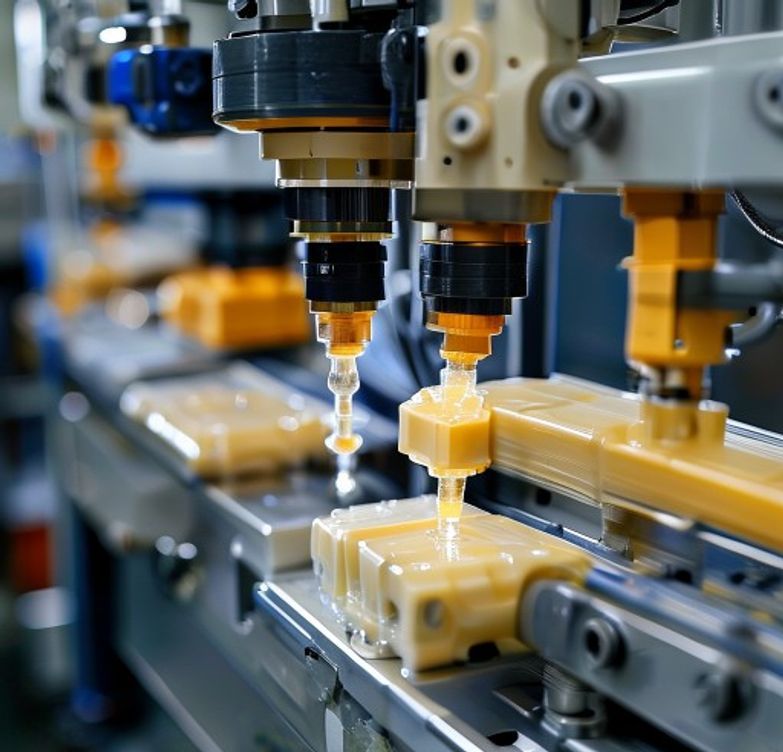
Semi-finished shapes for CNC machining
Engineering-grade nylon raw materials for injection molding
常見問題

When is Nylon vs. POM (Acetal): Engineering Plastics Comparison Guide a good option?
Nylon vs. POM (Acetal): Engineering Plastics Comparison Guide is a good option when fast iteration, complex geometry, low tooling cost, or low-volume production is more important than molded-part unit cost.
What should be checked before choosing Nylon vs. POM (Acetal): Engineering Plastics Comparison Guide?
檢查零件尺寸、材料特性、表面光潔度、尺寸公差、受熱情況、負載方向,以及是否需要後加工。.
How does Nylon vs. POM (Acetal): Engineering Plastics Comparison Guide compare with CNC machining?
3D 列印可以快速製造複雜的形狀,而 CNC 加工通常在精密表面、更小的公差和生產級材料方面更強。.
What affects the cost of Nylon vs. POM (Acetal): Engineering Plastics Comparison Guide?
成本取決於材料、建置量、列印時間、層高、支撐移除、精加工、檢查以及建置中的零件數量。.


 English
 Dutch
Dutch German
 French
 Korean
 Russian
 Japanese
 Spanish
 Vietnamese
 Chinese
 Portuguese
 Arabic