
Nylon and POM (polyoxymethylene, also known as acetal or Delrin) are two of the most important engineering plastics. Both are widely used for precision mechanical components, but their distinctly different properties make each better suited for specific applications.
Mechanical Properties Head-to-Head
| Eigentum | PA6 (Nylon) | POM (Acetal) |
|---|---|---|
| Zugfestigkeit (MPa) | 70-85 | 60-70 |
| Biegemodul (GPa) | 2.5-3.0 | 2.6-2.9 |
| Bruchdehnung (%) | 50-150 | 25-75 |
| Dichte (g/cm³) | 1.14 | 1.41 |

Wear and Friction: A Critical Difference
POM’s key advantage over nylon is its excellent wear resistance and low coefficient of friction (0.2-0.35 against steel), making it preferred for gears, bearings, and sliding components.
Feuchtigkeitsabsorption
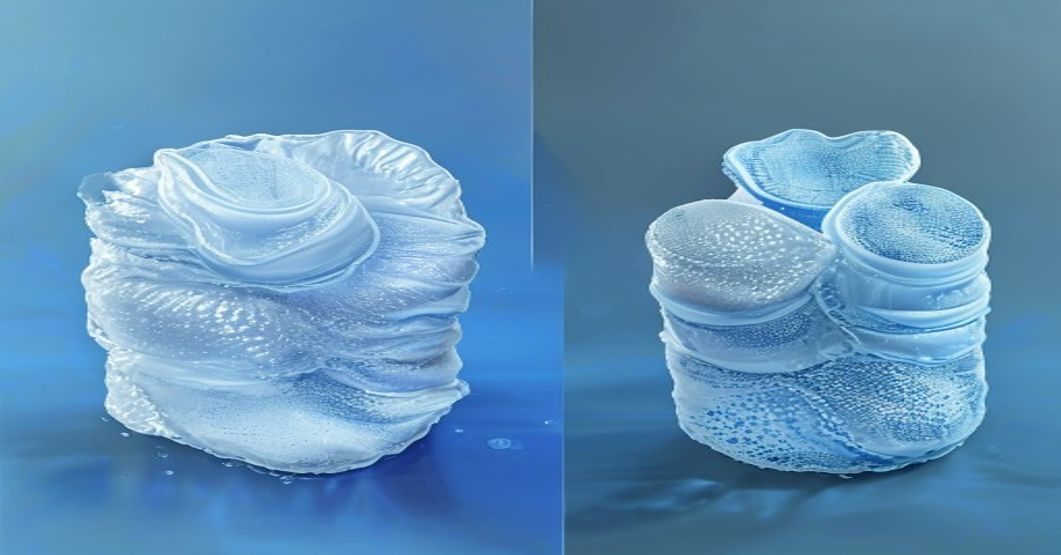
POM absorbs less than 0.3% water even at saturation, while nylon absorbs 2.5-9.5% depending on conditions. This means POM parts maintain consistent dimensions regardless of humidity.
Chemische Beständigkeit
Nylon is resistant to oils, greases, fuels, and alkalis. POM offers excellent resistance to organic solvents, oils, and neutral chemicals but is attacked by strong acids.
Thermal Properties
| Eigentum | PA6 | POM |
|---|---|---|
| Melting Point (°C) | 220 | 165-175 |
| HDT at 1.8 MPa (°C) | 65 | 95-110 |
| Continuous Use Temp (°C) | 80-100 | 90-100 |
Application Guide
Choose Nylon When:
- Impact resistance and toughness are critical
- Parts experience dynamic loading
- Higher temperature resistance is needed (PA66)
Choose POM When:
- Dimensional stability in varying humidity is critical
- Low friction and wear resistance are priorities
- Parts operate in wet environments
- Precision mechanical components are needed
Unser Leistungsvermögen
Mit über 300 CNC-Maschinen, produzieren wir mehr als 10.000 Stück täglich mit so engen Toleranzen wie ±0,005 mm. Wir akzeptieren MOQ ab 1 Stück, mit Lieferzeiten von 24 Stunden bis 15 Tage. We machine both nylon and POM for precision applications. Erhalten Sie innerhalb von 24 Stunden ein Angebot.
FAQ
When is Nylon vs POM (Acetal/Delrin): Choosing Between Two Engineering Plastics a good option?
Nylon vs POM (Acetal/Delrin): Choosing Between Two Engineering Plastics is a good option when fast iteration, complex geometry, low tooling cost, or low-volume production is more important than molded-part unit cost.
What should be checked before choosing Nylon vs POM (Acetal/Delrin): Choosing Between Two Engineering Plastics?
Prüfen Sie die Größe des Teils, die Materialeigenschaften, die Oberflächenbeschaffenheit, die Maßtoleranz, die Wärmeeinwirkung, die Belastungsrichtung und ob eine Nachbearbeitung erforderlich ist.
How does Nylon vs POM (Acetal/Delrin): Choosing Between Two Engineering Plastics compare with CNC machining?
Mit dem 3D-Druck lassen sich komplexe Formen schnell erstellen, während die CNC-Bearbeitung für präzise Oberflächen, engere Toleranzen und serienreife Materialien oft besser geeignet ist.
What affects the cost of Nylon vs POM (Acetal/Delrin): Choosing Between Two Engineering Plastics?
Die Kosten hängen vom Material, dem Bauvolumen, der Druckzeit, der Schichthöhe, der Entfernung von Stützen, der Endbearbeitung, der Prüfung und der Anzahl der Teile im Bau ab.