
Nylon and POM (polyoxymethylene, also known as acetal or Delrin) are two of the most important engineering plastics. Both are widely used for precision mechanical components, but their distinctly different properties make each better suited for specific applications.
Mechanical Properties Head-to-Head
| Propiedad | PA6 (Nylon) | POM (Acetal) |
|---|---|---|
| Resistencia a la tracción (MPa) | 70-85 | 60-70 |
| Módulo de flexión (GPa) | 2.5-3.0 | 2.6-2.9 |
| Alargamiento a la rotura (%) | 50-150 | 25-75 |
| Densidad (g/cm³) | 1.14 | 1.41 |

Wear and Friction: A Critical Difference
POM’s key advantage over nylon is its excellent wear resistance and low coefficient of friction (0.2-0.35 against steel), making it preferred for gears, bearings, and sliding components.
Absorción de humedad
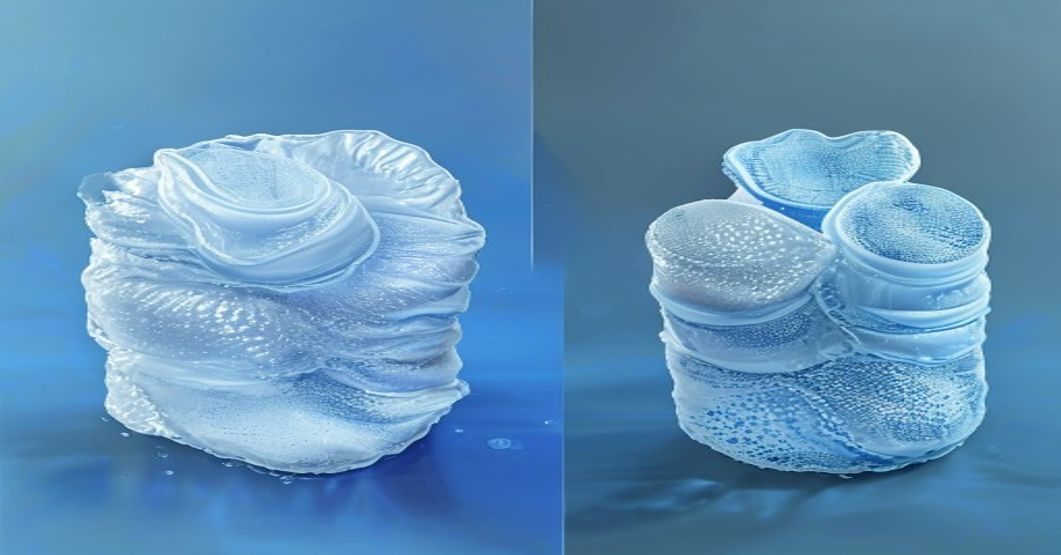
POM absorbs less than 0.3% water even at saturation, while nylon absorbs 2.5-9.5% depending on conditions. This means POM parts maintain consistent dimensions regardless of humidity.
Resistencia química
Nylon is resistant to oils, greases, fuels, and alkalis. POM offers excellent resistance to organic solvents, oils, and neutral chemicals but is attacked by strong acids.
Thermal Properties
| Propiedad | PA6 | POM |
|---|---|---|
| Melting Point (°C) | 220 | 165-175 |
| HDT at 1.8 MPa (°C) | 65 | 95-110 |
| Continuous Use Temp (°C) | 80-100 | 90-100 |
Application Guide
Choose Nylon When:
- Impact resistance and toughness are critical
- Parts experience dynamic loading
- Higher temperature resistance is needed (PA66)
Choose POM When:
- Dimensional stability in varying humidity is critical
- Low friction and wear resistance are priorities
- Parts operate in wet environments
- Precision mechanical components are needed
Our Capabilities
With over 300 CNC machines, we produce more than 10,000 pieces daily with tolerances as tight as ±0.005mm. We accept MOQ from 1 piece, with delivery times ranging from 24 hours to 15 days. We machine both nylon and POM for precision applications. Get a quote within 24 hours.
PREGUNTAS FRECUENTES
When is Nylon vs POM (Acetal/Delrin): Choosing Between Two Engineering Plastics a good option?
Nylon vs POM (Acetal/Delrin): Choosing Between Two Engineering Plastics is a good option when fast iteration, complex geometry, low tooling cost, or low-volume production is more important than molded-part unit cost.
What should be checked before choosing Nylon vs POM (Acetal/Delrin): Choosing Between Two Engineering Plastics?
Compruebe el tamaño de la pieza, las propiedades del material, el acabado superficial, la tolerancia dimensional, la exposición al calor, la dirección de la carga y si es necesario un tratamiento posterior.
How does Nylon vs POM (Acetal/Delrin): Choosing Between Two Engineering Plastics compare with CNC machining?
La impresión 3D puede crear formas complejas con rapidez, mientras que el mecanizado CNC suele ser más potente para superficies precisas, tolerancias más ajustadas y materiales de calidad de producción.
What affects the cost of Nylon vs POM (Acetal/Delrin): Choosing Between Two Engineering Plastics?
El coste depende del material, el volumen de fabricación, el tiempo de impresión, la altura de capa, la eliminación de soportes, el acabado, la inspección y el número de piezas de la fabricación.