
High-Temperature Performance
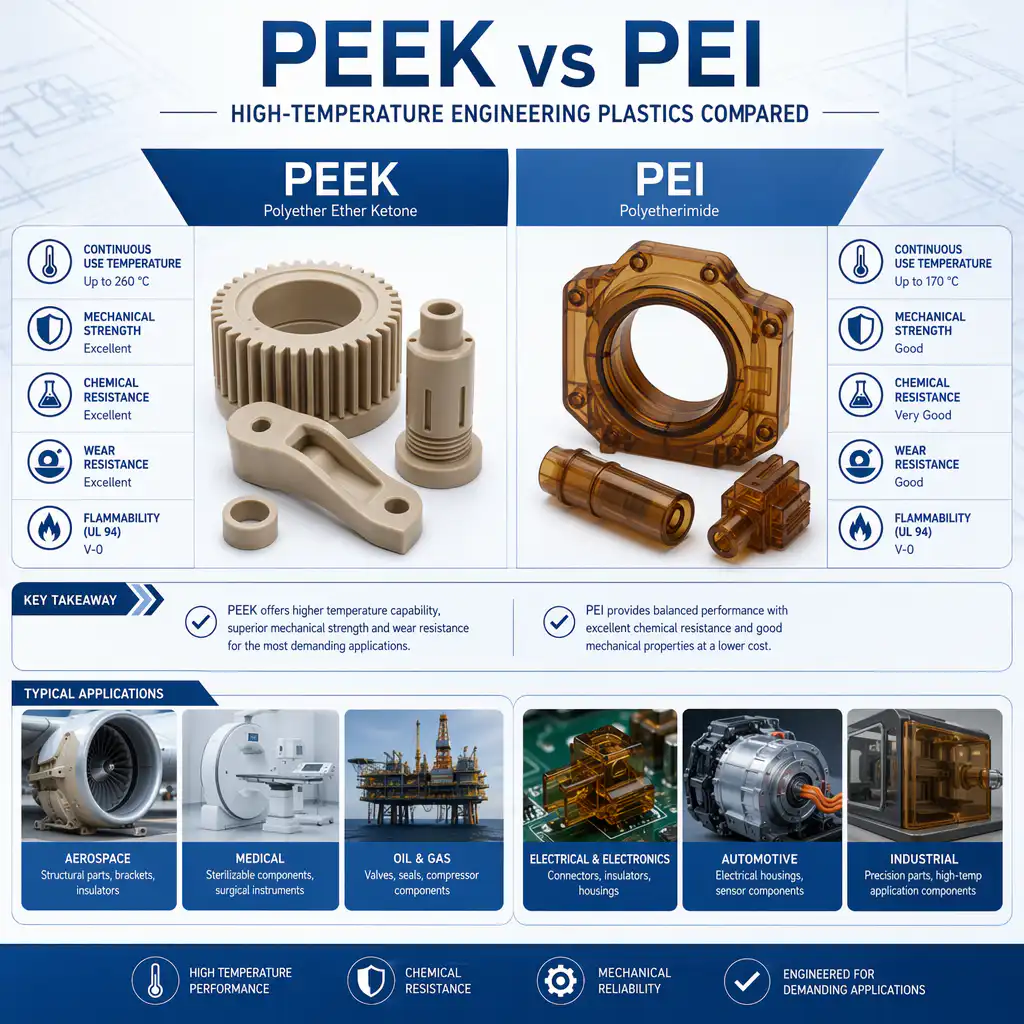
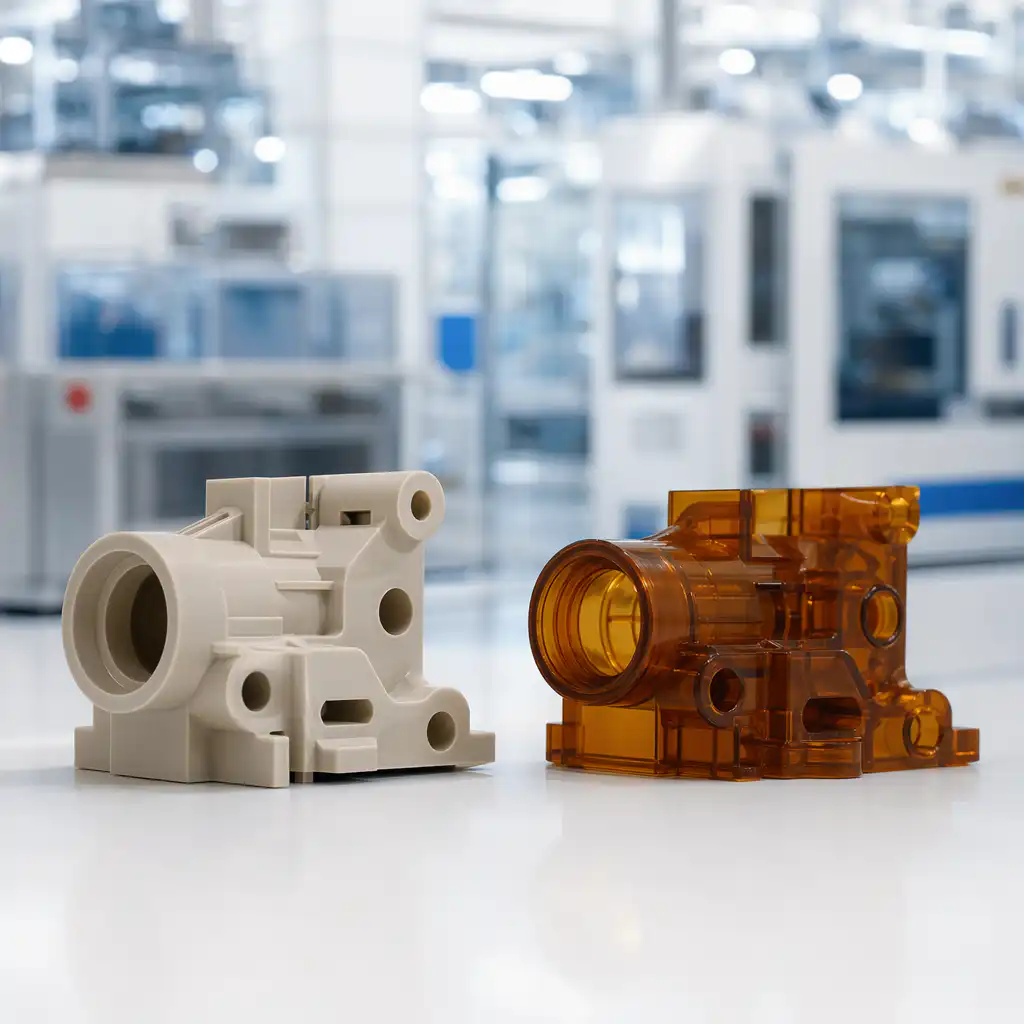
PEEK e PEI (Ultem) are leading high-temperature engineering plastics.
Key Differences
| Imóveis | PEEK | PEI |
|---|---|---|
| Continuous Use Temp | 250°C | 170°C |
| Resistência química | Excelente | Bom |
| Custo | $150-300/kg | $30-60/kg |
FAQ
When is PEEK vs PEI — High-Temperature Engineering Plastics Compared a good option?
PEEK vs PEI — High-Temperature Engineering Plastics Compared is a good option when fast iteration, complex geometry, low tooling cost, or low-volume production is more important than molded-part unit cost.
What should be checked before choosing PEEK vs PEI — High-Temperature Engineering Plastics Compared?
Verificar o tamanho da peça, as propriedades do material, o acabamento da superfície, a tolerância dimensional, a exposição ao calor, a direção da carga e se é necessário pós-processamento.
How does PEEK vs PEI — High-Temperature Engineering Plastics Compared compare with CNC machining?
A impressão 3D pode criar formas complexas rapidamente, enquanto a maquinagem CNC é frequentemente mais forte para superfícies precisas, tolerâncias mais apertadas e materiais de qualidade de produção.
What affects the cost of PEEK vs PEI — High-Temperature Engineering Plastics Compared?
O custo depende do material, do volume de construção, do tempo de impressão, da altura da camada, da remoção do suporte, do acabamento, da inspeção e do número de peças na construção.
PEEK vs PEI — Frequently Asked Questions
Is PEEK stronger than PEI?
At room temperature, PEI has higher tensile strength. PEEK maintains properties better at elevated temperatures.
Where can I source PEEK and PEI materials?
Nylonplastic supplies both materials in rod, sheet, and tube forms.
 English
 Dutch
Dutch German
 French
 Korean
 Russian
 Japanese
 Spanish
 Vietnamese
 Chinese
 Portuguese
 Arabic