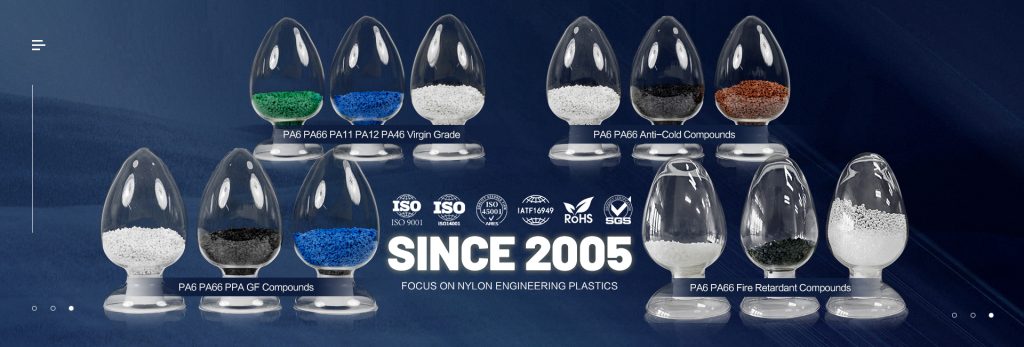

The Case for Recycled Nylon
Engineering plastics have a sustainability problem. Virgin nylon production emits approximately 6–8 kg of CO₂ per kilogram of resin—nearly twice the carbon footprint of commodity plastics like polypropylene. With global nylon production exceeding 8 million metric tons annually, the environmental impact is substantial. Recycled nylon offers a path to maintain nylon’s engineering performance while reducing carbon emissions by 60–80%.
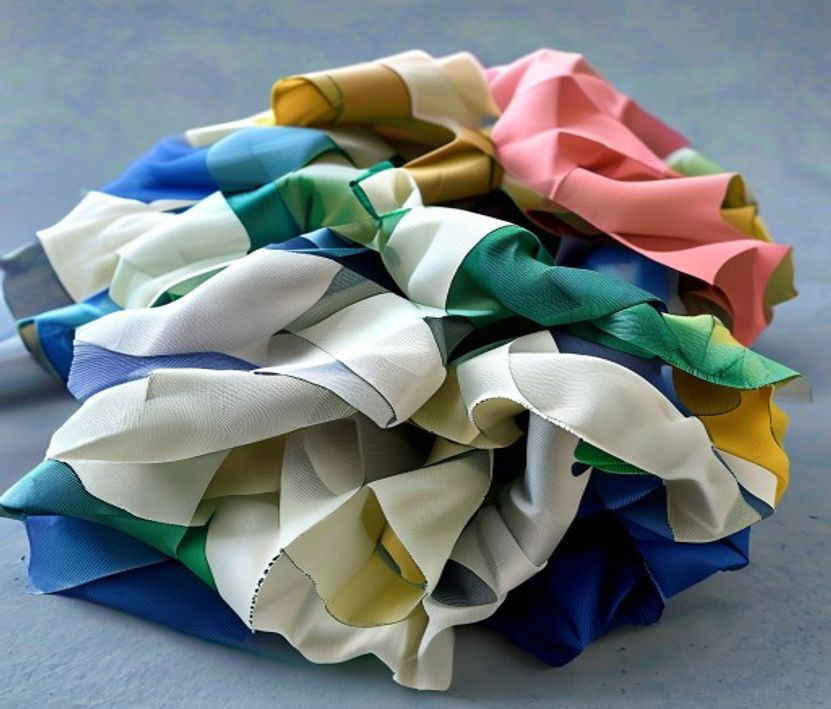
But the conversation has shifted from “is recycled nylon green enough?” to “is recycled nylon good enough?” The answer, increasingly, is yes. Modern recycling technologies—particularly chemical recycling—can produce recycled nylon with properties that rival virgin material. Post-industrial recycled (PIR) nylon fiber waste, carpet yarn, and even post-consumer fishing nets are being transformed into engineering-grade compounds suitable for demanding applications.
Recycling Pathways: Mechanical vs Chemical
| Pathway | 製程 | Quality | CO₂ Reduction | Cost vs Virgin |
|---|---|---|---|---|
| Post-Industrial Mechanical | Grinding, washing, re-compounding of factory scrap and fiber waste | 非常好 | 70–85% | -15 to -30% |
| Post-Consumer Mechanical | Collection, sorting, cleaning, grinding, re-compounding (e.g., fishing nets) | Good–Very Good | 60–75% | -10 to -20% |
| Chemical (Depolymerization) | Breakdown to caprolactam monomer, re-polymerization to virgin-quality PA6 | Equivalent to Virgin | 50–70% | +5 to +20% |
Mechanical Recycling: The Workhorse
Post-industrial mechanical recycling is the most mature and cost-effective pathway. Nylon fiber waste from textile and carpet manufacturing, injection molding sprues and runners, and extrusion trim are collected, ground, and re-compounded—often with stabilizers added to compensate for any degradation during the first processing cycle. PIR nylon frequently delivers 90–100% of virgin property retention because the material has a known, clean history.
Post-consumer mechanical recycling is more challenging. Fishing nets—one of the largest sources of recycled nylon—arrive contaminated with salt, sand, marine growth, and UV-degraded surface layers. Advanced washing, sorting, and filtration technologies are essential to produce engineering-grade material. The resulting compound typically retains 80–95% of virgin properties, sufficient for most non-safety-critical applications.
Chemical Recycling: Virgin-Quality from Waste
Chemical (or “advanced”) recycling breaks nylon down to its caprolactam monomer through depolymerization. The purified monomer is then re-polymerized into PA6 that is chemically identical to virgin material. This process eliminates the gradual property degradation associated with mechanical recycling and can handle mixed-color and contaminated waste streams that mechanical processes reject.
The major players—including BASF (ChemCycling), Aquafil (ECONYL), and Toray—have commercial-scale operations producing chemically recycled nylon for automotive, fashion, and industrial applications. ECONYL nylon, made from rescued fishing nets and carpet waste, is the best-known brand and has been adopted by major automotive OEMs including BMW and Mercedes-Benz for interior components.
Property Comparison: Recycled vs Virgin
| 財產 | Virgin PA6 | PIR PA6 | PCR PA6 (Net) | Chem-Recycled PA6 |
|---|---|---|---|---|
| 拉伸強度 (MPa) | 70-80 | 68–78 | 60–72 | 70-80 |
| 斷裂伸長率 (%) | 50–150 | 40–120 | 20–60 | 50–150 |
| 缺口伊佐德 (kJ/m²) | 5-7 | 4.5–6.5 | 3.5–5.5 | 5-7 |
| Color Options | Unlimited | Good (natural base) | Limited (dark preferred) | Unlimited |
Real-World Applications
- 汽車: BMW i3 and iX use ECONYL recycled nylon for floor mats, headliner fabrics, and interior trim components. Ford uses recycled nylon in engine covers, air intake manifolds, and radiator end tanks.
- 消費性電子產品: Microsoft’s Ocean Plastic Mouse contains 20% recycled ocean plastic, primarily nylon from fishing nets. Dell uses recycled nylon in laptop packaging and components.
- Furniture: Herman Miller’s Aeron chair uses recycled nylon in structural components. The material meets all performance requirements for a chair designed for 24/7 use.
- Fashion: Prada’s Re-Nylon collection uses ECONYL for luxury bags and accessories. Adidas and Stella McCartney have also adopted recycled nylon in performance wear and footwear.
- 工業級: Cable ties, fasteners, conduit, and protective covers are increasingly specified in recycled nylon for applications where certification requirements permit.
Specifying Recycled Nylon: A Practical Approach
When considering recycled nylon for your application, follow this decision framework:
- Safety-critical applications: Stick with virgin or chemically recycled material with full certification. Do not use mechanically recycled post-consumer material for primary safety components.
- Visible/aesthetic parts: Chemically recycled or light-colored PIR material. Post-consumer recycled nylon often carries color inconsistency from mixed waste streams.
- Hidden structural components: PIR recycled nylon is an excellent fit—high property retention, lower cost than virgin, and strong sustainability credentials.
- Consumer-facing products: Consider the marketing value. ECONYL and similar branded recycled materials command consumer recognition and can justify premium pricing.
- Regulated industries: Medical devices and food contact applications require specific regulatory clearances. Engage with your material supplier early to understand what documentation is available.
為何選擇尼龍塑膠滿足您的工程塑膠需求?
- ✅ 300 多台注塑機 從 50T 到 2000T
- ✅ 每天 10,000+ 個零件 產能
- ✅ ±0.02mm 精度 所有材料的公差
- ✅ MOQ 僅 1 件 用於原型設計;可擴充至數百萬
- ✅ 24 小時報價, 3-15 天的交貨時間
- ✅ 通過 ISO 9001 認證的品質管理系統
相關文章
- Engineering Plastic Cost Factors — Buyer’s Guide
- The Complete Guide to Nylon Grades: PA6, PA66, PA11, PA12 and Beyond
- Engineering Plastics Selection Guide: Nylon, POM, PC, and PE
常見問題
How do you know whether Recycled Nylon in Engineering Applications: Performance and Sustainability fits a part?
Recycled Nylon in Engineering Applications: Performance and Sustainability fits a part when its load capacity, temperature range, moisture exposure, wear behavior, and processing method match the real service conditions.
What properties should be checked for Recycled Nylon in Engineering Applications: Performance and Sustainability?
Check strength, stiffness, impact resistance, heat resistance, moisture absorption, dimensional stability, friction, wear, and chemical compatibility.
What is the biggest selection risk for Recycled Nylon in Engineering Applications: Performance and Sustainability?
The biggest risk is choosing from a datasheet value without considering actual environment, processing method, part geometry, and long-term use.
When should Recycled Nylon in Engineering Applications: Performance and Sustainability be tested before production?
Testing is recommended when the part faces load, heat, chemicals, moisture, tight tolerances, regulatory requirements, or a new operating environment.