Einführung in die Konstruktion von Spritzgussformen
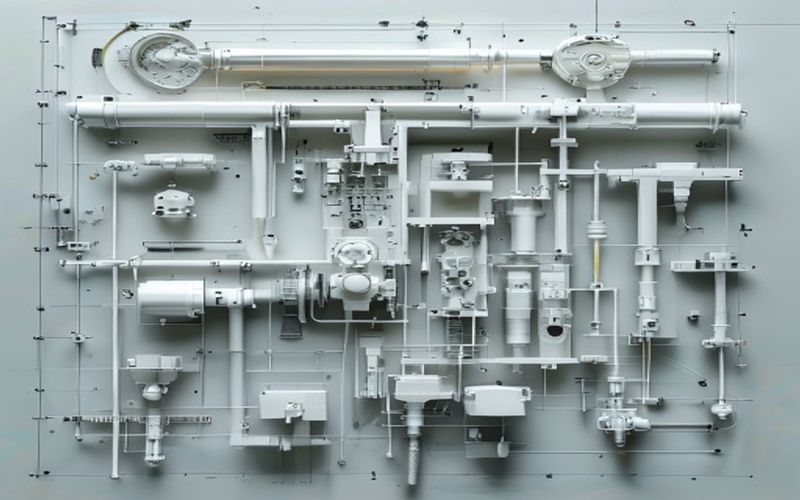
Die Konstruktion von Spritzgusswerkzeugen ist die Grundlage für eine erfolgreiche Herstellung von Kunststoffteilen. Eine gut konzipierte Form gewährleistet eine gleichbleibende Teilequalität, effiziente Produktionszyklen und eine lange Lebensdauer der Form. Dieser Leitfaden behandelt die wesentlichen Grundsätze, die jeder Ingenieur verstehen sollte.
1. Gleichmäßige Wanddicke
Beim Spritzgießen ist es wichtig, eine gleichmäßige Wandstärke beizubehalten. Abweichungen verursachen eine unterschiedliche Abkühlung, was zu Verzug, Einfallstellen und inneren Spannungen führt.
Empfohlene Wandstärken nach Material
| Material | Empfohlene Dicke (mm) |
|---|---|
| ABS | 1.2 - 3.5 |
| PP | 0.8 - 3.8 |
| PC | 1.0 - 3.8 |
| Nylon (PA6/PA66) | 0.8 - 3.0 |
| POM | 1.0 - 3.0 |
2. Entwurfswinkel für die Teilfreigabe
Entformungswinkel ermöglichen eine saubere Entformung der Formteile aus dem Formhohlraum. Ohne ausreichenden Luftzug können die Teile verkleben, was zu Defekten und Formschäden führen kann.
- Minimaler Tiefgang: 0,5° - 1° für glatte Oberflächen
- Strukturierte Oberflächen: 2° - 5° je nach Texturtiefe
- Tiefe Merkmale: Verzug erhöhen, um Materialschwund auszugleichen
3. Korrektes Rippen-Design
4. Gate-Standort-Strategie
Die Platzierung des Anschnitts beeinflusst das Füllmuster, die Schweißlinien und das Aussehen des Teils. Berücksichtigen Sie:
- Durchflusslänge: Minimieren, um den Druckabfall zu reduzieren
- Platzierung der Schweißnaht: Position in unkritischen Bereichen
- Erscheinungsbild: Verstecken Sie die Tore nach Möglichkeit in nicht sichtbaren Bereichen.
- Teilfunktion: Vermeiden Sie Tore in der Nähe von tragenden Elementen
5. Design des Kühlsystems
Effiziente Kühlung reduziert die Zykluszeit und verbessert die Qualität der Teile. Wichtige Überlegungen:
- Gleichmäßiger Abstand der Kühlkanäle (2-3× Kanaldurchmesser)
- Schikanen und Bubbler für tiefe Kerne
- Konforme Kühlung für komplexe Geometrien
- Angemessener Wasserdurchfluss (turbulentes Strömungsregime)
Zu vermeidende häufige Design-Fehler
- Hinterschneidungen ohne geeigneten Mechanismus (Heber, Schlitten)
- Scharfe Innenecken verursachen Spannungskonzentrationen
- Unzureichende Entlüftung führt zu Verbrennungen und kurzen Schüssen
- Nichtberücksichtigung von Materialschwund bei Maßberechnungen
Schlussfolgerung
Die Befolgung dieser Grundsätze für die Konstruktion von Spritzgießwerkzeugen gewährleistet herstellbare Teile mit gleichbleibender Qualität. Eine frühzeitige Zusammenarbeit zwischen Produktdesignern und Formenbauern verhindert spätere kostspielige Änderungen.
Verwandte Ressourcen
- CNC-Bearbeitung von Nylon
- 3D-Druck für Prototyping und Produktion
- Leitfaden zur Auswahl von Kunststoffmaterialien
- Kostenfaktoren für technische Kunststoffe
- PEEK vs. PEI Vergleich
Verwandte Ressourcen
- CNC-Bearbeitung von Nylon
- 3D-Druck für Prototyping und Produktion
- Leitfaden zur Auswahl von Kunststoffmaterialien
- Kostenfaktoren für technische Kunststoffe
- PEEK vs. PEI Vergleich
Verwandte Ressourcen
- CNC-Bearbeitung von Nylon
- 3D-Druck für Prototyping und Produktion
- Leitfaden zur Auswahl von Kunststoffmaterialien
- Kostenfaktoren für technische Kunststoffe
- PEEK vs. PEI Vergleich
FAQ
When does Injection Mold Design Principles — Building Quality Molds from the Ground Up make sense?
Injection Mold Design Principles — Building Quality Molds from the Ground Up makes sense when the part volume, material choice, geometry, and repeatability needs justify mold design and tooling investment.
What design factors matter most for Injection Mold Design Principles — Building Quality Molds from the Ground Up?
Wall thickness, ribs, bosses, draft angle, gate location, shrinkage, parting line, and ejection all affect molded part quality.
What information is needed before mold production?
The supplier should confirm the 3D model, material, expected annual volume, appearance requirements, tolerance needs, and any assembly or functional testing requirements.
What is the biggest risk in Injection Mold Design Principles — Building Quality Molds from the Ground Up?
The biggest risk is approving tooling before material behavior, shrinkage, flow, and part function are fully checked against the real application.