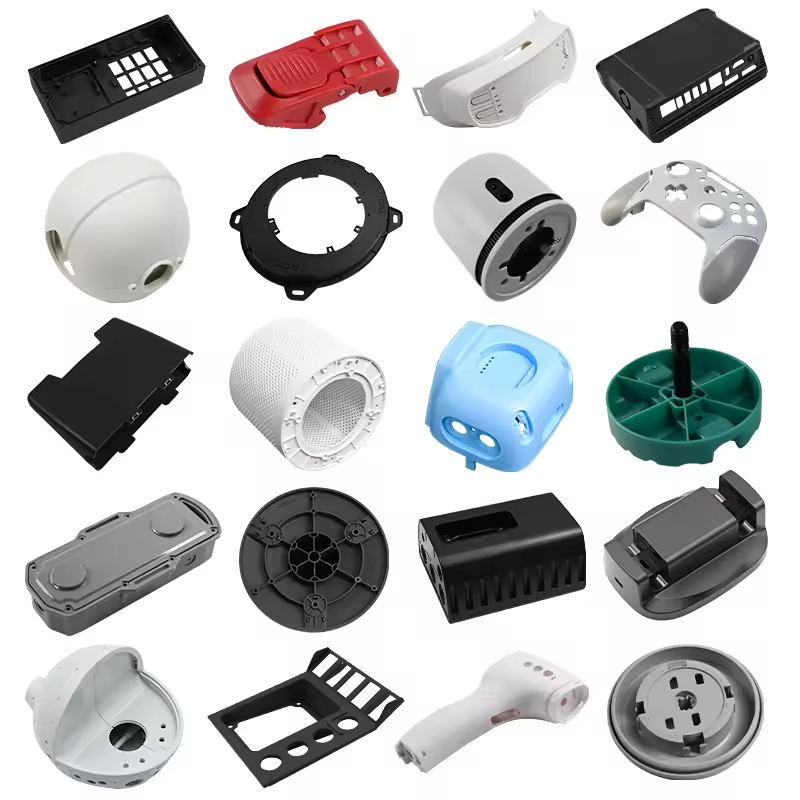
Inleiding tot het ontwerpen van spuitgietmatrijzen
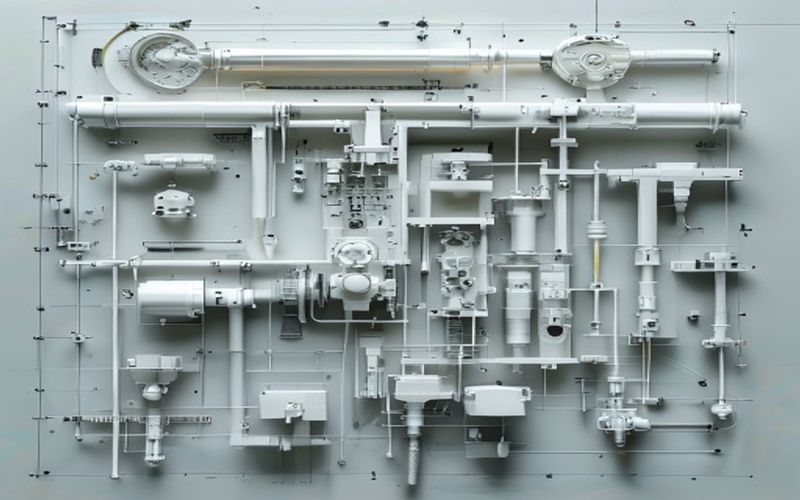
Het ontwerp van een spuitgietmatrijs is de basis voor de succesvolle productie van kunststof onderdelen. Een goed ontworpen matrijs garandeert een consistente productkwaliteit, efficiënte productiecycli en een lange levensduur van de matrijs. Deze gids behandelt de essentiële principes die elke ingenieur moet begrijpen.
1. Uniforme wanddikte
Een consistente wanddikte is essentieel bij spuitgieten. Variaties veroorzaken verschillende koeling, wat leidt tot kromtrekken, zinkvlekken en inwendige spanningen.
Aanbevolen wanddikte per materiaal
| Materiaal | Aanbevolen dikte (mm) |
|---|---|
| ABS | 1.2 - 3.5 |
| PP | 0.8 - 3.8 |
| PC | 1.0 - 3.8 |
| Nylon (PA6/PA66) | 0.8 - 3.0 |
| POM | 1.0 - 3.0 |
2. Ontwerphoeken voor het vrijgeven van onderdelen
Dankzij trekhoeken kunnen spuitgietproducten netjes uit de matrijsholte komen. Zonder voldoende trek kunnen onderdelen blijven kleven en defecten en schade aan de matrijs veroorzaken.
- Minimale diepgang: 0,5° - 1° voor gladde oppervlakken
- Oppervlakken met structuur: 2° - 5° afhankelijk van textuurdiepte
- Diepe functies: Verhoog de trekkracht om materiaalkrimp te compenseren
3. Juist ribontwerp
4. Strategie voor poortlocatie
De plaatsing van de poort beïnvloedt het vulpatroon, de laslijnen en het uiterlijk van het onderdeel. Overweeg:
- Stromingslengte: Minimaliseren om drukval te verminderen
- Plaatsing van laslijnen: Positie in niet-kritieke gebieden
- Uiterlijk: Verberg waar mogelijk hekken in niet-zichtbare ruimtes
- Deelfunctie: Vermijd hekken in de buurt van dragende elementen
5. Ontwerp koelsysteem
Efficiënt koelen verkort de cyclustijd en verbetert de kwaliteit van de werkstukken. Belangrijkste overwegingen:
- Gelijkmatige afstand tussen koelkanalen (2-3× kanaaldiameter)
- Baffles en bubblers voor diepe kernen
- Conformale koeling voor complexe geometrieën
- Juiste waterstroomsnelheid (turbulent stromingsregime)
Veelvoorkomende ontwerpfouten die je moet vermijden
- Ondersnijdingen zonder goed mechanisme (hefarmen, geleiders)
- Scherpe interne hoeken die spanningsconcentratie veroorzaken
- Onvoldoende ontluchting leidt tot verbranding en korte schoten
- Het negeren van materiaalkrimp in maatberekeningen
Conclusie
Het volgen van deze ontwerpprincipes voor spuitgietmatrijzen zorgt voor produceerbare onderdelen met een consistente kwaliteit. Vroegtijdige samenwerking tussen productontwerpers en matrijsingenieurs voorkomt dure aanpassingen achteraf.
Verwante bronnen
- CNC Bewerking Nylon
- 3D printen voor prototyping vs productie
- Selectiegids voor kunststof materialen
- Technische plastic kostenfactoren
- Vergelijking PEEK vs PEI
Verwante bronnen
- CNC Bewerking Nylon
- 3D printen voor prototyping vs productie
- Selectiegids voor kunststof materialen
- Technische plastic kostenfactoren
- Vergelijking PEEK vs PEI
Verwante bronnen
- CNC Bewerking Nylon
- 3D printen voor prototyping vs productie
- Selectiegids voor kunststof materialen
- Technische plastic kostenfactoren
- Vergelijking PEEK vs PEI
FAQ
When does Injection Mold Design Principles — Building Quality Molds from the Ground Up make sense?
Injection Mold Design Principles — Building Quality Molds from the Ground Up makes sense when the part volume, material choice, geometry, and repeatability needs justify mold design and tooling investment.
What design factors matter most for Injection Mold Design Principles — Building Quality Molds from the Ground Up?
Wall thickness, ribs, bosses, draft angle, gate location, shrinkage, parting line, and ejection all affect molded part quality.
What information is needed before mold production?
The supplier should confirm the 3D model, material, expected annual volume, appearance requirements, tolerance needs, and any assembly or functional testing requirements.
What is the biggest risk in Injection Mold Design Principles — Building Quality Molds from the Ground Up?
The biggest risk is approving tooling before material behavior, shrinkage, flow, and part function are fully checked against the real application.