
Multi-Material Molding Overview

Multi-material molding combines different materials in a single part to achieve functional or aesthetic benefits. Two-shot molding and overmolding are the primary techniques, each with distinct advantages.
Two-Shot Molding
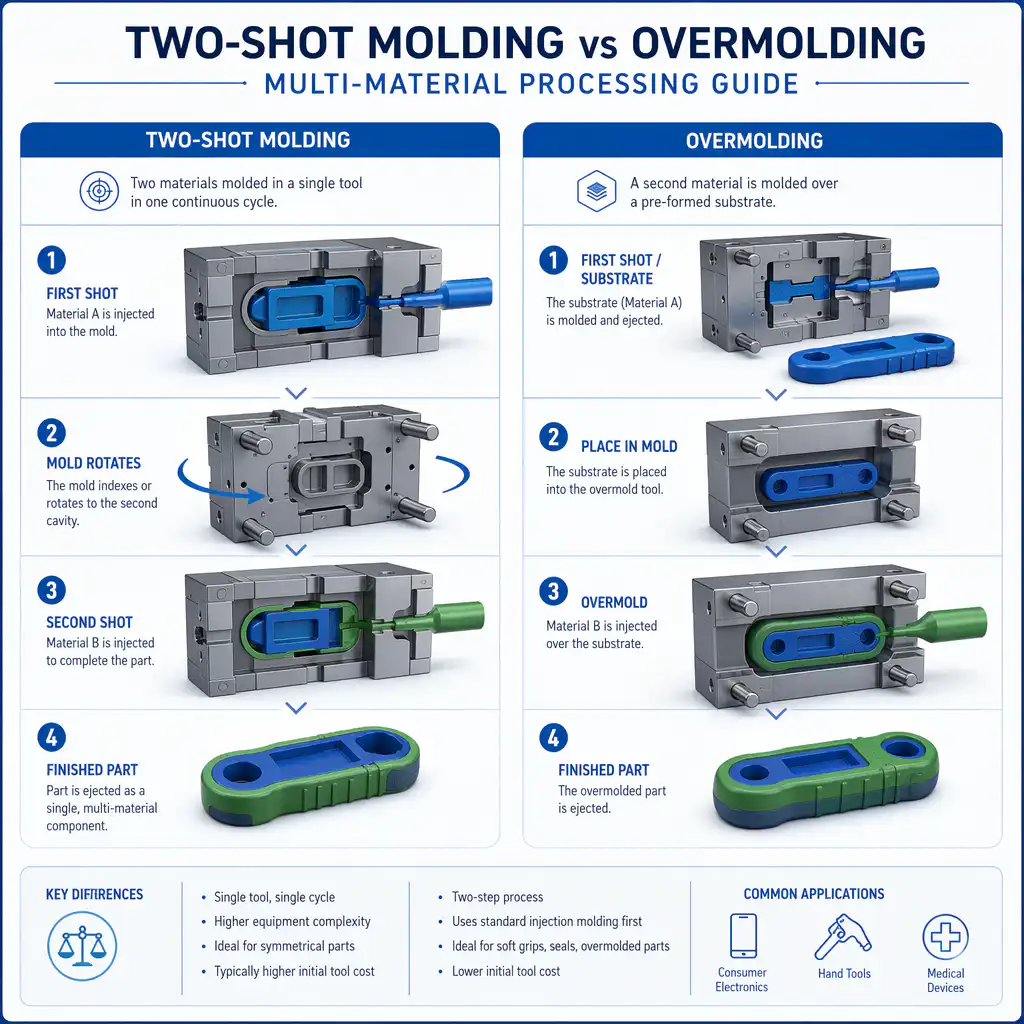
Two-shot molding (also called 2K molding or multi-component molding) injects two different materials in a single molding cycle using a specialized machine with two injection units.
Prozessbeschreibung
- First material injected into mold cavity
- Mold rotates or transfers to second position
- Second material injected over or alongside first
- Part ejected as complete unit
Advantages
- Excellent material bonding (chemical bond possible)
- High precision and repeatability
- Single cycle production
- Design flexibility for complex geometries
- Reduced labor and handling
Disadvantages
- Higher machine and tooling cost
- Requires specialized equipment
- Less flexibility for design changes
- Longer tooling lead time
Overmolding
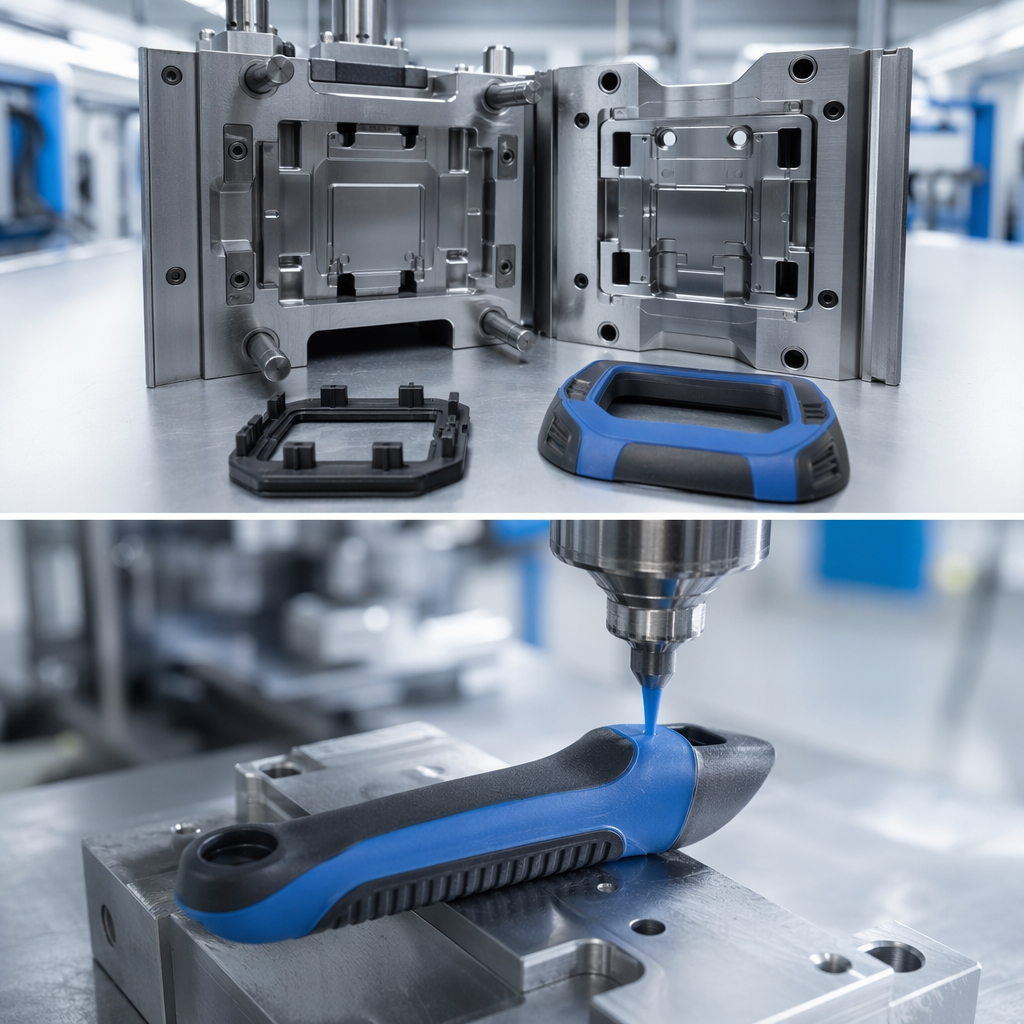
Overmolding uses two separate molding cycles. A substrate part is molded first, then placed in a second mold where additional material is injected over it.
Prozessbeschreibung
- Substrate molded in first mold
- Substrate placed in second mold
- Second material injected over substrate
- Completed part ejected
Advantages
- Lower equipment cost
- Can use standard injection machines
- More design flexibility
- Easier to change colors/materials
- Suitable for lower volumes
Disadvantages
- Requires two molding cycles
- Additional handling and labor
- Bond quality depends on mechanical interlock
- Higher per-part cost at high volumes
Material Compatibility
Anwendungen
Two-Shot Molding:
- Automotive interior components
- Medical devices with soft grips
- Consumer electronics buttons and keys
- Sealed enclosures with gaskets
Overmolding:
- Tool handles and grips
- Encapsulated electronics
- Cable connectors
- Product branding and logos
Decision Factors
- Volume: High volume favors two-shot; low volume favors overmolding
- Bond requirements: Chemical bond needs two-shot
- Budget: Overmolding has lower upfront costs
- Ausrüstung: Two-shot requires specialized machines
Schlussfolgerung
Both techniques produce multi-material parts successfully. Evaluate production volume, bond requirements, and available equipment to determine the best approach.
Verwandte Ressourcen
- Nylon Printing Temperature Guide
- CNC-Bearbeitung von Nylon
- 3D-Druck für Prototyping und Produktion
- Leitfaden zur Auswahl von Kunststoffmaterialien
- Kostenfaktoren für technische Kunststoffe
FAQ
When does Two-Shot Molding vs Overmolding — Multi-Material Processing Guide make sense?
Two-Shot Molding vs Overmolding — Multi-Material Processing Guide makes sense when the part volume, material choice, geometry, and repeatability needs justify mold design and tooling investment.
What design factors matter most for Two-Shot Molding vs Overmolding — Multi-Material Processing Guide?
Wall thickness, ribs, bosses, draft angle, gate location, shrinkage, parting line, and ejection all affect molded part quality.
What information is needed before mold production?
The supplier should confirm the 3D model, material, expected annual volume, appearance requirements, tolerance needs, and any assembly or functional testing requirements.
What is the biggest risk in Two-Shot Molding vs Overmolding — Multi-Material Processing Guide?
The biggest risk is approving tooling before material behavior, shrinkage, flow, and part function are fully checked against the real application.

 English
 Dutch
Dutch German
 French
 Korean
 Russian
 Japanese
 Spanish
 Vietnamese
 Chinese
 Portuguese
 Arabic