I’ve seen it happen a hundred times. An engineer stares at two spec sheets — 6061 on the left, 7075 on the right — and their brain locks up. Both are aluminum. Both machine well. Both show up in every CNC shop on Earth. But pick the wrong one for your application and you’ll either overpay for strength you don’t need, or worse, have a part crack where it shouldn’t.
The “which aluminum” question isn’t academic. It shows up on the shop floor every week: a bike frame designer who thinks he needs 7075 (he doesn’t), a drone bracket that actually does need it, a marine fitting where 6061 would have lasted — if only they’d specified the right temper.
Let’s walk through what actually matters. No metallurgy lectures. Just the stuff you need to make a call and keep your project moving.
Core Concepts: What 6061 and 7075 Actually Are
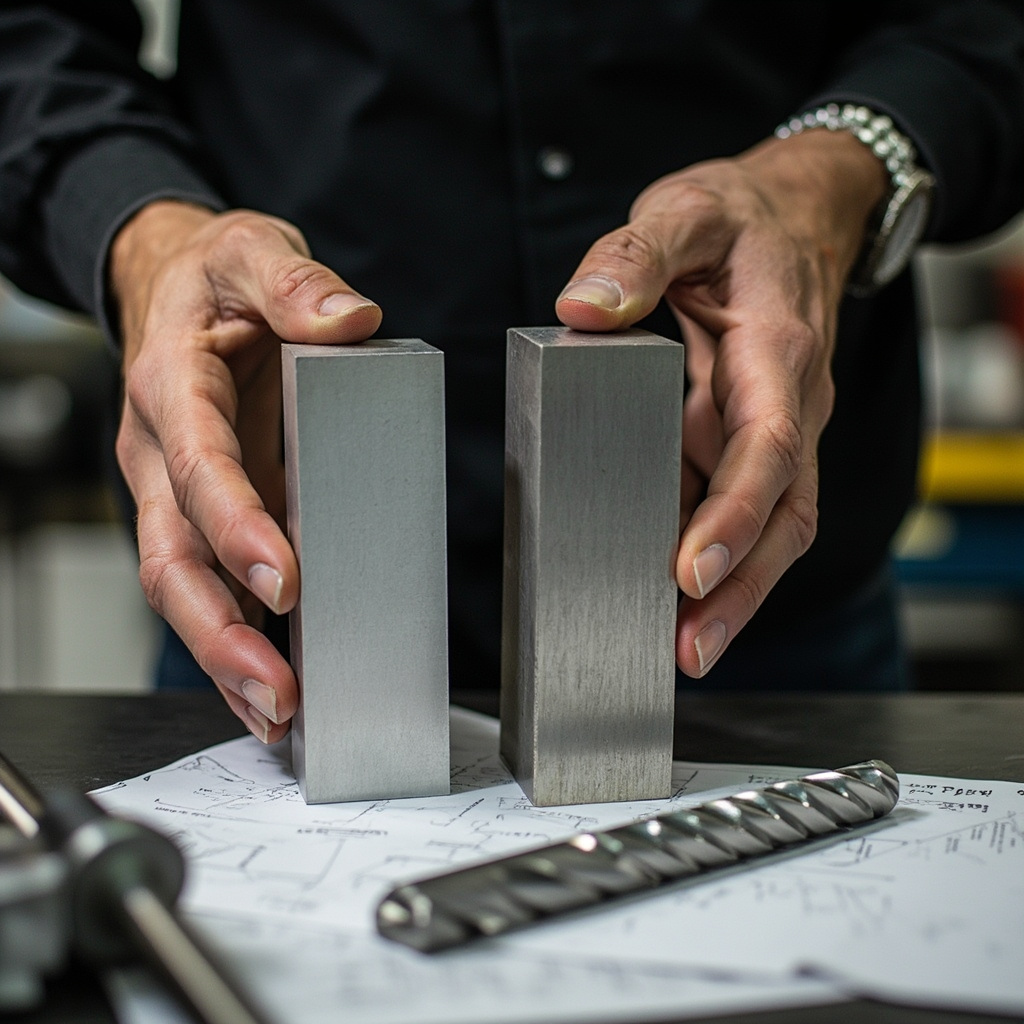
Both 6061 and 7075 are heat-treatable aluminum alloys. That’s important: you can make them harder by baking them in an oven. But that’s about where the similarities end, because they belong to entirely different alloy families.
6061 aluminum is a 6000-series alloy — meaning magnesium and silicon are the main alloying elements. It’s the Swiss Army knife of aluminum. Good at everything, best at nothing. You’ll find it in bicycle frames, yacht masts, structural tubing, and about half of everything that comes out of a CNC shop. At T6 temper (the most common heat treatment), 6061 hits around 45,000 psi ultimate tensile strength.
7075 aluminum is a 7000-series alloy — the primary alloying element is zinc. It’s what you spec when 6061 just isn’t strong enough. At T6 temper, 7075 delivers roughly 83,000 psi ultimate tensile strength — nearly double 6061. That puts it in the same conversation as some mild steels, but at one-third the weight. The catch? It costs more, it’s harder on tooling, and it doesn’t weld worth a damn.
Here’s the thing most guides won’t tell you: the temper designation matters almost as much as the alloy number. 6061-T6 and 6061-T651 behave differently. 7075-T6 and 7075-T7351 are not interchangeable. We’ll get into that.
The short version you need right now: 6061 = versatility and cost-effectiveness. 7075 = strength at any reasonable price. Everything else is nuance — but nuance is where parts fail.
Key Processes & Technologies: How Each Grade Machines
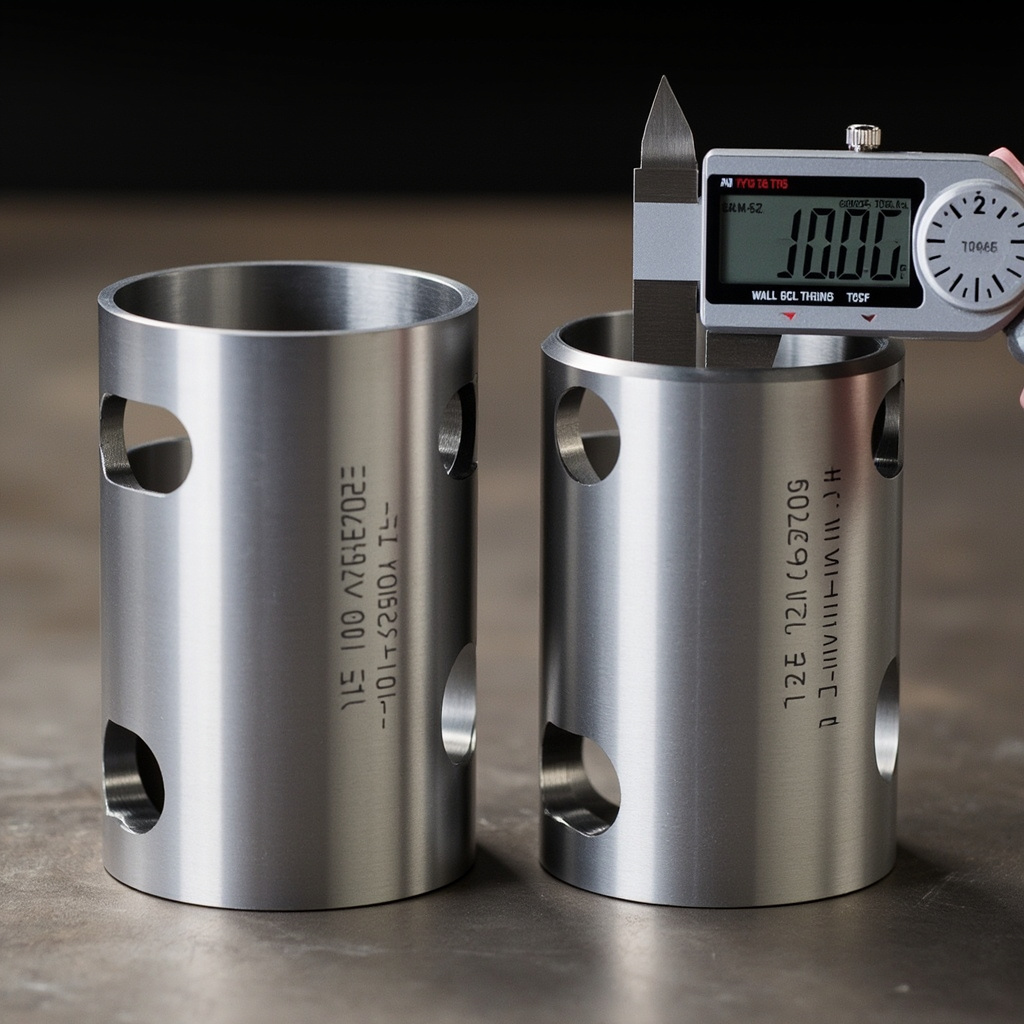
Both alloys are considered “good” for CNC machining, but “good” means different things depending on what you’re doing. Let me break down how each grade actually behaves when the spindle’s turning.
| Property | 6061-T6 | 7075-T6 | What It Means on the Floor |
|---|---|---|---|
| Machinability Rating | 50% (relative to brass) | 70% (relative to brass) | 7075 cuts cleaner — chips break better, less BUE on the tool. But it’s harder, so tool wear goes up. |
| Ultimate Tensile Strength | 45,000 psi (310 MPa) | 83,000 psi (572 MPa) | 7075 is nearly 2× stronger. If your part takes structural loads, this matters. |
| Yield Strength | 40,000 psi (276 MPa) | 73,000 psi (503 MPa) | 7075 resists permanent deformation much better. Important for fasteners and load-bearing joints. |
| Hardness (Brinell) | 95 HB | 150 HB | 7075 is harder — better wear resistance, but more abrasive on HSS tooling. Carbide is your friend. |
| Corrosion Resistance | Excellent | Poor to Fair | 6061 wins hands-down in wet/salty environments. 7075 will pit and corrode without coating. |
| Weldability | Excellent (TIG/MIG) | Poor — generally not recommended | 6061 welds beautifully. 7075 is prone to hot cracking. If you need to weld, skip 7075. |
| Anodizing Quality | Excellent — takes color evenly | Fair — can appear darker, uneven | 6061 anodizes beautifully for cosmetic parts. 7075 works for hard anodize but expect a duller finish. |
| Surface Finish (As-Machined) | Good — slight tearing possible | Excellent — chips shear cleanly | 7075 can actually give you a better as-machined finish because chips evacuate better. |
| Material Cost (Relative) | 1.0× (baseline) | 1.5–2.0× | 7075 billet costs noticeably more. For large blocks, the price gap widens fast. |
| Density | 2.70 g/cm³ | 2.81 g/cm³ | Essentially identical for weight-sensitive designs. |
Surface finishing note: 6061-T6 takes Type II (decorative) anodizing beautifully — you get vibrant, consistent colors and a smooth finish. 7075, because of its zinc content, anodizes to a darker, duller tone. If your part is cosmetic, 6061 is the pick. If you need hardcoat (Type III) anodizing for wear resistance, both work — but 7075 with hardcoat gives you a seriously tough exterior on an already-strong core.
Industrial Applications: Who’s Using What
| Industry | Application | Material | Key Requirement | nylonplastic.com Advantage |
|---|---|---|---|---|
| Aerospace | Wing ribs, fuselage frames, bulkheads | 7075-T6 / 7075-T7351 | Maximum strength-to-weight ratio; fatigue resistance | Tight-tolerance CNC machining with aerospace-grade QA — we hold ±0.005mm on structural components |
| Automotive | Suspension control arms, engine brackets | 6061-T6 | Good strength + corrosion resistance + weldability | Cost-optimized production runs with in-house anodizing for corrosion-prone under-hood parts |
| Medical | Surgical instrument handles, device chassis | 6061-T6 (anodized) | Biocompatible surface, autoclave tolerance | Precision machining with validated surface finishing for medical-grade cleanliness |
| Electronics | Heat sinks, RF enclosures, server chassis | 6061-T6 | Thermal conductivity, EMI shielding, surface quality | High-volume CNC with tight flatness specs — plus black anodize for thermal and aesthetic |
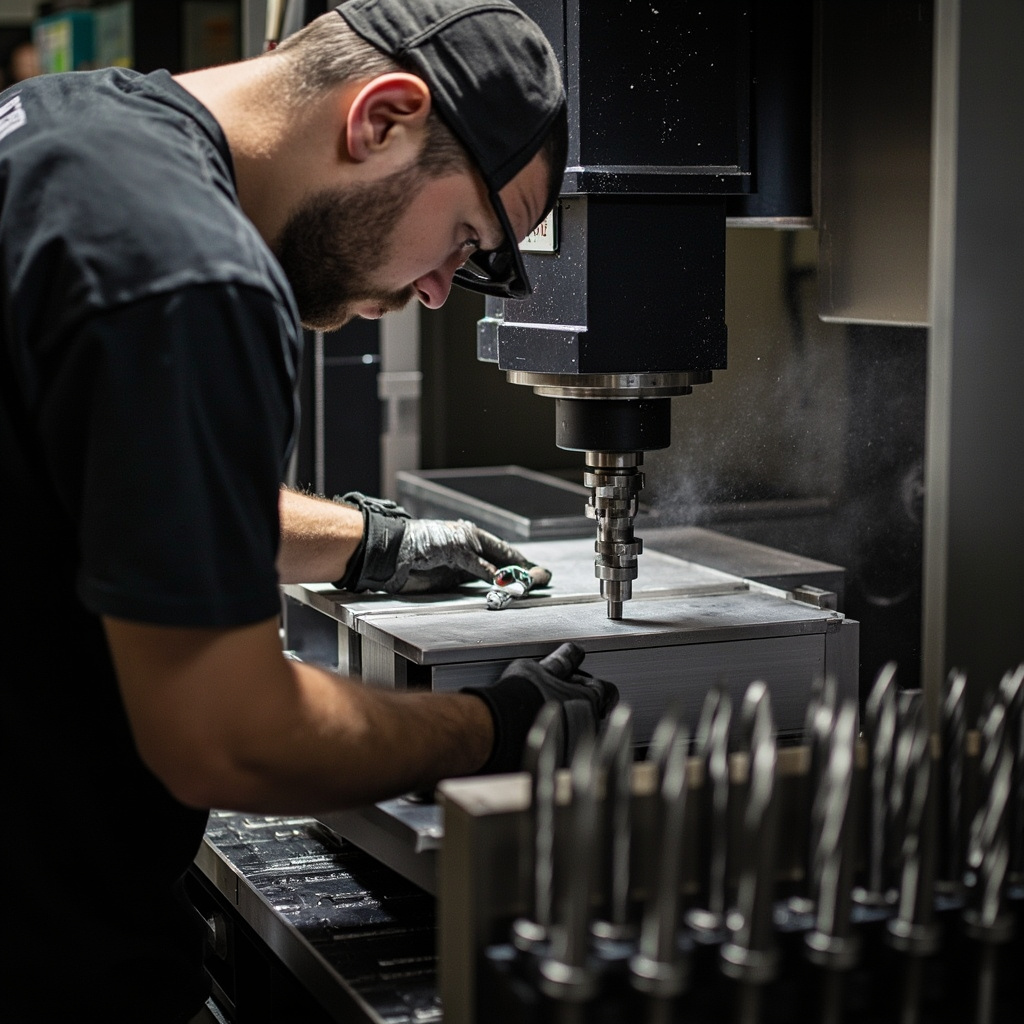
| Robotic Automation | End-effector arms, structural links, joint housings | 7075-T6 | High stiffness, low weight, fatigue life under cyclic loads | Multi-axis machining of complex geometries — we handle thin-wall 7075 parts that other shops won’t touch |
| Industrial Equipment | Pump housings, valve bodies, mounting plates | 6061-T6 | Corrosion resistance, moderate strength, cost | Rapid prototyping through production — same machine, same process, consistent results |
| Defense / Small Arms | Receiver components, scope mounts, rail systems | 7075-T6 | Impact resistance, dimensional stability | Mil-spec capable with full material traceability and certification packages |
Material Selection: What Actually Works in the Real World
Here’s my rule of thumb, born from years of seeing what works and what comes back: pick 6061 unless you have a specific reason to pick 7075.
That sounds backwards — shouldn’t you want the stronger one? No, and here’s why: 6061 is cheaper, easier to machine with standard tooling, welds, anodizes beautifully, and handles corrosion without needing extra coatings. It covers 80% of mechanical applications without breaking a sweat.
7075 is a specialist. You spec it when:
- Strength is non-negotiable. Your part takes high cyclic loads (robotic arms, aircraft structure).
- You need steel-level strength at aluminum weight. Think drone frames, competition bicycle components, climbing gear.
- Stiffness matters more than toughness. 7075’s higher modulus means less deflection under load.
- You’re competing with titanium. At roughly 1/10th the material cost of Ti-6Al-4V with 80% of the strength-to-weight, 7075 is often the smarter engineering choice.
Don’t pick 7075 if: your part gets welded, lives in saltwater, needs bright anodized colors, or is price-sensitive. 6061 does all of those better. I’ve seen startups blow their budget on 7075 when 6061 would have been more than adequate — that extra strength sat unused while the corrosion issues showed up six months later.
One more thing: temper matters. If you’re machining 7075 and then having it welded (which I just told you not to do, but some people insist), you need to re-heat-treat to recover strength. 7075-T7351 gives you better stress corrosion cracking resistance than 7075-T6, at the cost of about 10% strength. It’s the go-to for thick aircraft structural parts. Meanwhile, 6061-T651 is stress-relieved by stretching, which means less warping when you machine it — worth the slight cost bump for thin or long parts.
Cost & Performance Trade-offs
Let’s talk money, because nobody’s budget is unlimited.
Raw material: 7075 billet runs about 1.5× to 2× the price of equivalent 6061 stock. For a small bracket, that’s maybe $5–10 more. For a 12″ × 12″ × 3″ plate, you’re looking at a real difference — potentially hundreds of dollars per part at prototype quantities.
Machining cost: Here’s where it gets interesting. 7075 actually machines faster — the chips break clean, you can push higher feeds, and surface finish comes out nicer. So the per-part cycle time on 7075 can be shorter. But you’ll burn through carbide end mills faster, and you absolutely need carbide — HSS will dull in minutes on 7075. Net-net, machining cost is usually a wash or slightly higher for 7075 depending on geometry.
Post-processing: 6061 wins on anodizing cost and quality. For a bright red or blue cosmetic finish, 6061 is the only real option. 7075 with hardcoat anodize for wear parts (pistons, sliding components) works great, but expect to pay more and communicate your color expectations clearly — it won’t look the same.
The bottom line: On a simple part, going 7075 over 6061 might add 20–40% to your total part cost. On a complex part with lots of , the difference narrows. Always ask yourself: Am I buying strength I’ll actually use? If the answer is no — buy 6061 and spend the savings on better surface finishing or tighter tolerances.
Quality Standards & Best Practices
When you’re ordering CNC-machined aluminum parts, the alloy is one variable — how it’s made is another. Here’s what to specify and look for:
- Material certs. Ask for mill test reports (MTRs) if traceability matters. Aerospace and medical customers — this isn’t optional. A legitimate shop can trace every block back to the heat lot.
- Temper verification. 6061-T6 isn’t the same as 6061-O (annealed). If someone machines your part from the wrong temper — or worse, the wrong alloy — you won’t know until it fails. A reputable shop verifies incoming material.
- Grain direction. For structural 7075 parts (especially in fatigue-critical applications), grain direction relative to load matters. It’s worth a conversation with your machinist. Specifying L, LT, or ST orientation on the drawing prevents surprises.
- Post-machining stress relief. Thin-wall 7075 parts can warp after machining as internal stresses release. 7075-T7351 helps, but sometimes you need a post-machining stress-relief cycle. Don’t assume — ask.
- standards. Know what you need: first article (FAI), in-process checks, or 100% . For 7075 aerospace parts, FAI per AS9102 is standard practice.
One shop-floor reality: 6061 is forgiving. If speeds and feeds are slightly off, you’ll get a mediocre surface finish but the part will work. 7075 is less tolerant of sloppy setups — chatter, tool deflection, and workholding matter more. That’s why you want a shop that cuts both materials regularly, not one that “does aluminum” generically.
Getting Started: Practical Steps
- Define your hard requirements. What loads does the part see? What environment? Does it weld? Does it need to look good? Answer these honestly before you open a material spec sheet.
- Default to 6061-T6. It’s the right answer more often than not. Only escalate to 7075 when you have a concrete reason.
- Send us your drawing (or napkin sketch). We’ll give you a straight recommendation based on your geometry, loads, environment, and budget. No sales pitch — just engineering reality. Use our Material Selection Hub to explore more options.
- Consider finishing early. Don’t design the part and then ask “what coating should I put on this?” If corrosion is a risk, plan for anodizing or chem-film from the start — it affects tolerances.
- Prototype first. For high-volume production, run 5–10 pieces in your chosen material before committing. The shop-floor reality of 7075 thin-wall machining might surprise you — better to learn at 10 parts than 10,000.
If you’re still uncertain, our one-stop manufacturing solution covers everything from material selection through finishing.
Conclusion
6061 and 7075 aren’t competitors — they’re different tools for different jobs. 6061 is your workhorse: versatile, corrosion-resistant, weldable, and cost-effective. It’s the right aluminum for probably 80% of the parts that cross a CNC shop bench. 7075 is your specialist: nearly twice as strong, machines beautifully, but costs more and demands respect — no welding, plan for coating, and be deliberate about temper selection.
The mistake I see most often? Choosing 7075 because “I want the best.” Stronger doesn’t always mean better. Sometimes it means a part that costs 40% more and corrodes in six months. Sometimes it’s exactly what the application demands. The difference is knowing which situation you’re in.
When in doubt, talk to the people who cut both every day. That’s what we’re here for.
Ready to Machine Your Aluminum Parts?
Whether you’re going with 6061, 7075, or still deciding, we machine both every single day. Send us your drawing and we’ll give you an honest material recommendation — no upselling, no guesswork. From single prototypes to production runs, we’ve got the machines, the tooling, and the experience to get your parts right the first time. Start your project →
FAQ
How should buyers evaluate 6061 vs 7075 Aluminum: Which Grade Actually Fits Your Parts??
6061 vs 7075 Aluminum: Which Grade Actually Fits Your Parts? should be evaluated by matching strength, corrosion resistance, heat exposure, machinability, finishing requirements, and certification needs to the operating environment.
What properties matter most for 6061 vs 7075 Aluminum: Which Grade Actually Fits Your Parts??
The most important properties usually include strength, hardness, ductility, corrosion resistance, thermal behavior, machinability, and surface treatment compatibility.
What information helps select the right metal grade?
Application load, environment, temperature, contact materials, required finish, production process, and applicable standards all help narrow the grade choice.
What is a common mistake when choosing 6061 vs 7075 Aluminum: Which Grade Actually Fits Your Parts??
A common mistake is choosing by strength alone while ignoring corrosion, forming, machining, welding, finishing, or long-term service conditions.
Related Reading
- CNC Machining Services — From Prototype to Production
- CNC Machining Materials Guide — Complete Selection Reference
- Surface Finishing Options — Anodizing, Coating & More
- Product Design for Manufacturing — DFM Best Practices
- Aluminum CNC Machining: Grades, Speeds, and What Actually Works
- What is CNC Machining? How It Actually Works in Modern Manufacturing — Practical Guide
- CNC Milling Services: 3-Axis vs 5-Axis and What Your Parts Actually Need