


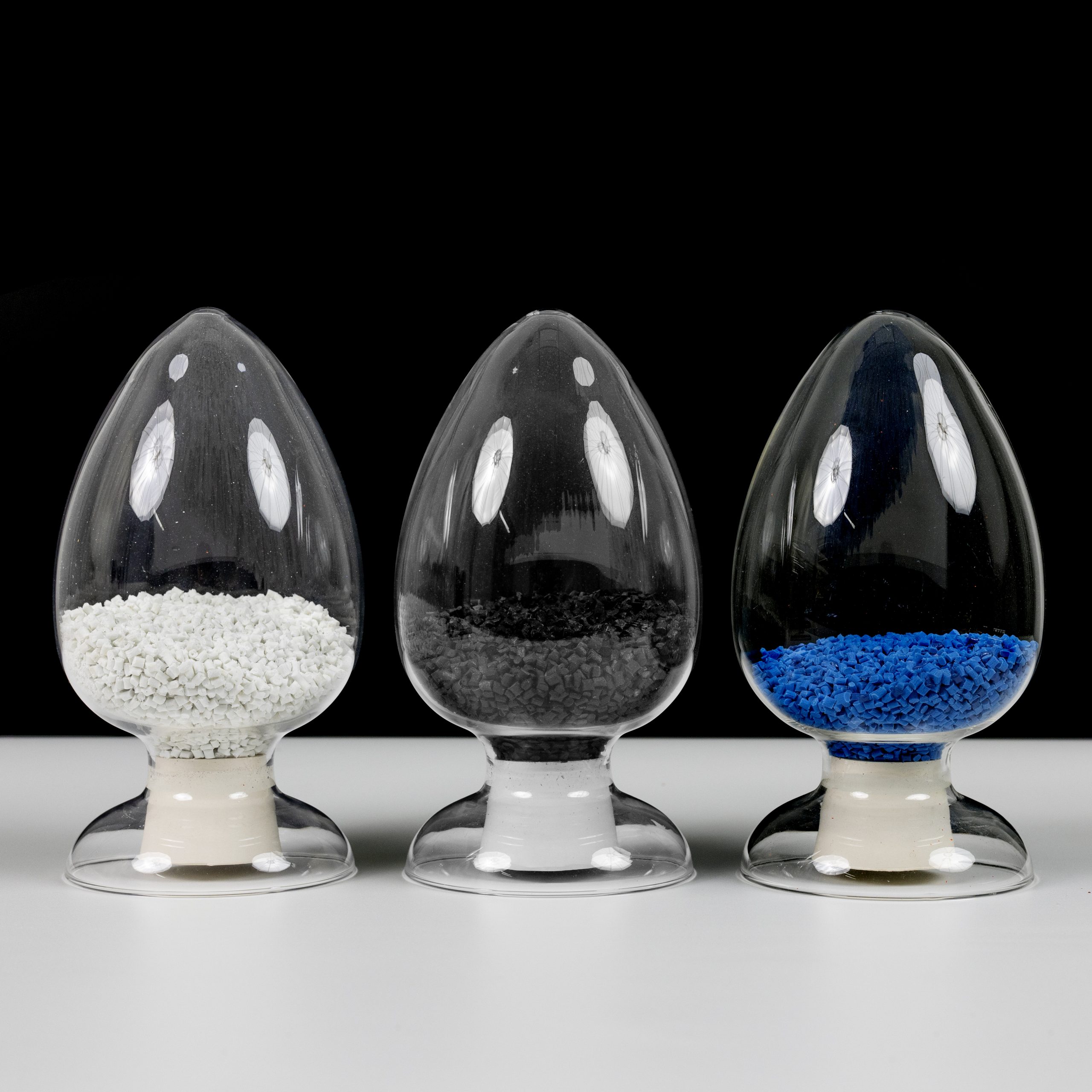
PBT GF30 Material Selection and TDS Request
PBT GF30 identifies polybutylene terephthalate reinforced with 30% glass fiber. The designation describes a material family; the exact formulation determines mechanical, thermal, electrical and processing data. Review the selected grade before approving material for a component.
Request a PBT GF30 TDS and Material Recommendation. Send the application, color, operating conditions and required documents. CAD and a confirmed order quantity are not required for an initial material inquiry; include usage if known.
PBT GF30 Technical Documentation
| Property | Grade data to request | Method and conditions to confirm |
|---|---|---|
| Glass fiber content | 30% in the PBT GF30 designation; confirm formulation | Supplier specification; ISO 1172 where reported |
| Tensile strength | Exact-grade TDS value | ISO 527 method, temperature and specimen state |
| Flexural modulus | Exact-grade TDS value | ISO 178 method and temperature |
| Notched impact strength | Exact-grade TDS value | Impact method, notch, specimen and temperature |
| HDT | Exact-grade TDS value, not continuous-use temperature | ISO 75 method and load, including whether 1.8 MPa applies |
| Comparative tracking index (CTI) | Exact-grade electrical test record | IEC 60112 report, formulation and specimen scope |
| Flammability | Rating only where documented | UL 94 class, color, thickness and approval scope |
PBT GF Series Selection Comparison
| Family | Nominal glass loading | Selection consideration | Required evidence |
|---|---|---|---|
| PBT GF10 | 10% | Compare moderate reinforcement with processing and surface needs. | Compare exact-grade TDS and application tests; glass loading alone is not a performance ranking. |
| PBT GF15 | 15% | Compare stiffness and toughness for the application. | Compare exact-grade TDS and application tests; glass loading alone is not a performance ranking. |
| PBT GF20 | 20% | Review mechanical requirements and molded dimensions. | Compare exact-grade TDS and application tests; glass loading alone is not a performance ranking. |
| PBT GF30 | 30% | Review structural, thermal and electrical requirements together. | Compare exact-grade TDS and application tests; glass loading alone is not a performance ranking. |
| PBT GF40 | 40% | Check flow, fiber orientation and weld-line behavior. | Compare exact-grade TDS and application tests; glass loading alone is not a performance ranking. |
| PBT GF50 | 50% | Check stiffness needs against impact, warpage and surface limits. | Compare exact-grade TDS and application tests; glass loading alone is not a performance ranking. |
PBT GF30 Selection Considerations
Compare the grade for stiffness, heat exposure, creep and electrical requirements. Confirm time-dependent loading and environmental exposure against the actual formulation; a material-family designation does not establish service life or a finished-part guarantee.
Industry Applications:
These are application categories to assess, not a record of supplied customer parts or approvals. Confirm material suitability, exposure, loads and compliance for the actual design.

Explore the PBT Glass Fiber Series in Detail
Click on the links below to review the related product families and request the exact-grade technical documentation.
| Related material family | Review before selection | Product overview |
|---|---|---|
| PBT GF10 | Compare moderate reinforcement with processing and surface needs. | View PBT GF10 Product Overview |
| PBT GF20 | Review mechanical requirements and molded dimensions. | View PBT GF20 Product Overview |
| PBT GF30 | Review structural, thermal and electrical requirements together. | View PBT GF30 Product Overview |
| PBT GF40 | Check flow, fiber orientation and weld-line behavior. | View PBT GF40 Product Overview |
| PBT GF50 | Check stiffness needs against impact, warpage and surface limits. | View PBT GF50 Product Overview |
Powering Innovation Across Industries
| Industry | Key Applications |
|---|---|
| Automotive | Engine covers, intake manifolds, structural brackets, sensor housings, connectors. Explore Automotive Applications → |
| Electrical & Electronics | Circuit breakers, switches, connector housings, insulating components. Discover E&E Solutions → |
| Industrial Equipment | Gears, bearings, machine housings, rollers, mechanical components. See Industrial Uses → |

Processing and Modification Requirements
Follow the selected grade drying and processing instructions. Review residual moisture, melt residence time, mold temperature, gate location, fiber orientation and weld lines. Validate critical dimensions and mechanical or electrical requirements on representative molded parts.
Ask about color matching, flame-retardant, hydrolysis-resistant, impact-modified or low-warpage formulations where relevant. Confirm availability and properties for the proposed grade rather than assuming these modifications are included in all PBT GF30 materials.
For technical comparison context, see the PBT GF30 selection guide and the engineering-plastics material hub. The BASF B 4300 G6 product reference illustrates why data belongs to a named formulation; it is not the datasheet for material quoted here.
Need finished components rather than material? Review the injection molding service and Request a PBT Part Manufacturing Quote. Include the drawing revision, quantity, assembly conditions and acceptance requirements if available.
Why Choose Us?


PBT GF30 Questions
Which PBT GF30 grade and documents should I request?
Specify the application, color, temperature, load, exposure and required approvals. Request the exact formulation TDS and SDS, with test methods and specimen conditions. If required, discuss batch COA or COC and application-specific compliance records. Availability and document scope are confirmed for the proposed grade.
Is PBT GF30 suitable for thin-walled connectors?
It is a candidate material family, not an automatic approval. Review the exact-grade flow, fiber orientation, weld lines, shrinkage, pin retention and molding conditions. Connector dimensions and electrical requirements must be checked on the selected material and molded part.
Does PBT GF30 guarantee a CTI or flame rating?
No. Glass-fiber content alone does not establish CTI, UL 94 classification or compliance. Confirm the exact grade, color, thickness and applicable test report. RoHS and REACH records also need the correct formulation and document scope.
