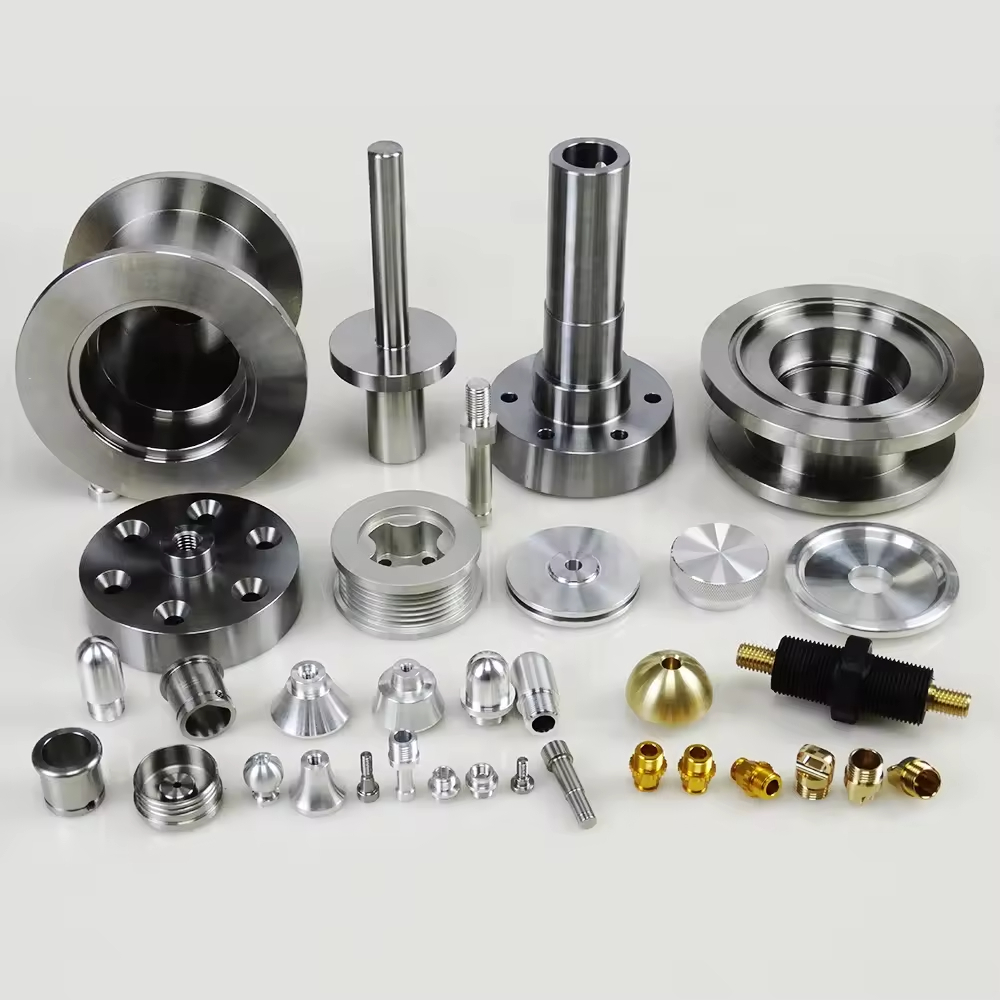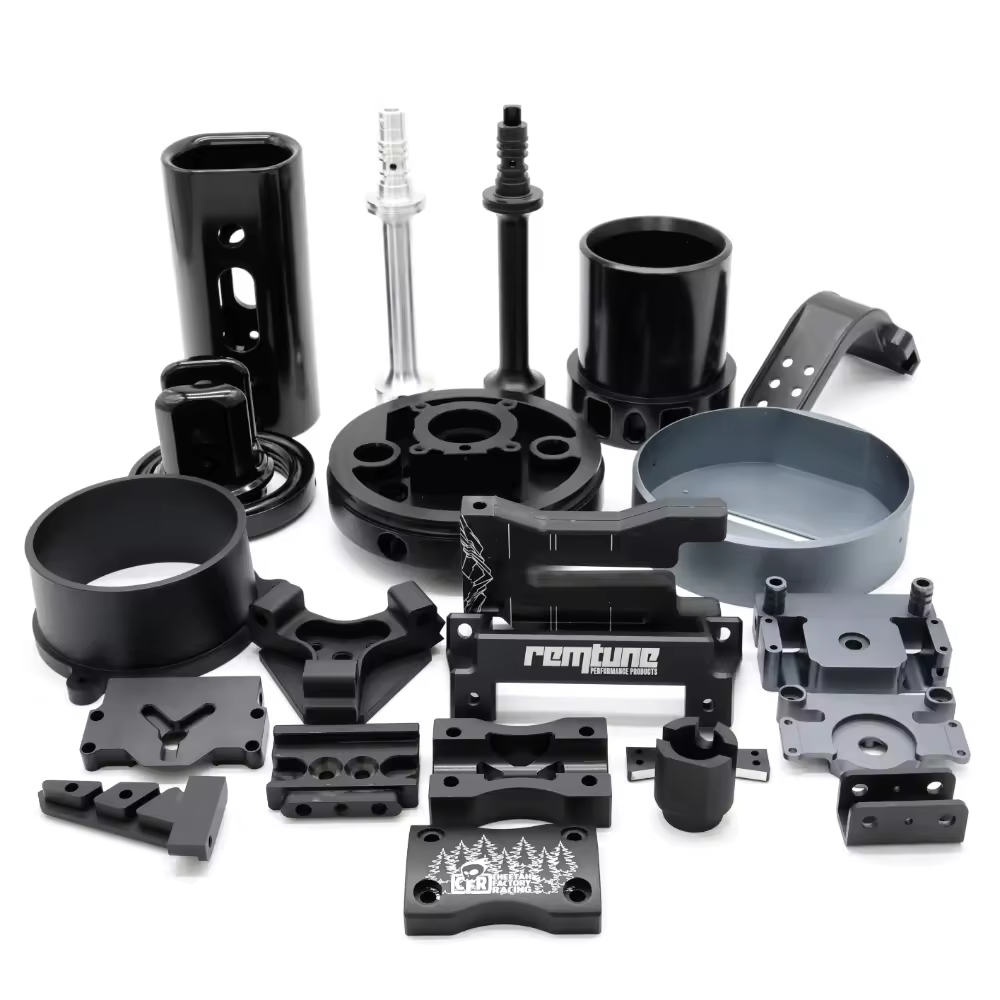
This cnc machining engineering plastics guide guide explains practical material, design, manufacturing, and sourcing considerations for Nylon Plastic readers.
This engineering plastic cnc machining guide explains practical material, design, manufacturing, and sourcing considerations for Nylon Plastic readers.
This cnc machining plastics guide explains practical considerations for material selection, design review, manufacturing, and sourcing decisions.
CNC machining has become an indispensable manufacturing process for producing precision engineering plastic components. Unlike metal, engineering plastics offer excellent chemical resistance, low friction, and lightweight properties—making them ideal for industries ranging from automotive to medical devices.
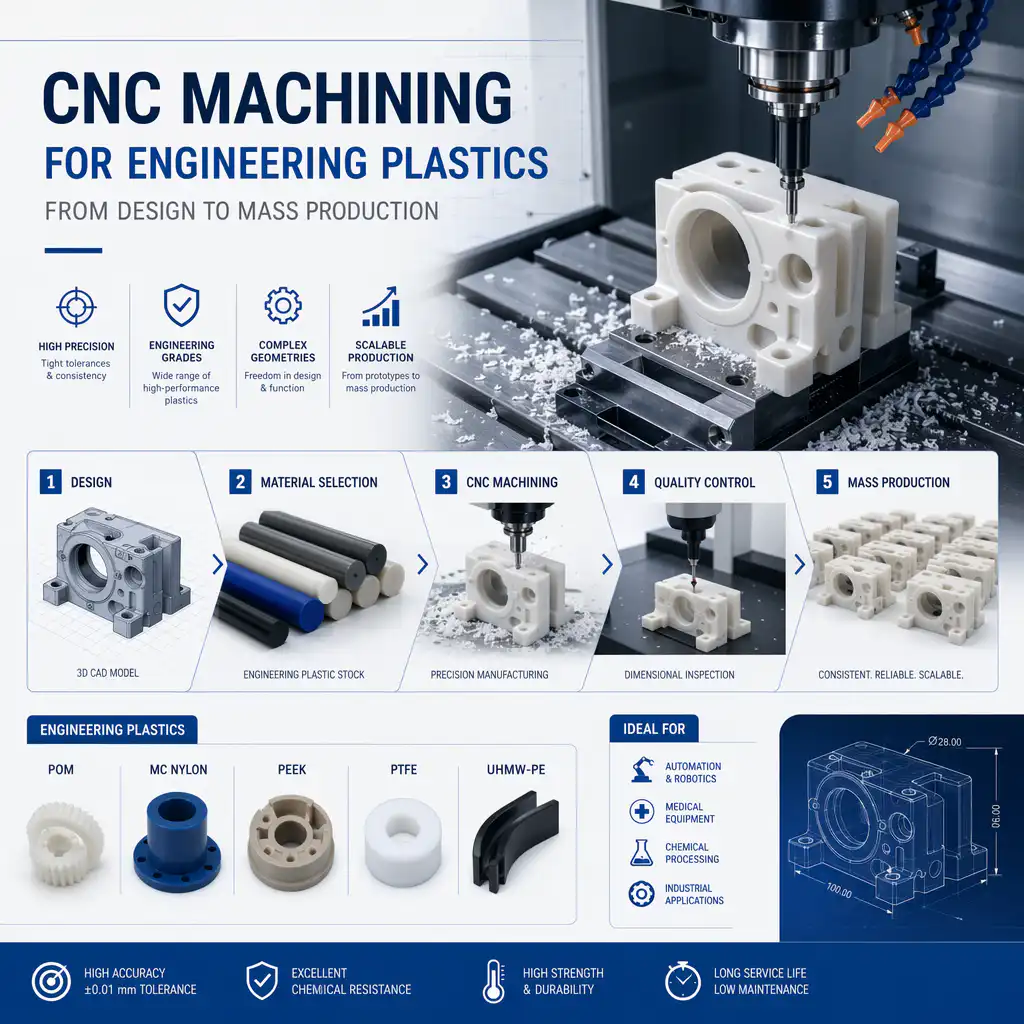
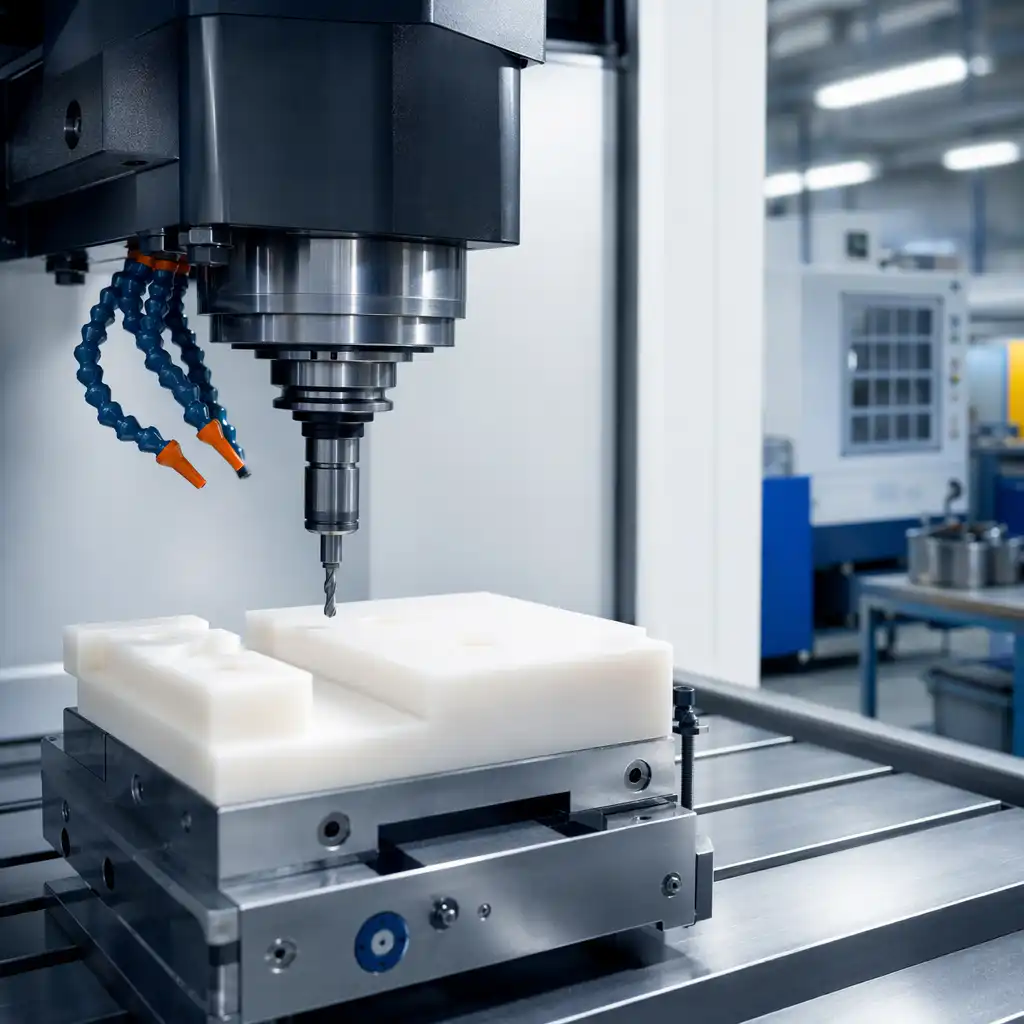
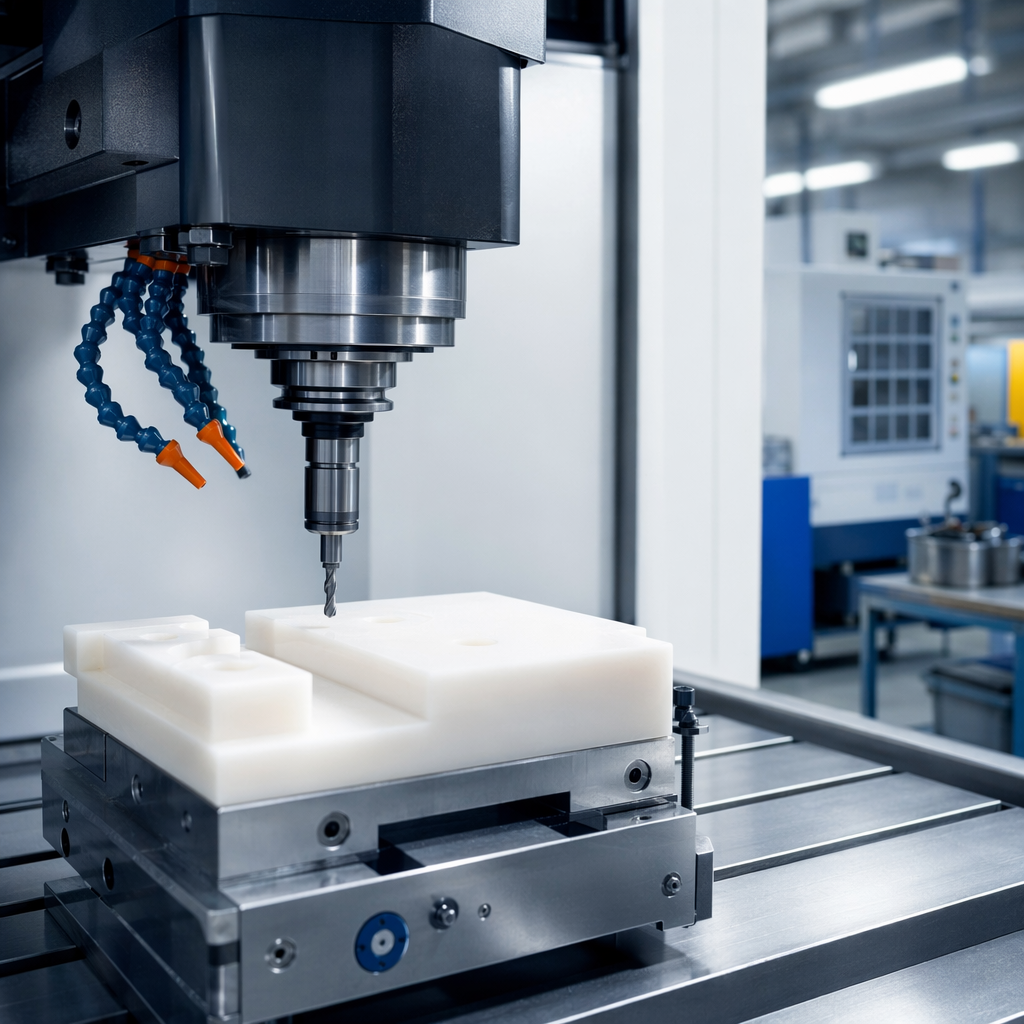
Why Choose Engineering Plastics for CNC Machining?
Engineering plastics such as Nylon (PA6, PA66), PEEK, POM (Acetal), and Polycarbonate are increasingly preferred over metals in precision manufacturing. These materials provide:
- Weight reduction — up to 6x lighter than aluminum, 15x lighter than steel
- Chemical resistance — excellent performance in harsh environments
- Low friction and self-lubrication — ideal for moving parts
- Electrical insulation — critical for electronic applications
- FDA/EU compliance — available in food-grade formulations
CNC Machining Parameters for Engineering Plastics
Different engineering plastics require specific machining parameters to achieve optimal results. For nylon components:
| Parameter | Nylon | PEEK | POM |
|---|---|---|---|
| Spindle Speed | 3000-6000 RPM | 2000-4000 RPM | 4000-8000 RPM |
| Feed Rate | 0.1-0.3 mm/rev | 0.05-0.2 mm/rev | 0.15-0.4 mm/rev |
Why Choose Our CNC Machining Services
Our manufacturing facility combines scale, precision, and speed to deliver CNC-machined plastic parts across all industries:
- 300+ CNC machines — 3-axis, 4-axis, 5-axis machining centers and high-precision CNC lathes
- ±0.005mm precision — routine tolerance of ±0.01mm for critical dimensions
- Massive capacity — worktable up to 3000mm × 2000mm; daily output exceeding 10,000 parts
- MOQ 1 piece — single-piece customization with no mold costs
- Same-day delivery available — standard prototypes within 24 hours; 100,000-piece orders in 15 days
Upload your CAD files or technical drawings — our engineering team will respond with a detailed quote and DFM feedback within 24 hours.
FAQ
When is CNC Machining for Engineering Plastics: From Design to Mass Production a good option?
CNC Machining for Engineering Plastics: From Design to Mass Production is a good option when fast iteration, complex geometry, low tooling cost, or low-volume production is more important than molded-part unit cost.
What should be checked before choosing CNC Machining for Engineering Plastics: From Design to Mass Production?
Check part size, material properties, surface finish, dimensional tolerance, heat exposure, load direction, and whether post-processing is required.
How does CNC Machining for Engineering Plastics: From Design to Mass Production compare with CNC machining?
3D printing can create complex shapes quickly, while CNC machining is often stronger for precise surfaces, tighter tolerances, and production-grade materials.
What affects the cost of CNC Machining for Engineering Plastics: From Design to Mass Production?
Cost depends on material, build volume, print time, layer height, support removal, finishing, inspection, and the number of parts in the build.