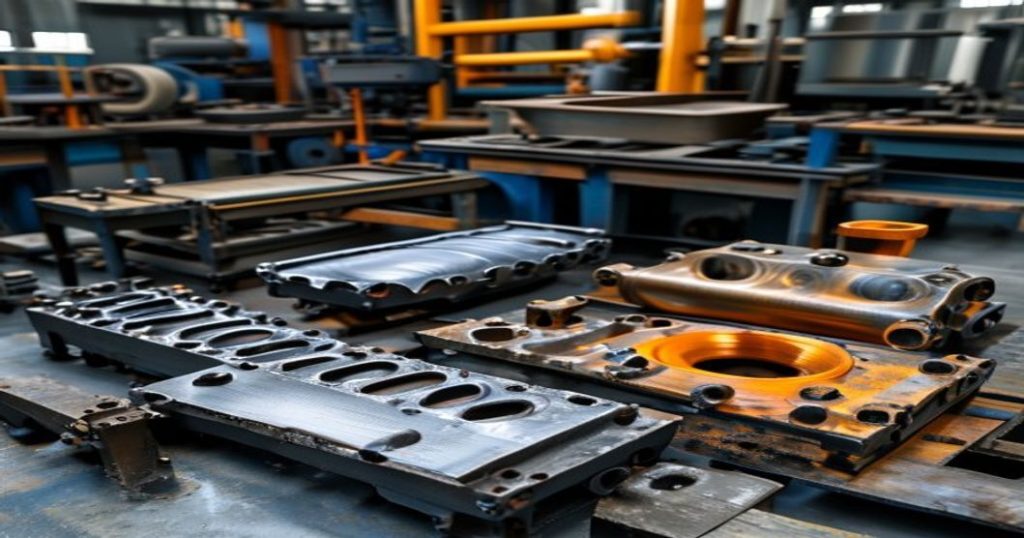
Introduction: The Tolerance Trap
An engineer designs a sensor mounting bracket. The sensor needs positioning within about 0.5mm. The bracket has four mounting holes and a pilot bore. Playing it safe, the engineer dimensions everything at ±0.02mm. Every hole, every edge, every surface.
Quote: $85 per part for 200 pieces. Manager says too expensive. After rounds of supplier discussion, someone asks: “Which dimensions on this drawing actually need ±0.02mm?”
Answer: zero of them. The whole part could be ±0.1mm general tolerance with one critical bore at ±0.05mm. Revised quote: $28 per part. Same material, same quantity, same function.
The tolerance trap is real. This guide covers what precision CNC machining actually delivers, when tight tolerances matter, and how to spec parts so you get what you need without paying for precision you can’t use.

Core Concepts & Fundamentals
“Precision CNC machining” is a spectrum, and where you land determines cost, lead time, and which shops can do the work.
Standard machining: ±0.1mm (±0.004″). Any competent shop hits this without thinking — standard tooling, no special thermal control, no probing. Covers 80% of all machined features.
Precision machining: ±0.01mm to ±0.05mm (±0.0004″ to ±0.002″). Requires quality toolholders, stable workholding, thermal compensation, and operators who check dimensions mid-run. Most shops advertising “precision” live here — bearing bores, press fits, seal surfaces, dowel pin locations.
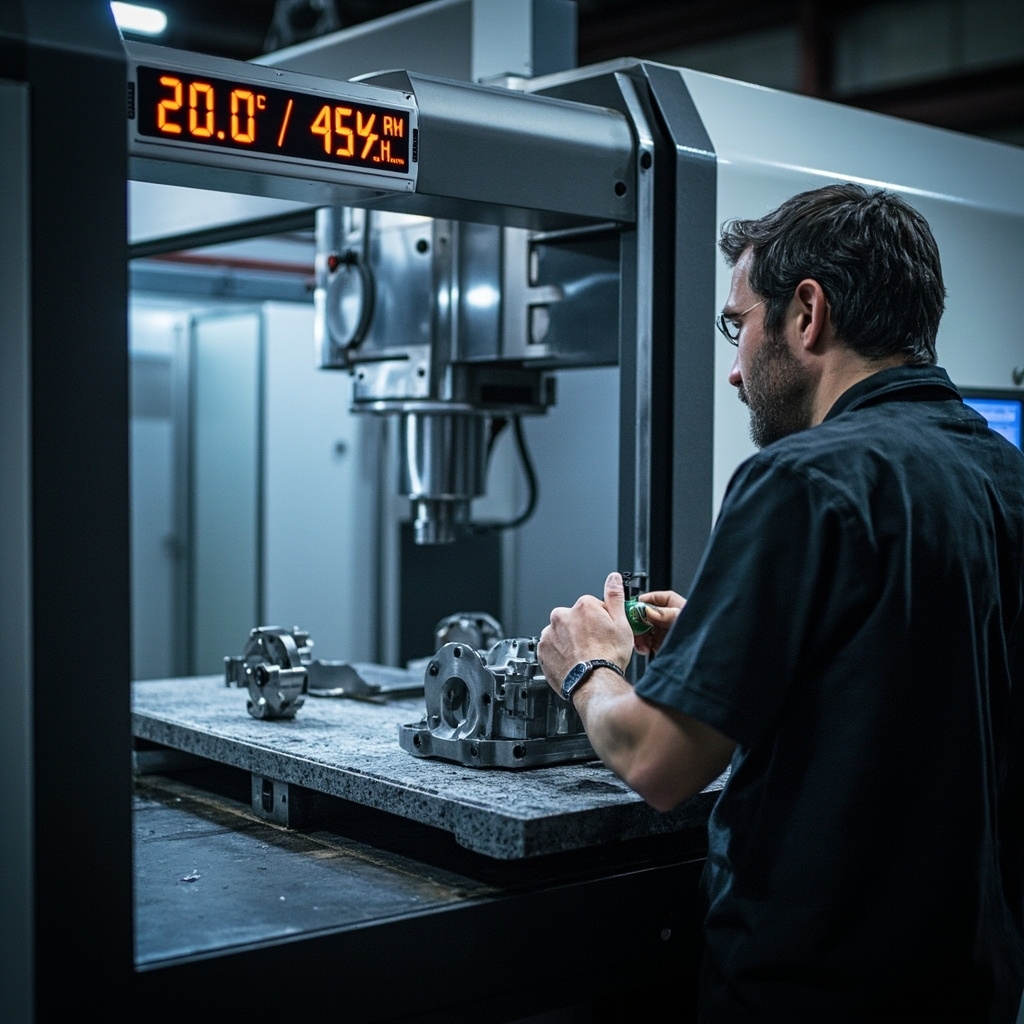
High-precision machining: ±0.005mm to ±0.01mm (±0.0002″ to ±0.0004″). Climate-controlled rooms, temperature-stabilized workpieces, in-process probing with auto-offset. Every shop that says they hold ±0.005mm can’t actually do it. The ones that can have the reports.
Ultra-precision: Below ±0.005mm. Grinding, honing, lapping — specialized equipment with nanometer-resolution scales. A different discipline.
The fundamental physics problem: thermal expansion. Aluminum grows 23 microns per meter per degree C. A 100mm feature changes by 2.3 microns per degree. Your shop is at 20°C, but the spindle warms up, cutting adds heat, the door opened three times today. At ±0.005mm, these effects are measurable.
Key Processes & Technologies
Machine Tool Architecture
Precision starts with the machine’s bones. Linear guide machines are fast but have a compliance floor — they deflect microns under load. Box-way machines are stiffer and better at damping vibration but slower. For ±0.01mm, either works. For ±0.005mm, you want box ways or high-end roller guides with glass scale feedback on all axes.
Toolholding & Runout
A CAT40 holder with 10μm runout turns a ±0.005mm tolerance into wishful thinking. Precision demands shrink-fit or hydraulic holders with verified runout under 3μm. The toolholder is the cheapest precision upgrade and the most common accuracy leak.
Workholding
Vise jaws unground for six months? Angular error. Part clamped too tight deforming? Bore measures round in-machine, oval on the CMM. Precision workholding is about repeatable, low-stress clamping — sometimes custom s, sometimes vacuum or magnetic for thin parts.
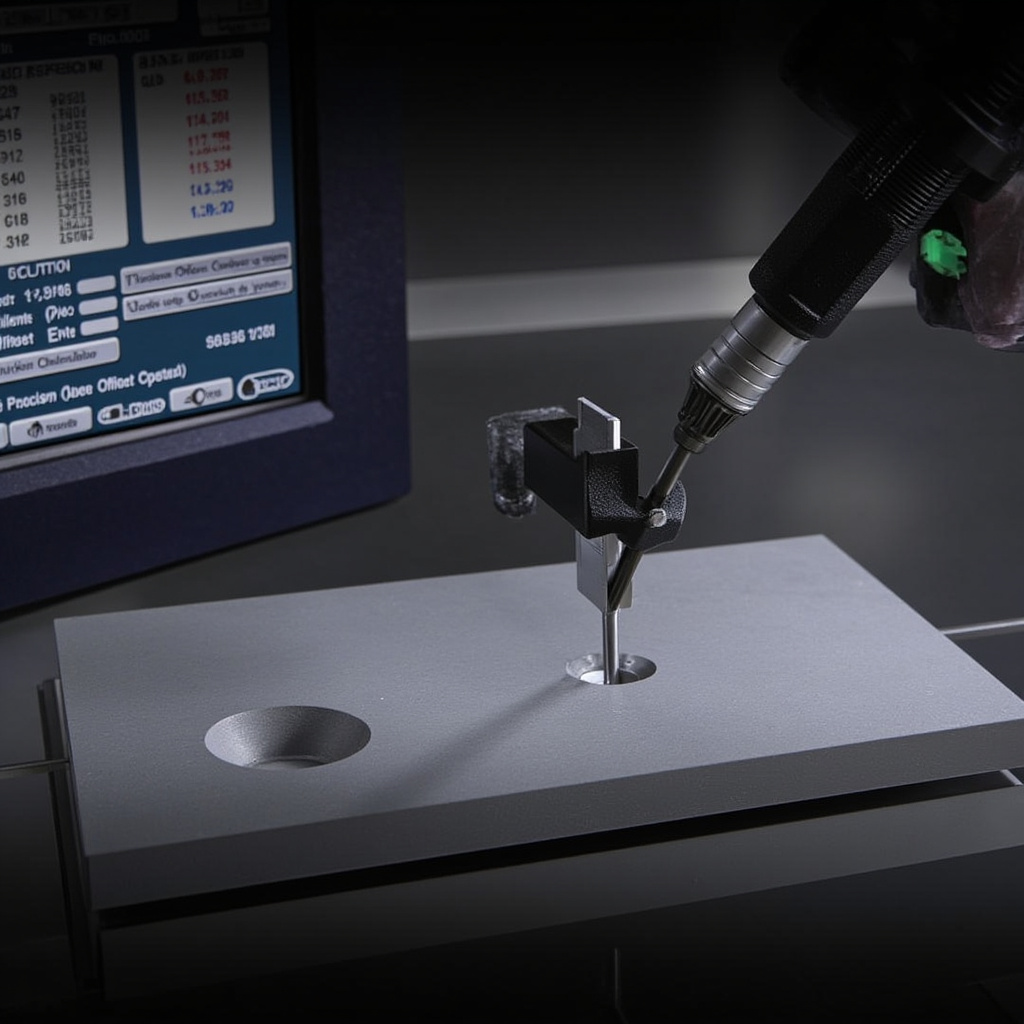
In-Process Measurement
Process Capability Comparison
| Technology | Achievable Tolerance | Best For | Cost Impact | Key Limitation |
|---|---|---|---|---|
| Standard VMC (no probing) | ±0.05 – 0.1mm | General machining | Baseline | Operator-dependent drift |
| VMC + probing + thermal comp | ±0.01 – 0.025mm | Precision housings, bearing bores | +20-40% | Still limited by machine geometry |
| High-end 5-axis (box-way, scales) | ±0.005 – 0.01mm | Aerospace, mold cavities | +80-150% | Demands climate control |
| Jig boring / jig grinding | ±0.002 – 0.005mm | Precision hole patterns | 3-5x baseline | Slow, limited geometry |
| Cylindrical grinding | ±0.001 – 0.005mm | Shaft journals, bearing diameters | 2-4x turning cost | Cylindrical features only |
| Honing / Lapping | ±0.0005 – 0.002mm | Hydraulic bores, sealing surfaces | 3-6x, secondary op | Improves geometry, doesn’t create it |
Each factor-of-2 tightening roughly doubles cost somewhere in the process. Going from ±0.1mm to ±0.01mm is factor 10 — cost multiplies geometrically, not linearly.
Industrial Applications
| Industry | Application | Material | Key Requirement | nylonplastic.com Advantage |
|---|---|---|---|---|
| Aerospace | Turbine blade roots, fuel nozzles, structural fittings | Inconel 718, Ti-6Al-4V, 17-4 PH | ±0.01mm critical features, FAI reports, full certs | 5-axis probing + AS9100-compliant documentation packages |
| Medical Devices | Implant interfaces, surgical instruments, endoscopic parts | Ti-6Al-4V ELI, 316LVM, PEEK | Ra ≤ 0.4 μm, lot traceability | Climate-controlled cells with validated processes + full lot tracking |
| Semiconductor | Wafer handling, vacuum chambers, gas manifolds | 6061-T6, 316L SS, ceramics | 5μm flatness over 300mm, zero particulates | Cleanroom-compatible machining with post-process cleaning protocols |
| Robotic Automation | Harmonic drive parts, joint housings, encoder mounts | 7075-T6 Al, 440C SS, 4140 | Bearing bore concentricity ≤5μm | Single-setup 5-axis eliminates tolerance stack on multi-face features |
| Automotive (HP) | Injector bodies, turbo housings, valve train | 4140 steel, 6061-T6, 303 SS | ±0.015mm functional, high-volume Cpk | Production cells with SPC-driven offset control — Cpk ≥ 1.67 |
| Optical / Instrumentation | Lens housings, mirror mounts, interferometer bodies | 6061-T6, Invar 36, 416 SS | ≤5μm axial runout on threads | Temperature-stabilized machining of low-CTE materials verified at 20.0°C |
The common thread: precision is about functional requirement, never accuracy for its own sake. If your feature doesn’t serve a function that demands it, use general tolerance.
Material Selection — What Actually Works
Aluminum (6061-T6, 7075-T6): Gold standard for precision. High conductivity sends heat into chips, low cutting forces mean less deflection. 7075-T6 gives 80% higher strength with nearly identical machinability. Main enemy: thermal growth — a 200mm aluminum feature changes ~4.6μm per °C.
Stainless (303, 304, 316, 17-4 PH): 303 is your precision friend — sulfur makes it behave. 304/316 work-harden; you need rigid setups and sharp coated carbide. Can’t “sneak up” on a dimension — take real DOC. 17-4 PH at H1150 machines well; at H900, you’re grinding.
Tool steels (A2, D2, H13): Machinable annealed, but after heat treat (58-62 HRC) you’re grinding. Plan: rough machine annealed leaving 0.2-0.5mm stock, heat treat, finish grind. Attempting ±0.01mm on hardened tool steel with carbide is slow, expensive, and tool-destroying.
Engineering plastics (PEEK, Delrin, Ultem): 50-100x lower elastic modulus than metals — they deflect and spring back. Sharp positive-rake tools mandatory. PEEK is most predictable. Delrin is the best all-around plastic for precision. Coolant can cause dimensional change through thermal expansion and moisture absorption — sometimes dry machining is more predictable.
Stress relief note: Rolled, forged, or cast stock carries residual stress. Machine away 60% of cross-section and stresses redistribute — the part moves. For true precision with significant , specify stress-relieved stock. The 10-15% premium is cheap insurance against parts that measure right in the machine and wrong on the CMM.

Cost & Performance Trade-offs
Standard Zone (±0.1mm): The floor. Every shop bids. You’re paying material + machine time + basic QC.
Precision Zone (±0.025mm): +30-60% per part. Better toolholders, more tool changes, in-process measurement. Supplier pool shrinks by half.
High-Precision Zone (±0.01mm): 2-4x baseline. Climate control, dedicated workholding, probing cycles, 100% . Only ~20% of shops can bid. Longer lead times.
Ultra-Precision Zone (±0.005mm and below): 5-10x+. Territory of grinding, honing, lapping. Very few shops, different business model entirely.
Real Quote Ranges (100-piece batch, 6061-T6)
| Part Type | ±0.1mm General | ±0.025mm Critical | ±0.01mm All Over |
|---|---|---|---|
| Simple bracket (3-axis, 2 setups) | $18-25/pc | $28-35/pc | $55-75/pc |
| Housing w/ bearing bores (4-axis) | $45-60/pc | $65-85/pc | $120-160/pc |
| Complex manifold (5-axis) | $85-120/pc | $130-180/pc | $250-350/pc |
Each tolerance tier roughly doubles unit cost. The bracket at $22 general tolerance hits $65-75 at ±0.01mm. That’s the difference between a bracket and a precision component — make sure you actually need it.
Big cost driver nobody considers: rejection risk. Tighter tolerances mean more rejected batches. Parts at +0.009mm on a ±0.01mm spec are technically in-tolerance but within 10% of the limit — any measurement uncertainty and they fail. Wider tolerance bands give margin against process drift and error.
Quality Standards & Best Practices
ISO 2768: International standard for general tolerances. Fine (f) grade: ±0.05mm under 6mm, scaling to ±0.2mm over 400mm. Most precision shops default to ISO 2768-m for untoleranced dimensions and reserve fine/explicit for critical features. Put the standard on your drawing — it prevents arguments.
GD&T: Matters most in precision work. ±0.01mm linear on a hole is one thing; 0.01mm true position with MMC is a different animal entirely. GD&T communicates what relationships matter — perpendicularity, parallelism, profile, runout. For parts with multiple interrelated precision features, GD&T is not optional.
SPC: The difference between “we think the parts are good” and “the process is stable.” Cpk ≥ 1.33 for precision work (~63 defective ppm); ≥ 1.67 for critical features (~0.57 ppm). The shop-floor discipline difference between those numbers is significant.
First Article (FAI): Mandatory for aerospace (AS9102), increasingly common in medical and defense. Measure every dimension on Part #1 and document results. Costs $100-300 extra. Catches issues before they’re issues on 100 parts.
Precision QC checklist:
- Temperature soak: 2+ hours at 20°C before final — especially aluminum.
- Calibrated instruments: Current stickers on mics, calipers, CMM.
- Free-state measurement: Unclamp, let relax, then measure.
- Document critical few: Full on 1 part/batch; critical dims on 5-10% sample remainder.
- Trend data: Bore gradually drifting toward upper limit = tool wear. Adjust offsets before, not after, hitting the wall.
Getting Started — Practical Steps
1. Identify the “critical few.” Highlight only dimensions that actually need precision — bearing bores, press fits, seal surfaces, dowel locations. If you can’t explain why a dimension needs ±0.01mm, it probably doesn’t.
2. Use GD&T where it matters. True position with MMC for hole patterns. Profile of a surface for contours. Runout for rotating parts. These callouts communicate function, not just numbers.
3. Specify surface finish only on functional surfaces. Ra 0.8 μm on sealing surfaces: necessary. Ra 0.8 μm on cosmetic exterior getting painted: waste of money.
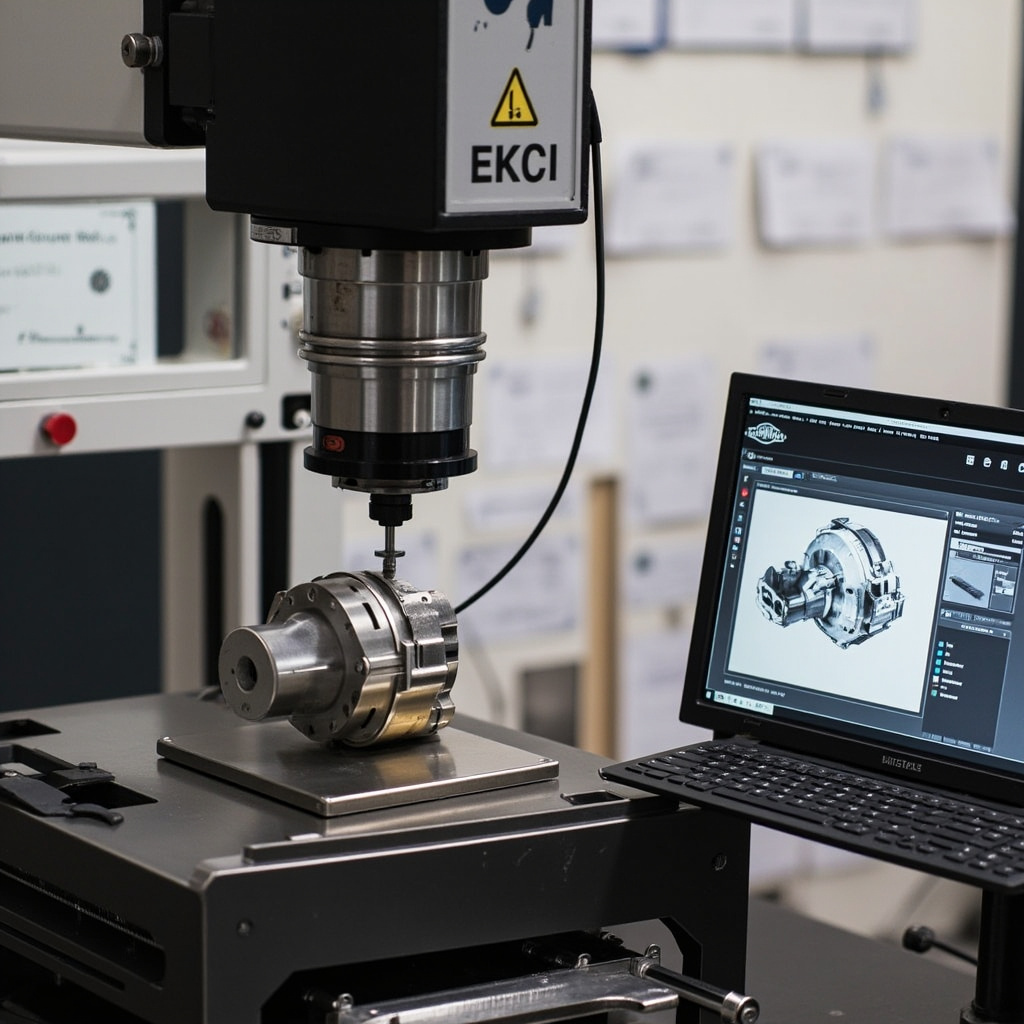
4. Ask for capability data. Not “are the parts in tolerance?” but “what’s the Cpk on the bore diameter?” A shop that can answer is controlling their process. A shop that says “we check every part” might be fine for general tolerance but not precision.
5. Prototype at production tolerance. Don’t prototype at ±0.1mm then tighten to ±0.01mm for production. The shop that handles the first might not handle the second. Quote prototypes at production tolerance, even for 5 parts.
6. Communicate temperature requirements. If your part mates at operating temperature significantly different from 20°C, precision at the operating temperature is what matters. Communicate this — it matters for aerospace and high-performance applications.
Conclusion
Precision CNC machining isn’t about buying a fancier machine. It’s about understanding which dimensions drive function, communicating them clearly, and verifying the process — not just the part — is under control.
The expensive mistake: tolerances tightened as insurance, not engineering. The designer isn’t sure what clearance is needed, so everything goes tight. The shop quotes accordingly. Nobody questions it until the budget meeting.
Break that cycle. Put precision where function demands it. Use GD&T to communicate relationships. Ask shops for process capability data, not just conformity reports. Every zero you add to a tolerance callout adds a zero to the invoice. And when a good shop pushes back on unnecessary tolerances during quoting — listen. They’re trying to save you money.
Get Your Precision Parts Quoted — No Guesswork
Upload your STEP file and drawing. Tell us which features actually need precision and which don’t. We quote what you need — not what an over-toleranced drawing demands. Climate-controlled cells, in-process probing, full FAI documentation when required. Engineering feedback included at no charge.
FAQ
When do tight CNC tolerances actually make sense?
Precision CNC Machining: How Tight Tolerances Actually Work — Engineer’s Guide is the right choice when the part requires machined accuracy, controlled surfaces, repeatable features, and a material that can be cut reliably.
Which dimensions should be tightly toleranced and which should not?
Confirm the drawing version, material grade, tolerances, quantity, critical dimensions, surface finish, and inspection requirements before production starts.
What usually drives the cost of precision CNC machining?
Cost is usually driven by material, setup time, machine time, tolerance difficulty, fixturing, tool access, finishing, inspection, and order quantity.
How can buyers reduce risk when specifying tight tolerances?
Quality risk is reduced by marking critical features clearly, avoiding unnecessary tight tolerances, confirming manufacturability early, and using inspection data for important dimensions.
Related Reading
- CNC Machining Services — Full Capability Overview
- CNC Machining Materials Guide — Properties, Machinability Ratings, Selection
- Surface Finishing Services — From As-Machined to Mirror Polish
- Product Design for Manufacturing — DFM Guidelines That Reduce Cost
- Aluminum CNC Machining: Grades, Speeds, and What Actually Works
- Deburring in CNC Machining: Methods, Standards, and What Your Parts Actually Need
- What Is CNC Machining? A Complete Guide for Engineers and Buyers