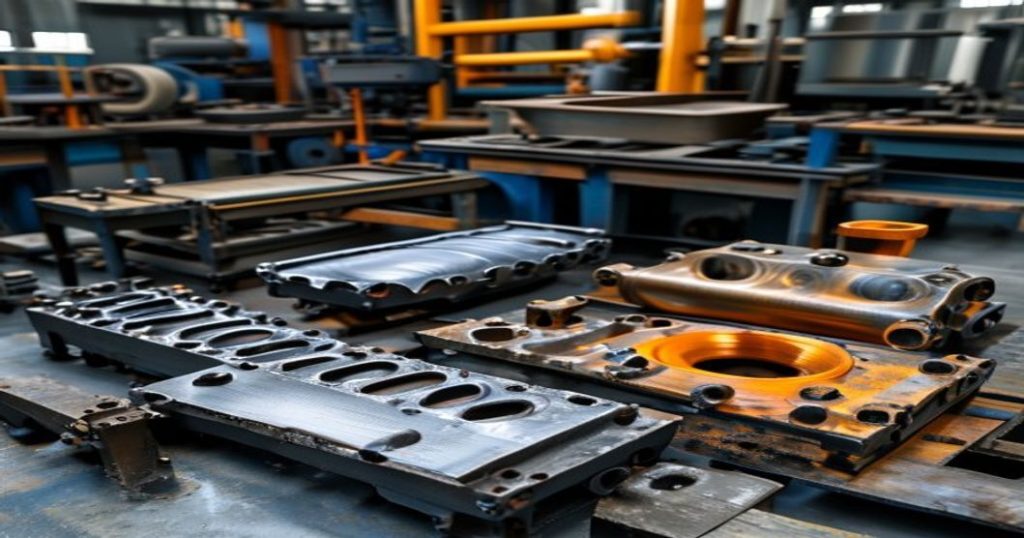
Let me tell you something I learned the hard way about 10 years ago on the shop floor.
We had a fresh batch of 7075-T6 blanks lined up for a drone bracket job. The CAD looked beautiful — thin ribs, tight pockets, ±0.02mm tolerances. The customer said “just machine it like you’d do 6061.” So we did.
Two hours later we’d scrapped three parts. The end mill was screaming, chip welding everywhere, and the surface finish looked like someone dragged a rake across it.
Here’s the reality: aluminum CNC machining is one of the most forgiving processes in subtractive manufacturing. But “forgiving” doesn’t mean “foolproof.” The difference between a perfect part and scrap metal often comes down to knowing which grade you’re cutting, what speeds actually work on your machine, and when to push versus when to back off.
This guide is written from the shop floor, not a textbook. No marketing fluff. Just what works.

Core Concepts & Fundamentals
Before we dive into specific grades, let’s establish the ground rules. Aluminum is the most machined non-ferrous metal on the planet — and for good reason.
The big three advantages:
1. Machinability. Most aluminum alloys cut like butter compared to steel or titanium. You can run higher spindle speeds, deeper cuts, and get faster cycle times. The chip breaks clean (with the right alloy), and tool life stretches way longer than it does with stainless.
2. Strength-to-weight ratio. Pound for pound, 7075-T6 competes with mild steel on tensile strength while weighing roughly one-third as much. That’s why aerospace and motorsport engineers obsess over it.
3. Thermal conductivity. Aluminum dissipates heat fast. This is a double-edged sword — good because you don’t need flood coolant on every operation, tricky because thermal expansion can bite you on tight-tolerance work done in a hot shop.
But here’s what nobody tells you upfront:
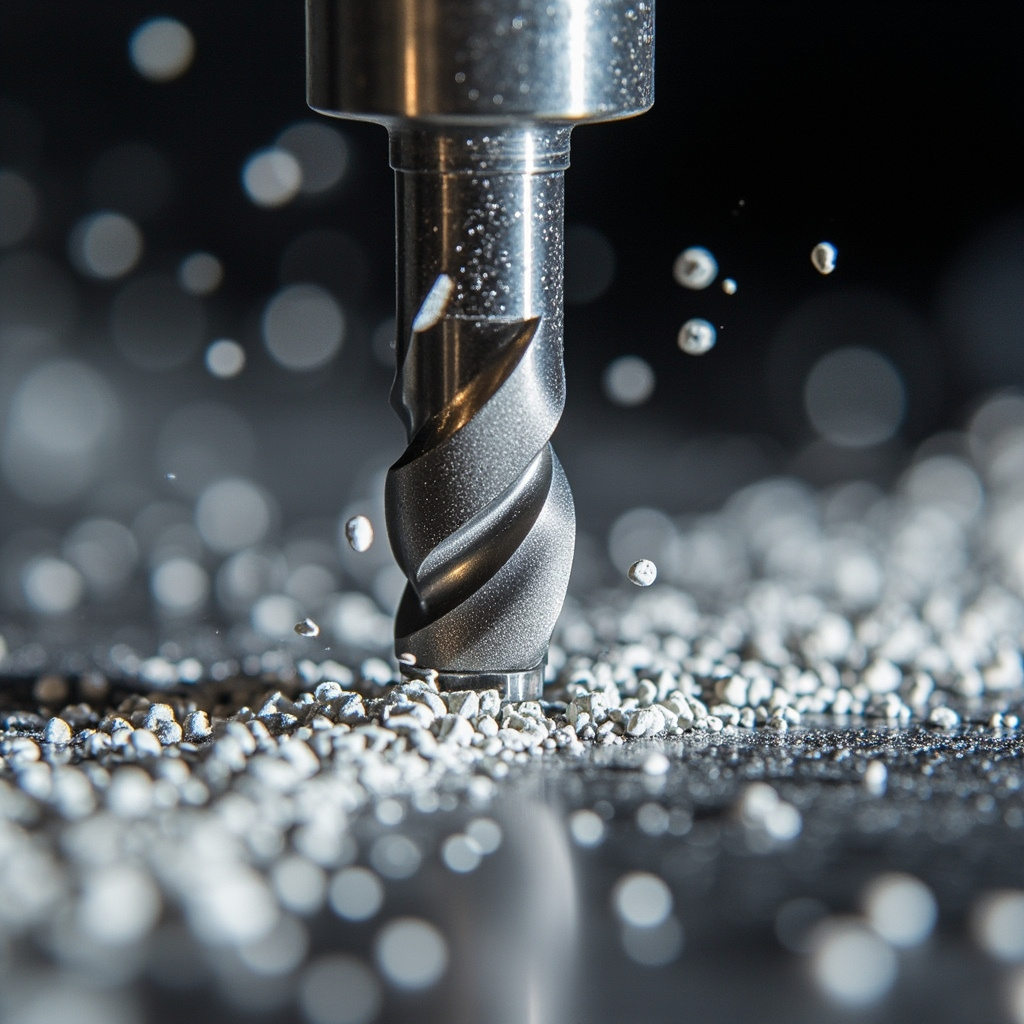
Aluminum is gummy. On the wrong grade, or with the wrong feeds and speeds, the chips don’t break — they smear. Built-up edge (BUE) on your cutter becomes a nightmare. Your surface finish goes to hell. And on deep pockets, chip evacuation can pack a cavity solid in seconds if your coolant strategy is lazy.
The key concept that separates pros from button-pushers? Chip control. If your chips are ribbons instead of nice little 6s and 9s, you’re doing something wrong. Aluminum wants to be cut aggressively enough that the chip shears clean — pussyfooting around with tiny stepovers and conservative feeds is actually worse than pushing hard.
Key Processes & Technologies
Not all aluminum machining is created equal. The process you pick — or more accurately, the approach you take within CNC machining — dramatically affects part quality, cost, and lead time.
Here’s how the main approaches stack up:
| Process | Best For | Typical Tolerance | Surface Finish (Ra) | Relative Cost | Turnaround |
|---|---|---|---|---|---|
| 3-Axis CNC Milling | Prismatic parts, plates, brackets, housings | ±0.025mm | 0.8–1.6µm | $ | 3–7 days |
| 4-Axis CNC Milling | Parts with side features, angled holes, wraps | ±0.025mm | 0.8–1.6µm | $$ | 4–8 days |
| 5-Axis CNC Milling | Complex contours, impellers, aerospace structures | ±0.015mm | 0.4–1.2µm | $$$ | 5–12 days |
| CNC Turning | Shafts, bushings, spacers, round parts | ±0.015mm | 0.4–0.8µm | $ | 2–5 days |
| Swiss Turning | Small, long, slender precision parts | ±0.005mm | 0.2–0.8µm | $$ | 3–7 days |
| High-Speed Machining (HSM) | Thin walls, deep pockets, mold cavities | ±0.02mm | 0.3–0.8µm | $$$ | 4–10 days |
The real difference maker? strategy.
Coolant decisions matter more than you think. For most aluminum work, mist or flood coolant works fine. But on deep pocketing — especially in gummy grades like 5052 — through-spindle coolant (TSC) at 70+ bar is worth every penny. It blasts chips out of the cut zone so you’re not re-cutting them, which is the fastest way to ruin a finish and a tool simultaneously.
Industrial Applications
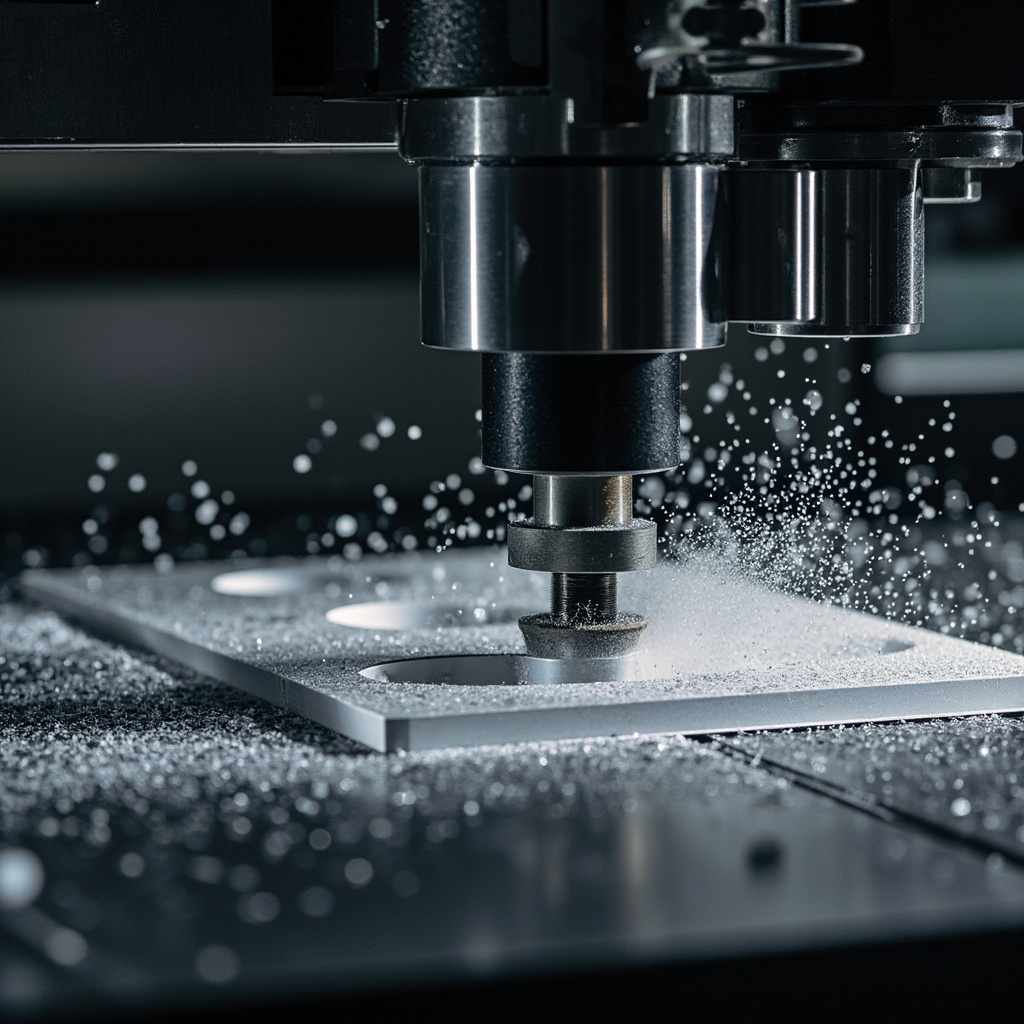
Aluminum CNC parts show up everywhere — from the phone in your pocket to the satellite orbiting overhead. Here’s where our customers are putting machined aluminum to work:
| Industry | Application | Material | Key Requirement | nylonplastic.com Advantage |
|---|---|---|---|---|
| Automotive | Engine brackets, suspension components, EV battery housings | 6061-T6, 7075-T6 | High strength, corrosion resistance, weldability | 5-axis capability for complex geometries with ±0.015mm precision; anodizing in-house |
| Aerospace | Structural ribs, wing spars, avionics enclosures | 7075-T7351, 2024-T351 | Fatigue resistance, traceability, NADCAP-level QA | Full material certs with heat lot traceability; stress-relieved stock only |
| Medical Devices | Surgical instrument bodies, imaging equipment housings | 6061-T6, 5052-H32 | Biocompatible finishes, cleanroom-ready packaging | Electropolishing and passivation options; ISO 13485 documentation |
| Electronics | Heat sinks, RF enclosures, server chassis components | 6061-T6, 6063-T5 | Thermal conductivity, EMI shielding, tight flatness | Thin-wall machining to 0.5mm; thermal management design feedback |
| Industrial Equipment | Pneumatic manifolds, sensor housings, conveyor components | 6061-T6, 5083-H111 | Wear resistance, chemical compatibility | Hard anodizing to 50µm thickness; NPT/BSPP threading expertise |
| Robotic Automation | End effectors, robot arm links, mounting plates | 7075-T6, 6061-T6 | Lightweight, high stiffness, repeatable accuracy | Part-level CMM reports included; dynamic balancing if needed |
The pattern should be obvious: one alloy doesn’t rule them all. The application drives the material, the material drives the process. Skip that logic chain and you’ll pay for it twice — once in machining headaches, once in field failures.
Material Selection — What Actually Works
Let’s cut through the datasheet noise and talk about the four aluminum grades that cover 90% of CNC machining work. I’ll tell you what they’re actually like on the machine, not just what the alloy composition chart says.
6061-T6: The Workhorse
If you’ve machined aluminum, you’ve machined 6061. It’s the default for a reason — decent strength (310 MPa tensile), excellent corrosion resistance, welds beautifully, and machines with almost no drama. Chip control is excellent; you get those textbook 6-and-9 shaped chips at sane feeds and speeds.
Where it shines: General-purpose structural parts, frames, brackets, manifolds, anything getting anodized. If you don’t have a specific reason to use something else, use 6061.
Watch out: At thin walls under 1mm, 6061 can vibrate and chatter more than 7075 because it’s less stiff. Not a dealbreaker, just something to account for in fixturing.
7075-T6: The Strong One
This is where things get serious. 7075-T6 hits ~570 MPa tensile — comparable to some steels. Aerospace lives on this stuff. It’s noticeably harder and less gummy than 6061, so chip control is actually better. You can push feeds harder without built-up edge issues.
Where it shines: High-stress components, drone and UAV parts, competition automotive, rock climbing gear, military hardware — anywhere weight savings meets strength requirements.
Watch out: It corrodes. Leave an uncoated 7075 part outside for a season and it’ll look terrible. You’ll need anodizing or alodine coating for any environmental exposure. Also, it welds poorly — if welding is in the downstream plan, go back to 6061 or 5052.
2024-T351: The Aerospace Specialist
Excellent fatigue resistance and higher strength than 6061, but the trade-off is worse corrosion resistance and trickier machining. It’s a bit gummier than 7075, so you need to pay attention to chip evacuation. Used heavily in aircraft skins and structural components where cyclic loading is the primary concern.
Where it shines: Aircraft structural parts, fatigue-critical rotating components, military vehicle parts subjected to vibration loading.
Watch out: The corrosion thing again — worse than 7075. Cladding (alclad) helps but complicates machining because you can cut through the protective layer. And it’s more expensive, so don’t spec it unless you genuinely need the fatigue performance.
5052-H32: The Formable One
This is the oddball of the group. It’s not very strong (~230 MPa), but it’s incredibly formable and has the best corrosion resistance of the bunch. Marine environments love 5052. Machining-wise, it’s the gummy one — chip control is your enemy here. You need sharp tools, higher feeds than feels comfortable, and excellent coolant delivery.
Where it shines: Sheet metal parts, marine hardware, fuel tanks, chemical containers, anything bent or formed after machining.
Watch out: Do not attempt fine surface finishes at conservative feeds. You’ll smear the surface. Push the feed rate up, use polished carbide inserts, and keep the coolant flowing.
Cost & Performance Trade-offs
Materials cost is the first number everyone looks at, but it’s rarely the most important one. Let’s break down what actually drives the price of an aluminum CNC part.
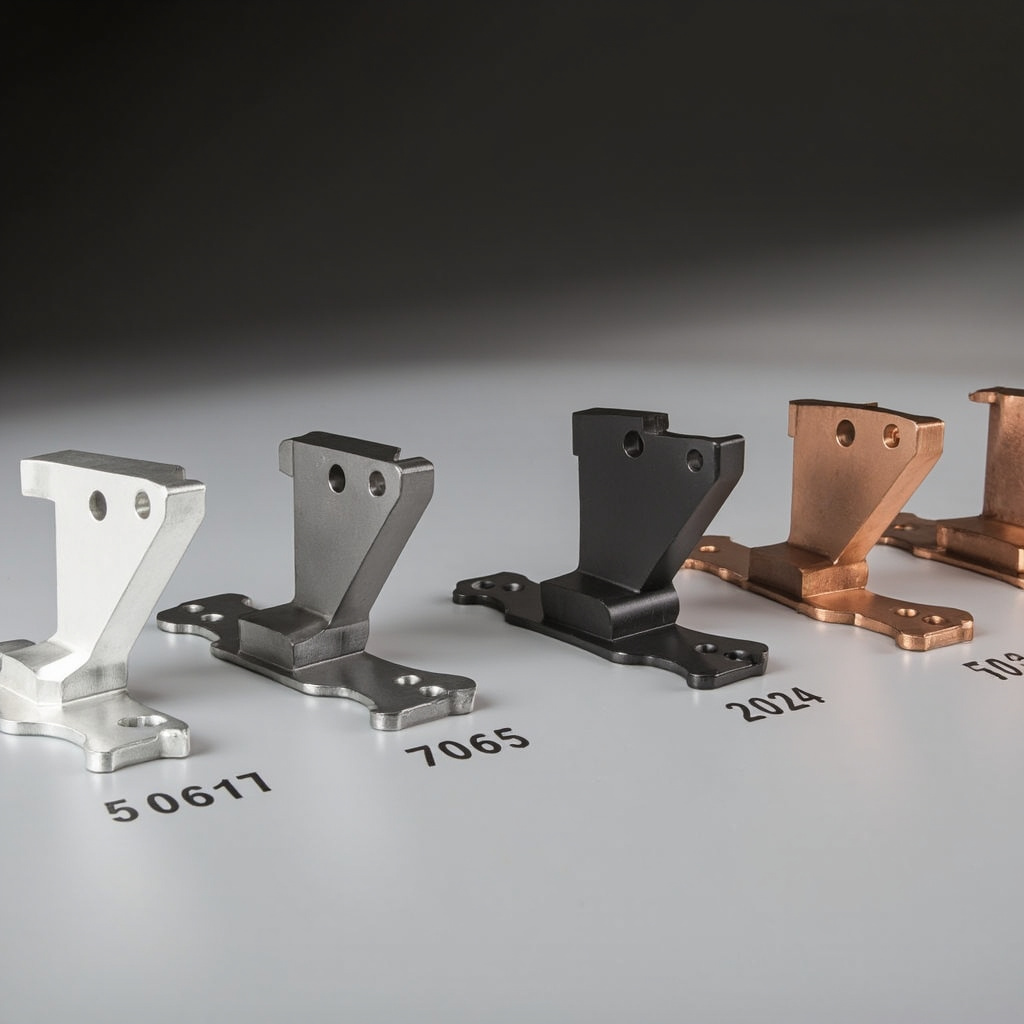
Material cost: the small picture. 6061-T6 plate runs about $6-8/kg. 7075-T6 is $10-14/kg. 2024-T351 pushes $15-20/kg. These differences matter on a 50kg billet, but on a 200g bracket? The material cost difference is measured in cents. Don’t optimize the wrong variable.
Machining time: the big picture. The real cost driver is how long the spindle is spinning. A part that takes 12 minutes in 6061 might take 8 minutes in 7075 because you can push harder without gumming. That’s a 33% cycle time reduction on a machine that costs $80-120/hr to run. Do the math.
Tooling costs are real. 7075 and 2024 are harder on tools — you’ll replace carbide end mills 20-30% more frequently. Not a budget-buster, but it adds up on production runs. Budget $3-8 per part for tooling on aluminum, depending on complexity and quantity.
Surface finishing adds up fast.
- As-machined: Free (included in the cutting). Acceptable for many internal components.
- Bead blasting: $2-8 per part. Kills tool marks, gives uniform matte look.
- Clear anodizing (Type II): $3-15 per part. The standard for corrosion protection and appearance.
- Hard anodizing (Type III): $8-30 per part. Wear surface on 6061, darker gray color, 40-60µm thickness.
- Color anodizing: $5-20 per part. Black, red, blue — cosmetic but popular for consumer-facing products.
- Chemical conversion (Alodine/Iridite): $2-6 per part. Conductive, thin, good primer for paint — aerospace standard.
The honest trade-off matrix:
| If you care most about… | Pick… | And accept… |
|---|---|---|
| Lowest total cost | 6061-T6, 3-axis, as-machined | Moderate strength, visible tool marks |
| Maximum strength | 7075-T6, 5-axis if geometry needs it | Higher cost, requires coating for corrosion |
| Fatigue life | 2024-T351, optimized s | Highest material cost, tricky machining |
| Corrosion resistance | 5052-H32 or 6061-T6 + anodize | Lower strength with 5052 |
| Cosmetic appearance | 6061-T6 + color anodize | Batch color matching takes coordination |
Quality Standards & Best Practices
Aluminum machining tolerances are not “whatever the machine can hold.” They’re whatever your customer’s drawing says — and you’d better be able to prove you hit them.
The standard everyone references:
ISO 2768-m is the baseline for machined aluminum — ±0.1mm for dimensions up to 30mm, ±0.2mm for 30-120mm, ±0.3mm up to 400mm. That’s “don’t even ask, we’ll hit it” territory on any decent CNC with aluminum.
When you get into ±0.025mm and tighter, you’ve entered the zone where everything matters: machine thermal stability, tool wear compensation, rigidity, measurement method, and even the ambient temperature in QC. Aluminum expands ~23µm per meter per degree Celsius. A 200mm part dimension measured at 30°C will read differently at 20°C by roughly 0.05mm. That’s enough to blow a ±0.025mm tolerance.
Shop-floor best practices that actually make a difference:
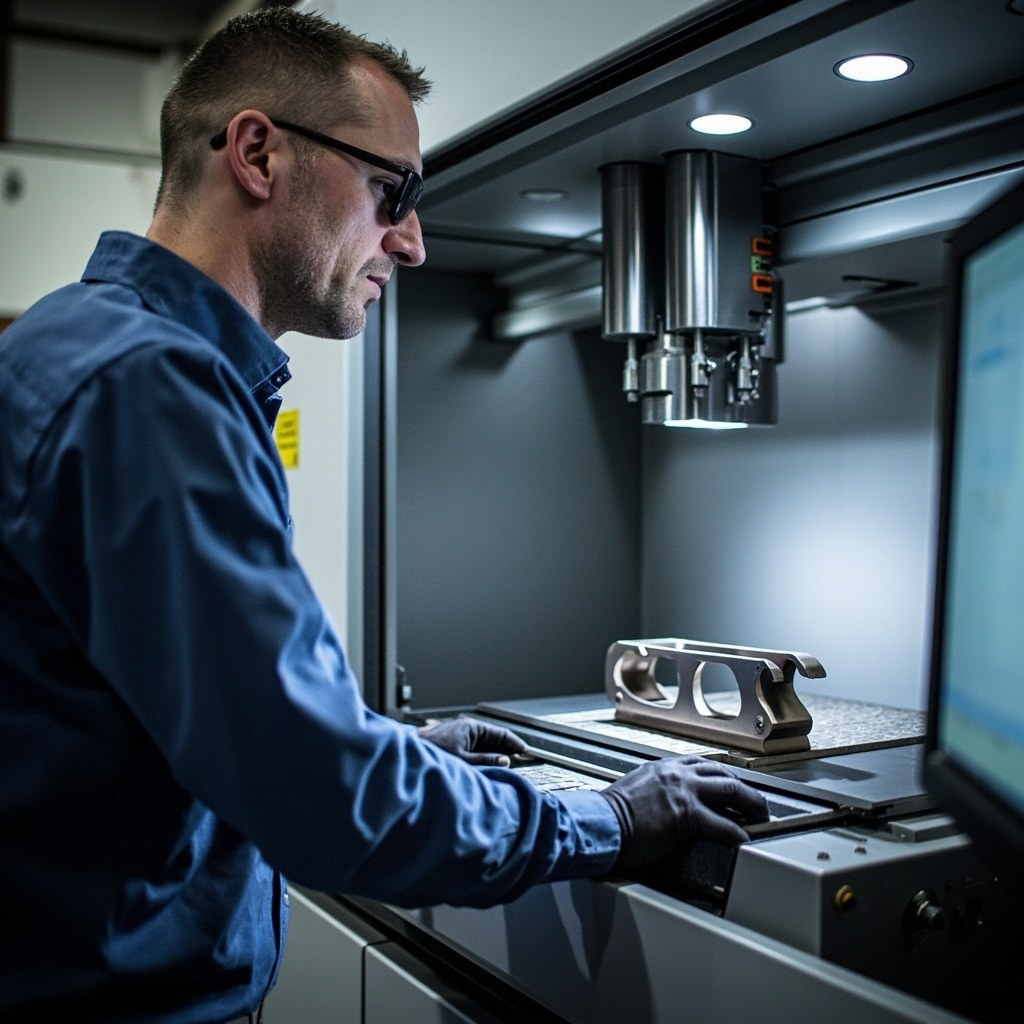
- Let your stock normalize. If it just came off a bandsaw or out of a hot truck, let it sit in the shop for a few hours. Thermal gradients inside a plate will warp it as they equalize.
- Rough, then finish. On tight-tolerance work, rough out the bulk material, let the part normalize (15-30 minutes), then finish machine. This releases internal stresses before the final cut.
- Tool numbering and tracking. Every end mill in a production job gets a tool number. When you hit the tool life limit (varies by grade: ~4 hours on 6061, ~3 hours on 7075, ~2.5 hours on 2024), change it whether the part looks bad or not. Tool wear is subtle until it isn’t.
- First article (FAI) every time. CMM the first part off a new setup. Not a caliper check — a proper CMM report. It takes 15 minutes and saves you from scrapping a whole batch.
- Deburr immediately. Aluminum burrs harden with exposure. A burr that breaks off clean right after machining becomes a stubborn, work-hardened sliver after sitting overnight. Break edges while the part is still in the machine if you can, or at least on the same shift.
Getting Started — Practical Steps
If you’re sending aluminum parts out for CNC machining — or bringing it in-house — here’s the workflow that prevents 90% of the problems I’ve seen over the years.
Step 1: Lock down the alloy first. Don’t spec “aluminum” on a drawing. Spec “Aluminum 6061-T6 per ASTM B209” or the equivalent. The T-number matters — T6 isn’t T651 isn’t T0. If you don’t know the difference, ask. We’ll tell you.
Step 2: Design for the process, not just the part. Internal corners need radii — a sharp 90° corner is physically impossible with a rotating cutter. The minimum inside radius equals the tool radius. A 6mm end mill leaves a 3mm radius. For deep pockets (depth > 3× diameter), you need to account for tool reach, deflection, and chip evacuation. We wrote more about this in our DFM guide — link at the bottom.
Step 3: Decide on surface finish up front. Don’t design a part assuming “it’ll get anodized” without checking if anodizing will change critical dimensions. Type II anodizing adds ~5-15µm per surface (half that in growth, half outward). Type III adds 25-50µm. If you’ve got a bearing bore at H7 tolerance, anodizing will push it right out of spec unless you machine the bore undersized to compensate.
Step 4: Choose a partner who asks questions. The best CNC shops don’t just quote your drawing — they ask “what’s this for?” If the shop goes silent and sends you a price in 20 minutes, they’re button-pushers. If they come back with “hey, this pocket ratio is going to chatter,” “have you considered 7075 instead of 6061 for this load case?” or “this thin wall is going to warp during anodizing,” you’ve found real machinists.
Step 5: Order a first article. Even on a 500-part production run, get one piece first. Inspect it. Fit it. Test it. It costs a few hundred bucks and a few extra days. Scrapping 500 parts because of a drawing error costs thousands and weeks.
Conclusion
Aluminum is the closest thing to a “free lunch” in CNC machining. It cuts fast, wears tools slowly, and hits tolerances that would make a stainless steel machinist weep with envy. But the free lunch comes with rules — and I’ve seen too many engineers learn them the expensive way.
The alloy you pick determines everything downstream: how fast you can cut, what tooling you need, whether the part needs coating, and what it costs. Don’t default to 6061 because it’s familiar. Don’t jump to 7075 because the tensile number is bigger. Pick the alloy that actually fits the application — who cares if it’s 30% stronger on paper if it corrodes in the field?
And find a machining partner who will have these conversations with you. The best parts come from shops that treat your project like their own, not a line item on a production schedule.
Ready to get your aluminum parts machined? Whether you need five prototypes or 50,000 production parts, our team knows aluminum inside and out. Send us your STEP file and we’ll come back with a quote — plus real engineering feedback if we spot something that could save you money or improve the part. No obligation, no sales pitch. Get a quote →
FAQ
When is Aluminum CNC Machining: Grades, Speeds, and What Actually Works the right choice?
Aluminum CNC Machining: Grades, Speeds, and What Actually Works is the right choice when the part requires machined accuracy, controlled surfaces, repeatable features, and a material that can be cut reliably.
What should be confirmed before ordering Aluminum CNC Machining: Grades, Speeds, and What Actually Works?
Confirm the drawing version, material grade, tolerances, quantity, critical dimensions, surface finish, and inspection requirements before production starts.
What usually drives cost in Aluminum CNC Machining: Grades, Speeds, and What Actually Works?
Cost is usually driven by material, setup time, machine time, tolerance difficulty, fixturing, tool access, finishing, inspection, and order quantity.
How can quality risk be reduced in Aluminum CNC Machining: Grades, Speeds, and What Actually Works?
Quality risk is reduced by marking critical features clearly, avoiding unnecessary tight tolerances, confirming manufacturability early, and using inspection data for important dimensions.
Related Reading
- CNC Machining Services — Full Capability Overview
- CNC Machining Materials Guide
- Material Selection Hub
- Surface Finishing Options
- What is CNC Machining? How It Actually Works in Modern Manufacturing — Practical Guide
- 3D Printing vs CNC Machining: When to Use Each — Practical Decision Guide
- Deburring in CNC Machining: Methods, Standards, and What Your Parts Actually Need