
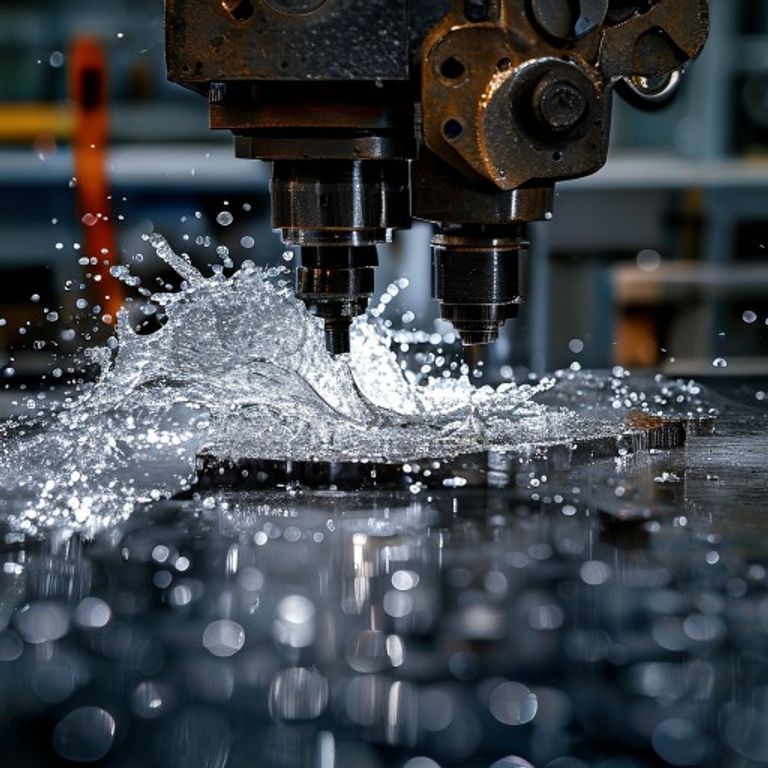
CNC milling is one of the most versatile and widely used subtractive manufacturing processes in modern industry. It uses computer-controlled rotary cutting tools to remove material from a workpiece, producing precision parts with complex geometries, tight tolerances, and excellent surface finishes. From simple 3-axis contouring to advanced 5-axis simultaneous machining, CNC milling services cover an enormous range of applications across aerospace, automotive, medical, electronics, and industrial equipment sectors.

How CNC Milling Works
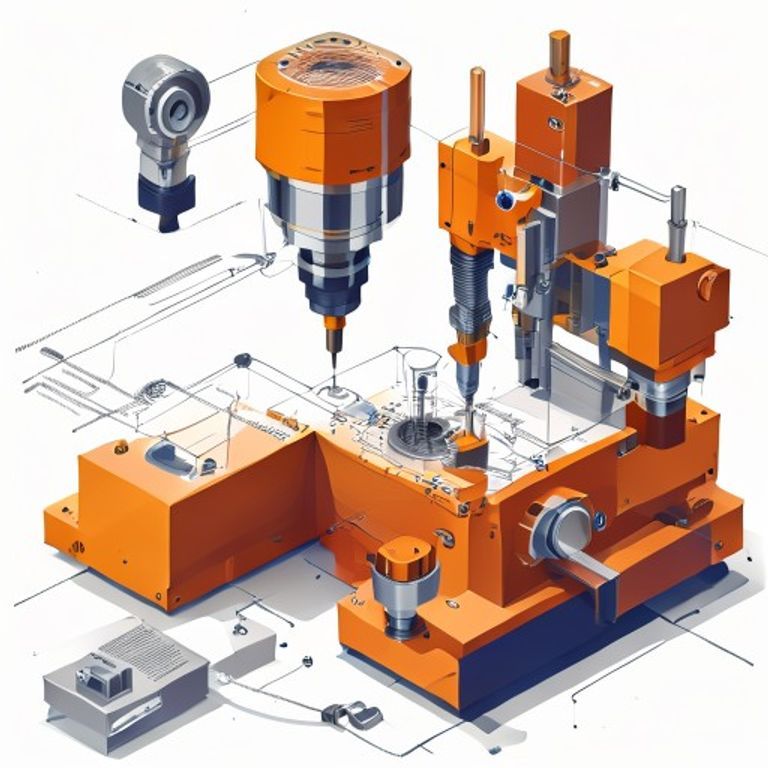
3-Axis vs 4-Axis vs 5-Axis CNC Milling
| Capability | 3-Axis | 4-Axis | 5-Axis |
|---|---|---|---|
| Axes of Movement | X, Y, Z linear | X, Y, Z + 1 rotary (A or B) | X, Y, Z + 2 rotary (A, B, or C) |
| Complexity | Flat surfaces, pockets, simple contours | Cylindrical features, cams, slots on arcs | Undercuts, turbine blades, impellers, complex freeform |
| Setup Count | Multiple setups for complex parts | Fewer setups, some features in one setup | Single setup for most parts |
| Tolerance | ISO 2768-m / ±0.05mm | ±0.02mm achievable | ±0.005mm / GD&T achievable |
| Best For | Brackets, housings, plates, simple molds | Shaft features, off-center holes, helical slots | Aerospace components, medical implants, turbine parts |
Key Advantages of CNC Milling Services
High Precision and Repeatability
CNC milling delivers dimensional accuracy within ±0.005mm on 5-axis machines, with excellent part-to-part repeatability. This level of precision is essential for aerospace fittings, medical device components, and precision gear housings where dimensional conformance directly impacts performance and safety.
Complex Geometry Capability
5-axis CNC milling can produce parts with undercuts, freeform surfaces, and complex 3D contours that would be impossible with 3-axis machines or manual machining. Turbine blades, impellers, medical implants, and aerospace structural components are all standard 5-axis milling applications.
Wide Material Range
CNC milling services work with virtually any machinable material: aluminum alloys (6061, 7075), steel (303, 304, 4140), titanium, copper, brass, and the full range of engineering plastics including nylon (PA6, PA66), POM, PEEK, PC, PTFE, UHMWPE, and acrylic. Plastics milling requires specialized tool geometries, speeds, and cooling strategies to avoid melting, chipping, or burring.
Fast Turnaround and Scalability
From single prototypes to 10,000+ production runs, CNC milling scales efficiently. Prototypes can ship in 5 business days, and production orders benefit from optimized fixturing, batch processing, and automated tool changes that keep per-part costs competitive even at higher volumes.
CNC Milling Materials Guide
| Material | Machinability | Key Properties | Common Applications |
|---|---|---|---|
| Aluminum 6061-T6 | Excellent | Lightweight, good strength, corrosion resistant | Brackets, housings, heat sinks, automotive parts |
| Stainless Steel 304 | Moderate | Corrosion resistant, hygienic, strong | Medical devices, food processing, marine hardware |
| Nylon PA66 | Good | Wear resistant, self-lubricating, tough | Gears, bushings, bearings, wear strips |
| POM (Delrin) | Excellent | Low friction, high stiffness, dimensional stability | Precision gears, valve bodies, conveyor components |
| PEEK | Difficult | High-temp (260°C), chemical resistant, biocompatible | Aerospace seals, medical implants, semiconductor parts |
| Titanium Ti-6Al-4V | Difficult | High strength-to-weight, corrosion resistant, biocompatible | Aerospace frames, medical implants, sports equipment |
Common Applications of CNC Milling
- Aerospace: Turbine blades, structural brackets, flight control components, fuel system parts
- Automotive: Engine components, transmission housings, suspension parts, custom brackets
- Medical: Surgical instrument handles, implant prototypes, diagnostic device housings, orthopedic components
- Electronics: PCB housings, connector blocks, heat sinks, EMI shield enclosures
- Industrial: Pump housings, valve bodies, gearboxes, custom tooling and s
- Prototyping: Rapid concept validation, fit-testing assemblies, functional test rigs
CNC Milling vs Other Machining Processes
Compared to CNC turning, milling excels at producing flat surfaces, pockets, slots, and complex 3D profiles, while turning is better suited for cylindrical parts like shafts and bushings. Versus EDM, milling is faster for most geometries but cannot achieve the same level of precision on hardened materials or very thin features. Against water jet cutting, milling provides better dimensional accuracy and surface finish, though water jet handles thicker plates and harder materials without thermal distortion. CNC milling remains the most broadly capable subtractive process for precision part manufacturing.
FAQ
When is CNC Milling Services: Precision 3-5 Axis Machining for Complex Parts the right choice?
CNC Milling Services: Precision 3-5 Axis Machining for Complex Parts is the right choice when the part requires machined accuracy, controlled surfaces, repeatable features, and a material that can be cut reliably.
What should be confirmed before ordering CNC Milling Services: Precision 3-5 Axis Machining for Complex Parts?
Confirm the drawing version, material grade, tolerances, quantity, critical dimensions, surface finish, and inspection requirements before production starts.
What usually drives cost in CNC Milling Services: Precision 3-5 Axis Machining for Complex Parts?
Cost is usually driven by material, setup time, machine time, tolerance difficulty, fixturing, tool access, finishing, inspection, and order quantity.
How can quality risk be reduced in CNC Milling Services: Precision 3-5 Axis Machining for Complex Parts?
Quality risk is reduced by marking critical features clearly, avoiding unnecessary tight tolerances, confirming manufacturability early, and using inspection data for important dimensions.

