Corten steel — officially designated ASTM A588 weathering steel — represents a remarkable intersection of metallurgical engineering and architectural aesthetics. By developing a protective oxide layer that stabilizes rather than corrodes continuously, Corten steel achieves weathering properties enabling decades of exposure without structural degradation while maintaining its distinctive rust-colored appearance. This comprehensive guide examines Corten steel’s metallurgical composition, weathering mechanism, structural performance, and architectural applications.
Metallurgical Composition
Corten steel’s weathering capability stems from its specific alloy composition, typically containing 0.5-1.0% copper, 0.4-0.6% chromium, 0.2-0.4% phosphorus, and 0.4-0.6% nickel. These alloying elements promote the formation of a dense, adherent oxide layer that acts as a protective barrier against further atmospheric corrosion. The copper content (0.5-1.0%) is particularly critical, accelerating the initial rust formation while stabilizing the oxide layer against progressive corrosion.
Weathering Mechanism
Oxide Layer Formation
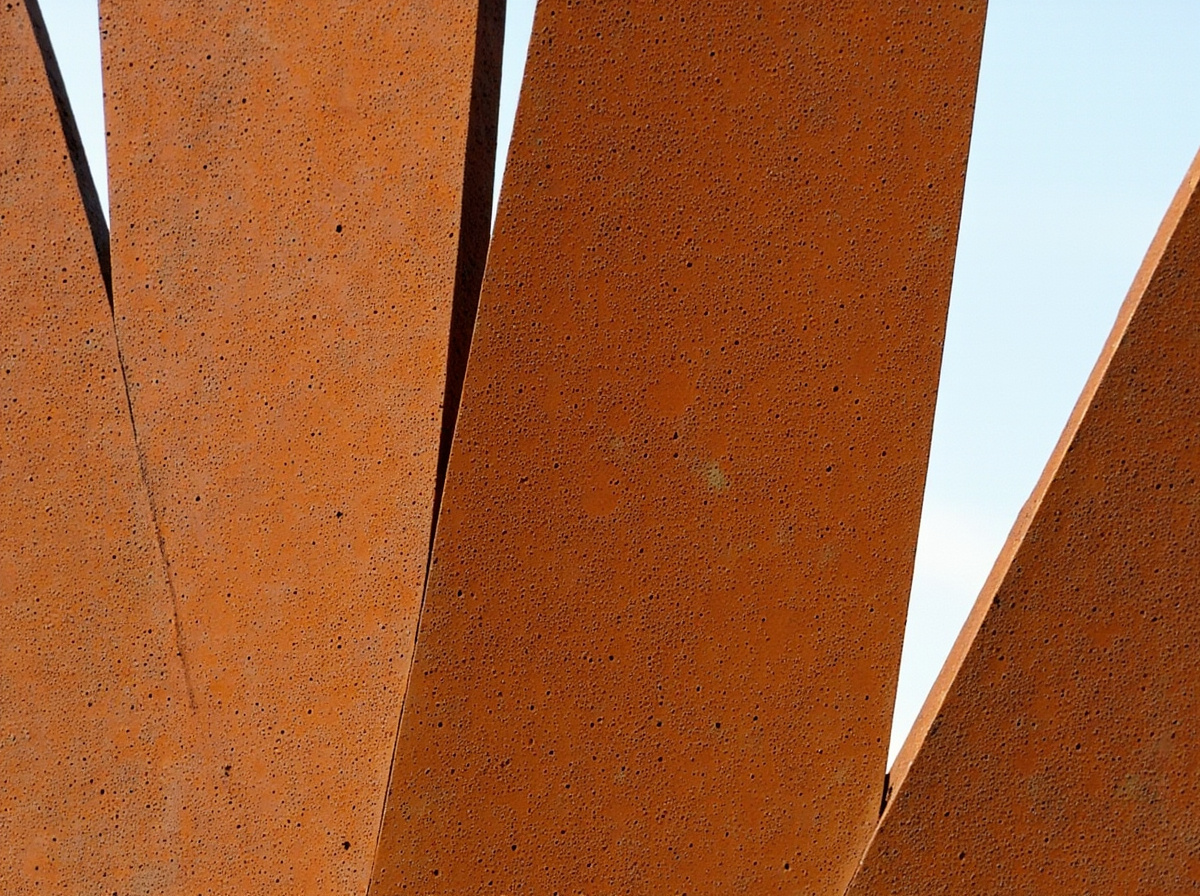
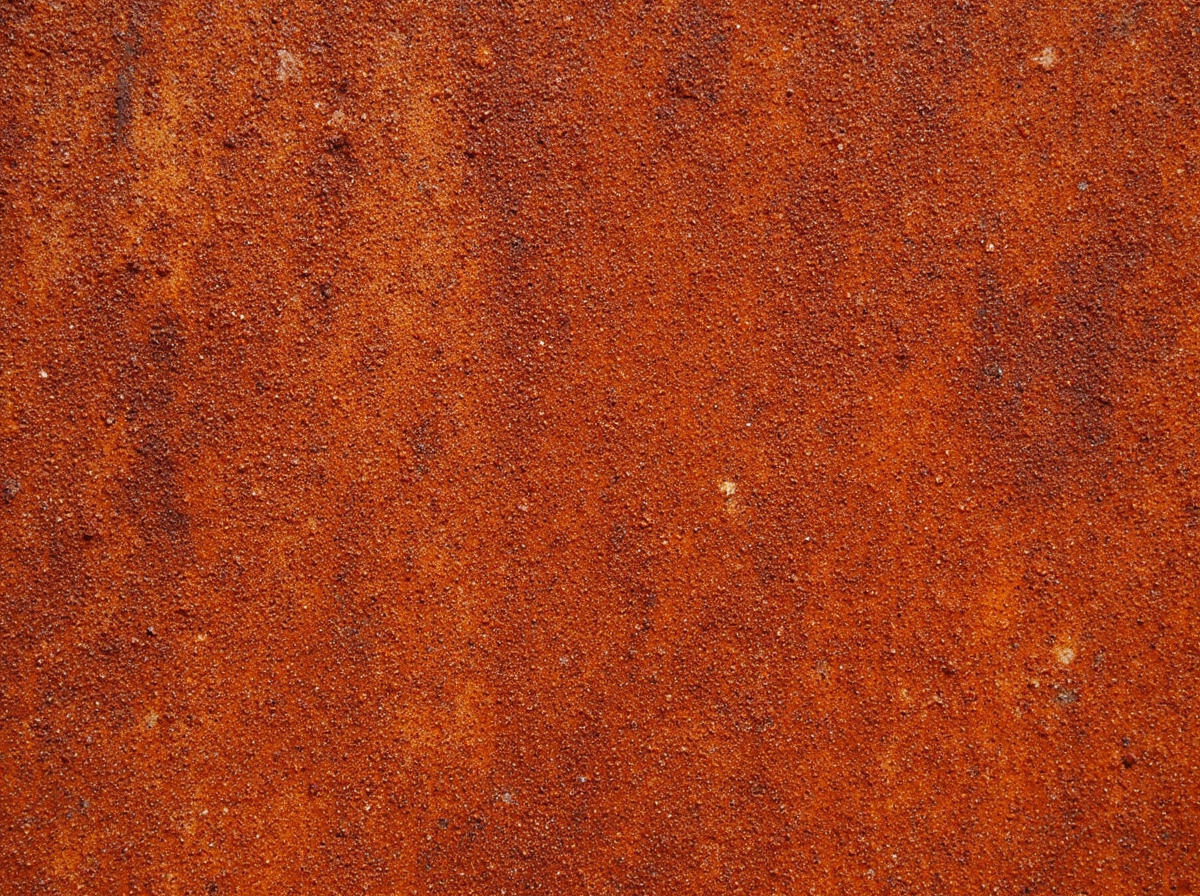
Corten steel weathering begins with initial rust formation identical to conventional steel. The critical distinction emerges as the alloying elements (particularly copper, chromium, and phosphorus) promote formation of a dense, compact oxide layer approximately 50-100 μm thick that effectively seals the steel surface. This oxide layer develops characteristic reddish-brown coloration within 6-18 months of exposure, stabilizing to prevent progressive corrosion loss.
Protective Layer Chemistry
| Oxide Component | Chemical Formula | Protective Function | Color Contribution |
|---|---|---|---|
| Goethite | FeO(OH) | Primary protective layer | Yellow-brown |
| Hematite | Fe₂O₃ | Secondary layer | Red-brown |
| Lepidocrocite | γ-FeO(OH) | Intermediate layer | Orange-red |
| Alloy oxides | Cu₂O, Cr₂O₃ | Stabilization | Various |
Environmental Influence
Weathering rate and oxide layer characteristics vary significantly with climate conditions. In wet/dry cycling environments (typical temperate climates), the oxide layer develops most effectively. Constant high humidity environments reduce weathering effectiveness by maintaining continuous moisture contact that inhibits oxide stabilization.
Structural Performance
Mechanical Properties
Corten steel maintains structural steel mechanical properties throughout weathering process. Typical ASTM A588 Grade A properties include tensile strength 485 MPa (70 ksi), yield strength 345 MPa (50 ksi), and elongation 21% minimum. The weathering oxide layer does not compromise mechanical performance, enabling structural applications identical to conventional steel.
Corrosion Rate Comparison
Long-term corrosion studies demonstrate Corten steel’s superior performance: corrosion loss rates typically 0.025-0.050 mm/year versus 0.100-0.200 mm/year for conventional carbon steel in identical environments. After 20 years exposure, Corten steel thickness reduction is approximately 1 mm versus 2-4 mm for conventional steel.
Design Considerations
Structural design with Corten steel accounts for initial oxide layer runoff during weathering period. Drainage systems must accommodate rust-colored runoff water for 6-18 months until oxide stabilization. Connection detailing maintains electrical continuity for cathodic protection where required.
Architectural Applications
Building Facades and Cladding
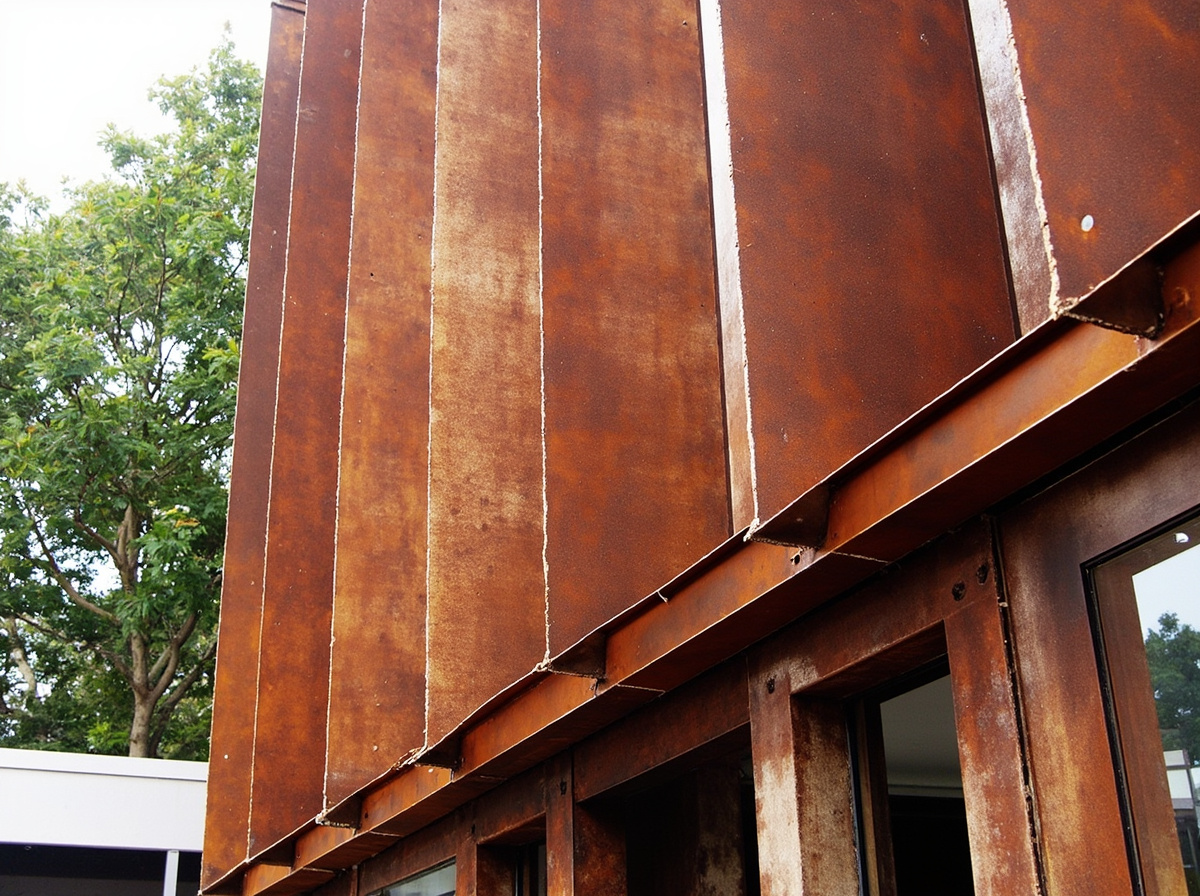
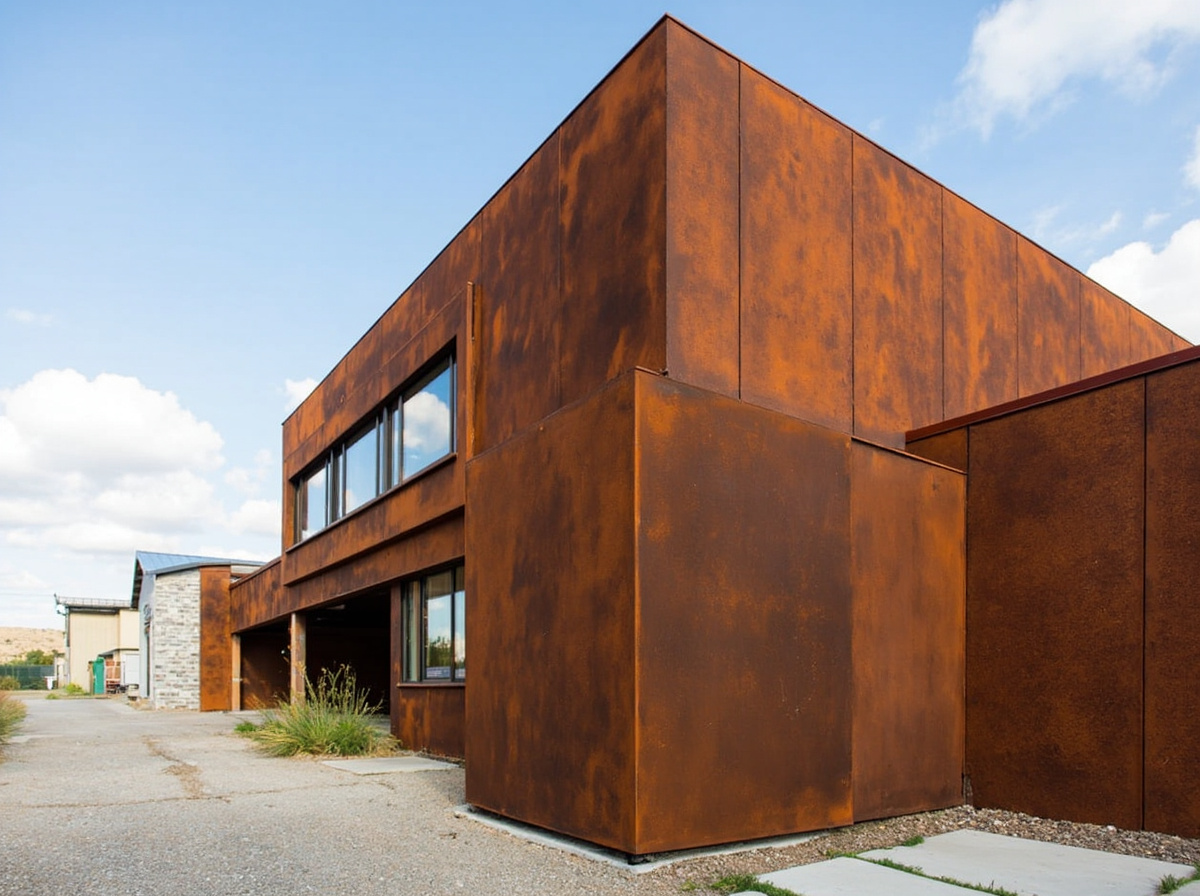
Corten steel dominates architectural applications where weathered aesthetic combines with structural performance. Building facades utilize Corten steel panels (3-6 mm thickness) for both weathering properties and distinctive appearance. Modern architectural projects increasingly integrate Corten steel with glass, concrete, and wood for material contrast.
Public Art and Sculpture
Artists leverage Corten steel’s evolving appearance for dynamic public art installations. The material’s transformation from metallic gray to stabilized rust orange-red over 6-18 months creates living artworks that evolve with environmental exposure. Sculpture applications range from monumental outdoor installations to gallery-scale pieces.
Bridge and Infrastructure
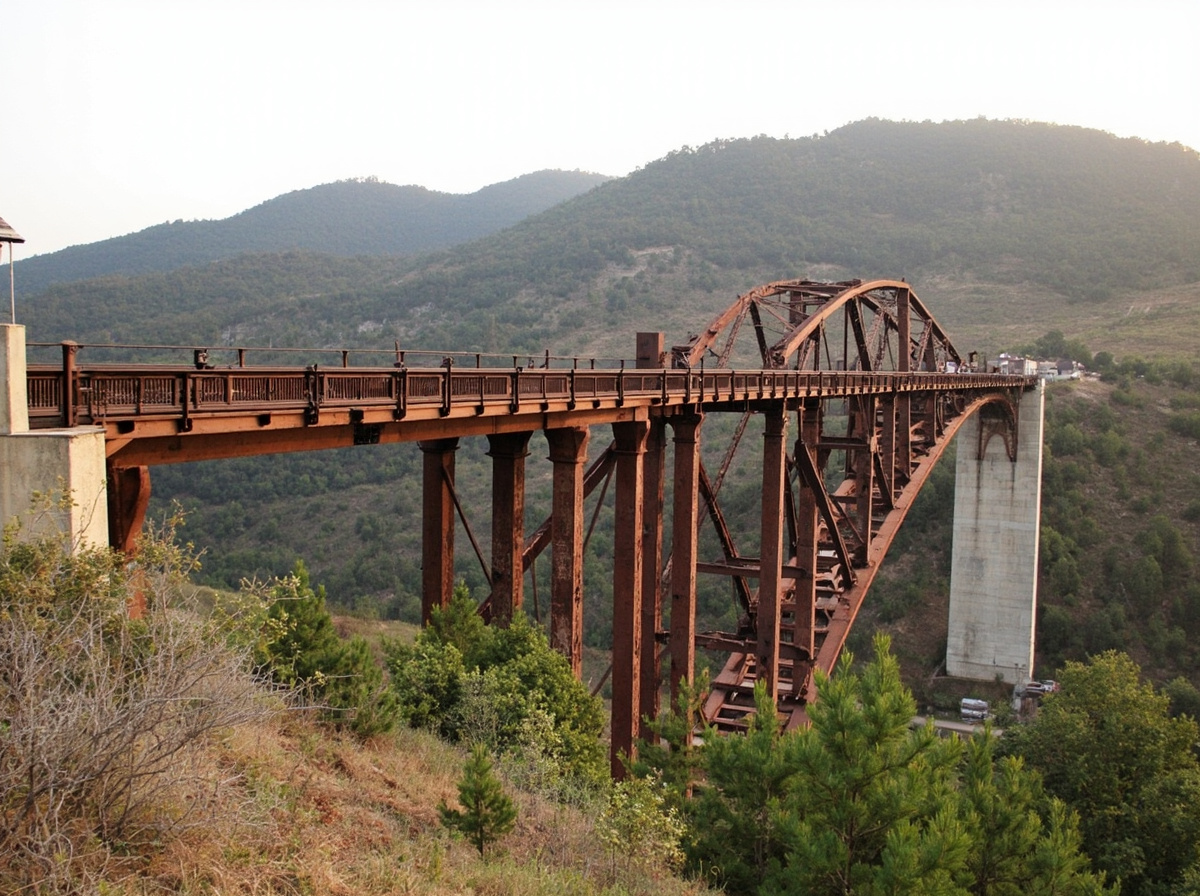
Corten steel bridge construction combines weathering properties with reduced maintenance requirements. Highway bridges, pedestrian bridges, and railway bridges utilize Corten steel for both structural members and aesthetic elements. Infrastructure applications benefit from reduced painting and maintenance over decades of service.
Material Selection Guidelines
Selecting Corten steel for specific applications requires evaluating multiple performance criteria:
Aesthetic Requirements: Corten steel’s evolving appearance may not suit applications requiring consistent metallic finish. The stabilized rust appearance after 6-18 months should align with project aesthetic vision.
Environmental Conditions: Wet/dry cycling environments optimize Corten steel weathering. Constant high humidity (marine environments, tropical climates) may reduce weathering effectiveness requiring supplemental protection.
Runoff Management: Initial weathering runoff (rust-colored water) requires drainage system accommodation for 6-18 months until oxide stabilization. Projects with sensitive adjacent surfaces (light-colored concrete, delicate landscaping) require runoff containment.
Structural Integration: Corten steel maintains conventional steel mechanical properties enabling standard structural design approaches. Connection detailing maintains electrical continuity where cathodic protection is required.
Conclusion
Corten steel represents a sophisticated material solution combining metallurgical innovation with architectural expression. Its ability to develop a protective oxide layer that stabilizes rather than corrodes continuously enables decades of exposure without structural degradation while maintaining distinctive aesthetic appeal. Understanding Corten steel’s weathering mechanism, structural performance, and application-specific considerations enables optimal material selection for projects requiring both durability and aesthetic distinction.
FAQ
How should buyers evaluate Corten Steel: Weathering Steel Properties and Architectural Applications?
Corten Steel: Weathering Steel Properties and Architectural Applications should be evaluated by matching strength, corrosion resistance, heat exposure, machinability, finishing requirements, and certification needs to the operating environment.
What properties matter most for Corten Steel: Weathering Steel Properties and Architectural Applications?
The most important properties usually include strength, hardness, ductility, corrosion resistance, thermal behavior, machinability, and surface treatment compatibility.
What information helps select the right metal grade?
Application load, environment, temperature, contact materials, required finish, production process, and applicable standards all help narrow the grade choice.
What is a common mistake when choosing Corten Steel: Weathering Steel Properties and Architectural Applications?
A common mistake is choosing by strength alone while ignoring corrosion, forming, machining, welding, finishing, or long-term service conditions.