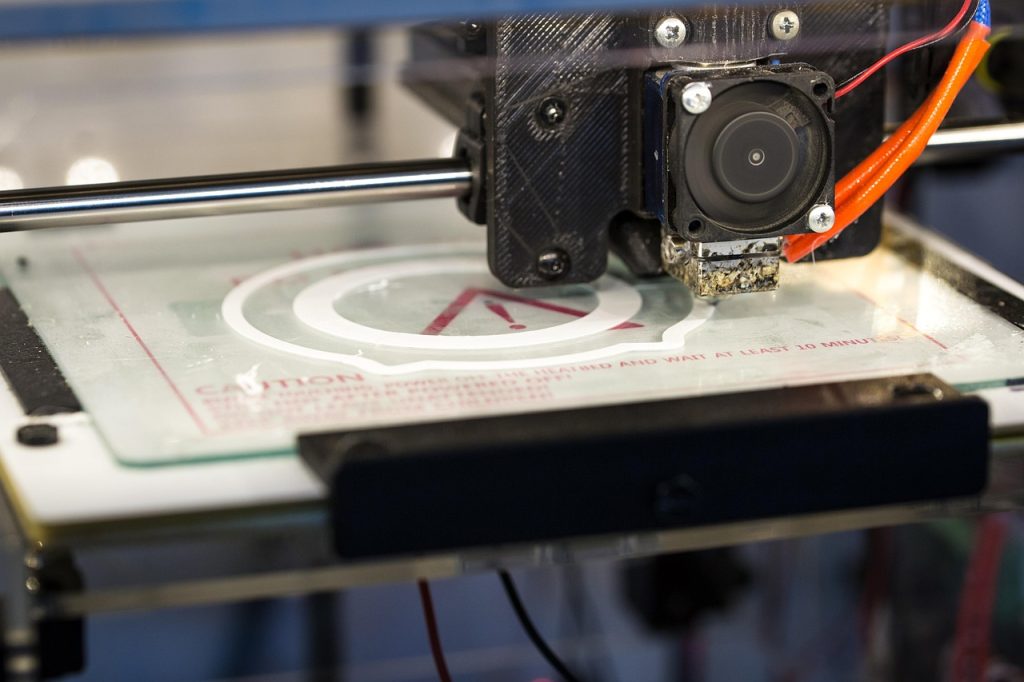
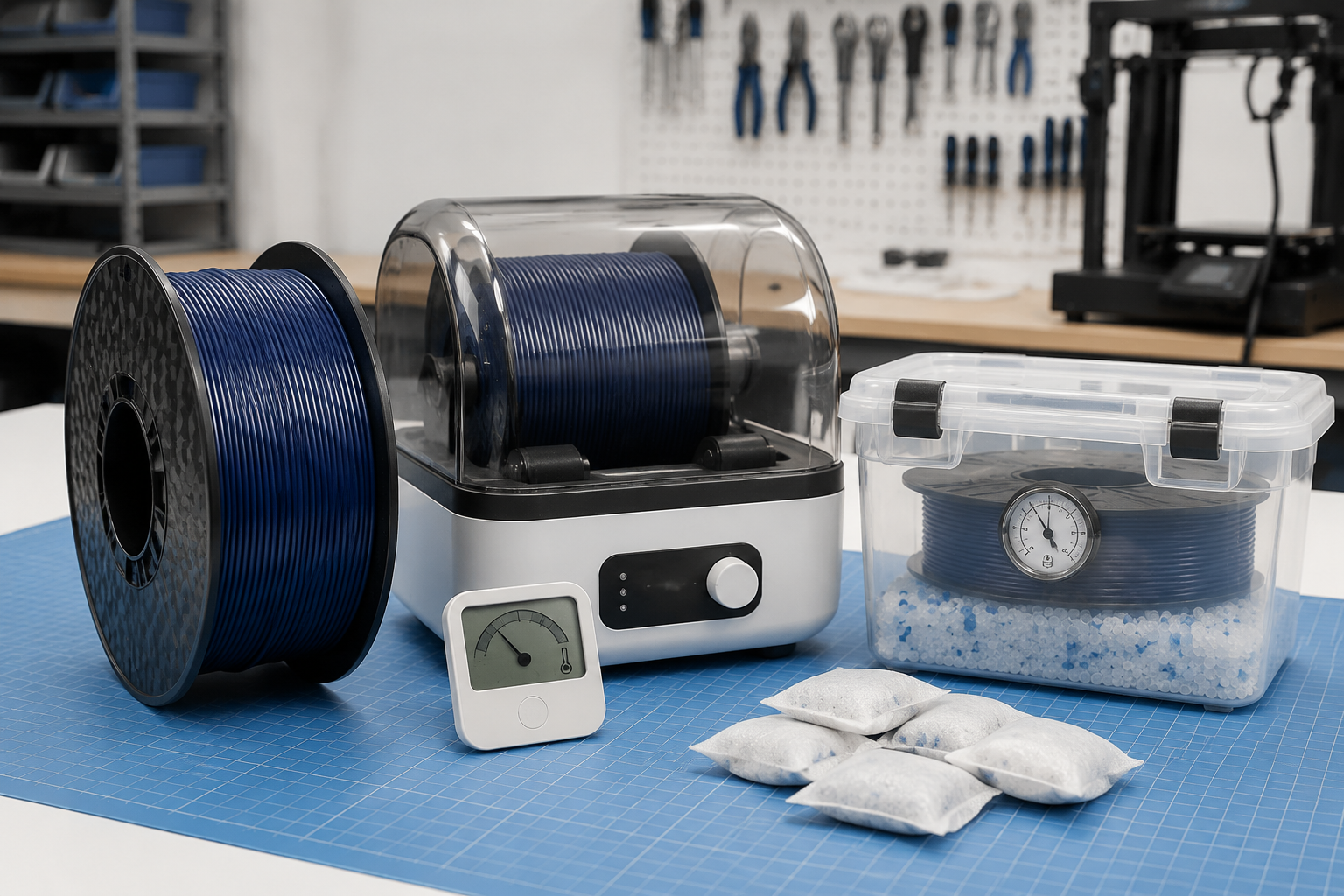
How to dry nylon filament correctly starts with full pre-drying before serious printing. If you want the short answer, most PA6 nylon spools print best after drying at 70-80 C for 6-12 hours, while PA12 usually needs 55-70 C for 4-8 hours. Carbon-fiber-filled nylon and glass-filled nylon still need drying, even though the fillers improve stiffness and reduce warping.
For prototype or production support beyond filament drying, review our 3D printing services and process options for FDM, SLS, MJF, SLA and PolyJet parts.
This guide explains how to dry nylon correctly, how to spot wet-filament defects, how to store spools after drying, and when a controlled feed box matters during printing. If you work with PA6, PA12, and engineering nylon grades for functional parts, this is the process workflow that matters most.
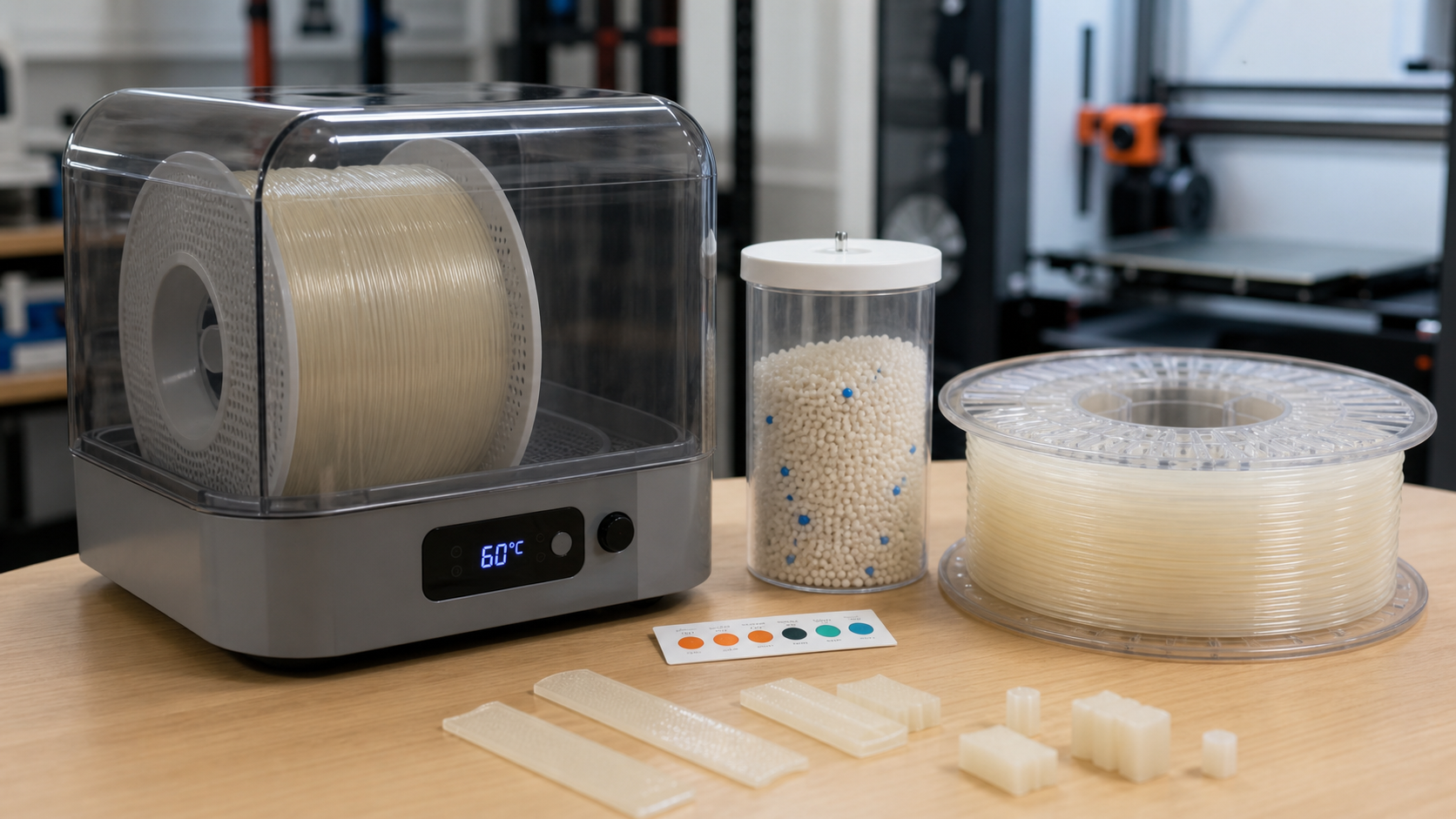
Quick Answer: Best Nylon Drying Settings
For most FDM users, the fastest reliable workflow is simple: dry the spool fully, keep it sealed, and print from a controlled environment instead of leaving it exposed beside the machine. That single process change often solves surface roughness, stringing, and weak layer bonding faster than endless slicer tuning.
| Nylon Type | Typical Drying Temperature | Typical Drying Time | Best Practice |
|---|---|---|---|
| PA6 Nylon | 70-80 C | 6-12 hours | Use a heated dryer or dry box for long prints |
| PA66 Nylon | 75-85 C | 6-12 hours | Verify spool heat tolerance before using an oven |
| PA12 Nylon | 55-70 C | 4-8 hours | Still store sealed, even though moisture uptake is lower |
| Carbon-Fiber Nylon | 70-80 C | 6-10 hours | Dry before every structural or dimensional-critical print |
| Glass-Filled Nylon | 70-80 C | 6-10 hours | Combine moisture control with a hardened nozzle setup |
Why Nylon Filament Absorbs Moisture So Fast
Nylon is hygroscopic, meaning it absorbs water from ambient air. This is one of the defining material behaviors that separates nylon from easier everyday filaments like PLA. Once the spool has absorbed enough moisture, the melt zone turns that water into steam. The result is unstable extrusion, visible surface defects, and lower mechanical performance.
That matters because nylon is usually chosen for functional printing, not decoration. People use nylon for jigs, clips, housings, brackets, bushings, and parts that need toughness, fatigue resistance, and better real-world durability than common entry-level materials. Printing it wet removes much of that advantage.
How to Tell If Nylon Filament Is Wet
Wet nylon usually announces itself before you ever measure the humidity around it. The signs are visible, audible, and consistent across many brands.
- Popping or sizzling sounds at the nozzle during extrusion
- Foamy, bubbly, or pitted outer surfaces
- Heavy stringing and random wisps between travel moves
- Unstable extrusion width or intermittent under-extrusion
- Weaker interlayer bonding and unexpectedly brittle parts
- Dimensional inconsistency caused by steam expansion in the melt
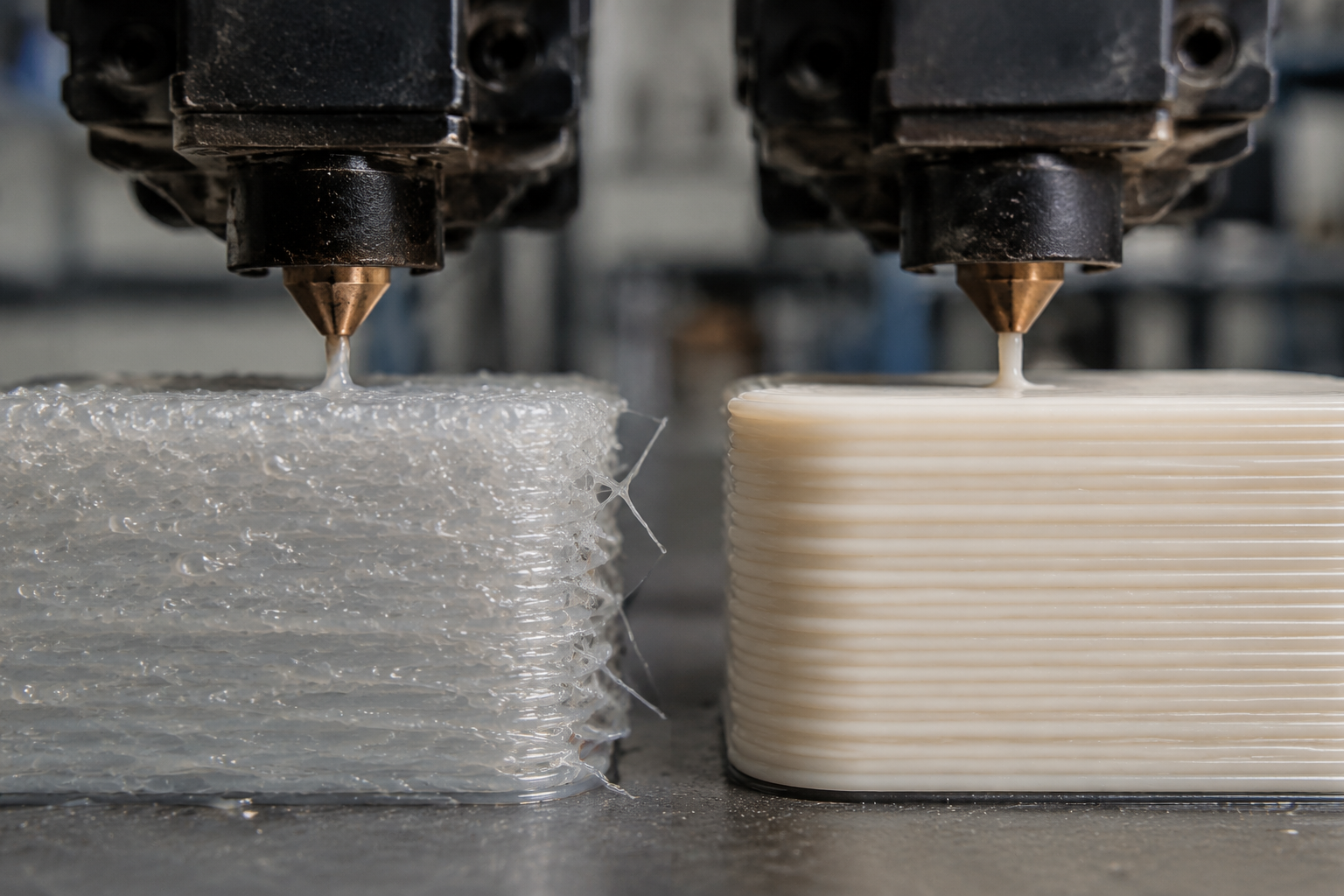
If your print shows two or more of those symptoms, start by drying the spool before you touch retraction, flow, or cooling settings. In many cases, moisture is the root cause. If moisture is also showing up as fit drift or inconsistent dimensions, our 3D printing tolerances guide helps separate material effects from machine calibration issues.
Best Ways to Dry Nylon Filament
Dedicated Filament Dryer
A purpose-built filament dryer is the most convenient day-to-day option. It gives you stable heat, better airflow than sealed bins, and in many cases a direct feed path into the printer. That matters because nylon can start reabsorbing moisture during long jobs if the spool sits in open room air.
Convection Oven
A convection oven can work well if the real internal temperature matches the setpoint. The main risk is overshoot. Some ovens cycle higher than the displayed number, which can deform spool flanges or soften spool materials. If you use an oven, verify temperature independently before committing a costly engineering spool.
Vacuum Oven or Industrial Drying Cabinet
For professional workflows, a vacuum oven or process-controlled drying cabinet gives the best repeatability. This is especially helpful when you are drying multiple materials, managing a team, or qualifying printed nylon parts for repeated production use.
Dry Box During Printing
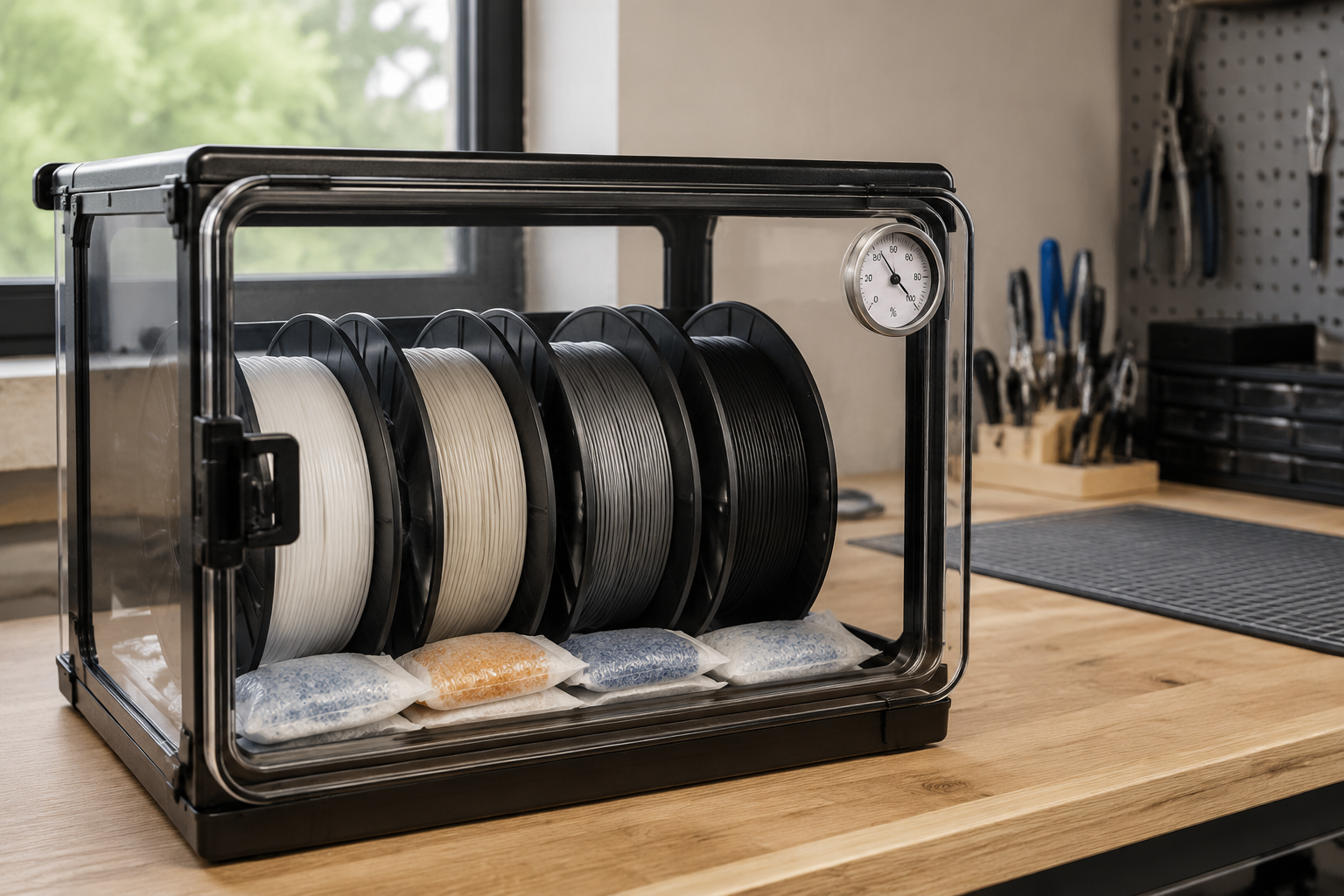
Pre-drying solves only half the problem. Nylon should ideally be printed from a sealed dry box or a heated dryer with a feed-through path. This becomes more important as print time, room humidity, and part value all increase.
How Long Should You Dry Nylon Filament?
There is no single universal number because drying time depends on polymer family, starting moisture level, spool mass, and the real temperature inside the dryer. But for practical FDM workflows, 4 to 12 hours covers most of the useful range.
Use the low end when the spool was only briefly exposed and symptoms are mild. Use the high end when you hear audible popping, see foamy walls, or know the spool sat open in a humid room for days or weeks.
Drying Temperature Mistakes to Avoid
Drying Too Cool
This is the most common mistake. A dryer that works for PLA may not reach the temperatures nylon actually needs. The spool feels warm, but the print still behaves like wet nylon.
Drying Too Hot
Overheating can warp spool edges, tighten winding, or create feed problems. Stay within the filament manufacturer’s guidance whenever possible, especially for filled or specialty grades.
Ignoring In-Print Reabsorption
If you dry the spool fully and then leave it exposed beside the printer for a long overnight job, you may still lose print quality during the run. A dry box fixes that more effectively than repeated pre-drying alone.
Best Storage Method After Drying
The goal is to avoid repeating full drying cycles unless the material actually needs them. Once the spool is dry, move it back into a sealed environment immediately.
- Store nylon in sealed bags or sealed bins after every print session
- Use fresh desiccant packs rather than exhausted ones
- Keep a hygrometer in larger storage boxes when possible
- Label each spool with material grade and last drying date
- Print directly from a dry box for long or high-value parts
Dry Nylon Versus Wet Nylon: What Changes?
Dry nylon usually gives smoother walls, better layer fusion, more repeatable dimensions, and less stringing. Wet nylon often still finishes the part, but the output looks worse and performs worse. That is why moisture control is both a quality issue and a mechanical-performance issue.
If you are comparing nylon against other engineering-friendly filaments, it helps to review broader material tradeoffs too, such as stiffness, heat resistance, moisture sensitivity, and ease of processing. Related comparisons on this site include PLA vs PETG vs ABS and the more detailed 3D print warping fix guide.
When Drying Alone Is Not Enough
Some nylon print failures are blamed on absorbed water when the real bottleneck is elsewhere. If the spool is dry but parts still curl, split, or lose accuracy, the next variables to check are chamber temperature, enclosure stability, first-layer adhesion, and the printer’s ability to hold nylon-specific settings consistently. If you are still evaluating hardware, this guide to the best 3D printers for engineering materials helps you compare chamber, hotend, and drying capability together.
| Situation | Recommended Action |
|---|---|
| New spool for production or structural parts | Dry it before the first serious print |
| Popping nozzle and foamy walls | Re-dry the spool before retuning slicer settings |
| Long overnight nylon print | Use an active dryer or sealed feed box during the run |
| Inconsistent part strength between batches | Standardize drying time, storage, and exposure tracking |
| Choosing a machine for engineering nylon printing | Check printer chamber, dryer, and hotend capability together |
Need help choosing the right nylon grade or production route? If you are comparing PA6, PA12, carbon-fiber nylon, MJF nylon parts, or machined engineering plastics, our team can help match the material and process to your actual part requirements. Contact us for application guidance or a quote.
Related Reading
Frequently Asked Questions
Why does nylon need drying before printing?
Nylon absorbs moisture from the air. During extrusion, that moisture can create bubbles, stringing, rough surfaces, weak layer bonding and less predictable dimensions.
How do I know if nylon filament is still wet?
Popping at the nozzle, bubbles, excessive stringing, cloudy extrusion, rough layers and reduced strength are common signs. A moisture check and controlled drying log are more reliable for production work.
What temperature should I use to dry nylon filament?
PA6 is often dried around 70-80 C and PA12 around 55-70 C, while filled nylons usually stay close to the grade supplier’s range. Confirm the exact spool and filament datasheet before heating.
How long does nylon filament need to dry?
Many spools need roughly 4-12 hours depending on grade, spool mass, moisture level and actual dryer temperature. Wet PA6 usually needs the longer end of the range.
Should nylon stay dry during the print?
Yes. Long prints or humid rooms can allow nylon to reabsorb moisture, so a dry box or sealed feed path helps maintain consistent extrusion and layer bonding.
Can I dry nylon filament in a regular oven?
Only if the temperature is stable and independently verified. Temperature overshoot can damage the spool or distort the winding, so a dedicated filament dryer is usually safer.
Request Nylon 3D Printing Support
Send the filament grade, part size, print process, drying history and the strength or dimensional target you need to achieve.