Nylon machining services are used when buyers need custom nylon parts without injection mold cost, or when a part requires tight features, low-volume production, prototype validation or machined stock geometry.
For multi-material capabilities, milling, turning and production support, see our custom CNC machining services page.
For chemical exposure or humid service, pair this with the nylon chemical compatibility chart and nylon moisture absorption guide before finalizing the grade.
This guide explains how to source nylon CNC machining services, compare PA6, PA66, cast nylon and filled nylon grades, plan tolerances and prepare an RFQ that avoids cost and quality surprises.
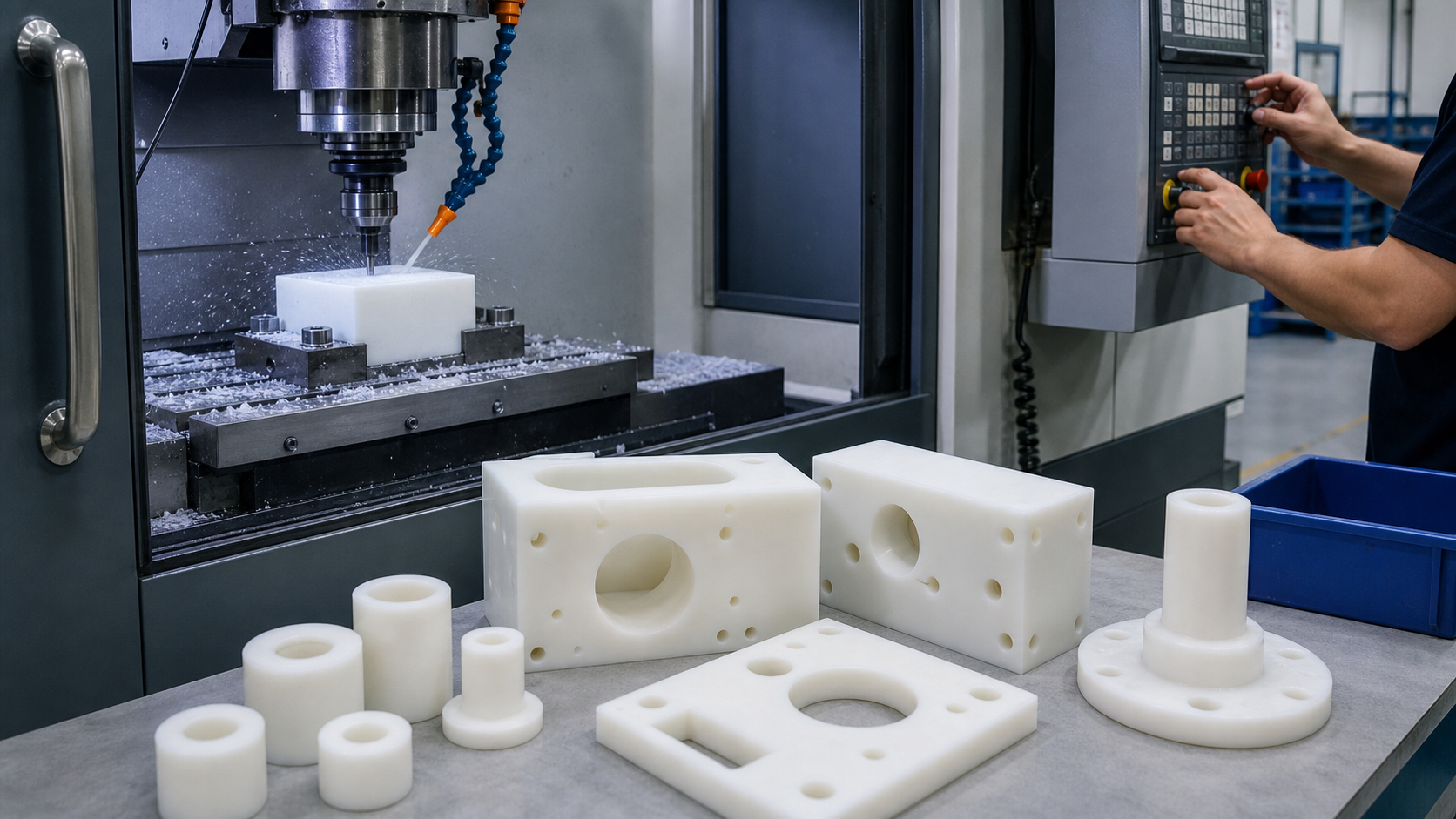
Nylon CNC Machining at a Glance
| Area | Common Choice | Buyer Note |
|---|---|---|
| Materials | PA6, PA66, cast nylon, oil-filled nylon, glass-filled nylon | Confirm moisture, wear, strength and dimensional stability needs |
| Processes | Milling, turning, drilling, boring, threading, routing | Match process to geometry and quantity |
| Parts | Bushings, rollers, gears, plates, guides, housings, spacers | Mark wear surfaces and mating fits |
| Risks | Moisture movement, burrs, stress, tolerance drift | Use realistic plastic tolerances and inspection timing |
| RFQ Data | Drawing, 3D model, grade, quantity, finish, inspection | Send complete data before quote |
When to Choose CNC Machining Instead of Molding
Nylon CNC machining is usually the better choice when volumes are low, part geometry may change, stock material is available, or the project cannot justify mold tooling. It is also useful for oversized parts, thick plates, replacement components and functional prototypes.
Injection molding may become more economical when volume is high and the geometry is stable. Many buyers use CNC machining first to validate design, then move selected parts to molding.
Nylon Materials for CNC Machining
PA6 and PA66 are common for strength, toughness and wear resistance. Cast nylon is often used for larger machined parts such as rollers, plates and wear components. Glass-filled nylon increases stiffness but can be more abrasive to tools and may require more careful edge finishing.
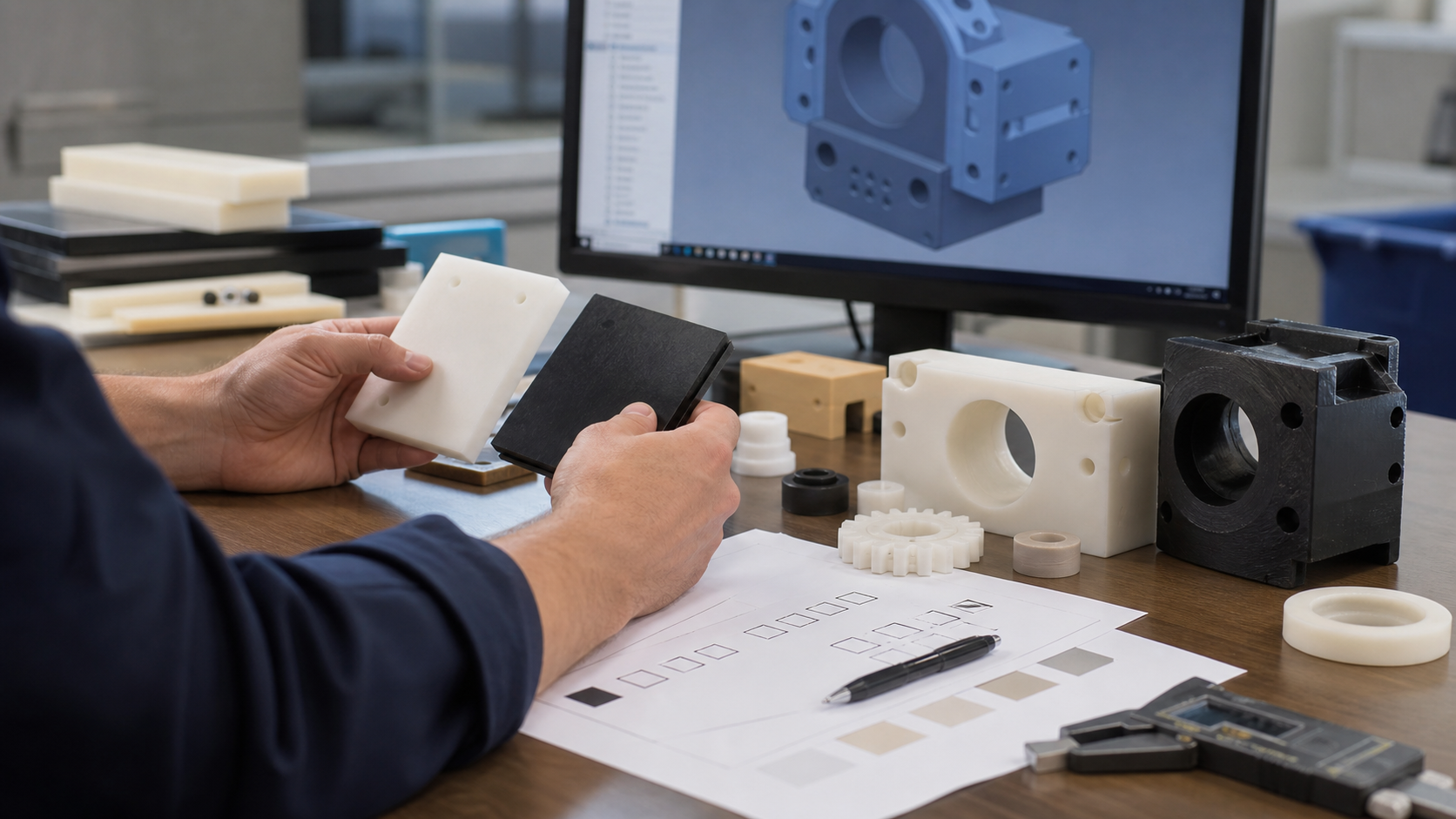
Moisture absorption is the main issue buyers must consider. Nylon can change dimensions with humidity, so tolerances, storage and inspection timing should be planned around the actual operating environment.
Tolerance and Design Guidelines
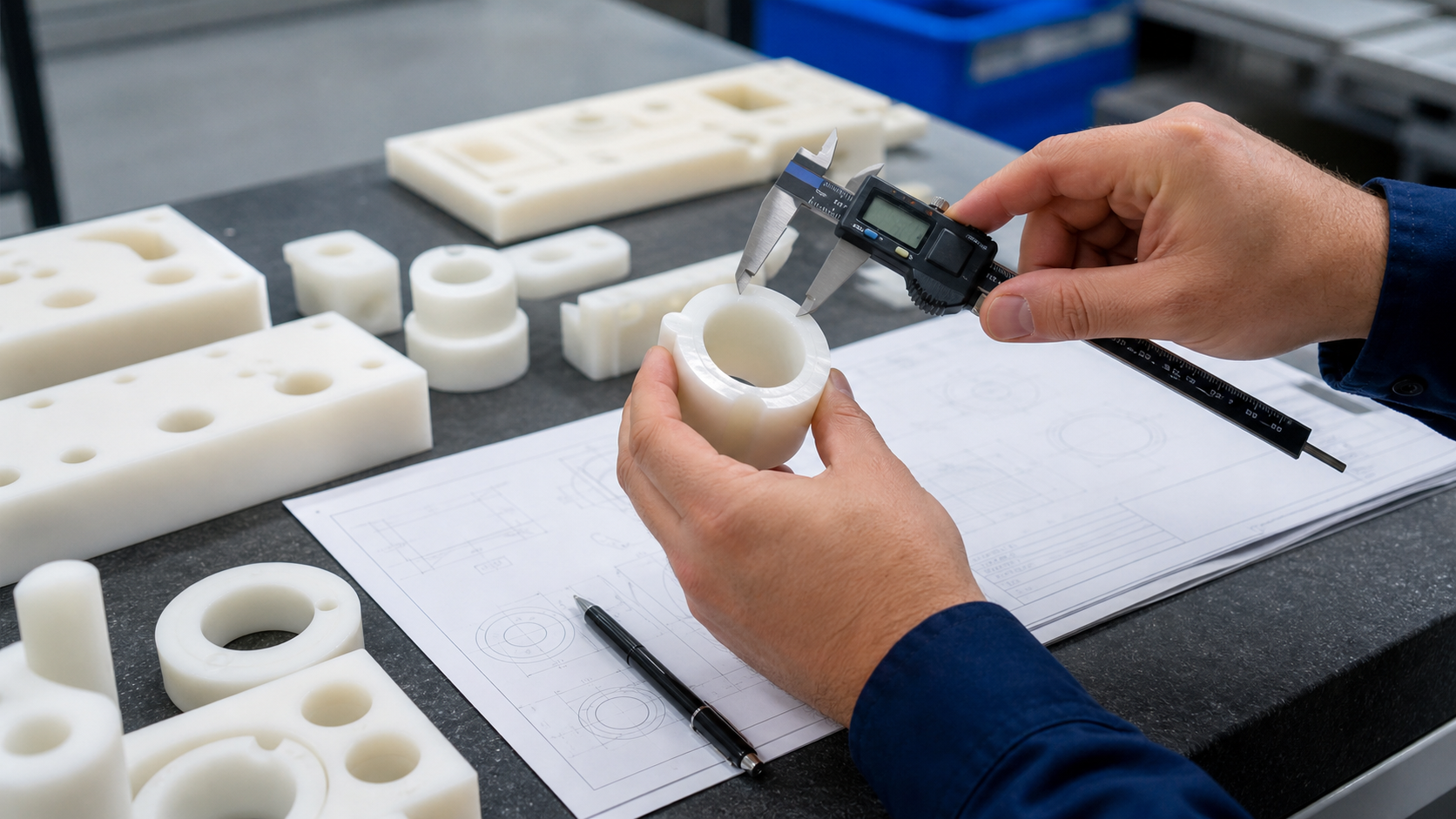
- Use tight tolerances only where the function requires them.
- Add radii where possible to reduce stress concentration.
- Avoid very thin walls if the part must remain flat.
- Confirm whether dimensions are measured dry, conditioned or after assembly.
- State critical fits for shafts, bearings, pins or mating housings.
Common Nylon Machining Problems and Fixes
| Problem | Likely Cause | Fix |
|---|---|---|
| Part warping | Internal stock stress or uneven machining | Use stable stock, balanced machining and rest time |
| Burrs | Tool geometry or feed mismatch | Adjust cutting tools and define deburring method |
| Hole size variation | Heat, tool deflection or material movement | Use staged machining and verify after cooling |
| Unexpected fit change | Moisture absorption or assembly load | Review environment and define functional fit range |
Related Reading
Frequently Asked Questions
Is nylon easy to CNC machine?
Nylon machines well, but moisture absorption, burr control and dimensional movement must be considered when tight fits are required.
Which nylon grade is best for machining?
PA6, PA66 and cast nylon are common. The best grade depends on strength, wear, temperature, moisture exposure and part size.
Can glass-filled nylon be machined?
Yes, but it is more abrasive than unfilled nylon. Tool choice, edge finishing and tolerance planning become more important.
What files are needed for a nylon CNC machining quote?
Send a STEP file, 2D drawing, material grade, quantity, finish requirement and inspection notes.
Request a Nylon Machining Review
For a nylon bushing, roller, guide or structural part, send the CAD and controlled drawing, exact grade and stock form, quantity, and operating conditions. The review connects material choice, workholding, functional fits and measurement conditions before quotation.
What to include in your request
| Send This | Why It Matters |
|---|---|
| STEP file and 2D drawing | Enables programming, tolerance review and inspection planning |
| Exact nylon grade | Prevents quoting the wrong material or stock type |
| Quantity and annual demand | Guides setup cost and process planning |
| Critical dimensions | Focuses inspection on functional features |
| Application environment | Helps account for moisture, temperature and wear |
- State stock source, permitted substitution, load, wear pair, temperature, moisture and chemical exposure.
- Mark the critical fit and datum; agree whether dimensions are accepted dry, conditioned or at a stated measurement temperature.
- Include surface/edge requirements, material records, sample report, traceability, destination and packaging.
Nylon Plastic focuses on CNC machined nylon parts where material behavior matters as much as machine accuracy. Nylon can move with moisture, heat and internal stress, so we review the drawing, tolerance stack and service environment before treating the part like a simple metal-machining job.
- Material and grade review: compare PA6, PA66, cast nylon, glass-filled nylon and alternative plastics such as POM or UHMW when wear, moisture or stiffness drives the design.
- Machining strategy: consider clamping, toolpath, bore stability, thin-wall deformation, deburring and rest time for parts that may move after cutting.
- Inspection planning: align datum selection, critical dimensions, fit checks and measurement conditions before production, especially for bushings, rollers, spacers and sliding parts.
- Route comparison: help buyers decide when CNC machining is better than nylon 3D printing or nylon injection molding.
The result is a quote and production plan that fits the plastic part, not a generic CNC process copied from metal components.
Compare quotes for the same stock, machining, stabilization or stress relief, conditioning, inspection and packaging scope. Agree any installed-fit or wear test separately from dimensional inspection. A machined or printed prototype may help validate geometry, but it does not approve the material and process of a later molded part.