
Nylon is a practical engineering topic when you need to compare options, check limits, and choose a process with less risk.
This nylon pa material selection injection molding guide explains practical material, design, manufacturing, and sourcing considerations for Nylon Plastic readers.
How to select the right nylon grade for injection molding — PA6 vs PA66 vs PA12, reinforcement options, and application-driven decision framework.
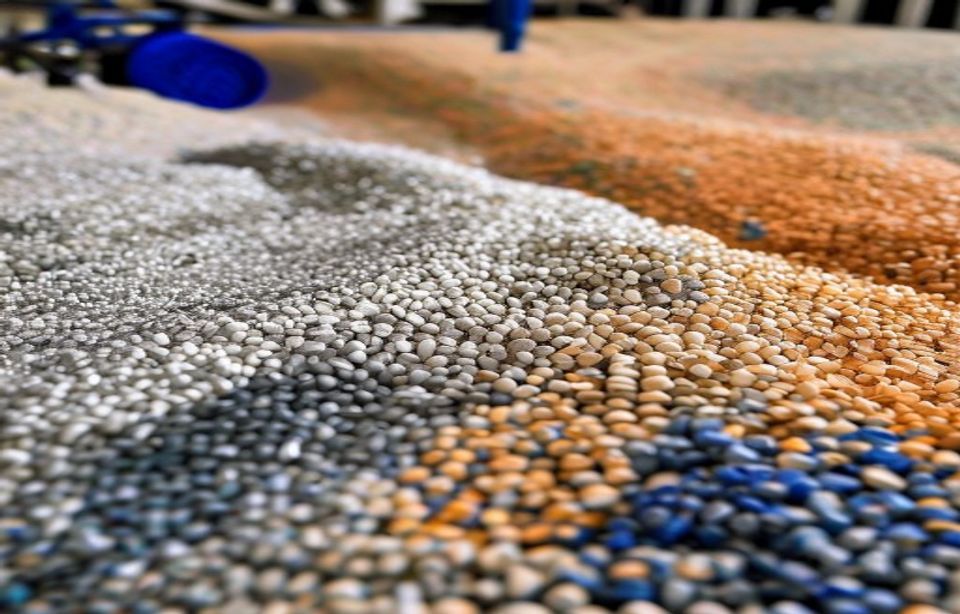
Why Nylon Dominates Engineering Plastics
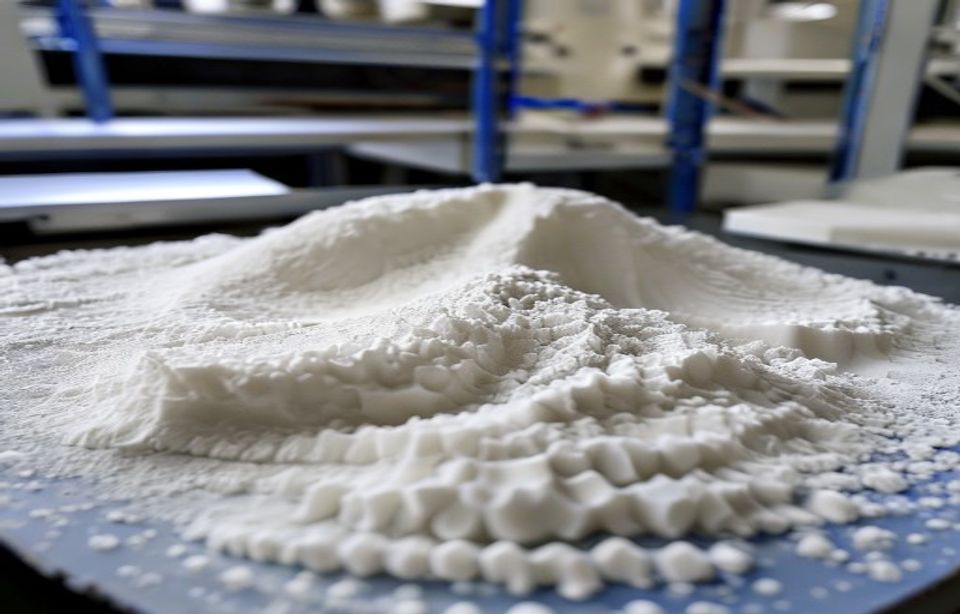
Nylon (polyamide, PA) is the most widely used engineering thermoplastic globally, accounting for over 40% of all engineering plastics consumption. Its popularity stems from an exceptional balance of mechanical strength, chemical resistance, wear performance, and processability. For injection molding engineers and procurement managers, selecting the right nylon grade directly impacts part performance, mold productivity, and total cost of ownership.
Unlike commodity plastics such as polypropylene or polyethylene, nylon grades are engineered for demanding applications. The difference between PA6 and PA66 — two grades that look nearly identical on paper — can mean the difference between a part lasting 50,000 cycles and 200,000 cycles in the same bearing application.
Understanding Nylon Families: PA6, PA66, PA46, PA12, and More
The nylon family extends far beyond the two most common grades. Each polyamide offers distinct performance characteristics:
PA6 (Polyamide 6) — Manufactured via caprolactam ring-opening polymerization. Offers good mechanical strength, excellent fatigue resistance, and superior surface finish. Glass fiber reinforced PA6 maintains approximately 60-70% of its room-temperature strength at 150°C, making it suitable for engine compartment components.
PA66 (Polyamide 66) — Produced from adipic acid and hexamethylenediamine (AH salt). Higher crystallinity than PA6 results in superior stiffness, thermal resistance, and chemical resistance. The melting point of PA66 (265°C) is 40°C higher than PA6, enabling use in high-heat environments. However, mold shrinkage is slightly higher.
PA46 (Polyamide 46) — Developed by DSM as a high-temperature nylon. Continuous service temperature reaches 180°C with exceptional hot rigidity. PA46 exhibits faster cycle times due to lower moisture sensitivity and higher crystallization rate. Primary applications include timing belt tensioners and automotive fuel systems.
PA12 (Polyamide 12) — Synthesized from laurolactam, offering the lowest moisture absorption of any nylon. Maintains mechanical properties in humid environments where other nylons would degrade. Superior chemical resistance to brake fluids, hydraulic oils, and fuel additives. Widely used in automotive fluid handling and cable conduits.
PA6/66 Copolymers — Blending PA6 and PA66 units creates materials with intermediate properties. These copolymers offer better impact resistance at low temperatures and reduced warpage compared to homopolymers. Commonly used in sports equipment and consumer goods.
Reinforcement Options: Glass Fiber, Carbon Fiber, and Mineral Fillers
Unfilled nylon has limitations in stiffness, thermal resistance, and dimensional stability that make it unsuitable for many structural applications. Reinforcement fillers address these gaps:
Glass Fiber Reinforced Nylon (PA-GF) — The most common reinforced nylon. Adding 30% glass fiber by weight increases tensile strength by 150-200%, flexural modulus by 300%, and reduces thermal expansion by 50%. However, glass fiber increases mold shrinkage anisotropy (differential shrinkage parallel vs. perpendicular to flow direction), requiring careful gate and part design.
Carbon Fiber Reinforced Nylon (PA-CF) — Carbon fiber reinforcement provides 20-30% higher strength-to-weight ratio than glass fiber at equivalent loadings. The conductive carbon network also provides electrostatic dissipation (ESD) properties — critical for electronics packaging and fuel system applications. Carbon fiber reinforced nylon is the specialty product line at nylonplastic.com.
Mineral Filled Nylon — Talc and mica fillers improve dimensional stability and reduce warpage without the anisotropy of fiber reinforcement. Commonly used in structural components where flatness is critical. 20% talc-filled PA6 offers warpage reduction of 40-60% compared to unfilled grades.
Impact Modified Nylon — Elastic modifiers (EPDM, SEBS) dramatically improve impact resistance, particularly at low temperatures. Essential for components subject to impact loading or cold-environment deployment. Notched Izod impact can exceed 800 J/m with rubber toughening, compared to 50-80 J/m for standard grades.
Application-Driven Material Selection Framework
The right material choice depends on your specific application requirements. Use this framework:
High-Temperature Applications (>150°C continuous) — Choose PA66-GF30 or PA46. PA66-GF30 maintains 80% of room-temperature tensile strength at 180°C. For even higher temperatures, consider PPA (polyphthalamide) or PEI (polyetherimide).
Chemical Exposure Environments — PA12 excels in fuel, oil, and brake fluid exposure. PA6 is attacked by strong acids and polar solvents. PA66 offers better general chemical resistance than PA6 but still requires compatibility testing for specific chemicals.
Dimensional Precision Requirements — Glass fiber reinforcement increases warpage. For tight-tolerance gears and precision components, consider internally lubricated nylons (PA6 + PTFE) or mineral-filled grades. Post-mold annealing reduces moisture-induced dimensional drift.
Food and Potable Water Contact — FDA-compliant grades available for both PA6 and PA66. EU Regulation 10/2011 compliance for food contact requires specific compound selection. KSAN-brand materials from Korea are well-documented for food-contact compliance.
Cost-Sensitive High-Volume Production — PA6 typically offers 10-15% material cost advantage over PA66. Glass fiber reinforcement at 30% loading provides the best cost-to-performance ratio for most structural applications.
Processing Considerations by Grade
Each nylon grade requires adjusted processing parameters:
PA6 Processing — Melt temperature: 230-260°C. Mold temperature: 60-80°C (higher than PA66 to achieve similar crystallinity). Moisture content must be below 0.2% — dried at 80°C for 4-6 hours. Higher mold temperature reduces crystallinity-related warpage.
PA66 Processing — Melt temperature: 270-290°C. Mold temperature: 80-100°C. Moisture content below 0.15%. The higher mold temperature increases cycle time but produces parts with superior surface finish and lower internal stresses. Note: PA66 has significantly higher melt viscosity — requires larger gates and higher injection pressure.
PA12 Processing — Melt temperature: 240-270°C. Mold temperature: 40-60°C. Lower moisture sensitivity than PA6/66, but still requires drying at 80°C for 3-4 hours. The lower mold temperature enables faster cycle times and makes PA12 suitable for temperature-sensitive inserts.
Reinforced Nylon Processing — Glass fiber lengths erode during injection. Gate design must minimize shear at the gate restriction. Check marks on finished parts indicate excessive fiber orientation stress. Counter-gating or hot runner systems reduce fiber alignment at critical surfaces.
FAQ
When does Nylon (PA) Material Selection Guide for Injection Molding make sense?
Nylon (PA) Material Selection Guide for Injection Molding makes sense when the part volume, material choice, geometry, and repeatability needs justify mold design and tooling investment.
What design factors matter most for Nylon (PA) Material Selection Guide for Injection Molding?
Wall thickness, ribs, bosses, draft angle, gate location, shrinkage, parting line, and ejection all affect molded part quality.
What information is needed before mold production?
The supplier should confirm the 3D model, material, expected annual volume, appearance requirements, tolerance needs, and any assembly or functional testing requirements.
What is the biggest risk in Nylon (PA) Material Selection Guide for Injection Molding?
The biggest risk is approving tooling before material behavior, shrinkage, flow, and part function are fully checked against the real application.

