Stanyl PA46 is a high-temperature polyamide used where conventional PA66 may lose too much stiffness or wear performance. Grade selection still depends on reinforcement, conditioning, sustained load, temperature and the molding window; the values below should be confirmed against the current supplier datasheet for the exact grade.
For engineering and sourcing teams
Considering Stanyl PA46 for a High-Heat Part?
PA46 is a high-temperature polyamide option when stiffness retention, wear and fatigue at elevated temperature justify tighter drying and molding control.
- Compare the exact grade in its dry and conditioned state
- Check sustained temperature, peak temperature and load separately
- Review PA66, PPA and PPS alternatives before locking the tool design
Request a PA46 grade and molding review → View high-temperature engineering plastics


| Property | Test Method | PA46 GF30 (46HF4130) | PA46 GF40 (46HF5040) | PA46 Unfilled (TW341) |
|---|---|---|---|---|
| Density | ISO 1183 | 1.41 g/cm³ | 1.62 g/cm³ | 1.17 g/cm³ |
| Melting Temperature | ISO 11357 | 295°C | 295°C | 295°C |
| HDT @ 1.80 MPa | ISO 75 | 285°C | 290°C | 189°C |
| Tensile Modulus (dry) | ISO 527 | 10,000 MPa | 15,000 MPa | 3,300 MPa |
| Tensile Modulus @ 120°C | ISO 527 | 5,500 MPa | 9,500 MPa | — |
| Tensile Modulus @ 160°C | ISO 527 | 5,000 MPa | 6,500 MPa | — |
| Tensile Modulus @ 200°C | ISO 527 | 4,500 MPa | — | — |
| Tensile Stress at Break (dry) | ISO 527 | 180 MPa | 190 MPa | 100 MPa |
| Elongation at Break (dry) | ISO 527 | 3% | 1.7% | 30% |
| Flexural Modulus (dry) | ISO 178 | 9,000 MPa | 13,000 MPa | — |
| Flexural Modulus @ 160°C | ISO 178 | — | 5,500 MPa | — |
| Charpy Notched Impact +23°C (dry) | ISO 179/1eA | 11 kJ/m² | 12 kJ/m² | 10 kJ/m² |
| Charpy Unnotched +23°C (dry) | ISO 179/1eU | 55 kJ/m² | 60 kJ/m² | — |
| Molding Shrinkage (flow / transverse) | ISO 294-4 | 0.5% / 1.3% | 0.3% / 0.9% | — |
| Water Absorption (23°C, 50% RH) | ISO 62 | 2.6% | 2.0% | 3.7% |
Key takeaway: The jump from GF30 to GF40 adds roughly 30–50% stiffness but costs elongation and toughness. GF30 is the workhorse for structural parts; GF40 is specified when creep resistance and absolute rigidity matter more than impact.
PA46 vs PA66 vs PPA vs PPS: High-Temperature Nylon Comparison
| Property | PA46 GF30 (Stanyl) | PA66 GF30 | PPA GF30 (PA6T-based) | PPS GF40 |
|---|---|---|---|---|
| Melting Point | 295°C | 260°C | 310–320°C | 280°C |
| HDT @ 1.80 MPa | 285°C | 245–255°C | 280°C | 265°C |
| Continuous Use (5000h) | 163°C | 120–130°C | 150–160°C | 200–220°C |
| Tensile Modulus (dry) | 10,000 MPa | 9,500–10,500 MPa | 11,000–13,000 MPa | 14,000–15,000 MPa |
| Tensile Modulus @ 150°C | ~5,250 MPa | ~3,000 MPa | ~4,500 MPa | ~12,000 MPa |
| Wear Resistance (gear test) | Excellent | Good | Moderate | Very Good |
| Flowability | Excellent (thin-wall 0.2 mm) | Good | Moderate | Moderate |
| Cycle Time (relative) | Fast | Moderate | Slow | Slow |
| Relative Cost per kg | Moderate-High | Low-Moderate | High | High |
| Best For | High-temp structural, gears, thin-wall | General structural | High chemical resistance, low moisture | Continuous 200°C+, chemical exposure |
When PA46 Wins
- Above 120°C, below 180°C: This is PA46’s sweet spot. PA66 loses too much stiffness at these temperatures, PPA is more expensive and cycles slower, and PPS is overkill (and 3–5× the cost).
- Thin-wall parts: PA46’s exceptionally high melt flow allows wall sections down to 0.2–0.3 mm — thinner than PA66 or PPA can reliably fill.
- Gears and wear surfaces: In DSM’s own gear wear testing, PA46 GF30 showed significantly lower wear depth than PA66 after millions of cycles, with or without internal lubrication.
- Cycle time reduction: PA46 crystallizes faster than PA66 and far faster than PPA, yielding 15–30% shorter molding cycles.
Stanyl PA46 Commercial Grade Selector
DSM (now Envalior) offers the most comprehensive PA46 portfolio. Below is a practical grade selector organized by reinforcement level and key differentiator.
| Grade | GF Content | Key Feature | Typical Application |
|---|---|---|---|
| Stanyl TW341 | 0% (unfilled) | High viscosity, lubricated | Extrusion profiles, stock shapes |
| Stanyl TQ261F2 | 10% GF | Low reinforcement, balanced flow | Snap-fits, clips |
| Stanyl TQ261F5 | 25% GF | Moderate stiffness, good surface | Housings, covers |
| Stanyl TW241F6 | 30% GF | Heat stabilized, lubricated, general purpose GF30 | Gears, bearings, structural parts |
| Stanyl 46HF4130 | 30% GF | High flow + heat stabilized, thin-wall capable | Connectors, bobbins, coil formers |
| Stanyl TE200F6 | 30% GF | Impact modified GF30 | Automotive structural brackets |
| Stanyl TW241F8 | 40% GF | Heat stabilized, high rigidity | Structural housings |
| Stanyl 46HF5040 | 40% GF | FR V-0 + heat stabilized + high flow | Electrical connectors, relay bases |
| Stanyl 46HF5041LW | 40% GF | FR V-0 + low warpage | Large flat electrical components |
| Stanyl 46HF5050 | 50% GF | FR V-0 + maximum stiffness | High-load electrical structural parts |
| Stanyl 46SF5030 | 30% GF | FR V-0, halogen-free option available | Green electronics, EV components |
| Stanyl TE250F6 | 30% GF | FR V-0 + heat stabilized | Electrical connectors, terminal blocks |
| Stanyl TE250F9 | 45% GF | FR V-0 + high stiffness | Circuit breaker internals |
| Stanyl Diablo OCD2100 | 40% GF | Ultra heat stabilized, long-term 200°C+ | Turbocharger air ducts, underhood hot-side |
| Stanyl TC154 | — | Thermally conductive + FR | LED heat sinks, thermal management |
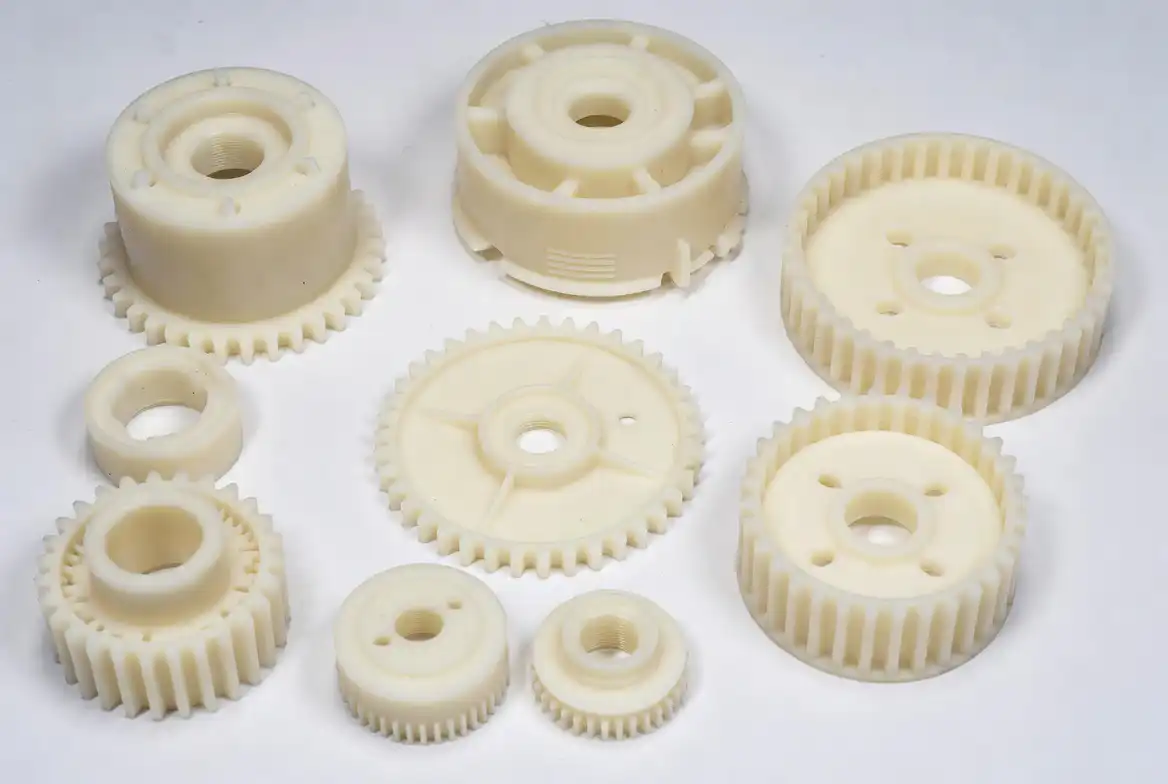
Processing PA46: Injection Molding Parameters
| Parameter | Recommended Value | Notes |
|---|---|---|
| Pre-drying | 80–100°C for 4–6 hours | Desiccant dryer required. Target moisture < 0.10% |
| Melt Temperature | 300–320°C | Stay within 290–330°C window. Over 330°C risks degradation |
| Mold Temperature | 80–120°C | Higher mold temp = better crystallinity and dimensional stability |
| Injection Speed | Medium to fast | Fast fill to prevent premature freezing in thin sections |
| Holding Pressure | 60–100 MPa | PA46 shrinkage is moderate; pack adequately |
| Residence Time | Minimize (≤ 5 min) | PA46 degrades with extended residence at melt temperature |
Critical processing notes:
- Moisture control: PA46 is less moisture-sensitive than PA66 at room temperature, but at 300°C+ melt temperatures hydrolysis becomes a real risk. Always pre-dry.
- Fast crystallization: PA46 crystallizes exceptionally fast — a productivity advantage, but also means gate freeze-off happens sooner. Size gates appropriately.
- Mold temperature matters: Unlike PA66, where mold temp mainly affects surface finish, PA46’s degree of crystallization depends on cooling rate. Mold temps below 80°C produce under-crystallized parts with reduced thermal resistance.
- Purge between materials: PA46’s high melt temperature means residual lower-temperature materials in the barrel can degrade. Purge thoroughly with PE or a purging compound.
PA46 Applications by Industry
| Industry | Application | Why PA46 |
|---|---|---|
| Automotive Engine | Turbocharger air ducts, charge air pipes, EGR components | Continuous 160–180°C, oil mist resistance, burst pressure |
| Automotive Drivetrain | Chain tensioners, gear wheels, bearing cages | Wear resistance under load at 120–160°C |
| Electrical / Electronics | SMT-compatible connectors, bobbins, relay bases | Survives reflow soldering (260°C peak), FR grades available |
| Electrical / Electronics | Circuit breaker internals, coil formers | V-0 at 0.35 mm, excellent arc tracking resistance |
| Industrial | High-temperature gears, cams, wear pads | Wear depth 3–5× lower than PA66 in gear cycling tests |
| Consumer Appliances | Electric motor end caps, brush holders | Temperature resistance + electrical insulation |
PA46 FR (Flame Retardant) Grades
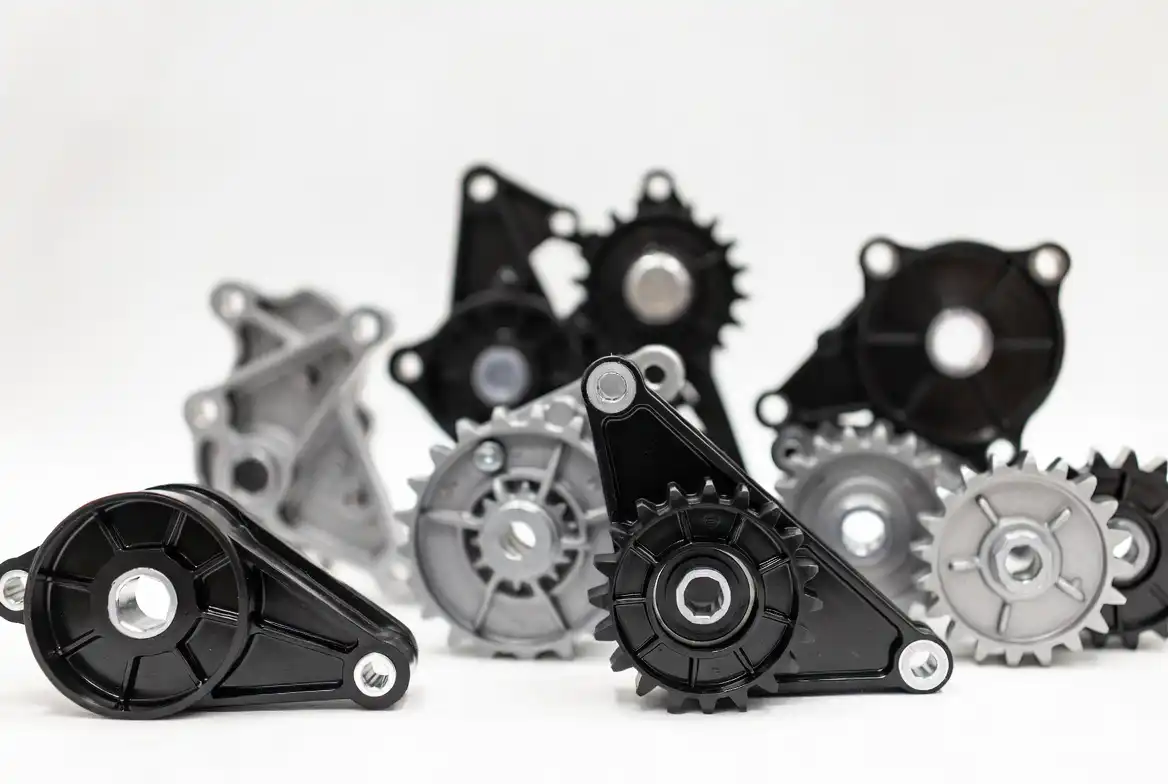
PA46’s high melting point creates a built-in advantage for flame retardant formulations. Where standard polyamides need heavy FR loading to pass UL94 V-0, PA46 can achieve V-0 at wall thicknesses as low as 0.35 mm with less additive — preserving more of the base polymer’s mechanical properties.
Key FR grades in the Stanyl portfolio:
- TE250F6 (GF30 V-0): Most widely specified FR PA46 for electrical connectors and terminal blocks. Halogenated FR, balances flow and stiffness.
- 46HF5040 (GF40 V-0): Higher stiffness FR grade for structural electrical components.
- 46SF5030 (GF30 V-0): Halogen-free FR option for environmentally regulated applications (EV charging, consumer electronics).
- TE250F9 (GF45 V-0): Maximum stiffness FR grade for circuit breakers and high-mechanical-load electrical parts.
Limitations: When NOT to Use PA46
- Hot water / steam above 120°C: PA46 hydrolyzes like all aliphatic polyamides. For prolonged hot-water exposure, consider PPS or PPA instead.
- Continuous use above 200°C: While PA46 survives short-term excursions to 250°C, long-term oxidative degradation makes PPS (220°C continuous) or PEEK the better choice beyond PA46’s range.
- UV exposure without stabilization: Standard PA46 grades require UV stabilization for outdoor use. Specify UV-stabilized variants (TW341 variants available).
- Single-source risk: Stanyl is exclusively produced by Envalior (formerly DSM Engineering Materials). For multi-source requirements, PPA or PPS may be preferred.
- Budget-driven projects: PA46 GF30 costs roughly 2–3× PA66 GF30. If the application doesn’t need the thermal performance, it’s overkill.
What Is PA46?
PA46 (polyamide 46) — sold exclusively under DSM’s Stanyl brand — is an aliphatic polyamide with a melting point of 295°C, roughly 40–55°C higher than PA66. While most engineering nylons soften significantly above their glass transition temperature (Tg), PA46 is different: its uniquely symmetric molecular chain packs into a crystal lattice with roughly 70% crystallinity, giving it mechanical stiffness retention that outperforms not only PA66 but also PPA, PPS, and some LCP grades in the 120–200°C range.
For design engineers and procurement teams searching for PA46 datasheets, Stanyl grade comparisons, or PA46 vs PA66 vs PPA selection guidance, this page consolidates the critical data — from glass-filled property tables to processing windows and commercial grade cross-references.
Why PA46 Stands Out: The DMTA Story
Dynamic Mechanical Thermal Analysis (DMTA) tells the story best. In the glassy region (below Tg), all engineering polymers — PA66, PPA, PPS, Stanyl — show comparable modulus values of 1–1.5 GPa. The divergence begins above Tg:
- PA66 GF30 drops rapidly above 70°C (its Tg), losing approximately 60% of room-temperature modulus by 120°C.
- PPA (PA6T-based) holds up better, but its retention depends on the specific aromatic structure and glass transition.
- PPS GF40 maintains good stiffness, but costs 3–5× more than PA46.
- Stanyl PA46 GF30 retains usable modulus up to 200°C — and notably, its rubber-plateau modulus is the highest among all polymers in the DMTA comparison chart, irrespective of polymer class.
In practical terms: if your part must carry structural load at 150°C in an oily, abrasive environment, PA46 is the material that does it without jumping to PEEK-level costs.
PA46 GF30 vs GF40: Glass-Filled Grade Properties
Can PA46 replace PEEK or PPS?
In the 150–180°C continuous-use range, PA46 can replace PPS at roughly one-third to one-fifth the material cost, assuming chemical exposure is limited to oils and hydrocarbons. PA46 cannot replace PEEK’s 250°C continuous use ceiling. But for applications currently using PPS or PEEK “just to be safe” in the 150–180°C range, PA46 is a viable cost-down candidate.
Does PA46 absorb moisture?
Yes — like all aliphatic polyamides, PA46 absorbs moisture. At 23°C and 50% RH, PA46 reaches approximately 2.6% moisture content. This affects dimensional stability and reduces tensile modulus (conditioned modulus is roughly 60% of dry-as-molded). For precision applications, account for moisture conditioning in your tolerance stack-up.
What temperature can PA46 withstand?
PA46’s short-term peak temperature is 250°C. Its continuous use temperature (5000-hour service life) is 163°C according to DSM’s UL RTI rating. For structural applications at temperatures above 180°C continuous, consult the Stanyl Diablo grades (engineered for long-term 200°C+ exposure).
How does PA46 compare to PPA (PA6T/PA9T/PA10T)?
PPA (polyphthalamide) is a family of semi-aromatic nylons with generally higher melting points (310–320°C) but slower crystallization. PA46 crystallizes faster and cycles 20–30% quicker in injection molding. PPA often provides lower moisture absorption (1–2% vs. 2.6% for PA46) and better chemical resistance, but PA46 wins on cycle time, thin-wall flow, and wear resistance. The choice often depends on whether processing speed or ultimate chemical resistance matters more for your part.
Need Stanyl PA46 pellets, datasheets, or technical grade selection support? We supply glass-filled, FR, and specialty PA46 grades. Contact us with your temperature, load, and regulatory requirements — we’ll recommend the right grade.
Frequently Asked Questions
What makes Stanyl PA46 different from PA66?
Stanyl (PA46) has a higher melting point (295°C vs. 260°C for PA66), higher crystallinity, and superior mechanical properties at elevated temperatures. Its shorter CH2 sequence between amide groups gives it a denser hydrogen-bond network, resulting in best-in-class heat and wear resistance among aliphatic nylons.
At what temperature does PA46 outperform PA66?
Stanyl PA46 shows significant advantage above 150°C. At 180°C, PA46 retains approximately 50% of its room-temperature stiffness, while PA66 retains only about 25%. This makes PA46 the go-to nylon for under-hood automotive components and high-speed industrial gears.
Is Stanyl PA46 more expensive than PA66?
Yes, Stanyl PA46 typically costs 2-5× more than PA66 on a per-kilogram basis. It is manufactured by DSM (now Envalior) as a specialized engineering plastic and is not a commodity-grade nylon. The cost is justified by its unique high-temperature performance.
What are the key processing challenges with PA46?
PA46 requires higher melt temperatures (305-320°C), fast filling speeds to prevent premature solidification, and mold temperatures of 120-160°C for proper crystallization. Moisture-sensitive resins must be dried to <0.05% before processing. Tool steel must withstand these elevated temperatures.
Technical Sources and Verification
Use supplier data as a verification source, not as a substitute for testing the exact grade and part under the intended service conditions.
Last updated: June 2026. Datasheet values are typical ranges for standard Stanyl grades. Always verify specific grade properties with the manufacturer’s current technical data sheet. Stanyl is a registered trademark of Envalior (formerly DSM Engineering Materials).
Related Reading
- PPA Polyphthalamide Guide: PA6T PA9T PA10T Grades, Properties, and How They Compare to PA66 PA46
- Water Jet Cutting Guide: How High-Pressure Water Cutting Works
- PA6 Material: Complete Guide to Nylon 6 Properties, Processing, and Applications
PA46 Selection Notes
| Material | Strength Point | Buyer Caution |
|---|---|---|
| PA46 | High heat resistance and strong stiffness retention | Confirm moisture conditioning and molding window |
| PA66 | Broader availability and strong general-purpose performance | Usually lower temperature margin than PA46 |
| PBT | Good dimensional stability and electrical use | Not ideal when sustained heat and fatigue dominate |
Why Choose Nylon Plastic
Nylon Plastic supports high-temperature nylon selection when buyers need a practical comparison between PA46, PA66 and other engineering thermoplastics before RFQ.