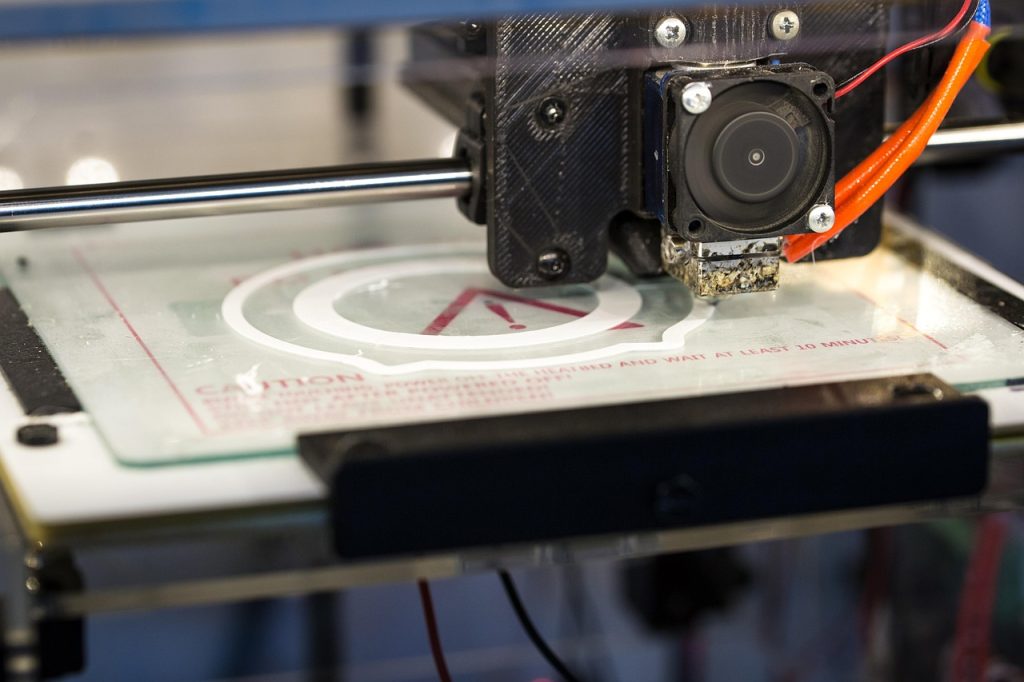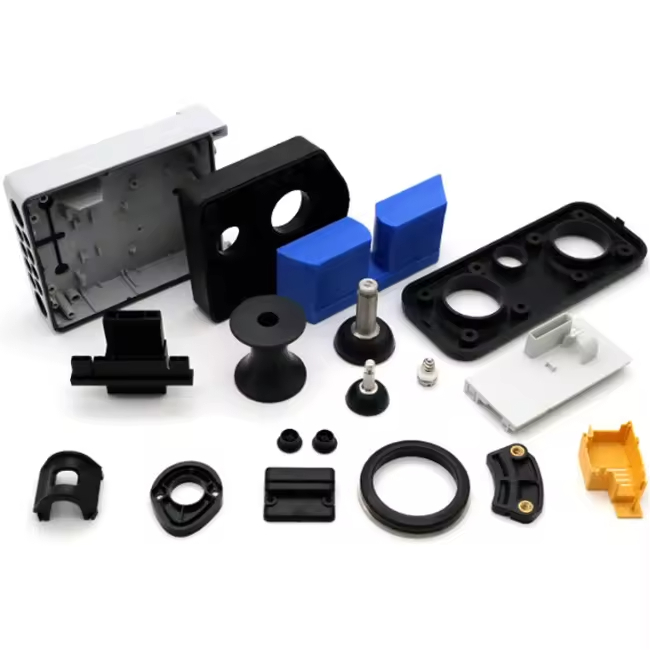
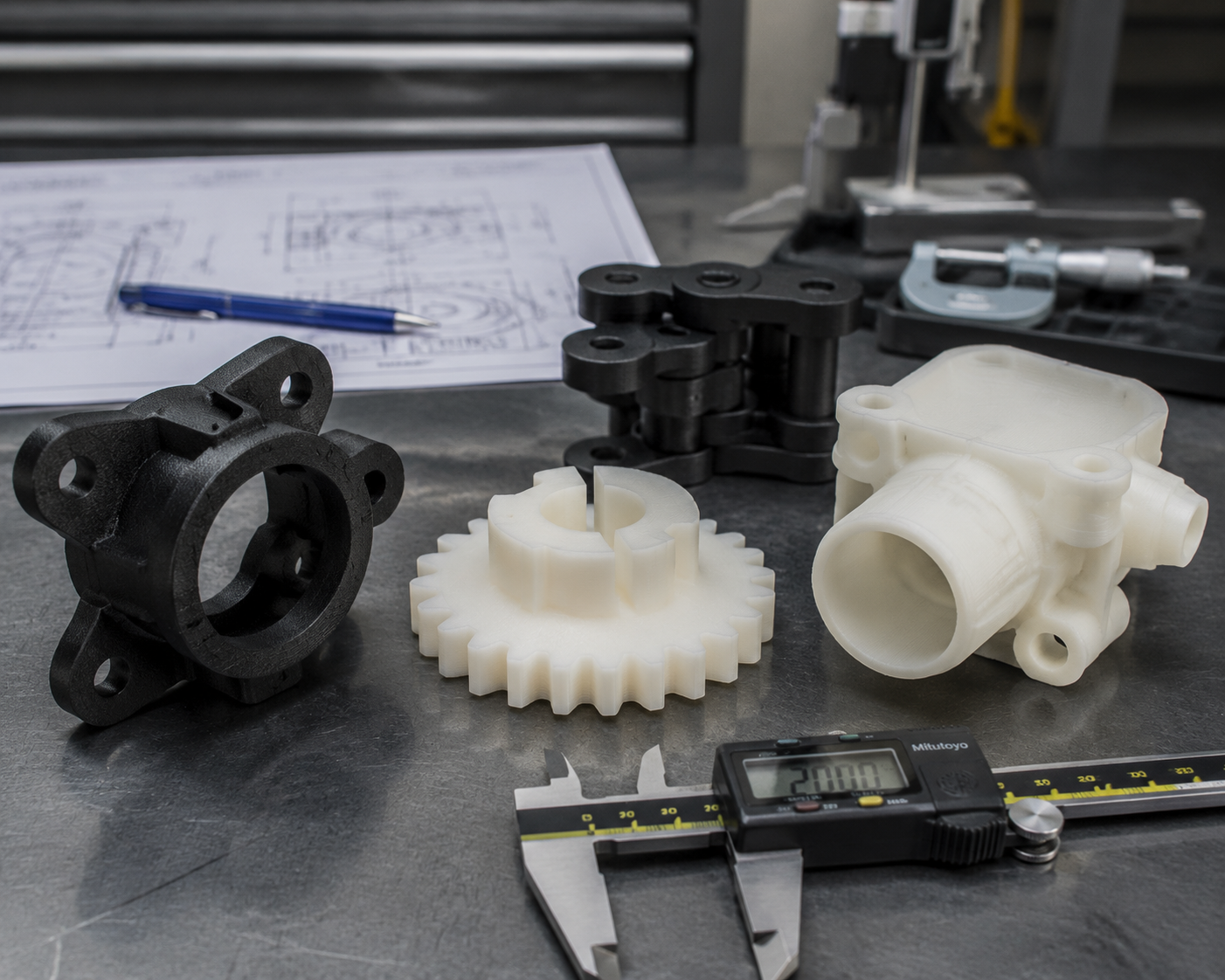
Nylon is the workhorse polymer of additive manufacturing. While most 3D printing enthusiasts start with PLA or PETG, nylon filament represents the threshold where printing meets engineering. With tensile strength exceeding 40 MPa, heat deflection temperatures above 80°C, and chemical resistance that puts most consumer filaments to shame, nylon is the material you graduate to when your parts need to survive in the real world—not just look good on a desk.
But nylon 3D printing isn’t forgiving. It’s hygroscopic to the point of obsession—a spool left uncovered overnight can absorb enough moisture to ruin your next 12 hours of prints. It warps more aggressively than ABS. And it demands enclosure temperatures that budget printers simply can’t maintain. If moisture control is your main failure point, our nylon drying guide covers the exact recovery and storage workflow; if hardware is the bottleneck, this comparison of the best 3D printers for engineering materials breaks down chamber, hotend, and dryer capability in more detail. This guide covers everything from material science to practical troubleshooting, written for engineers, manufacturers, and serious hobbyists who need nylon parts that work.
Nylon for 3D Printing: PA6 vs PA12 vs Composites
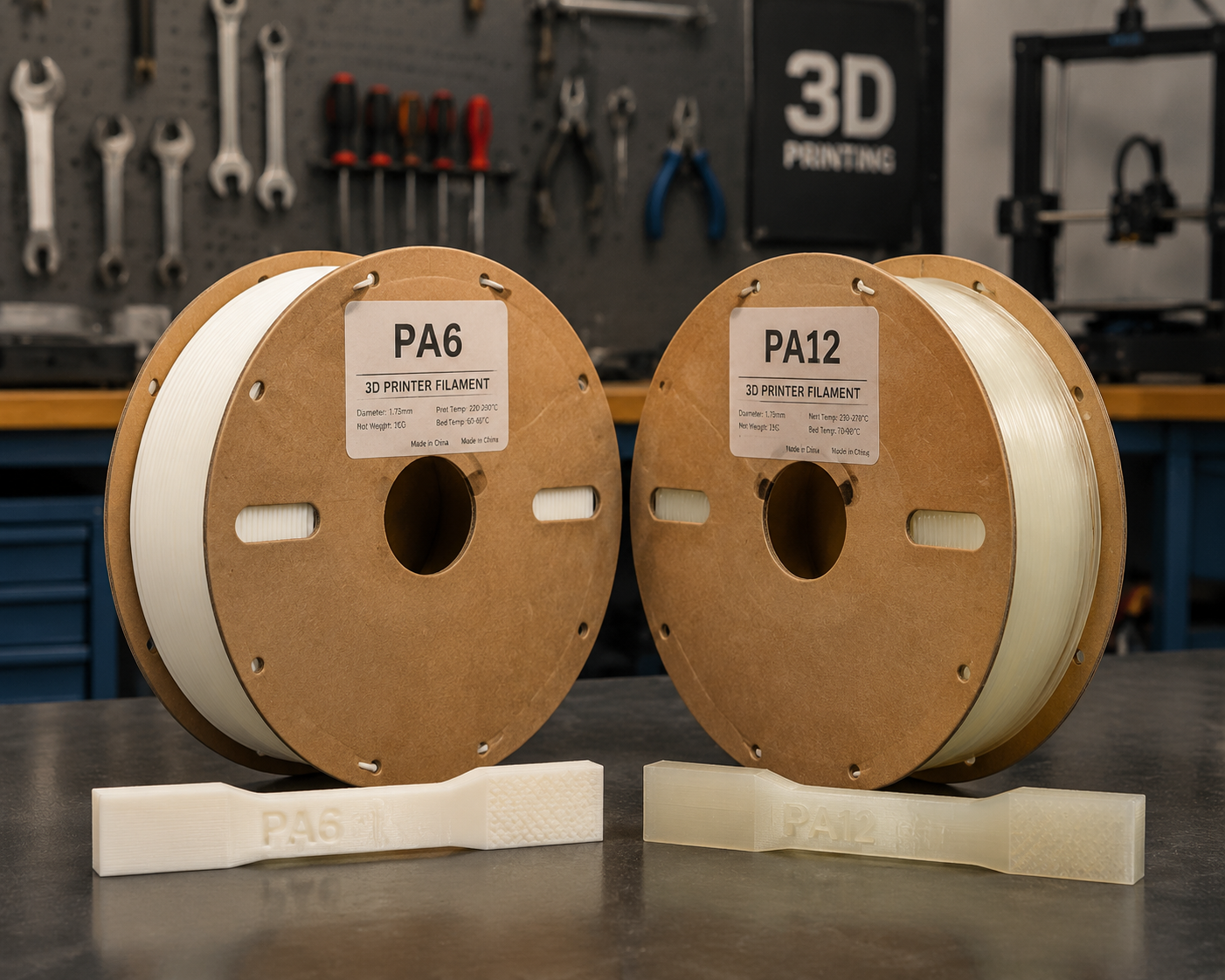
Not all nylon filament is created equal. The two dominant grades—PA6 and PA12—behave differently under heat, load, and moisture, and choosing the wrong one for your application is the single most common nylon printing mistake.
PA6 (Nylon 6)
PA6 is the higher-strength option. It offers superior tensile strength (typically 65–80 MPa when dry), better stiffness, and higher heat resistance with a glass transition temperature around 60°C and a melting point of approximately 220°C. PA6 is the choice for structural components, mechanical brackets, gears, and any application where load-bearing capacity matters.
The tradeoff: PA6 absorbs moisture faster than PA12—up to 9.5% of its weight at saturation. A “dry” PA6 part tested immediately after printing might show 70 MPa tensile strength; that same part after 48 hours at 50% RH can drop to 45 MPa. This moisture sensitivity extends to the filament itself: PA6 must be printed from a dry box or actively dried during printing. Even 2 hours of exposure to ambient air is enough to degrade print quality.
PA12 (Nylon 12)
PA12 sacrifices some strength (typically 45–55 MPa) for dramatically better dimensional stability and lower moisture absorption (about 1.5% at saturation vs PA6’s 9.5%). It’s more flexible, with better impact resistance and fatigue life, making it the preferred grade for living hinges, snap-fits, and parts that need to flex repeatedly without cracking. If fit and assembly accuracy matter as much as raw strength, our 3D printing tolerances guide is a useful companion.
PA12 also prints with less warping than PA6, though it still requires an enclosure. Its lower melting point (~178°C) means slightly lower nozzle temperatures, which can be an advantage on printers with stock hotends that struggle to maintain 260°C+ reliably.
| Property | PA6 (Nylon 6) | PA12 (Nylon 12) |
|---|---|---|
| Tensile Strength (Dry) | 65–80 MPa | 45–55 MPa |
| Elongation at Break | 20–30% | 25–40% |
| Melting Point | 220°C | 178°C |
| Moisture Absorption (24h) | 2.5–3.0% | 0.5–0.8% |
| Heat Deflection (0.45 MPa) | 160°C | 115°C |
| Print Difficulty | High | Medium-High |
| Best For | Structural parts, gears, high-temp mechanical | Snap-fits, living hinges, chemical-resistant parts |
Filled and Composite Nylons
Neat nylon is rarely the best choice for demanding applications. Filled nylons address the material’s biggest weakness—dimensional stability—by adding rigid fillers that reduce shrinkage and warping:
Glass-Filled Nylon (PA6-GF, PA12-GF): 15–30% glass fiber by weight doubles stiffness, raises HDT by 20–40°C, and reduces shrinkage from ~1.5% to ~0.3%. The tradeoff is abrasiveness—glass-filled nylon will destroy a brass nozzle in a single print. Hardened steel or ruby nozzles are mandatory.
Carbon-Fiber Nylon (PA6-CF, PA12-CF): Carbon fiber reinforcement provides the highest stiffness-to-weight ratio of any FDM filament. PA6-CF30 can achieve tensile modulus exceeding 15 GPa—comparable to die-cast aluminum—at roughly half the density. However, carbon fiber fill increases brittleness: elongation at break drops to 2–4%, so CF-nylon is for stiffness-critical parts, not impact-resistant ones.
Kevlar/Aramid-Filled Nylon: Less common but valuable for applications requiring abrasion resistance and toughness without the brittleness of carbon fiber. Used in wear pads, bushings, and protective components.
Essential Print Settings for Nylon Filament
Nylon is unforgiving of sloppy settings. Here’s what actually works, based on printing thousands of nylon parts across multiple printer platforms.
Nozzle Temperature
PA6: 250–270°C. Start at 260°C and adjust based on layer adhesion test results. Below 245°C, interlayer bonding drops sharply—the difference between a part that snaps cleanly and one that delaminates under load is often just 10°C.
PA12: 245–260°C. Slightly lower than PA6 due to the lower melting point. Some filled PA12 grades (especially carbon fiber) may need 260–275°C because the filler particles act as heat sinks during extrusion.
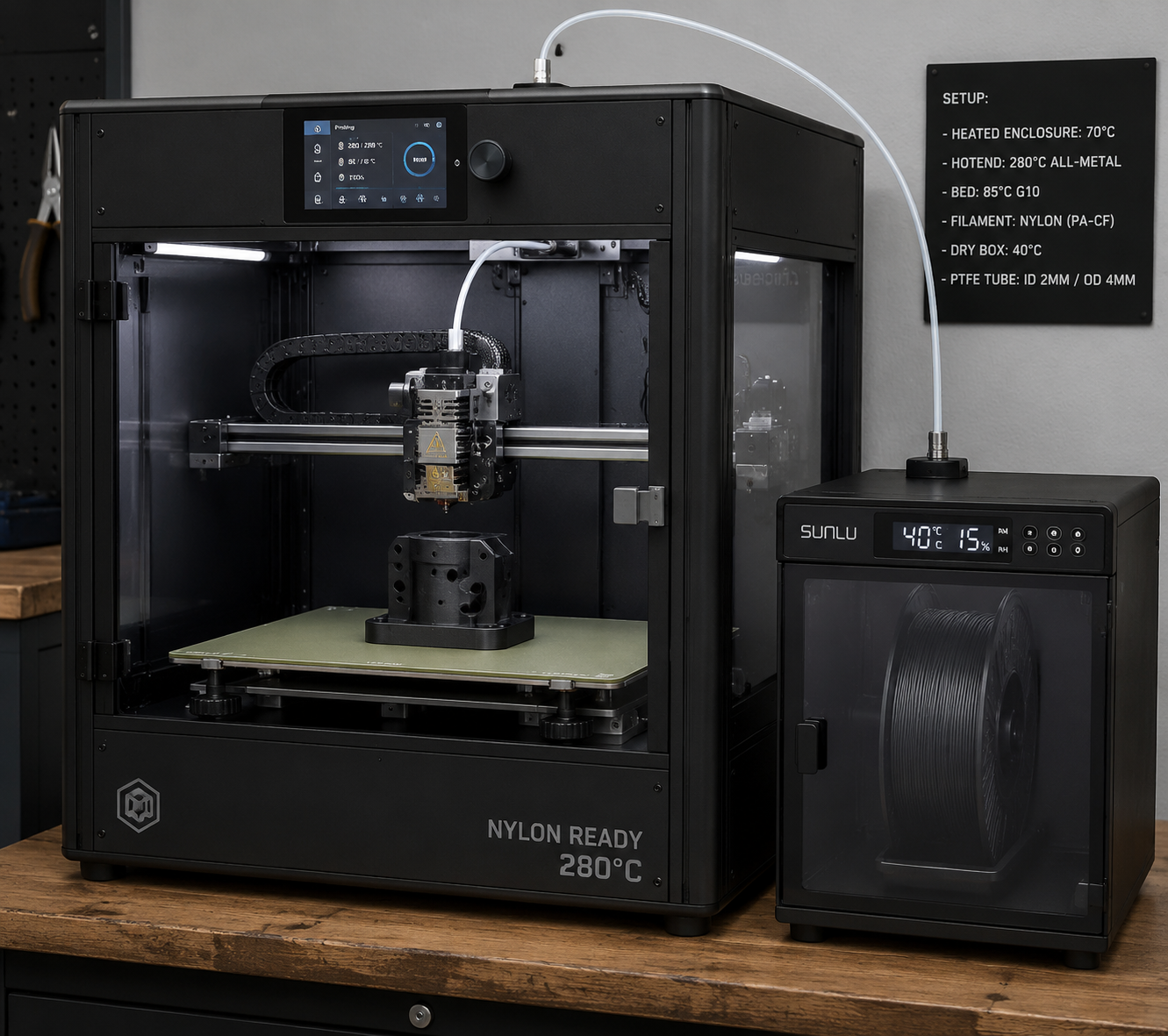
Critical note: Stock PTFE-lined hotends (common on budget printers) degrade above 240°C and release toxic fumes. Printing nylon safely requires an all-metal hotend. If your printer came with a white PTFE tube inside the hotend, do not attempt nylon without upgrading first.
Bed Temperature and Adhesion
Bed temperature: 70–90°C for PA6, 80–100°C for PA12. The bed needs to stay hot for the entire print—dropping bed temperature mid-print on nylon is a guaranteed warp.
Nylon doesn’t stick well to standard build surfaces. Bare glass is useless. PEI works with glue stick as a release agent (yes, release—nylon bonds so aggressively to PEI that it can rip the surface off). The most reliable solution is:
- Garolite (G10/FR4) board: Nylon adheres naturally to phenolic surfaces. Heat to 80°C and print directly on sanded G10. No glue, no tape, no spray. This is the gold standard for nylon bed adhesion.
- PVA glue stick on glass: Apply a thick layer and let it dry completely before printing. The PVA forms a sacrificial layer that nylon bonds to. Works, but requires reapplication every 2–3 prints.
- Nylon-specific adhesives: Magigoo PA and Vision Miner Nano Polymer Adhesive are purpose-built for nylon and worth the cost for production environments.
Enclosure and Ambient Temperature
An enclosure is mandatory for nylon. Not optional—mandatory. Aim for 45–55°C ambient inside the enclosure. Below 40°C, warping becomes nearly unavoidable on parts larger than 50mm in any dimension. Above 60°C, you risk overheating stepper motors and electronics.
If your printer doesn’t have a heated enclosure, preheat the chamber by running the bed at 100°C for 20–30 minutes before starting the print, then seal all gaps with tape or foam. Passive enclosures (insulated boxes without active heating) can work for PA12 but struggle with PA6 on larger parts.
Moisture Management: The Single Biggest Nylon Challenge
If you take one thing from this guide, take this: nylon and water are enemies, and nylon always loses. Here’s the physics: nylon’s amide groups form hydrogen bonds with water molecules. At the molecular level, absorbed water acts as a plasticizer—it slides between polymer chains, reducing intermolecular forces. The result is dramatic: a bone-dry PA6 part at 70 MPa can drop to 35 MPa after equilibration at 50% relative humidity.
Drying Before Printing
Filament must be dried before printing. Even factory-sealed nylon spools contain moisture from manufacturing. The drying protocol:
- PA6: 80°C for 8–12 hours in a convection oven or dedicated filament dryer. Desiccant alone is not sufficient—nylon’s bond with water is too strong.
- PA12: 70–80°C for 6–8 hours. Less demanding than PA6 but still requires active drying.
- CF/GF-filled grades: Same temperature as base polymer, but add 2–4 hours due to slower moisture migration through the filled matrix.
Printing from a Dry Box
Dried filament reabsorbs moisture in hours. A sealed dry box with active desiccant feeding directly into the extruder is essential. Commercial solutions (PrintDry, Sunlu S4, Eibos Cyclopes) work well; a DIY airtight container with a PTFE tube passthrough and 500g of indicating silica gel works nearly as well for under $20.
Monitor relative humidity inside the dry box: target below 15% RH. If it creeps above 20%, replace or regenerate the desiccant.
Practical Applications for Nylon 3D Printed Parts
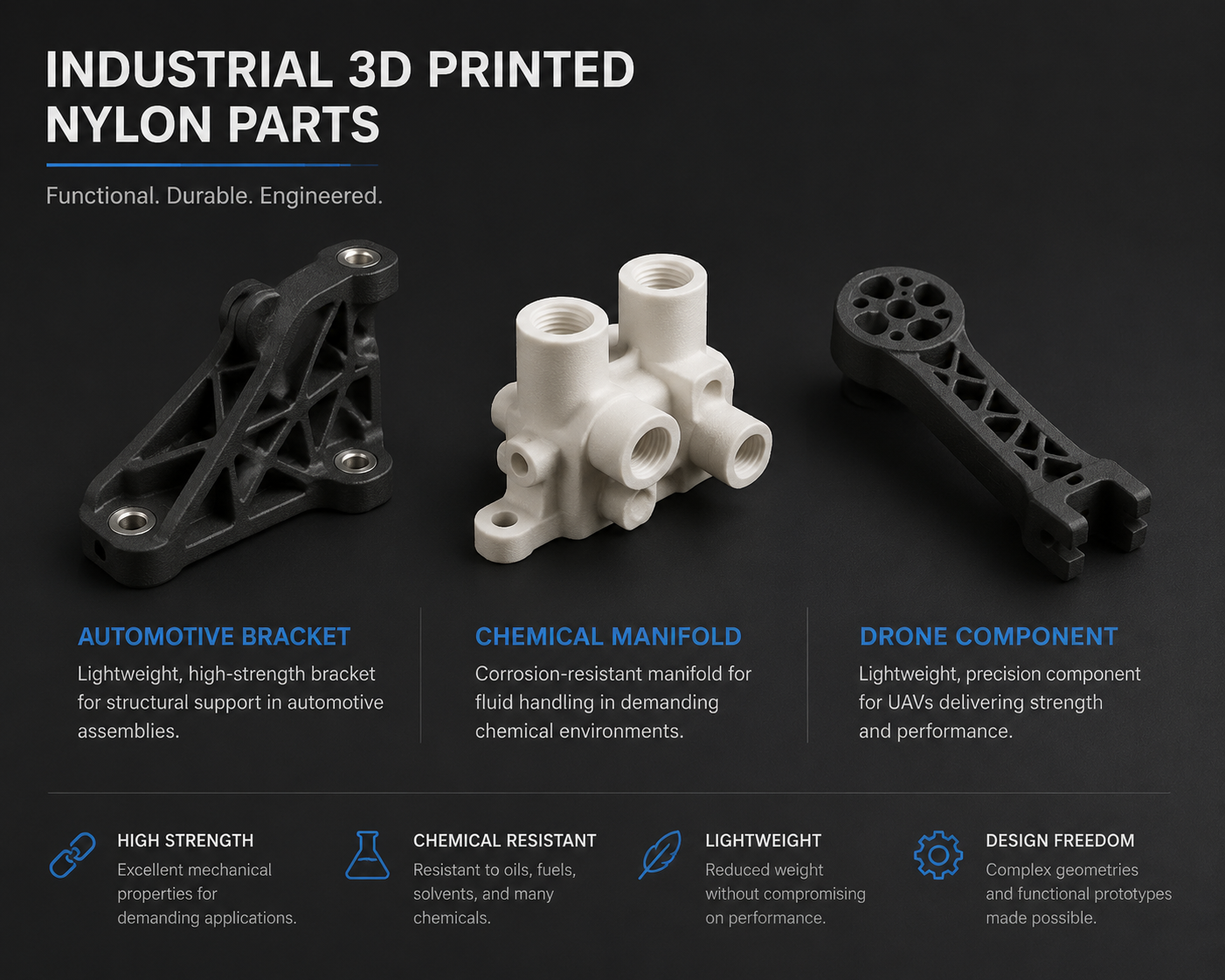
Nylon’s combination of strength, chemical resistance, and fatigue life makes it uniquely suited for functional parts that operate in harsh environments. Here’s where it excels:
Mechanical Components
Gears, pulleys, and bearings printed in nylon outperform their PLA and PETG counterparts by orders of magnitude in wear resistance. PA12’s natural lubricity means nylon-on-nylon gear pairs run smoother than nylon-on-metal. For high-cycle gears, PA6-CF20 provides the stiffness to maintain tooth profile under load.
Automotive Under-Hood
PA6-GF30 can survive continuous exposure to 150°C, making it viable for engine bay brackets, cable guides, and sensor housings. Chemical resistance to oil, grease, and coolant means nylon parts don’t degrade in the automotive environment the way ABS or PLA would.
Chemical Processing Equipment
Nylon resists hydrocarbons, ketones, and most industrial solvents. PA12 is particularly effective in fuel system components—it’s chemically compatible with gasoline, diesel, and ethanol blends. For chemical plant jigs, fixtures, and replacement parts, 3D printed nylon can replace metal at a fraction of the cost and lead time.
Aerospace and Drone Components
CF-nylon’s specific stiffness (stiffness divided by density) approaches aluminum at roughly half the weight. Drone frames, camera mounts, and antenna brackets printed in PA12-CF15 save grams that matter for flight time. The material also damps vibration better than carbon-fiber plate, protecting sensitive electronics.
Common Nylon Printing Problems and Solutions
| Problem | Cause | Solution |
|---|---|---|
| Warping / corner lift | Insufficient enclosure temp or bed adhesion | Preheat enclosure to 45°C+; use G10 build surface; add brim (8–10mm) |
| Popping / sizzling during extrusion | Wet filament—moisture boiling in nozzle | Dry filament at 80°C for 8+ hours; print from dry box |
| Poor layer adhesion / delamination | Nozzle temp too low or cooling fan on | Increase temp by 10°C; disable part cooling fan entirely |
| Stringing and oozing | Nylon’s low viscosity when molten | Increase retraction to 4–6mm; reduce temp 5°C; enable coasting |
| Nozzle clogging (filled grades) | Fiber buildup in standard nozzle | Use 0.5mm+ hardened steel nozzle; avoid brass with filled nylons |
| Over-adhesion to bed (PEI damage) | Nylon bonds chemically to PEI | Apply glue stick as release layer; switch to G10 |
Post-Processing Nylon Parts
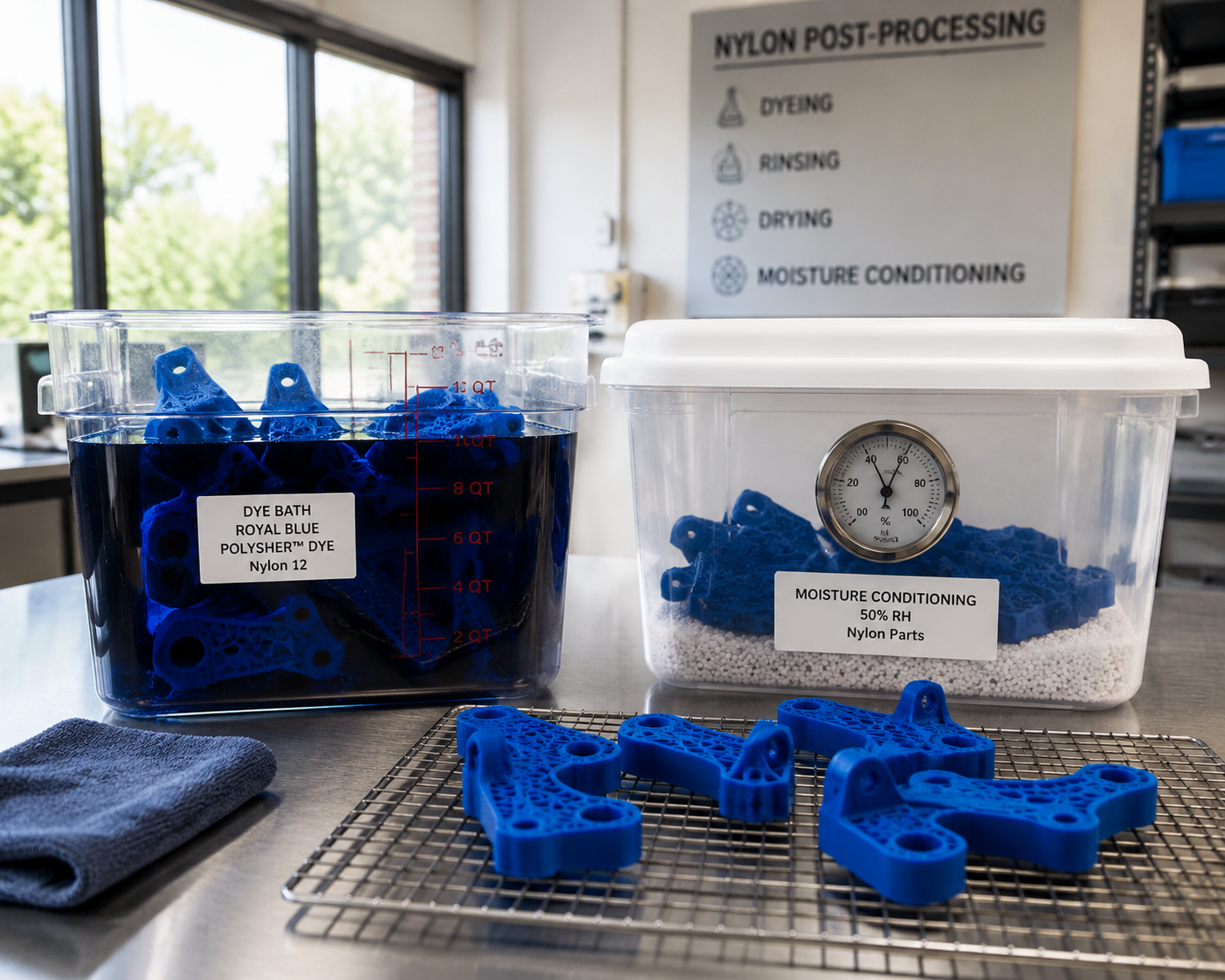
Nylon post-processes differently from other 3D printing materials. The same moisture absorption that complicates printing becomes an advantage in post-processing: controlled water absorption increases impact resistance and flexibility. Many manufacturers intentionally condition nylon parts by immersing them in water for 24–48 hours to achieve target mechanical properties.
Sanding and Smoothing: Nylon sands well but generates fine dust that can irritate respiratory systems—wear a mask. Wet sanding with 400–800 grit produces the best surface finish. Unlike ABS, nylon cannot be vapor-smoothed with acetone; chemical smoothing requires aggressive solvents like formic acid (dangerous—not recommended for hobbyists).
Dyeing: Nylon is one of the few 3D printing materials that takes fabric dye beautifully. Rit DyeMore for synthetics works at 80–90°C. Print in natural/white nylon, then dye to any color. This is particularly useful for production parts where color-matched filament isn’t available, or for creating multi-colored assemblies from a single natural spool.
Moisture Conditioning: For parts that need impact resistance over stiffness, submerge finished parts in room-temperature water for 24 hours, then let them equilibrate in ambient air for 48 hours. The result is a part with 2–3x the impact strength of the as-printed state, at the cost of 20–30% tensile strength.
Sourcing Quality Nylon Filament for Industrial Use
Filament quality matters more with nylon than almost any other material. Inconsistent diameter (common in budget nylon) causes extrusion variation that leads to weak spots in finished parts. For production environments, look for:
- Diameter tolerance: ±0.03mm or better (budget nylon is often ±0.05mm or worse)
- Ovality: Below 0.02mm deviation from round
- Moisture content: Factory-dried and vacuum-sealed with desiccant; re-sealable packaging
- Traceability: Lot numbers and QC data sheets available on request
For B2B buyers sourcing nylon filament in production quantities, nylonplastic.com offers PA6, PA12, and filled grade pellets suitable for filament extrusion or direct use in industrial SLS/MJF printers. Our engineering-grade nylon compounds are manufactured under ISO 9001 quality management with full lot traceability, mechanical property certificates, and consistent batch-to-batch performance. Contact our materials engineering team for technical datasheets and volume pricing.
Nylon 3D Printing: Is It Right for Your Application?
Nylon isn’t the right material for every print. It’s expensive ($40–80/kg for quality filament), demanding to print, and requires equipment upgrades that many users don’t have. But for parts that need to survive heat, load, chemicals, or thousands of cycles, nylon pays for itself in performance.
When to choose nylon over other engineering filaments:
- Nylon vs PETG: Choose nylon when you need >80°C heat resistance, better wear resistance, or chemical exposure to fuels and solvents. PETG is easier to print but can’t match nylon’s durability envelope.
- Nylon vs ABS: Choose nylon for mechanical applications requiring fatigue resistance and toughness. ABS is stiffer but more brittle and has poor chemical resistance.
- Nylon vs PEEK/PEI: PEEK and PEI (Ultem) outperform nylon in heat and chemical resistance but cost 10–20x more and require 350°C+ hotend temperatures. Nylon is the practical choice when extreme-temperature performance isn’t required.
Buyer Questions for Nylon 3D Printed Parts
- Is the quote for FDM filament, SLS powder, MJF material, or finished parts?
- Which dimensions, holes, threads, inserts, surfaces, and build directions are critical?
- Will the part be inspected dry, conditioned, dyed, tumbled, or after assembly?
- Does the quantity justify printing, CNC machining, or a future injection mold?
Nylon Plastic Service Support
Nylon Plastic can compare nylon 3D printing, CNC machining, and injection molding against the same drawing and production plan. Material drying, orientation, tolerances, inserts, finishing, inspection, and transition to volume production can be reviewed before quotation.
Related Reading
Frequently Asked Questions
Should PA6 or PA12 be used for nylon 3D printing?
PA6 can provide high strength and heat performance but is moisture-sensitive. PA12 is often easier to control dimensionally. The printer process and exact grade matter more than the family name alone.
What files are needed for a nylon printing quote?
Send the STEP or STL file, drawing, quantity, critical dimensions, load direction, surface and color requirements, inserts, inspection needs, and intended use.
Are SLS and MJF nylon parts isotropic?
They are generally more uniform than FDM parts, but build position, process parameters, refresh ratio, geometry, and post-processing can still create directional variation. Validate critical loads.
When should nylon parts move from printing to molding?
Review molding when geometry is stable, annual demand supports tooling, and unit cost or repeatability matters more than tool-free iteration.
Request a Nylon 3D Printing Review
Send the part files, quantity, use environment, tolerances, and finishing requirements for a process and quotation review.