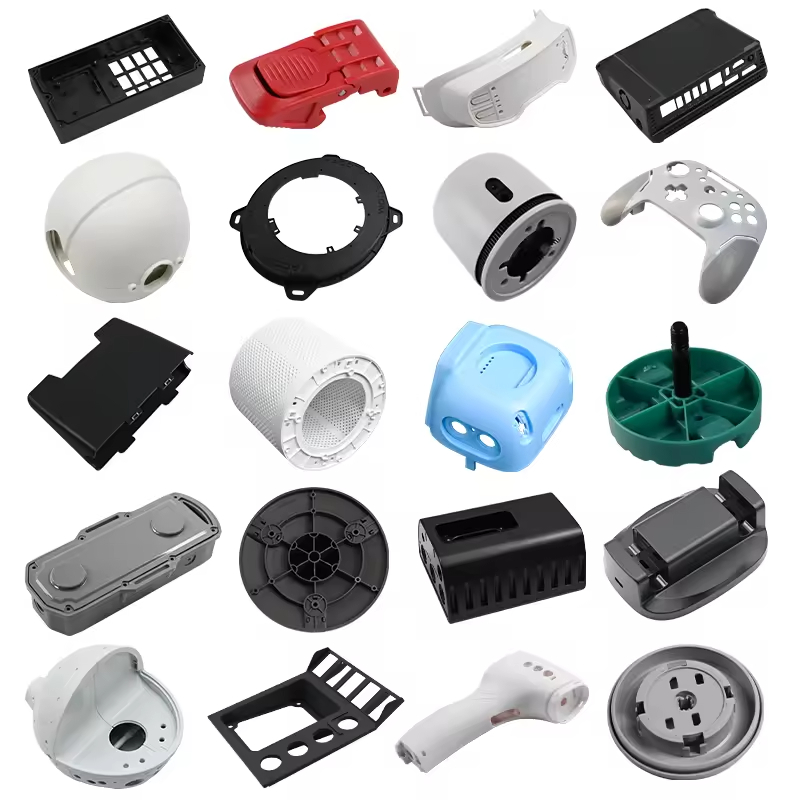
POM injection molding is used for acetal gears, bushings, rollers, clips, sliding blocks and precision mechanical parts. It offers low friction, good wear resistance and dimensional stability, but it has relatively high shrinkage and must be processed within a safe temperature window to avoid degradation.
POM can be an excellent production material when a plastic part needs smooth motion, stiffness and repeatable dimensions. The same properties that make it useful also demand careful mold design, venting, gate location and shrinkage allowance.

Why Use POM for Injection Molded Parts
Acetal is selected when friction, wear, fatigue and dimensional consistency are more important than a low raw material price.
| POM advantage | Useful part type | Design note |
|---|---|---|
| Low friction | Gears, sliders and bushings | Check mating material and lubrication. |
| Good fatigue behavior | Clips, springs and moving features | Avoid sharp notches and over-stress. |
| Dimensional stability | Precision mechanical components | Plan shrinkage and moisture conditions. |
| Wear resistance | Rollers and guide parts | Review load, speed and temperature. |
| Chemical resistance | Fuel or cleaning exposure in some cases | Confirm exact fluid compatibility. |
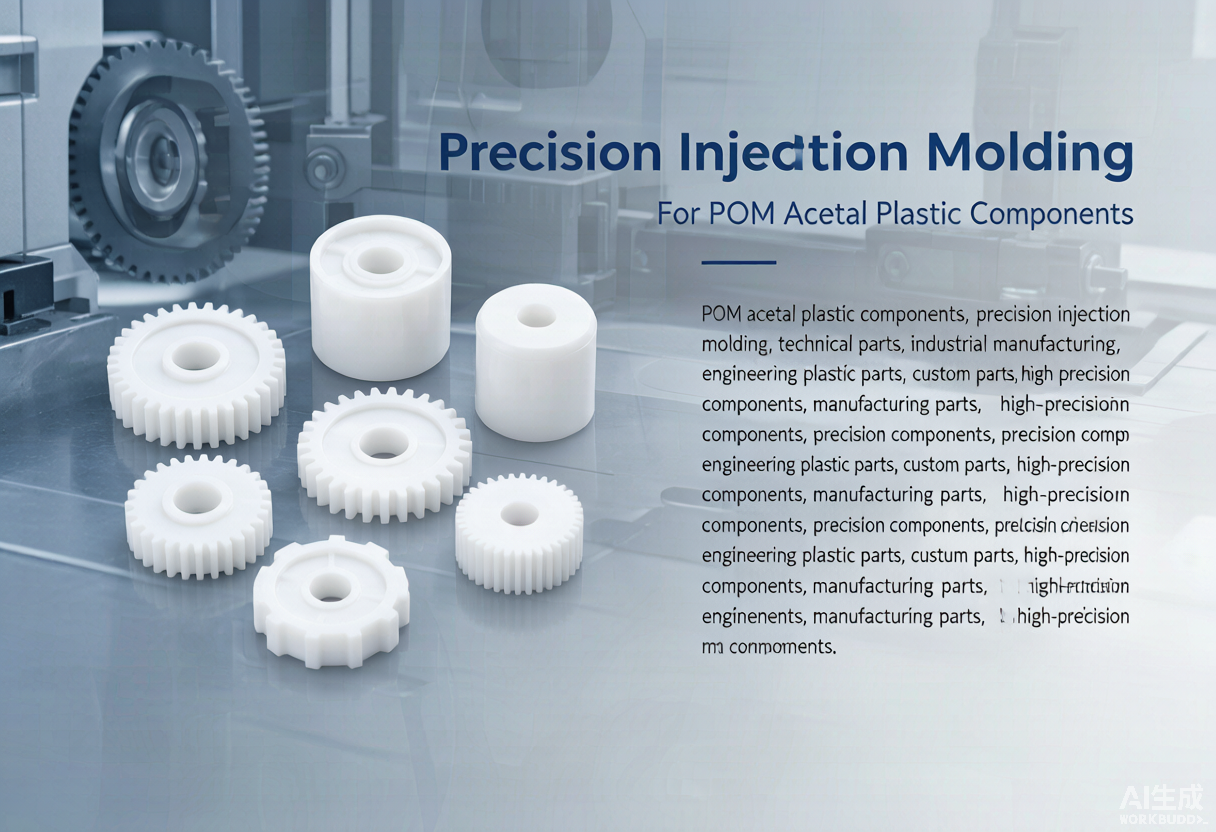
POM Grade Selection and DFM Checklist
For acetal injection molding, identify the manufacturer and exact homopolymer or copolymer grade, color and any wear modifier. A grade replacement should be checked against the incumbent material and the same drawing and operating conditions. Family names alone do not establish equivalent shrinkage, wear or chemical performance.
- Review shrinkage for the exact POM grade, wall section and molding direction before setting the tool dimensions.
- Use uniform wall thickness where practical.
- Avoid trapped gas and poor venting because POM degradation can be serious.
- Review gate location for precision dimensions and appearance.
- Confirm whether homopolymer or copolymer POM is better for the application.
Agree how molded samples will be accepted before releasing tooling. For a gear, define the mating gear, load, speed, backlash and noise requirements. For a bushing or slider, define the counterface, lubrication, clearance and wear test. Check critical dimensions after the agreed conditioning period, rather than treating an immediately measured sample as the final service fit.
Use the selected resin manufacturer’s processing guide for temperature, residence time, venting and handling. The Delrin homopolymer molding guide is a reference for that material family, not a substitute for another supplier’s exact-grade instructions.
POM vs Other Engineering Plastics
POM is not always better than nylon, PC or PBT. It is strongest when sliding behavior, wear and precision are central requirements.
| Material | Choose it when | Tradeoff |
|---|---|---|
| POM / acetal | Low friction and precision are required | Higher shrinkage and strict processing control. |
| Nylon | Higher toughness or structural strength is needed | Moisture affects dimensions. |
| PC | Impact and transparency are important | More stress and drying sensitivity. |
| PBT | Electrical and dimensional stability are needed | Different impact and flow behavior. |
| PEEK | Very high heat and chemical performance are needed | Much higher cost. |
Related Reading
A POM part should be evaluated against part tolerance, load, wear pair, mold cost and annual volume.
- Plastic injection molding materials guide
- Plastic gear design material selection guide
- CNC machining vs injection molding decision guide
Frequently Asked Questions
What is POM injection molding used for?
POM injection molding is used for gears, bushings, rollers, sliding blocks, clips and precision mechanical parts that need low friction and wear resistance.
Does POM have high shrinkage?
Yes. POM is a crystalline plastic with relatively high shrinkage, so mold dimensions, wall thickness and gate location must be planned carefully.
Is POM better than nylon?
POM is often better for low-friction precision parts, while nylon can be better for toughness and structural applications. The best choice depends on load, moisture, wear and temperature.
What is the main processing risk with POM?
POM must not be overheated or held too long at high temperature because degradation can create gas and safety risks. Processing control and venting are important.
Request a POM Injection Molding Project Review
Nylon Plastic supports engineering-plastic selection and custom part manufacturing. For POM gears, bushings, sliders or other molded mechanical components, send the current drawing or CAD, quantity and operating conditions. If you only need material selection, identify the current grade and the property or supply requirement you need to match.
- Material and function: exact grade or permitted alternative, color, load, mating material, lubrication, temperature and chemical exposure.
- Drawing and acceptance: revision, critical fits, gear or sliding performance, appearance reference and required inspection records.
- Order and delivery: prototype or production quantity, recurring demand where known, destination and target timing.
The review can clarify material and design questions before quotation. Ask the quote to identify tooling, cavity count, sampling, molded-part supply and inspection separately, with tool ownership, sample approval, delivery assumptions and exclusions stated. A CNC POM sample can help check fit before tooling, but molded shrinkage and production wear performance still need their own approval.