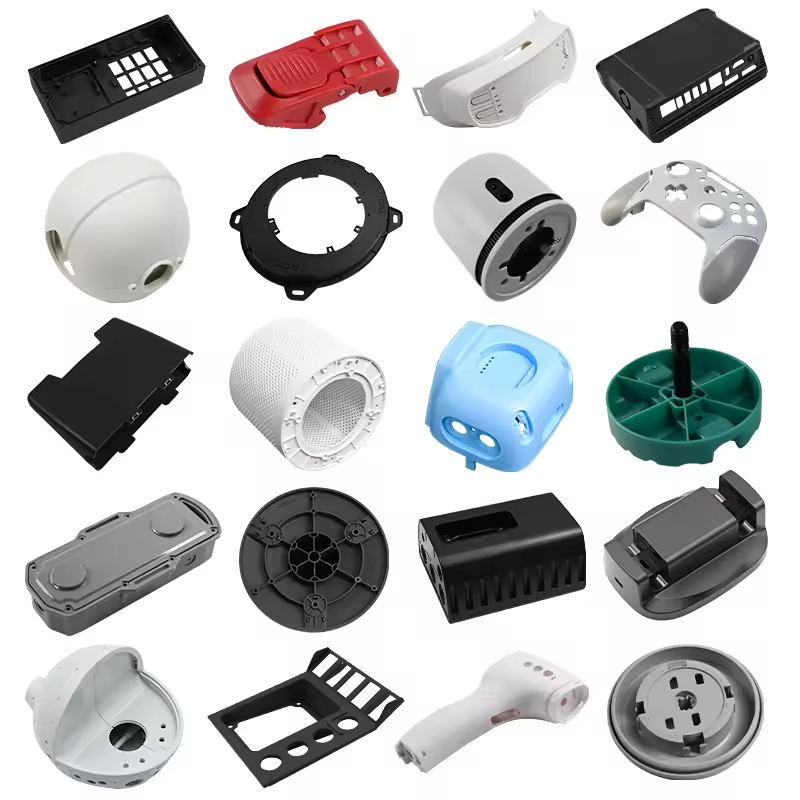
Choose ABS when cost, easy processing and surface finishing are the main priorities. Choose polycarbonate (PC) when impact resistance, transparency or higher heat performance matters more. Choose PC-ABS when the application needs a practical balance of toughness, appearance and molding behavior. The correct decision still depends on the exact grade, wall geometry, environment and validation requirements.
PC vs ABS at a Glance
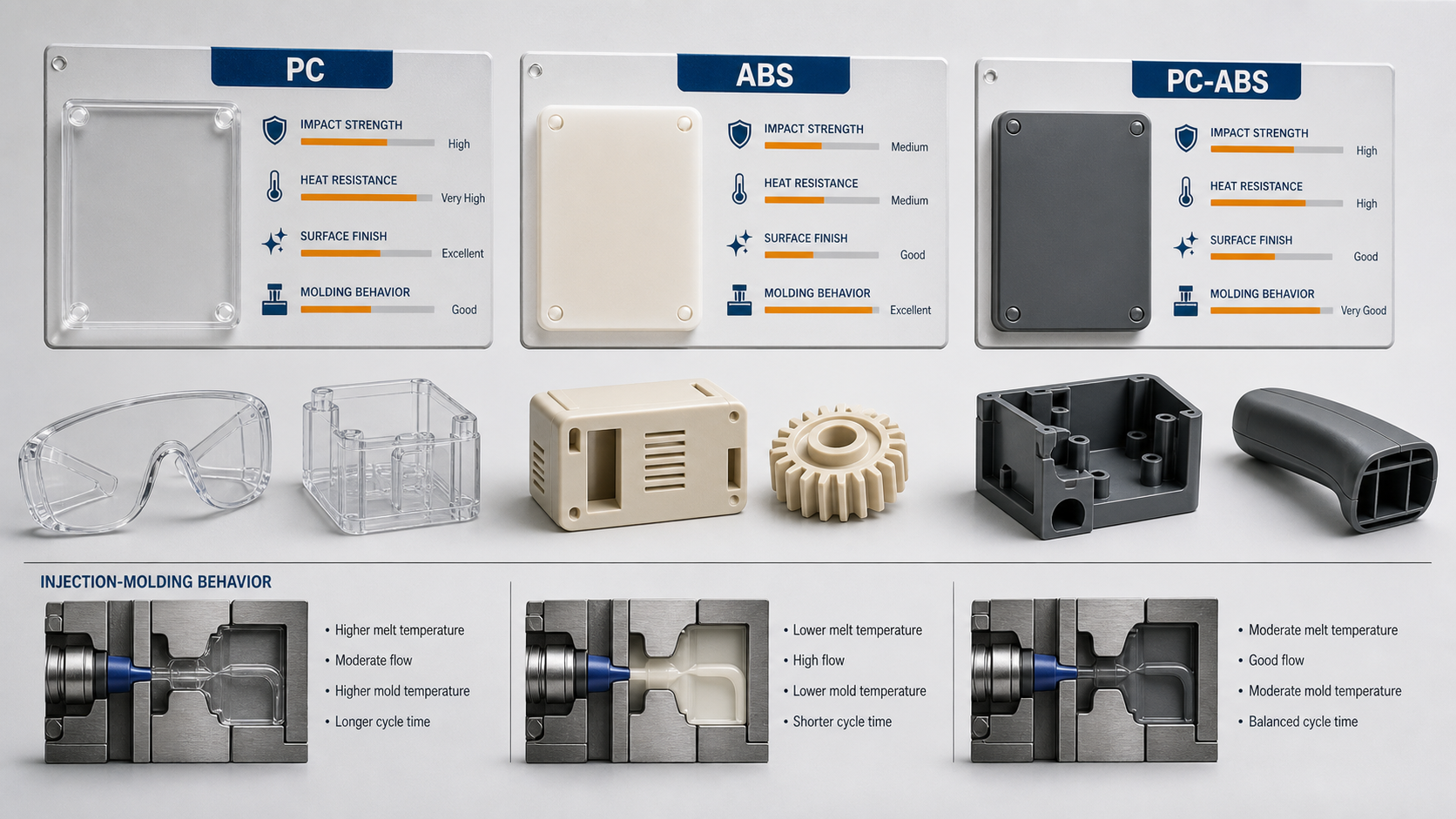
| Decision factor | ABS | PC | PC-ABS |
|---|---|---|---|
| Primary advantage | Cost, processability and finish | Impact and heat performance | Balanced toughness and processing |
| Appearance | Easy to texture, paint and plate | Clear or opaque grades available | Good appearance with impact balance |
| Heat exposure | Moderate, grade dependent | Higher than standard ABS | Intermediate, grade dependent |
| Impact | Good for general housings | Very strong in suitable grades | Good balance for many enclosures |
| Main risk | UV, chemical and heat limitations | Stress cracking and processing cost | Grade variation and property trade-offs |
When ABS Is the Better Choice
ABS is often selected for appliance housings, control panels, consumer electronics covers, interior trim and general-purpose molded parts. It offers a useful balance of stiffness, impact resistance, cycle efficiency and surface quality at a relatively accessible material cost. ABS is also convenient when the part will be painted, laser marked, plated or molded with a visible texture.
Standard ABS should not be treated as a universal outdoor material. Ultraviolet exposure can change color and surface performance, while heat and chemicals can reduce the design margin. For outdoor applications, compare an outdoor-qualified ABS or ASA grade and request the supplier’s grade-specific weathering evidence.
When PC Is the Better Choice
PC is useful for impact-resistant guards, protective covers, transparent components, lighting parts, electrical housings and parts that face higher temperature or more severe mechanical shock. It can provide better impact performance than standard ABS, but it also demands more attention to drying, mold temperature, residual stress and chemical exposure.
Transparent PC parts are especially sensitive to scratches, weld lines, gate location and stress whitening. A clear optical surface may require a higher mold polish, carefully placed gates, controlled venting and a stricter handling standard than an opaque enclosure.
When PC-ABS Is the Better Option
PC-ABS blends are often considered when a project needs more impact and heat performance than ABS but easier molding and finishing than a high-performance PC grade. They are common in electronics housings, vehicle interiors, control equipment and other parts where appearance, toughness and process stability must be balanced.
PC-ABS is not one universal formulation. The PC-to-ABS ratio, flame-retardant package, impact modifier, color and processing window can change the result. The RFQ should identify the approved grade or clearly define the required impact, heat, flame, color and appearance targets.
Processing and Design Differences
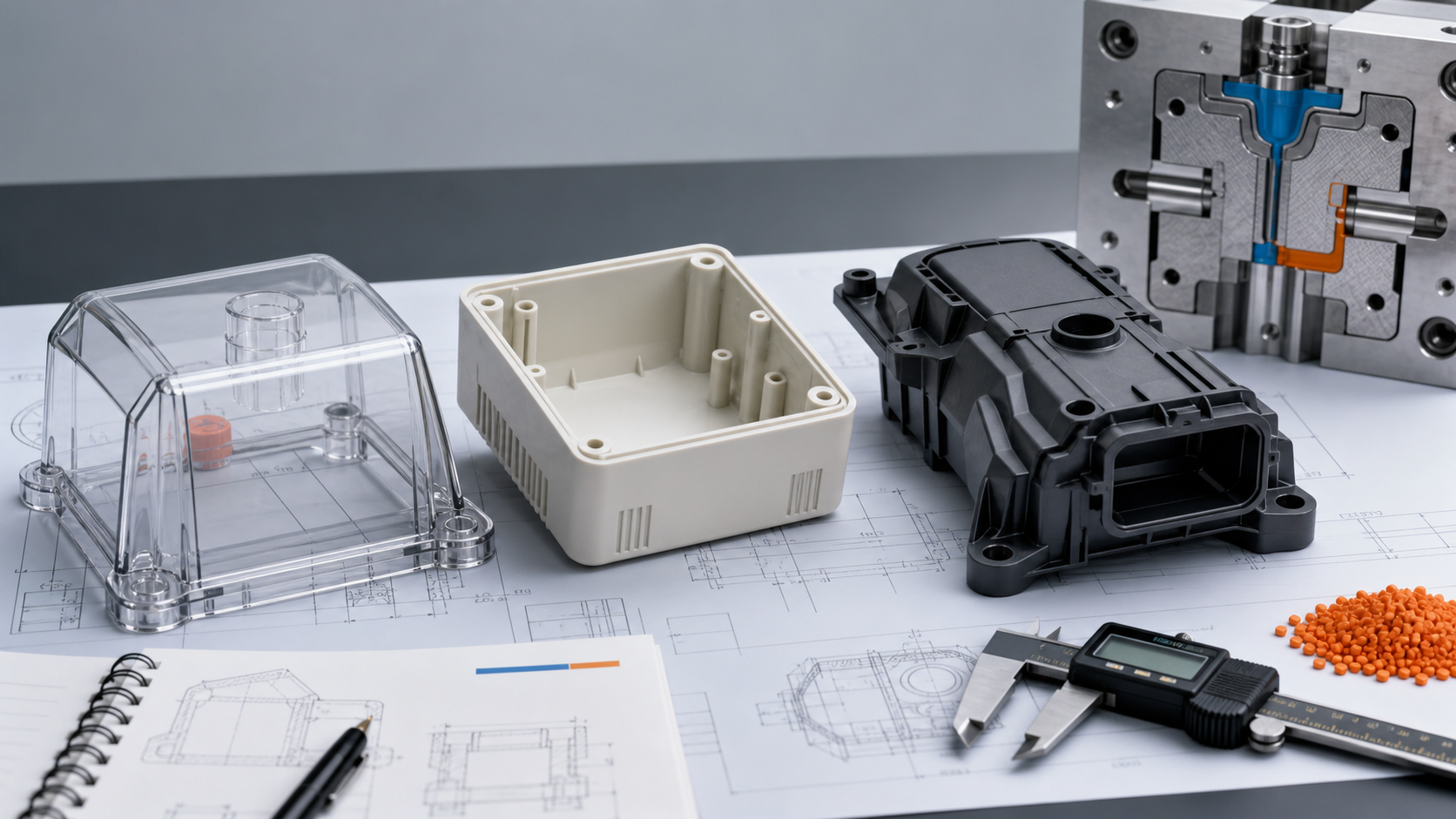
| Manufacturing issue | ABS consideration | PC or PC-ABS consideration |
|---|---|---|
| Drying | Follow the resin supplier’s moisture limit. | Drying is often more critical because moisture can cause splay and reduced properties. |
| Wall transitions | Use consistent walls to control sink and weld lines. | Thicker areas can retain stress and affect clarity or impact. |
| Gate and venting | Location affects weld lines and cosmetic finish. | Gate shear, venting and flow stress can be more visible in clear or glossy parts. |
| Demolding | Draft must match depth and texture. | Residual stress and sharp shutoffs can increase whitening or cracking risk. |
| Secondary finishing | Often easy to paint, print or plate. | Surface preparation and chemical compatibility must be validated. |
For all three material families, parting lines, ejector marks, ribs, bosses, snap-fits and screw towers should be reviewed during DFM. A material comparison cannot compensate for a design that concentrates stress or creates an uncontrolled tolerance stack-up.
Surface Finish, Joining and Chemical Exposure
ABS is usually forgiving for texturing and painting, but plated or bonded parts still need surface preparation and a compatible process. PC can provide a premium appearance, although stress cracking from cleaners, oils or solvents must be screened. PC-ABS may perform well in a housing but fail if a particular cleaning chemical attacks one component of the blend.
Before approving an adhesive, ultrasonic weld, heat stake or insert, test the actual grade and molded surface. Mold release, texture, pigment and processing conditions can change bond strength. The same rule applies to laser marking and printing: qualify the finished surface rather than relying only on a resin family name.
Application Decision Checklist
- Required impact energy, drop height or abuse condition
- Continuous and peak temperature, including heat from nearby components
- Indoor or outdoor exposure, UV, humidity and temperature cycling
- Flame, smoke, electrical or regulatory requirements
- Transparency, gloss, texture, color and cosmetic boundary
- Cleaner, oil, fuel, solvent and adhesive exposure
- Injection molding, CNC machining, additive prototype or hybrid route
- Annual volume, tool life, tolerance and inspection evidence
What to Include in a PC vs ABS RFQ
Send the CAD model, drawing, candidate grade, color, surface finish, annual quantity, assembly function, operating environment and required validation. If the material is not fixed, state the impact, heat, appearance, flame and chemical targets instead of requesting a generic PC or ABS quotation. We can then compare ABS, PC and PC-ABS against the part’s actual duty cycle.
For a PC vs ABS plastic decision, compare impact, heat, finish, chemical exposure and the actual molding route rather than relying on a generic material label.
For a production material decision, see our injection molding services and 3D printing guide.
Frequently Asked Questions
Compare nylon vs polycarbonate comparison including strength, heat, cost and application recommendations.
Is PC stronger than ABS?
PC usually provides higher impact resistance and better heat performance than standard ABS, but ABS can be the better choice for cost, processing, surface finishing or a less demanding environment.
Which is easier to injection mold, PC or ABS?
ABS is generally easier and more forgiving to process. PC can still be injection molded successfully when drying, mold temperature, filling, venting and residual stress are controlled.
Is PC-ABS better than ABS?
PC-ABS can be better when the project needs more impact or heat margin while retaining practical molding and finishing behavior. The exact grade must be validated because blends vary.
Which material is better outdoors?
Neither standard PC nor standard ABS should be approved outdoors from the family name alone. Request an outdoor-qualified grade and evidence for UV, color, impact and chemical retention.
How should a supplier quote PC vs ABS parts?
Provide the environment, performance targets, appearance, volume, tolerance, process and candidate grade. The quotation should state the exact resin, tooling assumptions, inspection scope and approved substitute rules.
For a material and process review, send the drawing, environment, annual volume and appearance requirements.