PEEK Plastic — The Ultimate Guide to High-Performance Engineering Polymers in 2026

PEEK is a practical engineering topic when you need to compare options, check limits, and choose a process with less risk.


PEEK polymer plastic engineering materials for high-temperature applications - Nylonplastic China supplier

PEEK Plastic — The Ultimate Guide to High-Performance Engineering Poly

What Is PEEK Plastic?

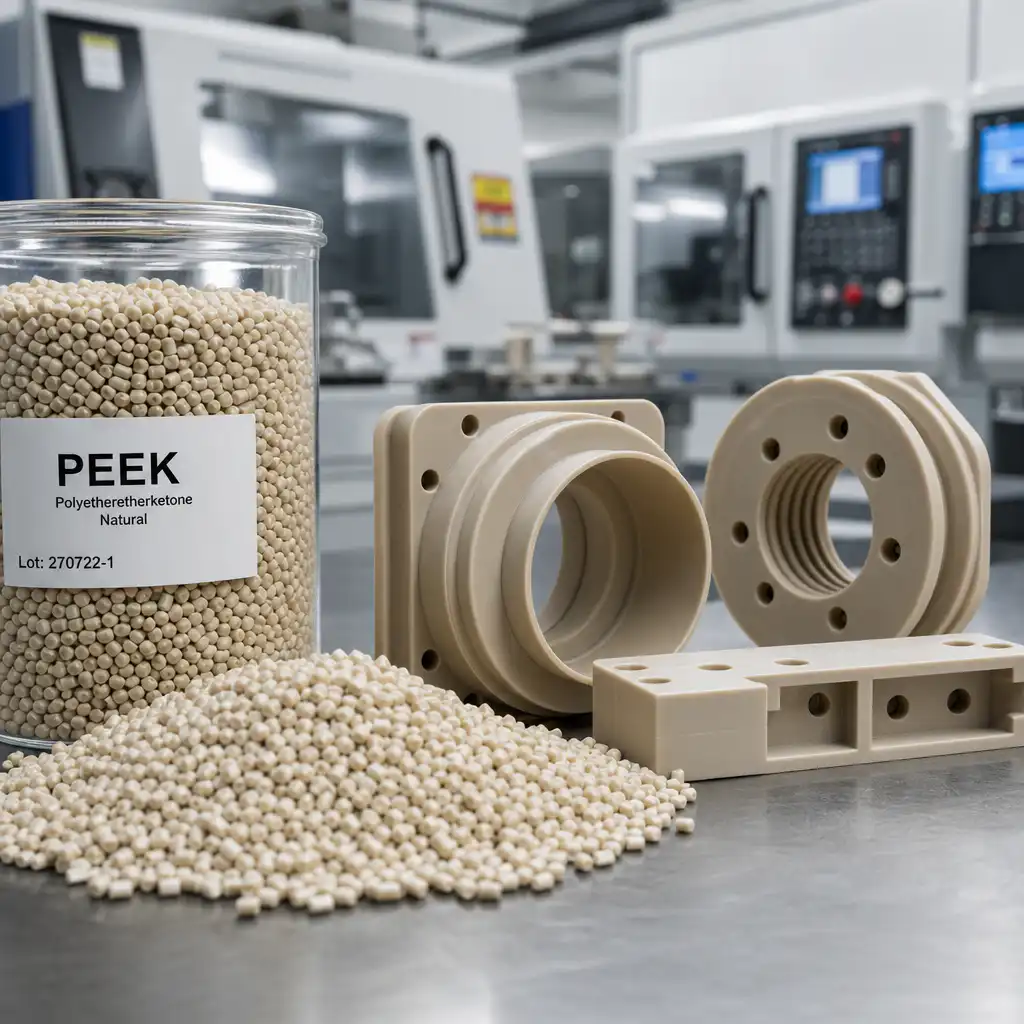
Professional industrial photograph: PEEK Plastic , plastic manufacturing, clean

PEEK (Polyether Ether Ketone) is a semi-crystalline, high-performance engineering thermoplastic. It maintains exceptional mechanical properties, chemical resistance, and thermal stability even under extreme conditions.

Key Properties of PEEK

  • Continuous Service Temperature: 250°C
  • Melting Point: 343°C
  • Tensile Strength: 90–100 MPa
  • UL94 Rating: V-0 at 1.5mm

PEEK Applications

PEEK is widely used in aerospace, automotive, medical devices, oil and gas, and 3D printing industries.

Sourcing PEEK from China

China-based compounders produce competitive PEEK compounds at 20–40% lower cost than European alternatives. Nylonplastic supplies PEEK compounds and machined components with full technical documentation.


PEEK Selection Checks Before Tooling or Machining

Requirement PEEK question
Temperature What continuous and short-term peak temperatures will the part see?
Chemicals Which media, concentration and exposure time must be validated?
Process route Is the volume better suited to injection molding, CNC machining or high-temperature printing?
Grade Does the design need unfilled PEEK, glass fiber, carbon fiber or a bearing grade?

Request the exact grade datasheet, conditioning state, processing window and inspection plan. A supplier should also explain how crystallinity, annealing and fiber orientation affect the finished part.

FAQ

When is PEEK Plastic — The Ultimate Guide to High-Performance Engineering Polymers in 2026 a good option?

PEEK Plastic — The Ultimate Guide to High-Performance Engineering Polymers in 2026 is a good option when fast iteration, complex geometry, low tooling cost, or low-volume production is more important than molded-part unit cost.

What should be checked before choosing PEEK Plastic — The Ultimate Guide to High-Performance Engineering Polymers in 2026?

Check part size, material properties, surface finish, dimensional tolerance, heat exposure, load direction, and whether post-processing is required.

How does PEEK Plastic — The Ultimate Guide to High-Performance Engineering Polymers in 2026 compare with CNC machining?

3D printing can create complex shapes quickly, while CNC machining is often stronger for precise surfaces, tighter tolerances, and production-grade materials.

What affects the cost of PEEK Plastic — The Ultimate Guide to High-Performance Engineering Polymers in 2026?

Cost depends on material, build volume, print time, layer height, support removal, finishing, inspection, and the number of parts in the build.

Start Your Project Review

This field is required.
What do you need?
Choose the option that best matches your current project stage.
This field is required.
Accepted: JPG, JPEG, GIF, PNG or PDF, up to 10 MB. CAD files can be sent by email after submission.
This field is required.

Related Reading

Scroll to Top