
Open-Loop is a practical engineering topic when you need to compare options, check limits, and choose a process with less risk.
Open-Loop vs Closed-Loop CNC Systems is a useful comparison when balancing precision, feedback, cost, and machine stability.
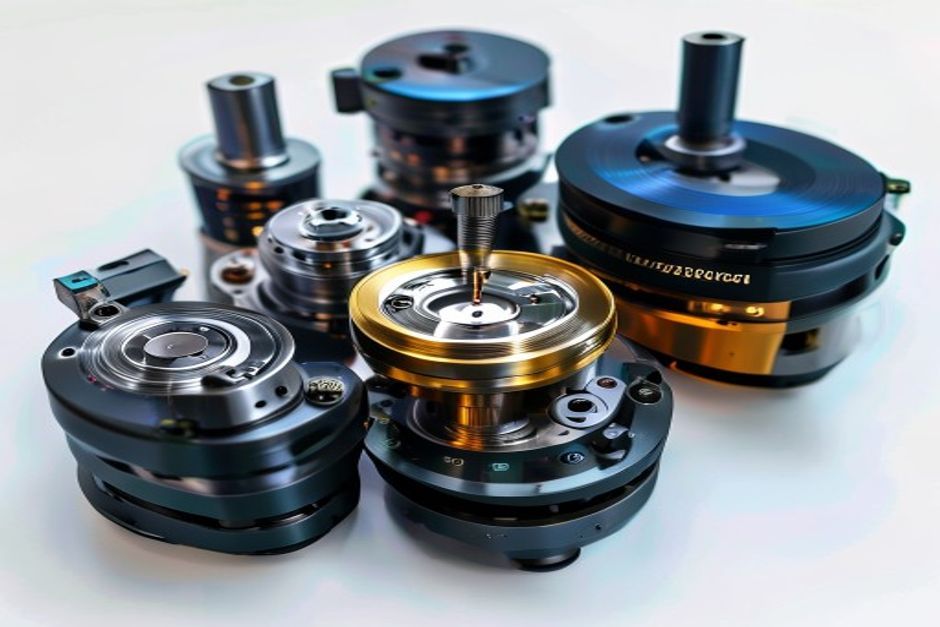
CNC machine control systems are fundamentally categorized into open-loop and closed-loop architectures. This distinction determines whether the system can detect and correct position errors during operation — a critical factor for achieving precision tolerances in manufacturing. Selecting the appropriate control architecture directly impacts part quality, machine cost, and suitability for specific materials and tolerances.
Open-Loop CNC Control Systems
Open-loop systems send motion commands from the CNC controller to the motor — stepper motors are almost exclusively used — without any feedback mechanism to confirm the motor actually reached the commanded position. The controller outputs step pulses, and the motor is expected to respond with precise incremental movements.
How Open-Loop Works
The controller generates a stream of step pulses at a specified frequency. Each pulse corresponds to a fixed angular increment (e.g., 1.8 degrees per step, or 200 steps per revolution). The stepper motor attempts to follow these pulses exactly. If the load torque is within the motor’s capability, the motor maintains synchronization with the command pulses.
Advantages of Open-Loop
- Lower Cost: No encoders, no feedback cables, simpler drive electronics — typically 30-50% less expensive than closed-loop equivalents
- Simpler Setup: No encoder alignment, no PID tuning, no feedback loop calibration
- Reliable for Light Loads: For CNC routers, plasma cutters, and 3D printers with predictable cutting forces, open-loop is adequate
- No Following Error: Because there is no position feedback, the concept of “following error” does not exist — the motor is either synchronized or it misses steps
Limitations of Open-Loop
- No Position Verification: If the motor misses steps due to overload, the controller has no way to detect or correct the error
- Torque Drops at High Speed: Stepper torque decreases rapidly with speed; above certain RPM, missed steps become likely
- Resonance Issues: Steppers have natural resonance frequencies that cause vibration and potential step loss
- Not Suitable for Heavy Machining: High cutting forces in steel or thick aluminum can cause step loss
Closed-Loop CNC Control Systems
Closed-loop systems incorporate position feedback — typically quadrature encoders on each axis — that continuously reports actual axis position back to the CNC controller. The controller compares commanded position to actual position and adjusts motor output to minimize the difference (following error).
How Closed-Loop Works
A servo motor driven by a digital servo drive receives command signals from the CNC controller. An encoder mounted on the motor shaft (and sometimes a linear scale on the axis itself) generates position feedback pulses. The CNC controller’s PID (Proportional-Integral-Derivative) loop continuously calculates the difference between commanded and actual position, adjusting motor current to minimize following error — typically maintained to less than 0.0001 inches during cutting.

Advantages of Closed-Loop
- Position Verification: The controller always knows actual axis position — lost motion is detected and corrected
- Higher Torque at Speed: Servo motors maintain rated torque across their entire speed range
- Error Compensation: Ball-screw backlash, thermal expansion, and mechanical wear can be compensated in software
- Superior Surface Finish: Servo systems maintain consistent feed rates even through changing cutting forces
- High-Speed Capability: Closed-loop systems routinely operate at 10,000+ IPM rapids
Limitations of Closed-Loop
- Higher Cost: Servo motors, drives, encoders, and cables increase machine cost by 50-100% compared to open-loop
- Tuning Complexity: PID loop tuning requires expertise; poorly tuned loops cause oscillation or sluggish response
- Encoder Vulnerability: Feedback cables and encoders can fail, causing loss of position control
Head-to-Head Comparison
| Factor | Open-Loop | Closed-Loop |
|---|---|---|
| Cost | Low (30-50% less) | High (50-100% more) |
| Position Feedback | None | Continuous encoder feedback |
| Max Cutting Force | Low (wood, plastic, aluminum) | High (steel, titanium, heavy stock) |
| Accuracy | ±0.005 inches (if no step loss) | ±0.0005 to ±0.0001 inches |
| Setup Complexity | Low | Moderate to High (PID tuning) |
Selection Criteria for Manufacturing
Choose Open-Loop for: CNC routers cutting wood, plastic, and foam; plasma cutters; 3D printers; light-duty milling in aluminum where ±0.005 inch is acceptable.
Choose Closed-Loop for: Steel and titanium machining; 4-axis and 5-axis contouring; high-speed machining; applications requiring ±0.001 inch or tighter tolerances; production environments where scrap cost is high.
FAQ

When is Open-Loop vs Closed-Loop CNC Systems: Precision Control Compared the right choice?
Open-Loop vs Closed-Loop CNC Systems: Precision Control Compared is the right choice when the part requires machined accuracy, controlled surfaces, repeatable features, and a material that can be cut reliably.
What should be confirmed before ordering Open-Loop vs Closed-Loop CNC Systems: Precision Control Compared?
Confirm the drawing version, material grade, tolerances, quantity, critical dimensions, surface finish, and inspection requirements before production starts.
What usually drives cost in Open-Loop vs Closed-Loop CNC Systems: Precision Control Compared?
Cost is usually driven by material, setup time, machine time, tolerance difficulty, fixturing, tool access, finishing, inspection, and order quantity.
How can quality risk be reduced in Open-Loop vs Closed-Loop CNC Systems: Precision Control Compared?
Quality risk is reduced by marking critical features clearly, avoiding unnecessary tight tolerances, confirming manufacturability early, and using inspection data for important dimensions.

