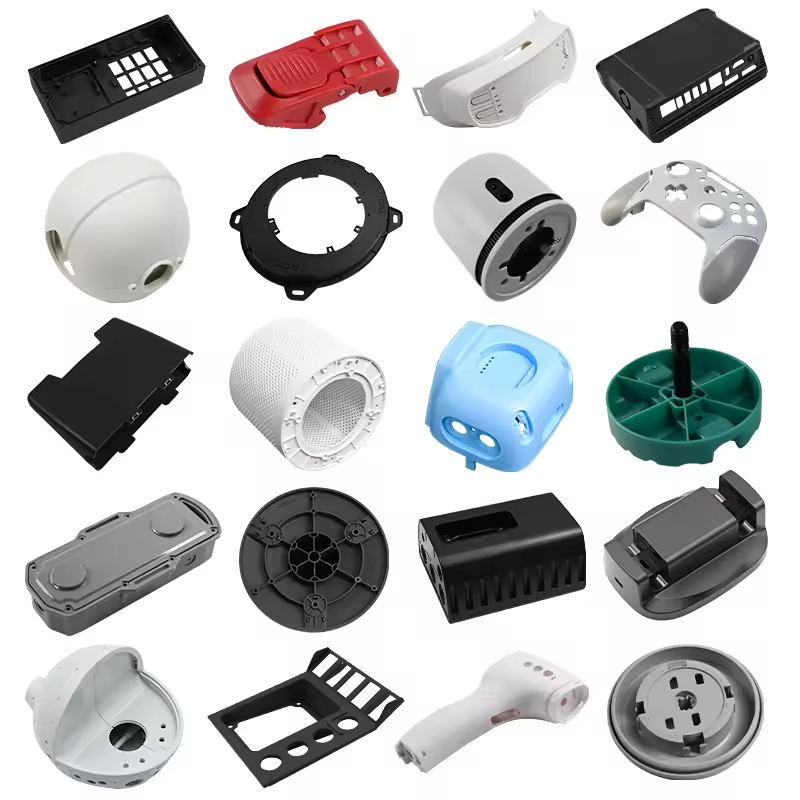
Automotive plastics components are not bought the same way as general consumer parts. Buyers usually need evidence around supplier discipline, tooling control, PPAP readiness and stable material selection before awarding a real automotive program.
Terms such as IATF 16949 plastics and automotive component manufacturing show higher-intent sourcing behavior. The supplier choice is therefore about process confidence and documentation maturity, not only unit price.
At a Glance
| Supplier Check | What to Review | Why It Matters |
|---|---|---|
| Quality system | Automotive-oriented quality discipline and response speed | Supports launch and repeat production stability |
| PPAP readiness | Submission package planning and dimensional evidence | Reduces approval delays |
| Tooling control | Maintenance, wear review and revision handling | Critical for long-life production parts |
| Material discipline | Approved grades and traceability | Prevents late substitutions |
| Program communication | DFM, issue closure and schedule visibility | Automotive timing risk is usually expensive |
What Buyers Should Expect from an Automotive Plastic Components Manufacturer
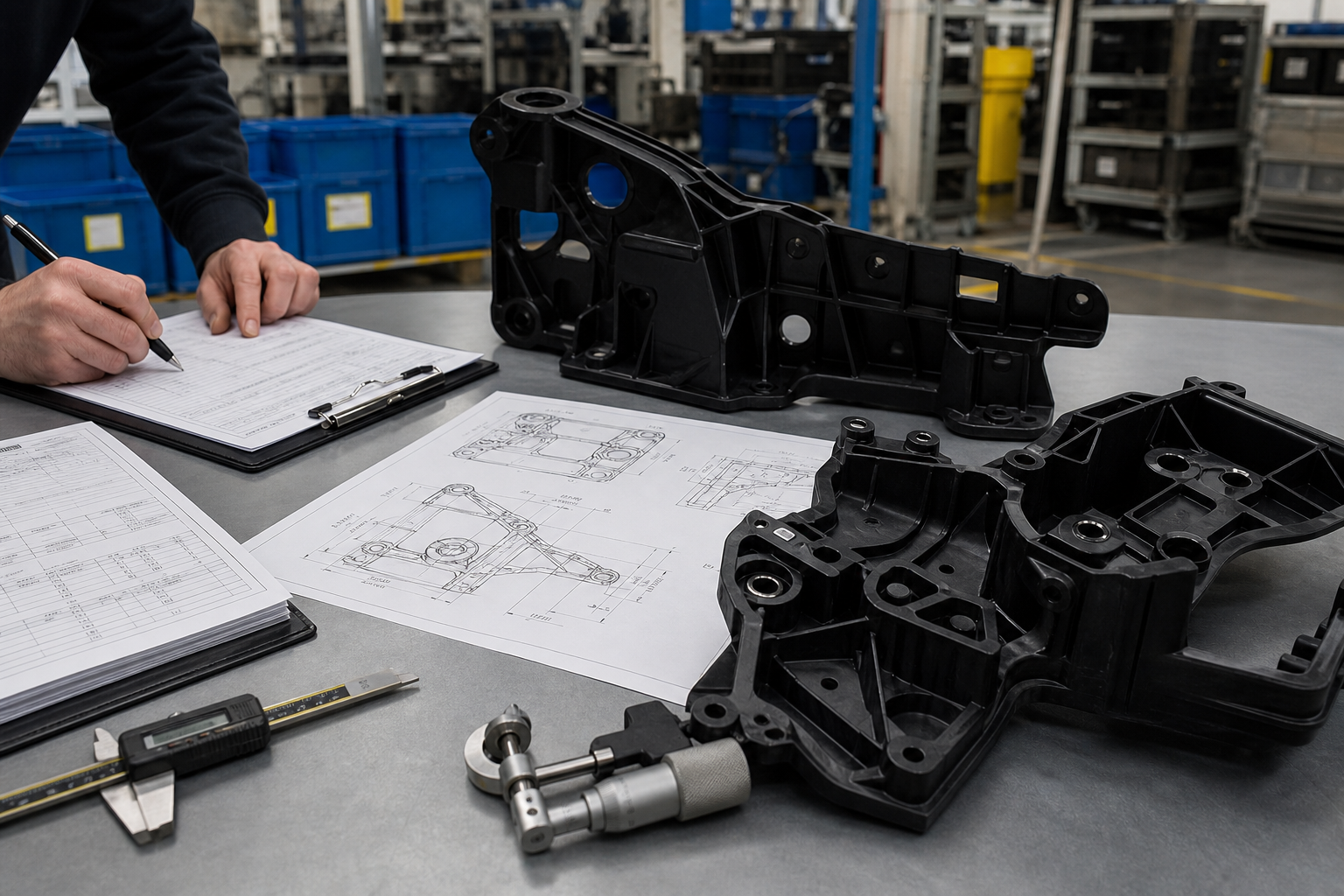
An automotive supplier should be able to connect material choice, tooling strategy and documentation output into one program flow. That includes first article evidence, dimensional control, issue tracking and a realistic response plan when sampling exposes a problem.
Many parts that appear simple become difficult when they must survive heat, vibration, fluids, cosmetic review and long production life together. Automotive sourcing is therefore about system reliability, not simple moldability.
Qualification Checks Before Awarding the Program
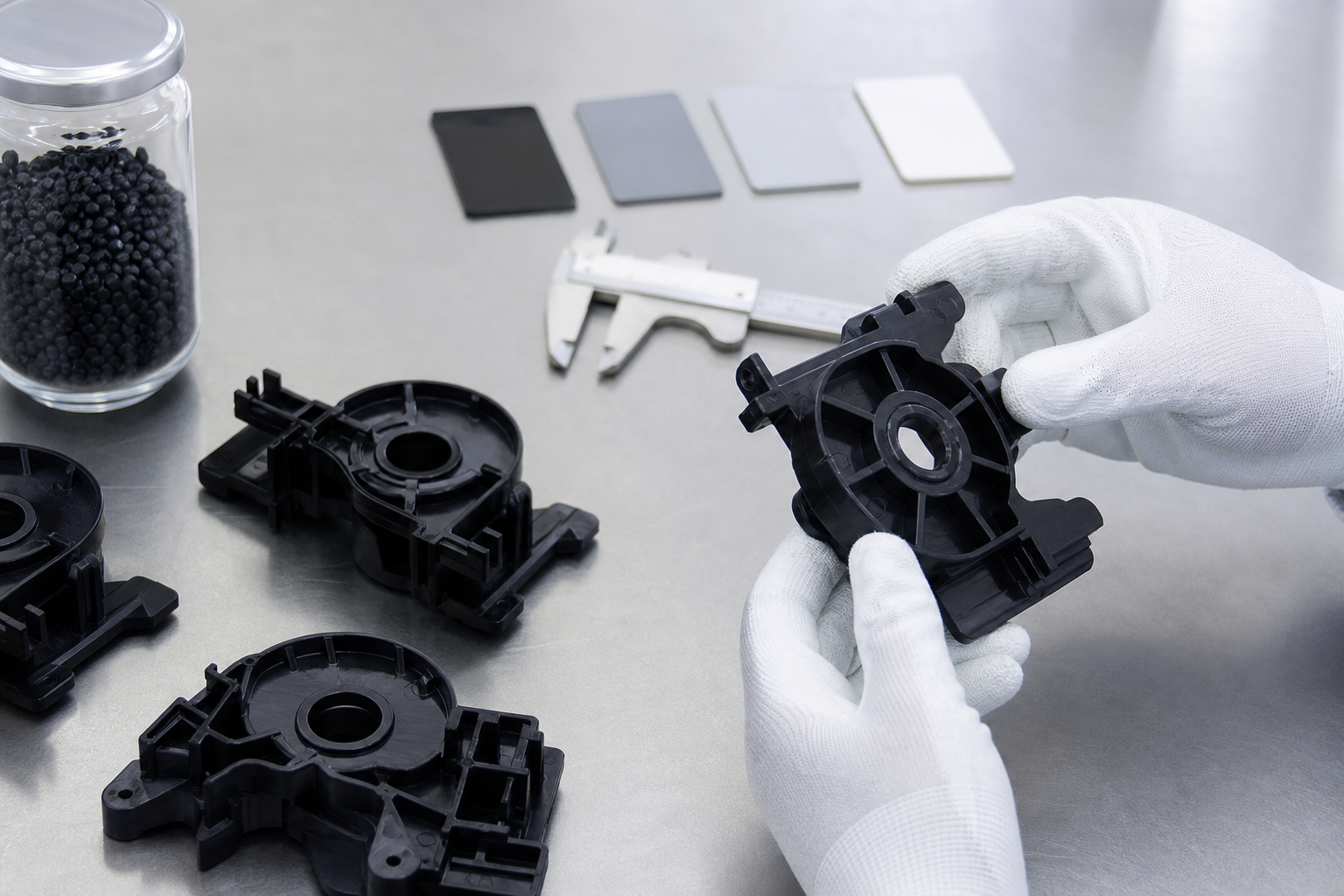
- Ask how PPAP evidence will be prepared: do not wait until submission week.
- Review the real use environment: heat, fluid exposure and vibration often change the resin choice.
- Confirm tooling maintenance logic: high-volume parts need a life-cycle plan, not just an initial tool quote.
- Lock approved resin and color path: substitution risk grows over long automotive schedules.
- Check communication discipline: timing slips often start with poor issue visibility.
Common Automotive Supplier Risks and Fixes
| Risk | Why It Happens | Fix |
|---|---|---|
| Late PPAP delays | Submission planning starts too late | Define data package, sample timing and dimensional checkpoints earlier |
| Field performance mismatch | Material selected on cost without full service review | Review fluid, heat and vibration exposure before resin approval |
| Tool wear and flash growth | Long production life without maintenance discipline | Set tool maintenance intervals and critical cavity inspection points |
| Program change confusion | Poor version and communication control | Use a visible change-approval path linked to parts, drawings and samples |
Automotive Components vs General Custom Plastic Parts
Automotive plastic components usually require stronger documentation, more disciplined change control and longer tooling thinking than general industrial plastic parts. A supplier that quotes attractively but cannot support automotive launch discipline often becomes the costlier choice later.
Why Choose Nylon Plastic
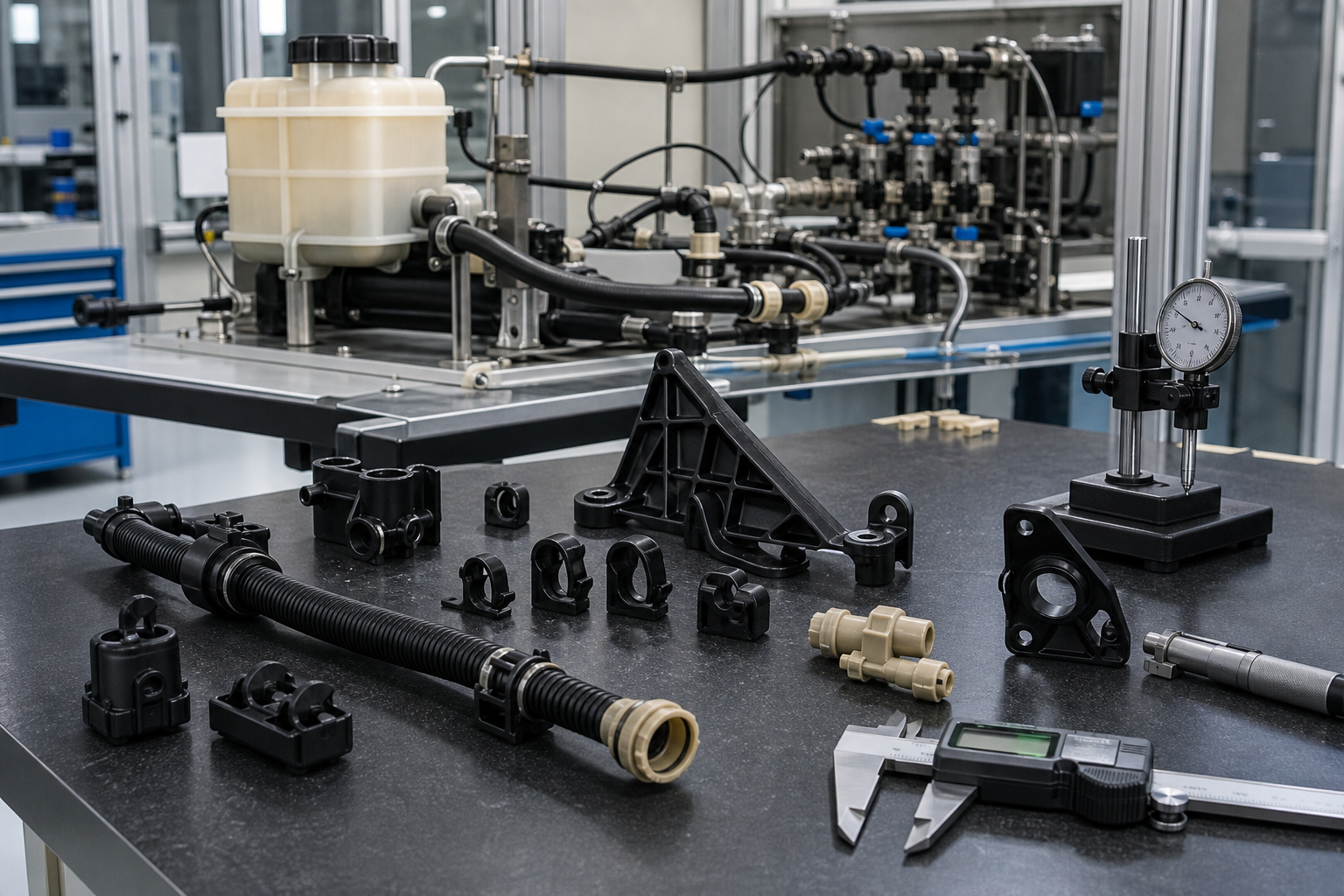
Nylon Plastic helps sourcing teams review whether a part program, material path and supplier package are realistic before tooling and approval timing are locked. That reduces the risk of pushing an automotive part into a supplier flow that is not ready for it.
Automotive Program Handoff: Evidence Before Tooling
| Program Gate | Risk If It Is Late | Evidence to Request |
|---|---|---|
| Material approval | Resin, color, reinforcement or supplier changes move validation | Exact grade, approved list, TDS, COA, lot traceability and change notice |
| Tooling release | Parting, gate, vent, cooling or ejection changes appear after steel | DFM, mold layout, critical-feature review, trial plan and ownership terms |
| PPAP or first approval | A good-looking sample is mistaken for a capable production process | Dimensional results, material records, process evidence, capability and sample status |
| Change control | Supplier, tool, resin or process changes are made without customer review | Revision path, approval owner, deviation record and traceable production release |
Automotive sourcing is a controlled handoff between design, material, tool, process and quality teams. A supplier can be technically capable and still be a poor fit if the data package, response timing, maintenance discipline or change-control expectations are unclear. Confirm the evidence required at each program stage before comparing piece price.
How Nylon Plastic Supports Automotive Plastic Programs
Nylon Plastic supports material review, injection molding, mold coordination, CNC secondary work and inspection for engineered plastic parts. Unfilled PA, PA-GF20 and PA-CF30 can be evaluated against heat, load, fluid, vibration, dimensional and cost requirements, but the exact grade and approval evidence remain the basis for release.
- Connect material, DFM, tooling, trial samples, inspection, PPAP expectations and production change control.
- Define which records are needed before quotation, tool release, first article and repeat production.
- Review annual volume, tool life, maintenance, spare parts, packaging and service risk alongside unit price.
Related Reading
Frequently Asked Questions
What should an automotive plastic components manufacturer provide?
Expect controlled tooling, exact material records, process and inspection evidence, issue response, maintenance discipline and a realistic approval path for repeat production.
Why does PPAP matter for automotive plastic parts?
PPAP helps show that the part and process are ready for controlled repeat production, not only that one sample met the drawing.
Does every automotive plastic part need the same resin approach?
No. Fluid exposure, temperature, vibration, cosmetic demand, load, aging and cost all influence the qualified resin and reinforcement.
What should I send for an automotive supplier review?
Send the drawing, CAD, annual volume, environment, approval timing, material expectations, critical features, PPAP or documentation requirements and packaging needs.
Is IATF 16949 certification alone enough to qualify a supplier?
No. It is one qualification input. Review the actual tooling, material, process, inspection, PPAP, change-control, traceability, capacity and issue-response evidence for the program.
Request an Automotive Supplier Review
Send the part package, program stage, annual volume, material requirements, approval timing and documentation expectations for a supplier-fit review.