
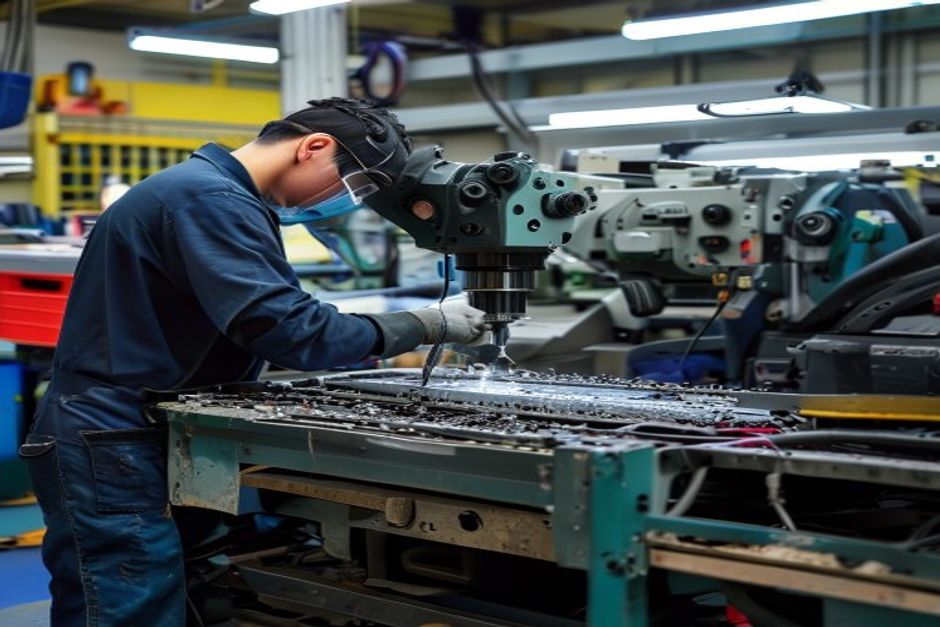
CNC machines represent a significant capital investment — from $50,000 for a basic 3-axis VMC to over $1 million for a large 5-axis machine. When older CNC equipment shows signs of wear, degraded accuracy, or reduced reliability, manufacturing organizations face a critical decision: refurbish (targeted repairs to restore acceptable performance), rebuild (comprehensive overhaul to original specifications), or replace (purchase a new machine). Each path carries distinct economic, technical, and operational implications.
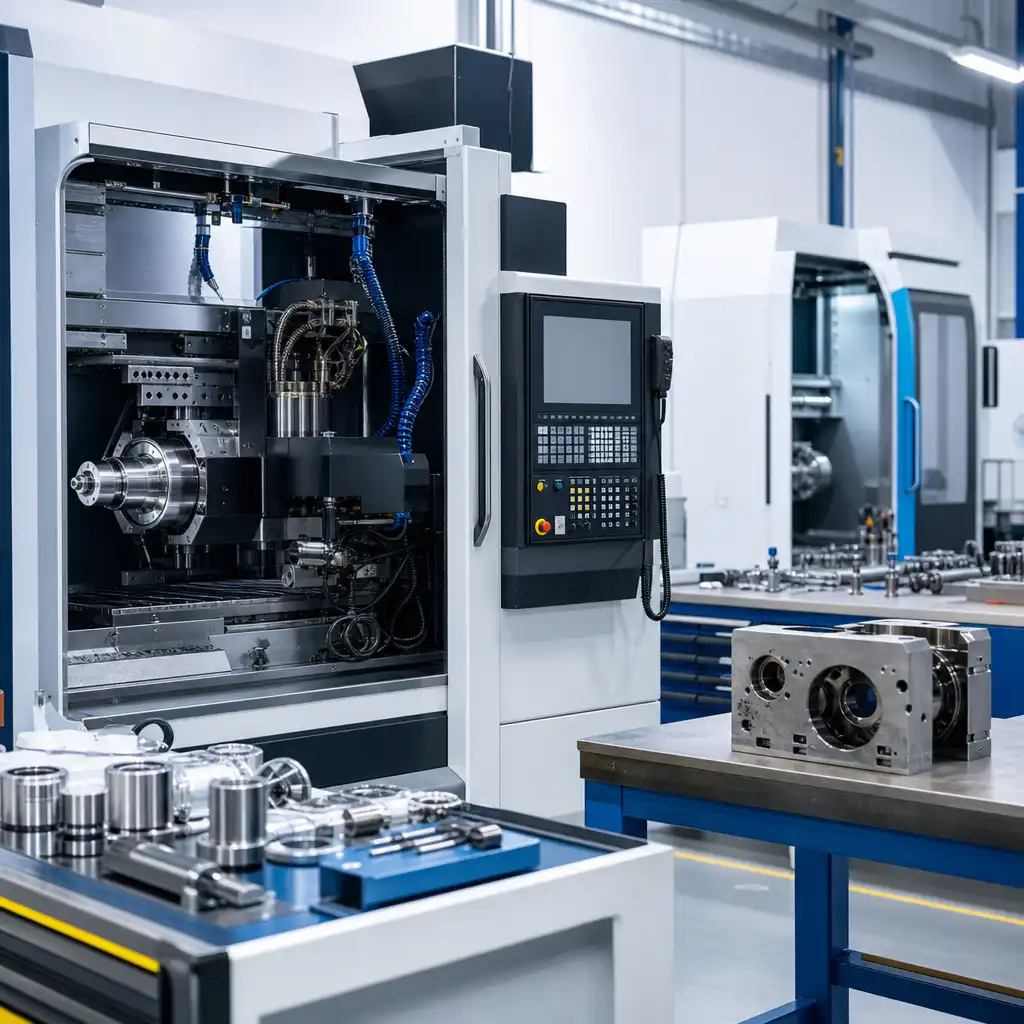
CNC Machine Refurbishment
Refurbishment addresses specific deficiencies — the weakest links — rather than rebuilding the entire machine. It is a targeted, cost-effective approach for machines that are fundamentally mechanically sound but have developed localized problems.
Typical Refurbishment Scope
- Replace or recondition worn ball screws or linear guide rails
- Replace worn spindle bearings (preventive, or due to excessive runout)
- Repair or replace servo motors and drive amplifiers
- Replace degraded way wipers, coolant seals, and machine covers
- Clean and re-lubricate mechanical systems
- Recalibrate axis positioning (pitch error compensation, backlash compensation)
- Replace or upgrade CNC controller components (age-related obsolescence)
When Refurbishment Is Appropriate
- The machine structure (casting, frame) is in good condition
- Only specific, identifiable subsystems show wear
- Downtime must be minimized (refurbishment: 1-2 weeks vs rebuilding: 4-8 weeks)
- Budget constraints prevent full rebuilding or replacement
- Accuracy requirements are moderate (< ±0.002 inch)
- The machine has 8-15 years of service and has been maintained
Refurbishment Costs
15-30% of equivalent new machine cost, depending on scope. A refurbished machine typically returns to 85-95% of original accuracy specifications. Service life extension: 5-8 years.
CNC Machine Rebuilding
Rebuilding is a comprehensive overhaul — essentially remanufacturing the machine from its structural foundation up. Every major system is inspected, remanufactured, or replaced.
Typical Rebuilding Scope
- Complete disassembly of the machine to its structural casting
- Re-scraping or re-grinding of way surfaces (box way machines)
- Replacement of all linear guides, ball screws, and bearing packs
- Replacement of all seals, wipers, hoses, and flexible connections
- Spindle rebuild or replacement
- Full CNC control system upgrade (modern controller, drives, encoders, human-machine interface)
- Re-wiring and re-plumbing of all electrical, pneumatic, and hydraulic systems
- Full calibration, laser interferometer check, and Ballbar circularity test

When Rebuilding Is Appropriate
- The machine structure is proven and valuable (large capacity, specialty configuration)
- The OEM no longer supports the model or a direct replacement is not available
- Accuracy requirements exceed what refurbishment can deliver (back to original or better)
- The machine is 15-30 years old and shows widespread wear
- Lead time for a new machine (6-12 months) exceeds operational needs
Rebuilding Costs
40-60% of equivalent new machine cost. A properly rebuilt machine typically meets or exceeds original accuracy specifications — often achieving ±0.0002 inch positioning repeatability when combined with a modern controller. Service life extension: 10-15 additional years.
Comparion: Refurbishment vs Rebuilding vs Replacement
| Factor | Refurbishment | Rebuilding | New Machine |
|---|---|---|---|
| Cost | 15-30% of new | 40-60% of new | 100% |
| Downtime | 1-2 weeks | 4-12 weeks | 12-40 weeks (lead time) |
| Accuracy (post) | 85-95% of original | 100%+ of original | 100% of specified |
| Service Life | 5-8 years | 10-15 years | 15-25 years |
Decision Framework
Ask these questions when evaluating whether to refurbish, rebuild, or replace:
- How old is the machine? Under 10 years → refurbish | 10-20 years → rebuild | 20+ years → rebuild or replace depending on structure condition
- Is the machine structure damaged? Cracked castings or distorted frames → replace (rebuilding cannot fix fundamental structural issues)
- Are spare parts available? Obsolete controller with no drop-in replacement → rebuild may require full control upgrade
- What accuracy do you need? Refurbishment for ±0.005 inch | rebuilding for ±0.001 inch | new machine for ±0.0005 inch or better
- Is downtime the driving factor? If the machine must be back in production within 2 weeks, refurbishment is the only practical option
FAQ
When is CNC Machine Refurbishment vs Rebuilding: Complete Decision Guide the right choice?
CNC Machine Refurbishment vs Rebuilding: Complete Decision Guide is the right choice when the part requires machined accuracy, controlled surfaces, repeatable features, and a material that can be cut reliably.
What should be confirmed before ordering CNC Machine Refurbishment vs Rebuilding: Complete Decision Guide?
Confirm the drawing version, material grade, tolerances, quantity, critical dimensions, surface finish, and inspection requirements before production starts.
What usually drives cost in CNC Machine Refurbishment vs Rebuilding: Complete Decision Guide?
Cost is usually driven by material, setup time, machine time, tolerance difficulty, fixturing, tool access, finishing, inspection, and order quantity.
How can quality risk be reduced in CNC Machine Refurbishment vs Rebuilding: Complete Decision Guide?
Quality risk is reduced by marking critical features clearly, avoiding unnecessary tight tolerances, confirming manufacturability early, and using inspection data for important dimensions.

