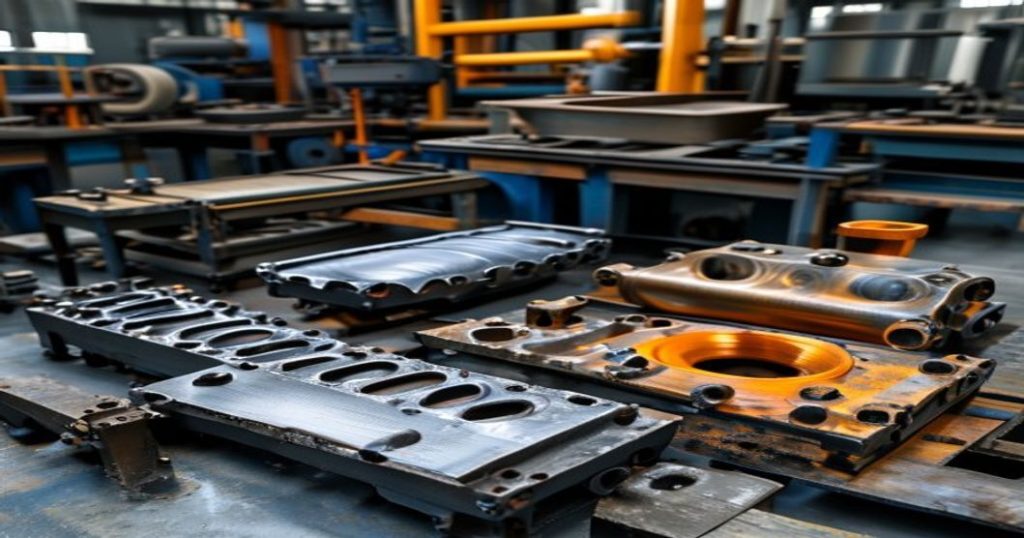
This article is not primarily about shopping for a CNC vendor or understanding the machining process from scratch. It is about turning a one-off part concept into a manufacturable custom CNC part with the fewest expensive surprises. That means the core topic is translation: turning drawings, tolerances, cosmetic intent, assembly needs, and quantity expectations into something a shop can build repeatedly. Buyers usually land here when the part is non-standard, no catalog equivalent exists, and every design choice changes price or lead time. So the focus below is on custom-part execution: how to define the part clearly, how to control ambiguity, and how to avoid rework before production begins.
Custom CNC parts are the backbone of modern manufacturing. Whether you’re prototyping a new robotics joint, replacing an obsolete automotive bracket, or scaling up a medical device from 50 to 5,000 units, at some point you’re going to need parts that don’t exist in a catalog. That’s where custom CNC machining comes in — and getting it right the first time saves you money, time, and a lot of headache.

This guide walks you through what actually matters when sourcing custom CNC parts — from design decisions that make or break your budget, to material choices that affect performance, to the questions you should ask before you send that first RFQ. No textbook theory. Just stuff that works on the shop floor.
Core Concepts & Fundamentals
At its simplest, custom CNC machining is subtractive manufacturing — you start with a solid block of material and cut away everything that isn’t your part. Sounds straightforward, right? But the decisions you make before any chip hits the floor determine whether your parts come out perfect or whether you’re paying for a very expensive learning experience.
Here’s what actually matters when you’re starting out:
- Geometry drives process choice. A part with features on six faces probably needs 5-axis. A simple shaft with threads on both ends? A lathe does it in one setup. Picking the wrong process from the start multiplies your cost for no benefit.
- Tolerances cost money — real money. Every zero you add to that tolerance callout adds dollars to the quote. If your part works at ±0.1mm, don’t put ±0.01mm on the drawing because it “looks professional.” The machine will hit it, but the shop will charge you for the extra setups, probing, and time.
- Design for manufacturing (DFM) isn’t optional. It’s the difference between a $50 part and a $500 part that does exactly the same job.
Key Processes & Technologies
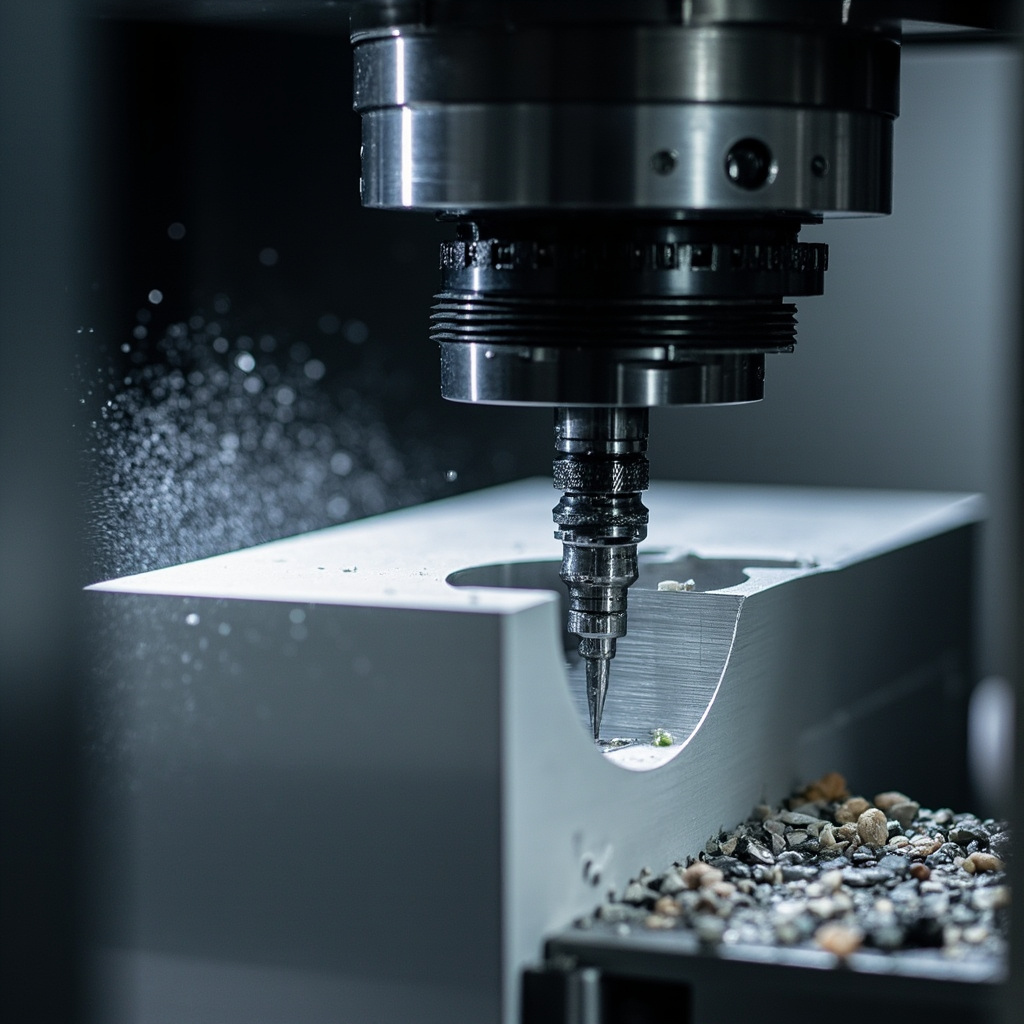
Not all CNC processes are created equal. The technology you choose cascades into every other decision — materials, tolerances, lead times, and cost. Here’s a breakdown of the main processes you’ll encounter when sourcing custom parts:
| Process | Best For | Typical Tolerance | Surface Finish (Ra) | Setup Time | Relative Cost |
|---|---|---|---|---|---|
| 3-Axis CNC Milling | Flat parts, pockets, slots, holes — 2.5D geometry | ±0.025mm | 0.8–1.6 μm | Low | $ |
| 5-Axis CNC Milling | Complex curved surfaces, multi-face parts, impellers | ±0.01mm | 0.4–0.8 μm | Medium | $$$ |
| CNC Turning | Cylindrical parts, shafts, bushings, threaded components | ±0.01mm | 0.4–1.6 μm | Low | $ |
| Swiss Turning | Small-diameter, high-precision cylindrical parts (medical, watch) | ±0.005mm | 0.2–0.8 μm | Medium | $$ |
| Wire EDM | Sharp internal corners, hard materials, tight tolerances | ±0.003mm | 0.2–0.4 μm | High | $$$$ |
| CNC Grinding | Ultra-precision surfaces, bearing races, sealing faces | ±0.002mm | 0.05–0.2 μm | High | $$$ |
Here’s the thing: most custom parts don’t need the fanciest process. A well-designed part for 3-axis milling can outperform a poorly designed part run on a $500K 5-axis machine. Start with what your geometry actually needs, not what sounds impressive in a meeting.
At nylonplastic.com, we run the full spectrum — 3-axis, 5-axis, turning, and EDM — because different parts need different tools. Our CNC machining capabilities cover everything from one-off prototypes to production runs, and our engineering team reviews every drawing for process compatibility before we even touch a tool. That’s the kind of thing that saves you from finding out your part can’t be made the way you drew it — after you’ve already paid for material.
Industrial Applications
Custom CNC parts show up everywhere — often in places you don’t notice because they’re working so well. Here’s where we see the most demand across industries:
| Industry | Application | Material | Key Requirement | nylonplastic.com Advantage |
|---|---|---|---|---|
| Automotive | Custom engine brackets, intake manifolds | Aluminum 6061-T6 | High strength-to-weight ratio, fatigue resistance | 5-axis machining eliminates multiple setups — faster delivery, tighter tolerances |
| Aerospace | Structural brackets, landing gear components | Titanium Ti-6Al-4V | Strength at elevated temps, certified material traceability | Full material certs + AS9100-compliant QC documentation included as standard |
| Medical | Surgical tool bodies, implant trials | Stainless 316L / PEEK | Biocompatibility, autoclave compatibility | ISO 13485 processes with full lot traceability from raw stock to finished part |
| Electronics | Heat sinks, enclosure bodies | Copper C110 / Aluminum 6061 | Thermal conductivity, fine fin geometry | 0.5mm fin thickness capability with no burr — sinker EDM for micro features |
| Industrial Equipment | Custom jigs, s, replacement gears | 4140 Alloy Steel | Wear resistance, dimensional stability | In-house heat treatment + post-HT grinding — one supplier, one invoice |
| Robotic Automation | End-effector bodies, joint housings | Aluminum 7075-T6 | Lightweight, complex internal geometries | 5-axis simultaneous for undercut features — no secondary ops, no tolerance stack |
The pattern across these industries is the same: they all need parts that work reliably under real conditions, and they all benefit from having a manufacturing partner who understands what happens when a part goes from “looks good on the screen” to “needs to survive 10,000 cycles in the field.”
Material Selection — What Actually Works
Material selection trips up more projects than any other single factor. You’d be surprised how many times I’ve seen someone spec Inconel for a part that would work fine in 304 stainless — and triple their cost for no reason.
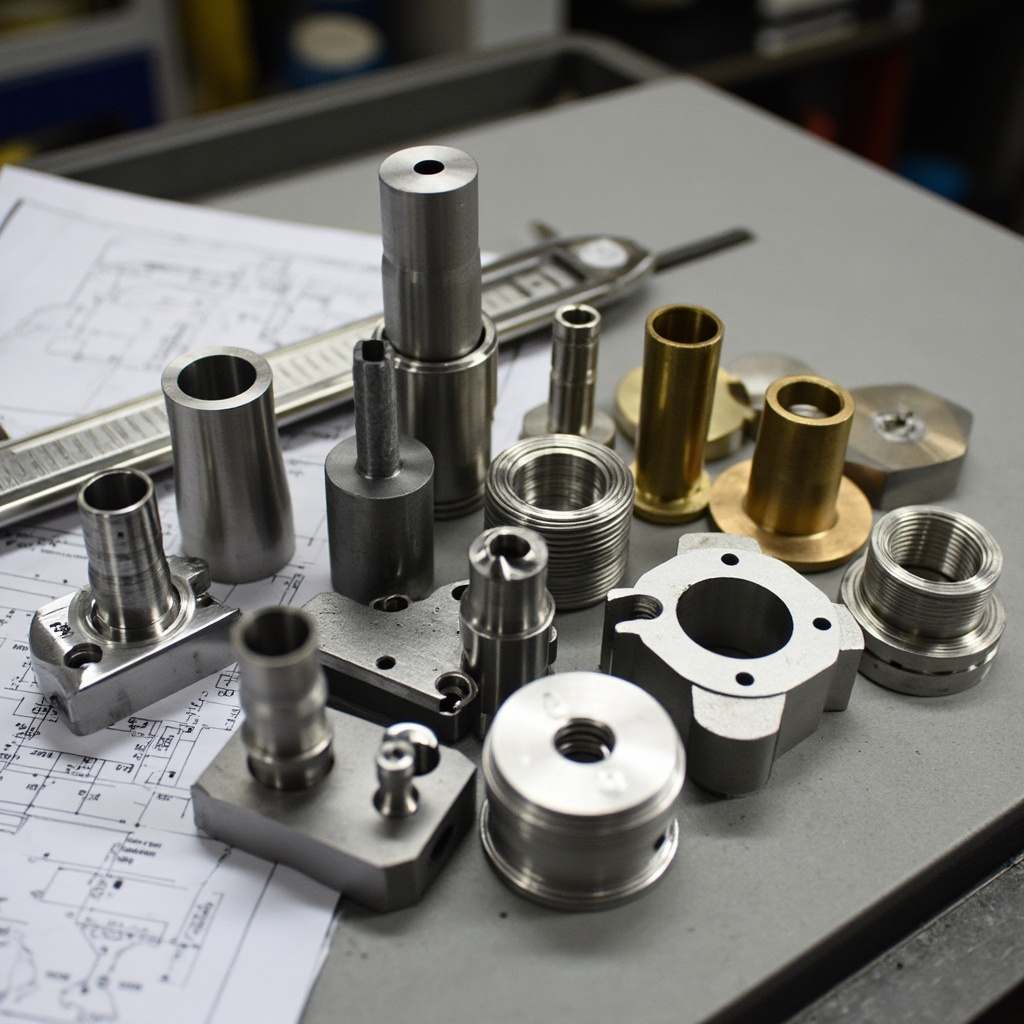
Here’s a practical breakdown of the materials we machine most often, and when each one makes sense:
Aluminum 6061-T6 — The workhorse. Good strength, excellent machinability, takes anodizing beautifully. This is your default choice unless you have a specific reason to use something else. About 60% of the custom parts we machine are 6061.
Aluminum 7075-T6 — When 6061 isn’t strong enough. Comparable to mild steel in strength but at a third the weight. More expensive and less corrosion-resistant than 6061, so only use it when you need the strength.
Stainless 304 / 316L — For corrosion resistance and food/medical applications. 316L adds molybdenum for better chemical resistance. Both machine slower than aluminum (roughly 3x the cycle time), so expect higher part costs.
Titanium Ti-6Al-4V — Aerospace and medical implant grade. Lighter than steel, stronger than aluminum, biocompatible. Also expensive as raw stock and slow to machine. Only use it when the weight savings justify the cost.
PEEK and engineered plastics — When you need chemical resistance, electrical insulation, or autoclave compatibility without metal weight. Check out our engineering plastics guide for detailed plastic-to-metal substitution data.
4140 / 4340 Alloy Steel — When you need parts that survive impact, fatigue, and wear. Gears, shafts, tooling bodies. Usually heat-treated post-machining.
Still not sure? Our material selection hub walks you through the trade-offs for every common engineering material, with real cost and performance data — not just spec sheet numbers.
Cost & Performance Trade-offs
Nobody likes surprise costs. Here’s what actually drives the price on custom CNC parts, in order of impact:
1. Material cost (15-40% of total). Raw stock prices fluctuate, but the spread is real. A block of 6061 aluminum is cheap. A block of 6Al-4V titanium is not. And some materials — looking at you, Inconel — eat tooling like candy, which gets baked into the shop rate.
2. Setup complexity (20-35% of total). Every time the machinist has to flip the part, re-indicate, and re-probe, you’re paying an hour of setup time. A part that machines complete in one setup (3-axis with all features from one side) is dramatically cheaper than a part that needs three setups. This is where 5-axis really earns its keep — one setup, five sides accessed.
3. Tolerance requirements (10-30% adder). Every tight tolerance means slower feeds, in-process , and often a separate QC step. If your drawing says ±0.005mm everywhere, the shop assumes you mean it — and prices accordingly. Be selective: only tolerance what matters.
4. Quantity (non-linear). One part is expensive because you’re paying for all the ming and setup amortized over one unit. Ten parts spreads that cost. A hundred parts is where things get efficient. But a thousand parts? At some point you should be looking at injection molding instead — that crossover point is somewhere around 200-500 units depending on geometry.
5. Surface finish. “As machined” is your cheapest option and works for most functional parts. Anodizing, powder coating, or mirror polishing each adds cost and lead time. Our surface finishing guide breaks down the cost for every finish option.
Quality Standards & Best Practices
Incoming material verification. Before any chip flies, the raw stock gets verified — alloy grade, dimensions, and (when required) mill certs. If the material is wrong, the part is wrong, no matter how good the machining is.
In-process . The first article off the machine gets a full dimensional check. For production runs, critical features get sampled at med intervals. The goal is to catch drift before it produces scrap — not after.
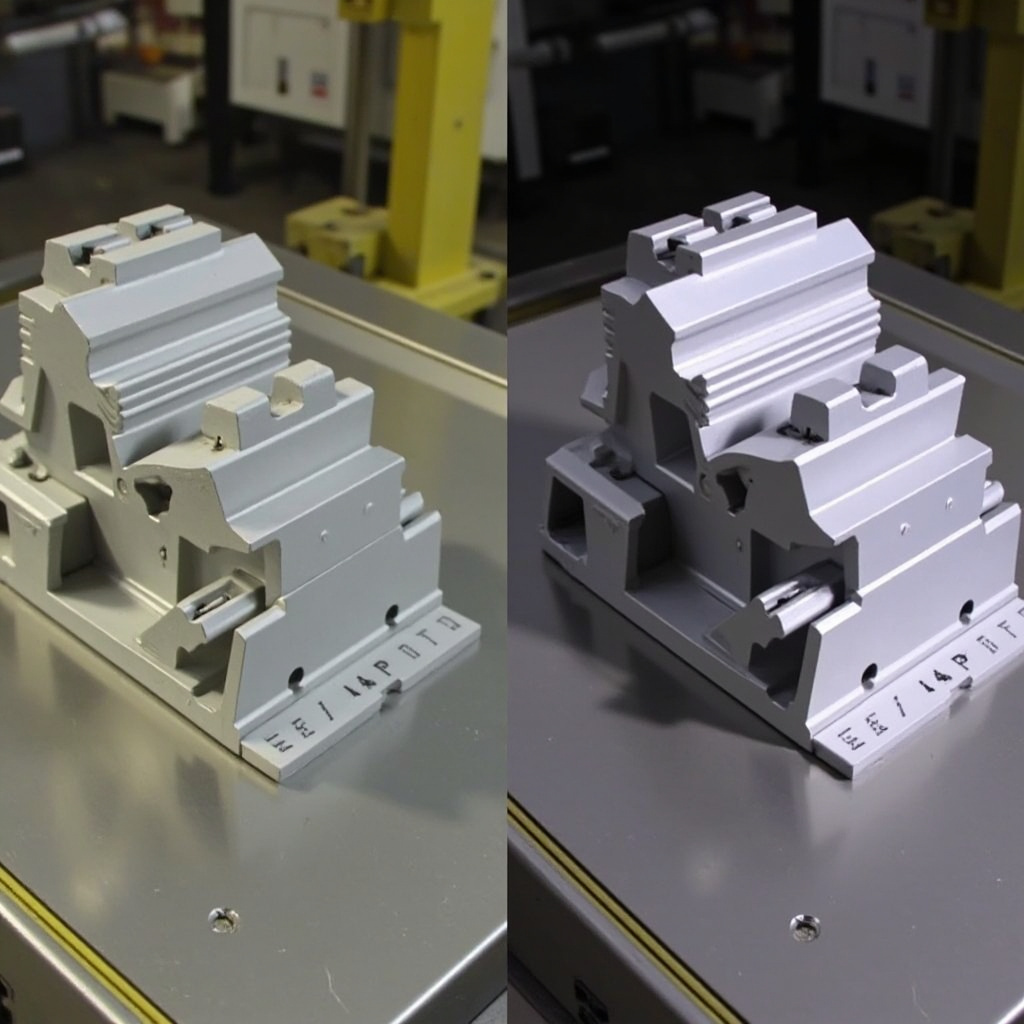
Final QC. CMM (Coordinate Measuring Machine) verification of all critical dimensions against the drawing. Surface roughness testing when finish matters. Hardness testing when heat treatment is involved.
Documentation. For regulated industries (aerospace, medical), the paperwork matters as much as the part. Full material traceability, reports, and certificates of conformance should be standard — not an upsell.
Getting Started — Practical Steps
Ready to get parts made? Here’s the process that works, based on (I’ll be honest) watching plenty of projects go sideways because people skipped steps:
Step 1: Define what you actually need. Not what you think you need — what the part actually needs to function. What loads? What environment? What mating components? What’s the real tolerance requirement? Write this down before you open CAD.
Step 2: Design with the process in mind. Use our product design guidelines for DFM best practices. Avoid sharp internal corners (they require EDM or tiny tools that break). Keep hole depths under 4x diameter when possible. Design for the largest reasonable internal radii.
Step 3: Create a clear drawing package. A 3D CAD file (STEP or IGES) plus a 2D drawing with critical dimensions and tolerances. Mark reference dimensions as reference. Call out surface finish requirements. Specify material and any post-processing.
Step 4: Send for DFM review. Before you commit to production, get a manufacturability review. A good shop will flag issues — too-thin walls, impossible undercuts, tolerance stacks that don’t close — and suggest fixes. This step is free at nylonplastic.com and it’s saved our customers tens of thousands of dollars in rework.
Step 5: Order a first article. For anything critical, get one or two pieces first. Verify fit, function, and finish before you commit to the full quantity. Yes, it adds a few days. It’s cheaper than scrapping a hundred parts.
Step 6: Scale with confidence. Once the first article is approved, production runs are straightforward because the process is validated. Same , same s, same QC plan.

Conclusion
Custom CNC parts don’t have to be a guessing game. The formula is simple: clear requirements, smart design decisions, the right material, and a manufacturing partner who tells you what you need to hear — not just what you want to hear.
We’ve been machining custom parts long enough to know that the difference between a good part and a great part usually comes down to the conversations that happen before the machine starts. The drawing review where someone says “have you considered making this wall 0.5mm thicker?” The material discussion where aluminum 6061 replaces titanium and saves 60% with no performance hit. The tolerance reality check that keeps your project on budget.
That’s the kind of partnership we build at nylonplastic.com. Not just a supplier who machines what’s on the drawing — but a team that helps you get the part right the first time.
Got custom parts to machine? Send us your drawing. We’ll review it for manufacturability, give you an honest quote (no games, no surprise fees). Whether you need one prototype or a thousand production parts, our engineering team treats your project like it matters — because it does. Upload your files and get a quote →
FAQ
When should you choose custom CNC parts instead of standard catalog components?
Custom CNC Parts: From Design to Production — Practical Engineering Guide is the right choice when the part requires machined accuracy, controlled surfaces, repeatable features, and a material that can be cut reliably.
What should you confirm before ordering custom CNC parts?
Confirm the drawing version, material grade, tolerances, quantity, critical dimensions, surface finish, and inspection requirements before production starts.
What usually drives cost in a custom CNC parts project?
Cost is usually driven by material, setup time, machine time, tolerance difficulty, fixturing, tool access, finishing, inspection, and order quantity.
How can you reduce quality risk when buying custom CNC parts?
Quality risk is reduced by marking critical features clearly, avoiding unnecessary tight tolerances, confirming manufacturability early, and using inspection data for important dimensions.
What should a CNC plastic machining manufacturer confirm before quoting a custom part?
Confirm the material and stock form, drawing revision, critical dimensions, quantity, finish, inspection state and delivery destination. Mark thin walls, deep pockets, threads and mating fits so workholding and tool access can be reviewed. Ask for a quote that states material, machining, secondary operations and inspection scope; compare the same work rather than only the piece price.
Related Reading
- CNC Machining Capabilities — Full Process Overview
- Material Selection Hub
- CNC Machining Materials Guide
- Product Design for Manufacturing
- CNC Machining Services: How to Choose the Right Partner for Your Parts
- CNC Milling Services: 3-Axis vs 5-Axis and What Your Parts Actually Need
- How to Reduce Costs in Custom CNC Machining: A Practical Guide for Procurement Teams