
Nylons is a practical engineering topic when you need to compare options, check limits, and choose a process with less risk.
Nylons cover a broad family of engineering materials with different balances of strength, toughness, heat resistance, and moisture sensitivity.
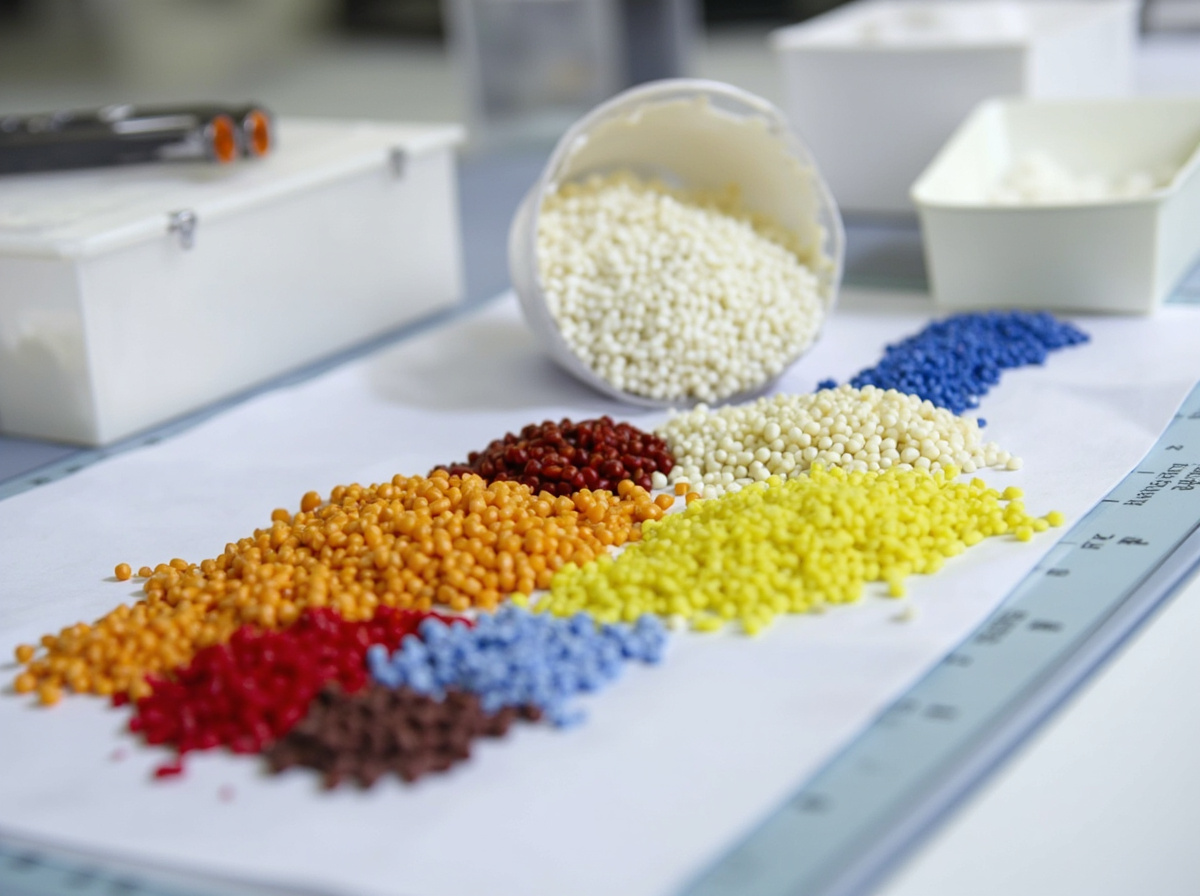
Nylon stands as one of the most commercially significant engineering thermoplastics ever developed, with annual global production exceeding 8 million metric tons. From its serendipitous discovery at DuPont’s experimental station to its ubiquity in modern manufacturing, nylon’s journey exemplifies how fundamental polymer science translates into practical engineering solutions. This comprehensive guide examines the full spectrum of nylon variants, their property profiles, processing characteristics, and industrial applications, drawing on our facility’s extensive experience in CNC machining and injection molding nylon components.
The Complete Nylon Family Tree
The nylon family encompasses aliphatic polyamides designated by the number of carbon atoms in their monomer units. The naming convention indicates the diamine and diacid carbon counts for condensation polymers (e.g., PA 66 uses a 6-carbon diamine and 6-carbon diacid), or the lactam ring size for ring-opening polymers (e.g., PA 6 from caprolactam with 6 carbons). The following table catalogs the commercially significant nylon grades and their distinguishing characteristics.
| Nylon Grade | Monomer(s) | Tm (°C) | Tg (°C, dry) | Key Feature |
|---|---|---|---|---|
| PA 6 | Caprolactam | 220 | 52 | Best impact/surface balance |
| PA 66 | HMDA + Adipic Acid | 260 | 57 | Higher strength/thermal resistance |
| PA 46 | Diaminobutane + Adipic Acid | 295 | 75 | Highest Tm of aliphatic nylons |
| PA 11 | 11-Aminoundecanoic Acid | 185 | 42 | Bio-based (castor oil) |
| PA 12 | Laurolactam | 178 | 40 | Lowest moisture absorption |
| PA 610 | HMDA + Sebacic Acid | 220 | 50 | Good moisture/chemical balance |
“>PA 612 |
HMDA + Dodecanedioic Acid | 215 | 46 | Good dimensional stability |
PA 6 vs PA 66: The Engineering Workhorses Compared
PA 6 and PA 66 collectively represent approximately 85% of all nylon consumption, making the choice between them one of the most common material selection decisions in engineering thermoplastics.
Processing Differences
PA 6 processes at lower melt temperatures (230-260°C versus 270-290°C for PA 66) and exhibits better flow characteristics, reducing injection pressure requirements and enabling thinner wall sections. The narrower molecular weight distribution of PA 6 (from ring-opening polymerization) provides more consistent processing behavior across molding cycles. However, PA 6 crystallizes more slowly, requiring longer cooling times or higher mold temperat
ures to achieve optimal crystallinity.
Mechanical Performance
Dry PA 66 offers approximately 10-15% higher tensile strength and modulus compared to PA 6, primarily due to its higher crystallinity (35-45% vs 25-35%) and closer chain packing enabled by the more regular repeat unit structure. However, after moisture conditioning to equilibrium at 50% RH, this performance gap narrows considerably. The plasticizing effect of absorbed water reduces PA 66 tensile strength to roughly equivalent levels as conditioned PA 6, though PA 66 retains a stiffness advantage of approximately 15-20%.
Comprehensive Mechanical Properties by Nylon Grade
| Property | PA 6 (Dry/Cond) | PA 66 (Dry/Cond) | PA 12 (Dry) | PA 6 GF30 | PA 66 GF30 |
|---|---|---|---|---|---|
| Tensile Strength (MPa) | 79 / 50 | 83 / 58 | 45 | 190 | 200 |
| Tensile Modulus (GPa) | 2.8 / 1.2 | 3.2 / 1.5 | 1.4 | 9.5 | 10.5 |
| Flexural Modulus (GPa) | 2.6 / 0.9 | 2.9 / 1.2 | 1.2 | 8.5 | 9.5 |
| Notched Izod (J/m) | 53 / NB | 43 / 120 | 
#ddd;”>NB |
110 | 100 |
| HDT @ 1.8 MPa (°C) | 68 / – | 90 / – | 52 | 210 | 250 |
| Water Absorption @ Sat. (%) | 2.7 | 2.3 | 0.25 | 1.5 | 1.2 |
The Moisture Challenge: Understanding Nylon’s Hydrophilic Nature
All polyamides absorb moisture from the environment due to hydrogen bonding between water molecules and amide groups in the polymer backbone. This moisture absorption profoundly affects mechanical properties, dimensional stability, and processing behavior — effects that must be accounted for in design and material selection.
Mechanism and Magnitude
The density of amide linkages determines equilibrium moisture content. PA 6, with one amide group per six backbone carbons, absorbs the most water (2.7% at saturation, approximately 2.5% at 50% RH). PA 66 absorbs slightly less (2.3% at saturation) due to higher crystallinity and tighter chain packing. PA 12, with one amide group per twelve backbone carbons, absorbs only 0.25% at saturation — an order of magnitude less than PA 6.
Property Effects
Absorbed water acts as a plasticizer, reducing glass transition temperature (from approximately 52°C dry to below 0°C saturated for PA 6) and improving impact resistance substantially. This explains why dry nylon is relatively brittle while conditioned nylon is remarkably tough. However, the plasticization also reduces tensile strength and stiffness by 30-40%, and dimensional changes of 0.3-0.8% in the flow direction and 0.5-1.5% in the transverse direction are typical for PA 6 reaching equilibrium moisture.
Processing Nylon: Best Practices for Injection Molding and CNC Machining
Injection Molding Nylon
Successful nylon injection molding begins with proper drying. PA 6 and PA 66 must be dried to less than 0.15% moisture (typically 4-6 hours at 80°C using desiccant dryers) to prevent hydrolytic degradation during processing. Melt temperature should be 230-260°C for PA 6 and 270-290°C for PA 66, with mold temperature maintained at 80-90°C to promote surface crystallinity and achieve consistent dimensions. Post-molding conditioning — exposing parts to ambient humidity or controlled moisture environments — is often necessary to achieve equilibrium moisture content and stabilize dimensions before precision assembly.
CNC Machining Nylon Components
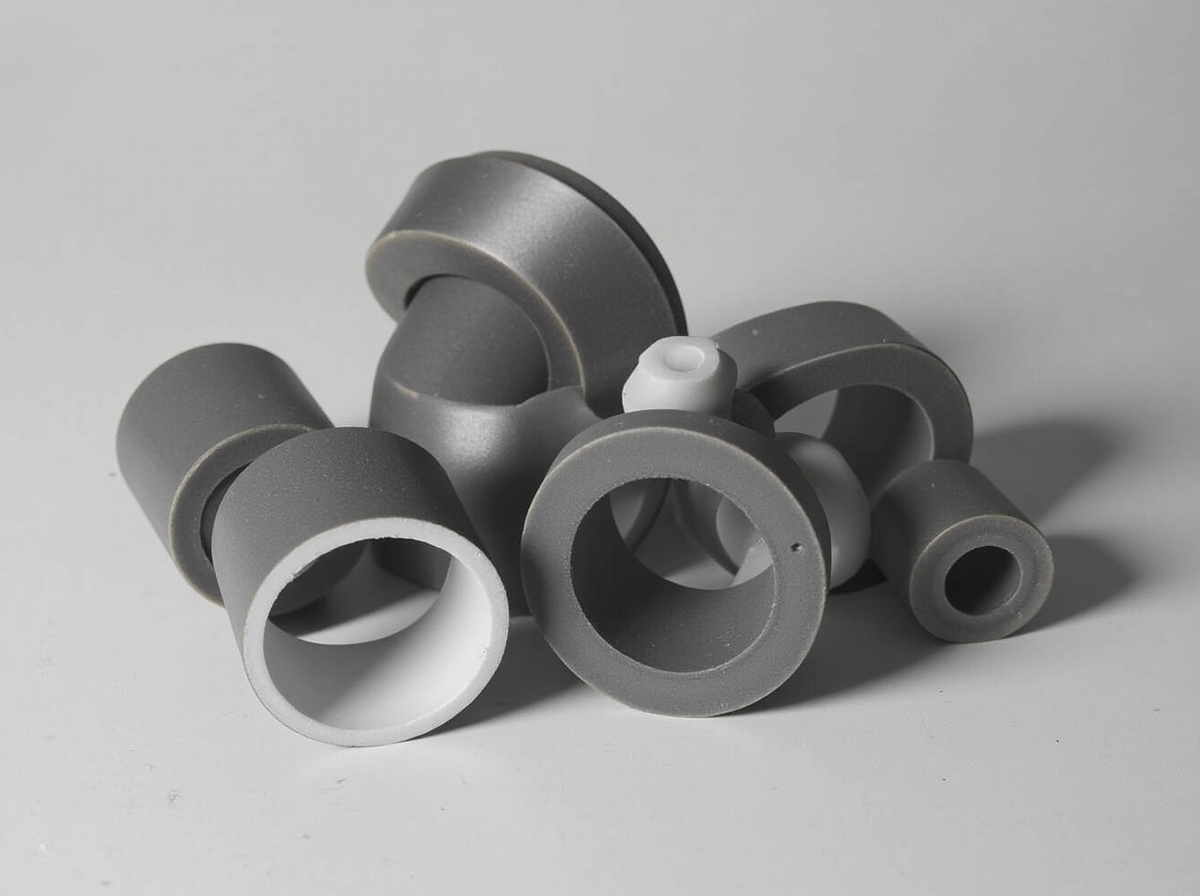
Nylon’s excellent machinability makes it a preferred material for precision components produced by CNC machining. Unfilled nylon grades machine with sharp carbide tooling, producing continuous chips that require effective evacuation to prevent re-cutting and surface degradation. Key machining parameters differ significantly between grades and filler content:
For unfilled PA 6 and PA 66, surface speeds of 150-250 m/min with feed rates of 0.1-0.3 mm/rev using carbide tooling with positive rake angles (10-15°) typically produce excellent surface finishes. Water-based coolants should generally be avoided for precision work, as they cause dimensional swelling. Glass-filled grades (PA 6 GF30, PA 66 GF30) require diamond-coated or PCD tooling, with surface speeds reduced to 80-150 m/min to manage abrasive wear. The glass fibers cause tool edge rounding that progressively degrades surface finish and dimensional accuracy.
Industrial Applications and Material Selection
Automotive Applications
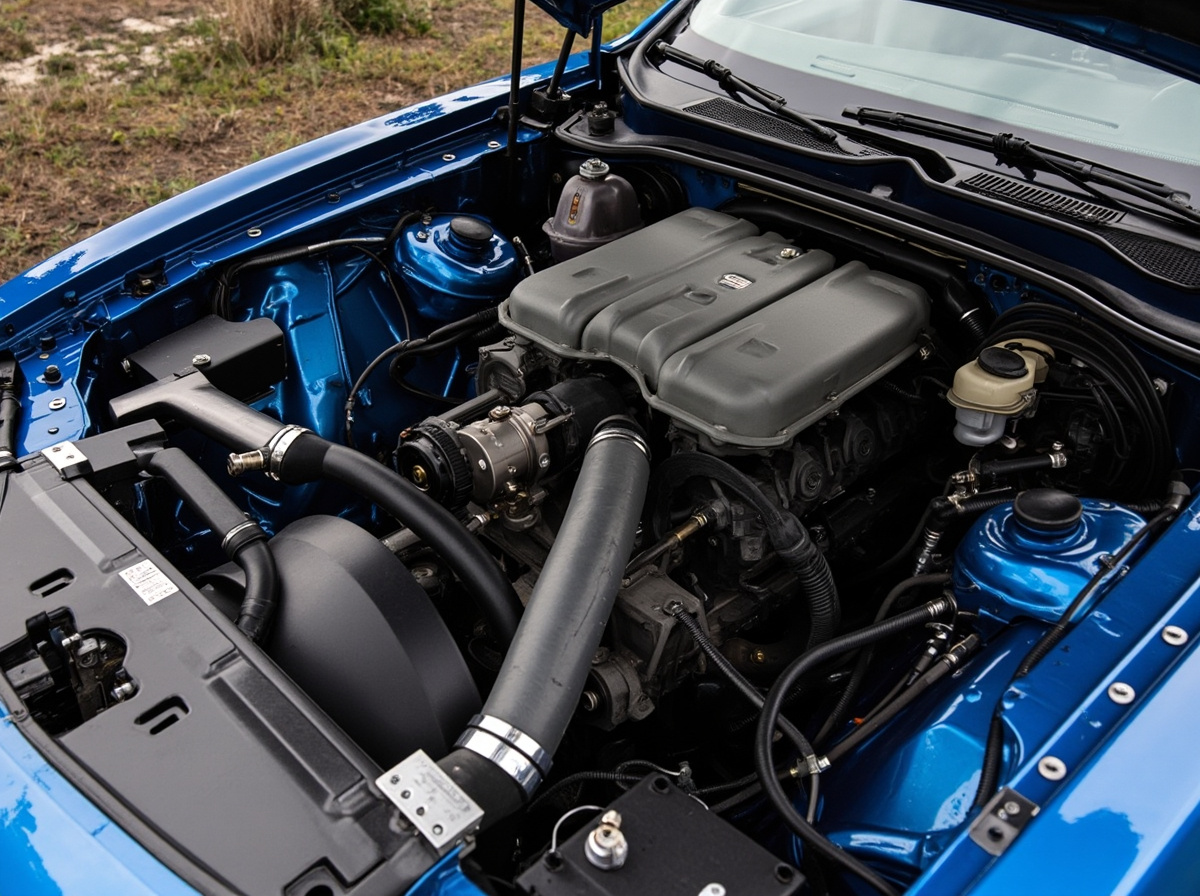
Nylon is the dominant engineering thermoplastic in automotive applications, with typical passenger vehicles containing 20-25 kg of nylon components. Under-hood applications — including engine covers, intake manifolds, radiator end tanks, and rocker covers — primarily use PA 66 and PA 66 GF30 for their superior thermal resistance and strength. Interior components including pedals, door handles, and seat belt components predominantly use PA 6 for its better surface appearance and lower cost.
Industrial Machinery
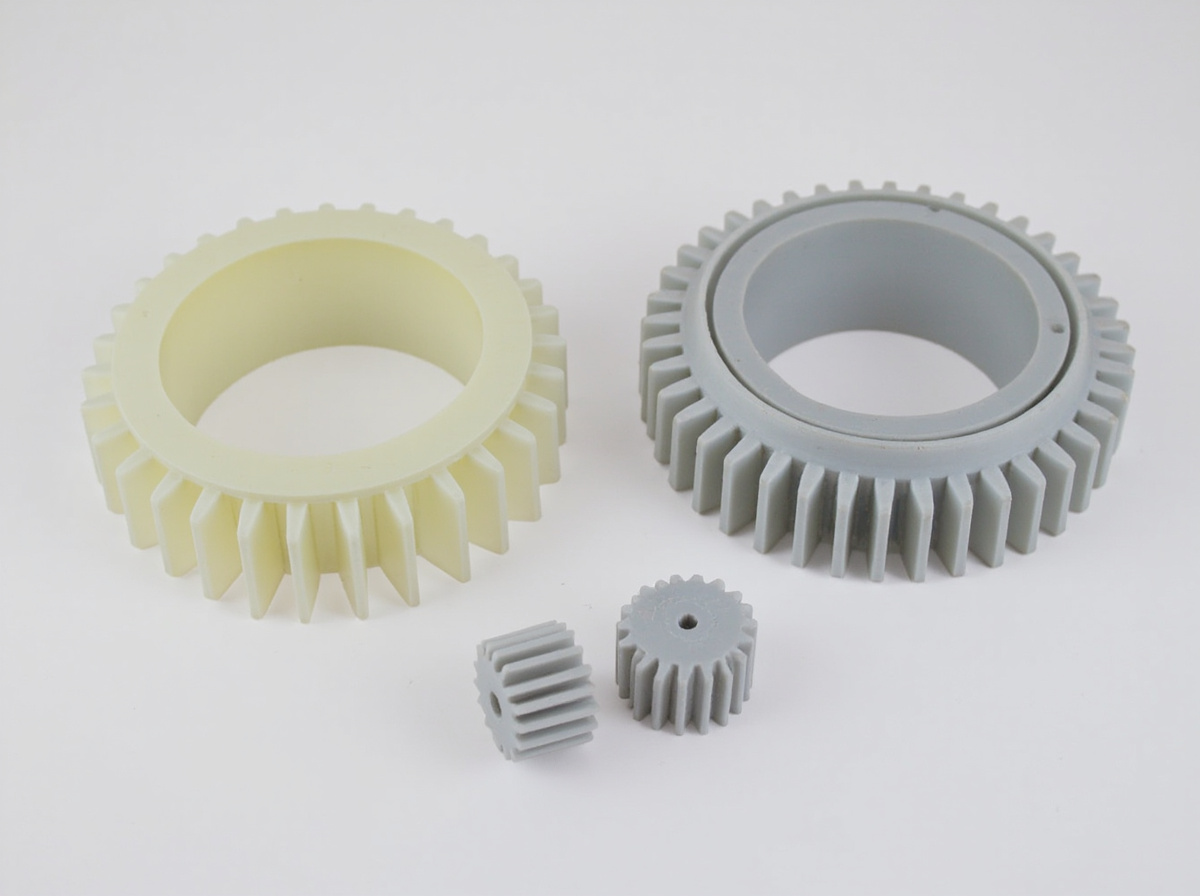
Nylon gears, bearings, rollers, and wear pads are ubiquitous in industrial machinery. Cast PA 6 grades incorporating oil, MoS₂, or solid lubricant fillers provide self-lubricating properties that extend component life in unlubricated applications. PA 12 and PA 11 are preferred for precision bearings operating in variable humidity environments where dimensional stability is critical.
Electrical and Electronics
PA 66 is the preferred nylon for electrical connectors, circuit breakers, and coil bobbins due to its superior dielectric strength and tracking resistance. Glass-filled and mineral-filled grades provide the stiffness and dimensional stability required for precision connector housings. Recent halogen-free, flame-retardant nylon formulations address growing regulatory requirements for electrical component materials.
Conclusion: Selecting the Right Nylon for Your Application
The nylon family offers unparalleled versatility across a spectrum of mechanical, thermal, and cost requirements. PA 6 provides the best balance of processability, surface finish, and economics for general-purpose applications. PA 66’s superior thermal and mechanical performance justifies its modest cost premium for demanding engineering applications. Glass-filled grades deliver dramatic improvements in stiffness and thermal resistance for structural components. And PA 12 remains the material of choice when dimensional stability in varying environments cannot be compromised.
At nylonplastic.com, our engineering team specializes in matching the right nylon grade to specific application requirements, drawing on decades of combined experience in nylon processing and component manufacturing. Whether your project requires high-volume injection molding or precision CNC machining of custom nylon components, understanding the material options available is the first step toward optimized manufacturing outcomes.
FAQ
How do you know whether Nylons: Complete Guide to Nylon Materials fits a part?
Nylons: Complete Guide to Nylon Materials fits a part when its load capacity, temperature range, moisture exposure, wear behavior, and processing method match the real service conditions.
What properties should be checked for Nylons: Complete Guide to Nylon Materials?
Check strength, stiffness, impact resistance, heat resistance, moisture absorption, dimensional stability, friction, wear, and chemical compatibility.
What is the biggest selection risk for Nylons: Complete Guide to Nylon Materials?
The biggest risk is choosing from a datasheet value without considering actual environment, processing method, part geometry, and long-term use.
When should Nylons: Complete Guide to Nylon Materials be tested before production?
Testing is recommended when the part faces load, heat, chemicals, moisture, tight tolerances, regulatory requirements, or a new operating environment.

