
This pa6 vs pa12 nylon material selection guide explains practical material, design, manufacturing, and sourcing considerations for Nylon Plastic readers.

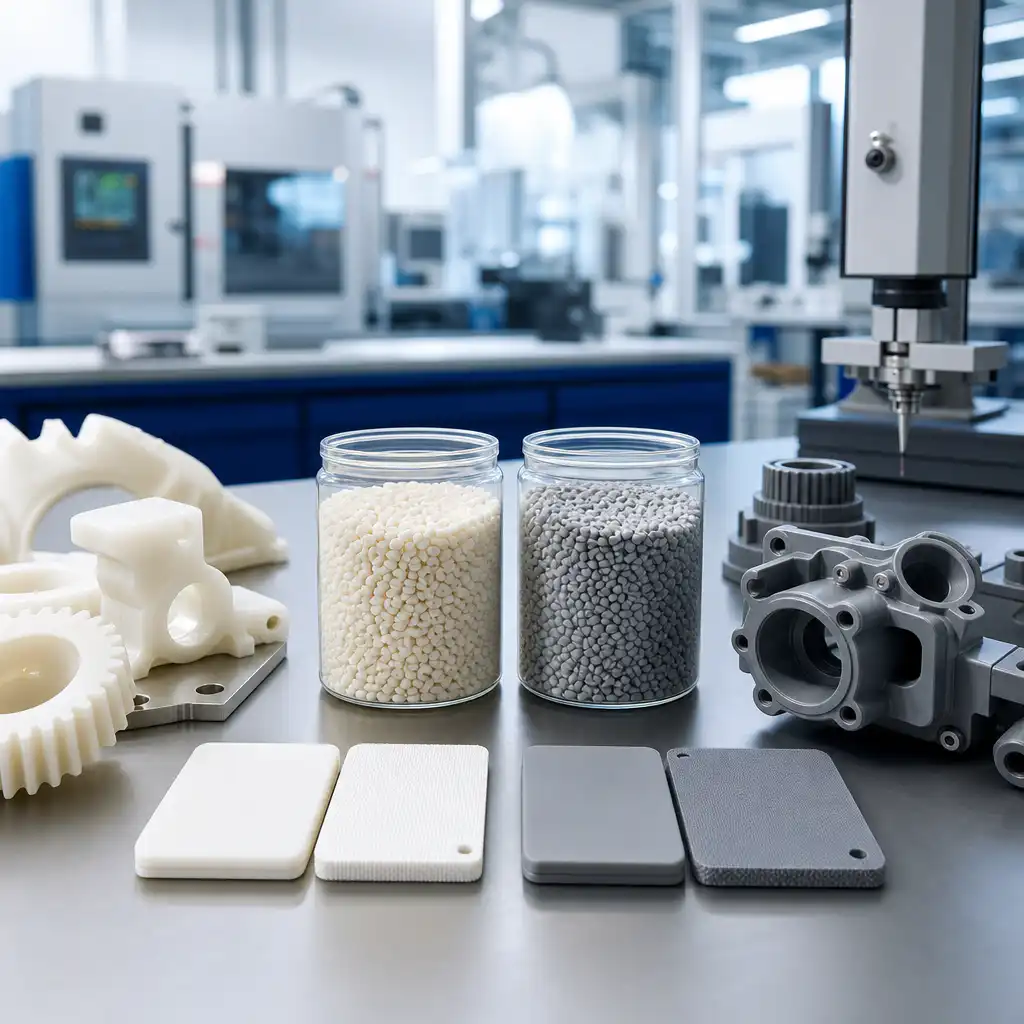
Core Comparison: PA6 vs PA12 At a Glance
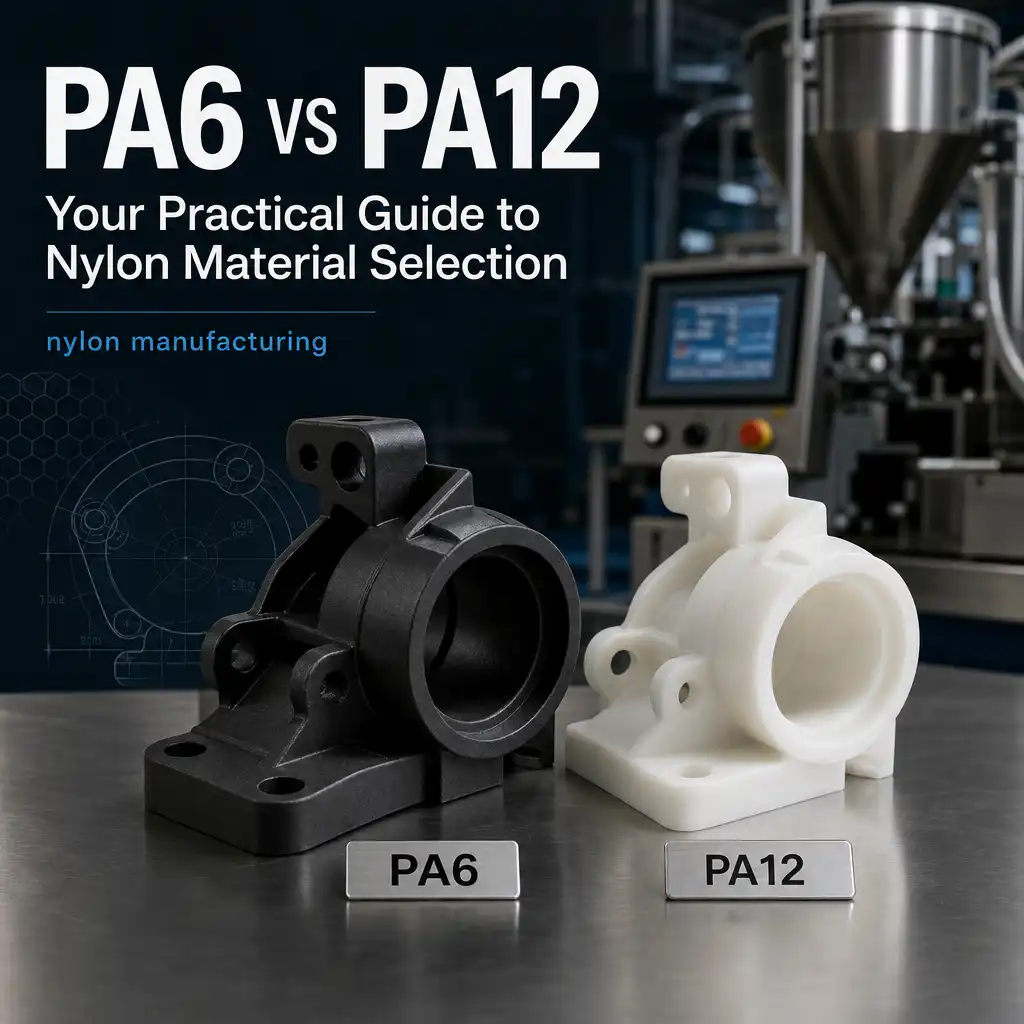
Selecting the right nylon grade is critical for product performance and cost. Here’s the fundamental trade-off:
-
PA6 (Nylon 6) is the versatile, cost-effective all-rounder. It offers an excellent balance of strength, toughness, and temperature resistance at a competitive price, making it ideal for a vast range of general engineering applications.
-
PA12 (Nylon 12) is the premium specialist for demanding environments. It provides the lowest moisture absorption, superior dimensional stability, excellent chemical/fuel resistance, and remains flexible at low temperatures, justifying its higher cost for critical uses.
Detailed Technical Property Comparison
The table below synthesizes key data to help you compare these materials directly.
| Property | PA6 (Nylon 6) | PA12 (Nylon 12) | Design Implication |
|---|---|---|---|
| Chemical Basis | Polymerized from caprolactam | Polymerized from laurolactam | PA12 has longer molecular chains, affecting flexibility and moisture behavior. |
| Density | ~1.13 g/cm³ | ~1.02 g/cm³ | PA12 is lighter, offering more parts per unit weight. |
| Tensile Strength | High (70-85 MPa) | Moderate (45-55 MPa) | PA6 is better for strong, rigid structural components like housings and gears. |
| Elongation at Break | Good (30-100%) | Excellent (250-300%+) | PA12 is far superior for flexible, bendable parts like tubes and hoses. |
| Impact Resistance | Very Good | Excellent (even at -40°C) | Both are tough; PA12 excels in very low-temperature or high-impact scenarios. |
| Melting Point | ~220°C | ~178°C | PA6 can withstand higher short-term thermal exposure. |
| Moisture Absorption | High (~2.7-3.0%) | Extremely Low (~0.25%) | This is PA12’s key advantage. It ensures stable dimensions in wet/humid conditions, unlike PA6 which absorbs moisture and swells. |
| Key Chemical Resistance | Good to oils, fuels; fair to acids/bases. | Excellent to salts, alkalis, hydrocarbons, fuels, and hydraulic fluids. | PA12 is preferred for long-term fluid contact (e.g., fuel lines). |
| Relative Material Cost | Lower (Most economical nylon) | Higher | PA6 provides the best performance-to-cost ratio for non-specialized needs. |
Ready to explore our PA6 options? Browse our comprehensive selection here: View PA6 (Nylon 6) Products.
Need the specialized performance of PA12? Discover our range here: View PA12 (Polyamide 12) Products.
Material Selection Guide
Use this logical pathway to determine the best fit for your project.
Start by asking: What is the single most critical requirement for my application?
-
Is maximizing cost-effectiveness and good all-around performance the top priority?
-
YES -> Strong candidate: PA6.
-
Proceed to Check: Will the part be constantly exposed to moisture, fuels, or require extreme dimensional stability? If YES, reconsider PA12.
-
-
Is maintaining precise dimensions in humid or wet environments absolutely crucial?
-
YES -> The clear choice is PA12.
-
Proceed to Check: Does the part also need to be very rigid and handle over 120°C continuously? This presents a conflict; consult our team for advice.
-
-
Is exceptional flexibility, ductility, or low-temperature toughness required?
-
YES -> The best choice is PA12.
-
Proceed to Check: Is there a very strict budget constraint? If YES, evaluate if a plasticized PA6 grade could suffice.
-
-
Is the part in constant contact with fuels, oils, or aggressive chemicals?
-
YES -> Prefer PA12 for its superior long-term resistance.
-
Proceed to Check: Is it a short-life part or with intermittent exposure? PA6 might be acceptable.
-
Industry Applications: Where Each Material Shines
Typical Applications for PA6:
-
Automotive: Interior components, cable ties, cooling fans, bezels.
-
Consumer Goods: Power tool housings, appliance components, sports equipment, furniture casters.
-
Industrial: Gears, bearings, rollers, conveyor parts, machine guards.
-
Films & Packaging: High-strength packaging films.
Typical Applications for PA12:
-
Automotive & Fluid Systems: Fuel lines, brake hoses, pneumatic air brake tubing, hydraulic reservoirs.
-
Industrial Tubing: Flexible hoses for chemicals, air, powders, and plastics processing.
-
Specialized Consumer Goods: High-performance sports shoe soles, ski boots, premium flexible components.
-
Technical Parts: Precision mechanical parts requiring stability, medical device components, cable sheathing.
Processing Notes & Enhancements
-
Essential Pre-Drying: Both PA6 and PA12 absorb moisture from the air, which must be removed before processing to prevent defects and loss of properties. Typical drying: 4-6 hours at 80°C for PA6; 6-12 hours at 80-90°C for PA12.
-
Reinforcements: Adding glass fibers (GF) to either material dramatically increases strength, stiffness, and heat deflection temperature, while reducing moisture absorption and shrinkage. This is a common way to elevate their performance.
-
Modifications: Both can be compounded with additives for flame retardancy (FR), improved UV resistance, or enhanced impact strength to meet specific requirements.
Frequently Asked Questions (FAQ)
Q1: We are using PA6, but our parts warp or change dimensions in humid climates. Will switching to PA12 solve this?
A: Almost certainly, yes. Dimensional instability due to moisture absorption is the primary reason to switch from PA6 to PA12. PA12’s near-negligible moisture uptake ensures parts maintain their shape and size in humid or wet environments.
Q2: Is PA12 always the “better” material because it’s more expensive?
A: Not necessarily. “Better” depends on the application. PA6 offers outstanding toughness, strength, and temperature resistance for its cost. If your part operates in a stable, dry environment and doesn’t require extreme chemical resistance, PA6 is likely the more economical and perfectly suitable choice. PA12 is “better” specifically for addressing moisture, chemical, and flexibility challenges.
Q3: Can we get a sample to test before placing a bulk order?
A: Yes, we encourage it. Testing a material in your specific application is the best way to validate your choice. Please contact our team to discuss your needs and request sample materials.
Q4: Do you offer these materials in custom colors or with specific certifications (like FDA, UL94)?
A: Yes, we do. Many of our standard grades are available in various colors, and we can supply grades that comply with specific industry standards such as UL 94 flame ratings or FDA regulations for food contact. Inquire with your specific requirement.
Q5: I’m still not sure which one to choose. Can you help?
A: Absolutely. Our technical experts are here to help you navigate material selection. Provide us with details about your application, operating environment, and key requirements, and we can recommend the most suitable grade.
Get a personalized recommendation or request a quote today: Contact Our Expert Team.
Conclusion
Choosing between PA6 and PA12 is a strategic decision. By understanding the core strengths of each—PA6 as the robust, economical workhorse and PA12 as the stable, resistant specialist—you can optimize your product’s performance, durability, and cost.
For cost-effective, strong, and versatile components, start with PA6 (Nylon 6).
For critical applications involving moisture, chemicals, flexibility, and precision, explore PA12 (Polyamide 12).
For personalized assistance, don’t hesitate to reach out to our team for a consultation.

