When selecting filament for FDM 3D printing, the choice between PETG and PLA represents one of the most common decisions engineers and makers face. Together, these materials account for over 80% of all desktop 3D printing worldwide. Understanding their differences is essential for achieving optimal results.
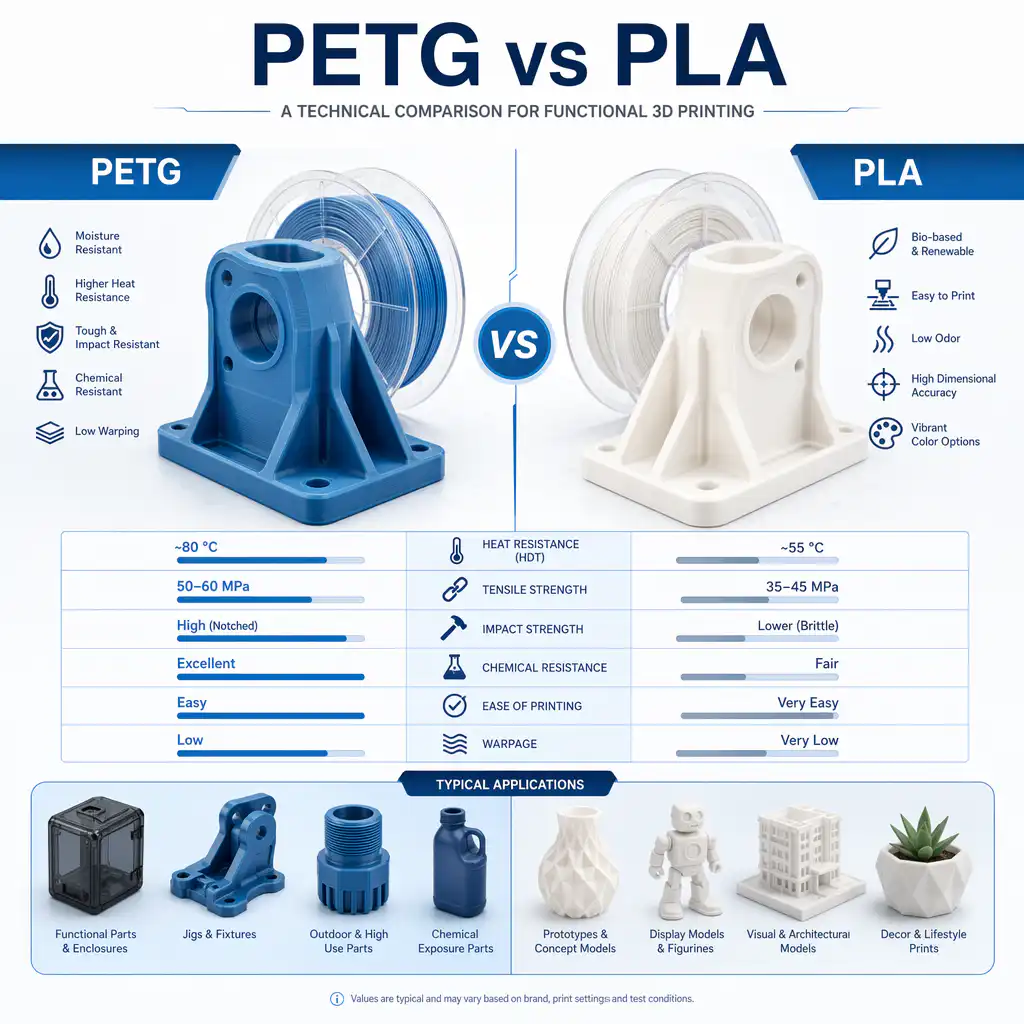
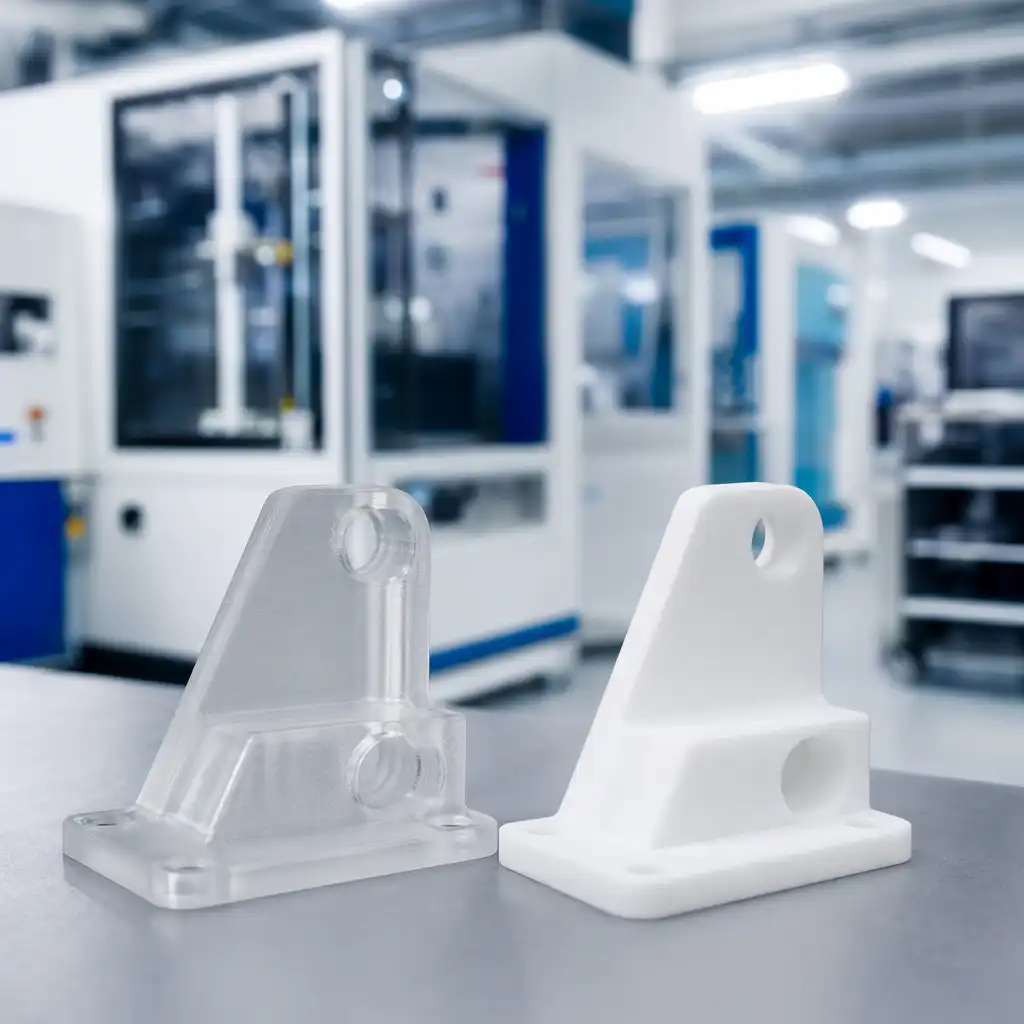
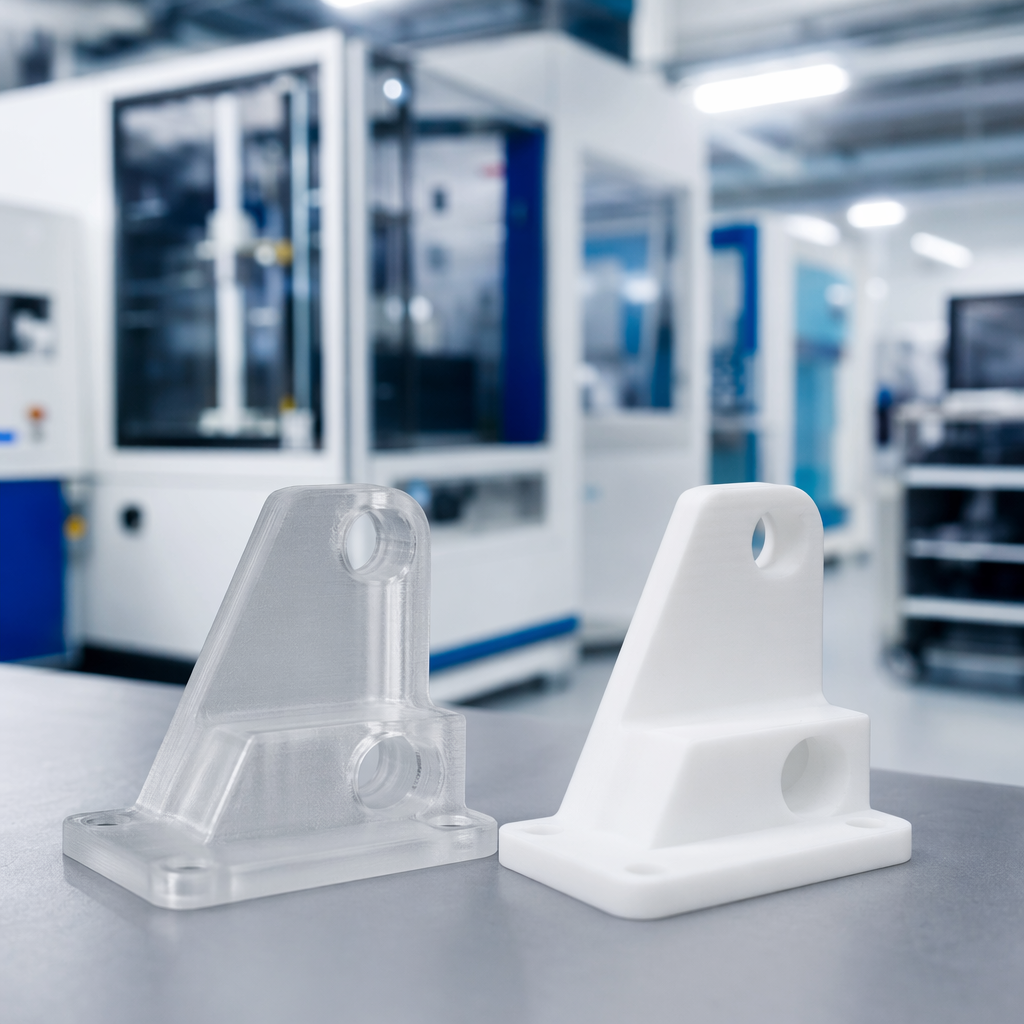
Material Properties Comparison
PETG offers impact strength of 30-40 kJ/m² with heat deflection at 70-75°C, while PLA provides 12-25 kJ/m² impact strength with heat deflection at 55-60°C. PETG has good flexibility (5-10% elongation) compared to PLA’s low flexibility (2-5% elongation). For engineering applications requiring higher strength, consider our PA6-CF Filament.
When to Choose PETG
PETG is the better choice for functional parts requiring impact resistance and durability, outdoor applications where UV resistance matters, fluid handling components, and mechanical components needing flexibility.
When to Choose PLA
PLA is ideal for visual prototypes and concept models, indoor decorative items, high-speed printing for rapid iteration, and beginner printing due to ease of use.
Source Quality Filaments
As a specialized source manufacturer, we supply both PETG and PLA in 1.75mm and 2.85mm diameters with tight tolerance (±0.03mm). Contact us for technical support and bulk pricing.
Get a Free Quote
Fill out the form below and our engineers will respond within 24 hours.
FAQ
When is PETG vs PLA — A Technical Comparison for Functional 3D Printing a good option?
PETG vs PLA — A Technical Comparison for Functional 3D Printing is a good option when fast iteration, complex geometry, low tooling cost, or low-volume production is more important than molded-part unit cost.
What should be checked before choosing PETG vs PLA — A Technical Comparison for Functional 3D Printing?
Check part size, material properties, surface finish, dimensional tolerance, heat exposure, load direction, and whether post-processing is required.
How does PETG vs PLA — A Technical Comparison for Functional 3D Printing compare with CNC machining?
3D printing can create complex shapes quickly, while CNC machining is often stronger for precise surfaces, tighter tolerances, and production-grade materials.
What affects the cost of PETG vs PLA — A Technical Comparison for Functional 3D Printing?
Cost depends on material, build volume, print time, layer height, support removal, finishing, inspection, and the number of parts in the build.