
Nylon is a practical engineering topic when you need to compare options, check limits, and choose a process with less risk.
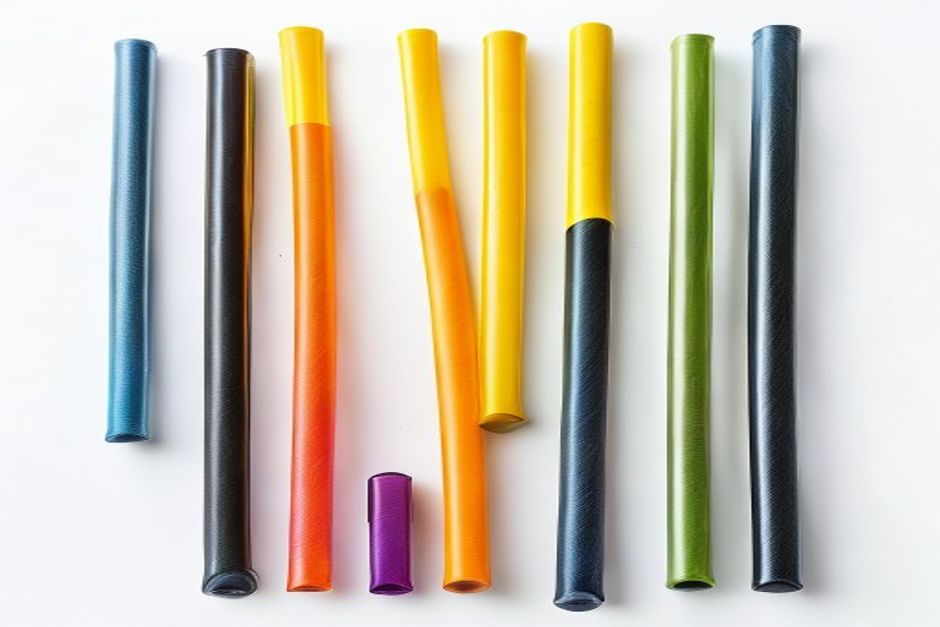
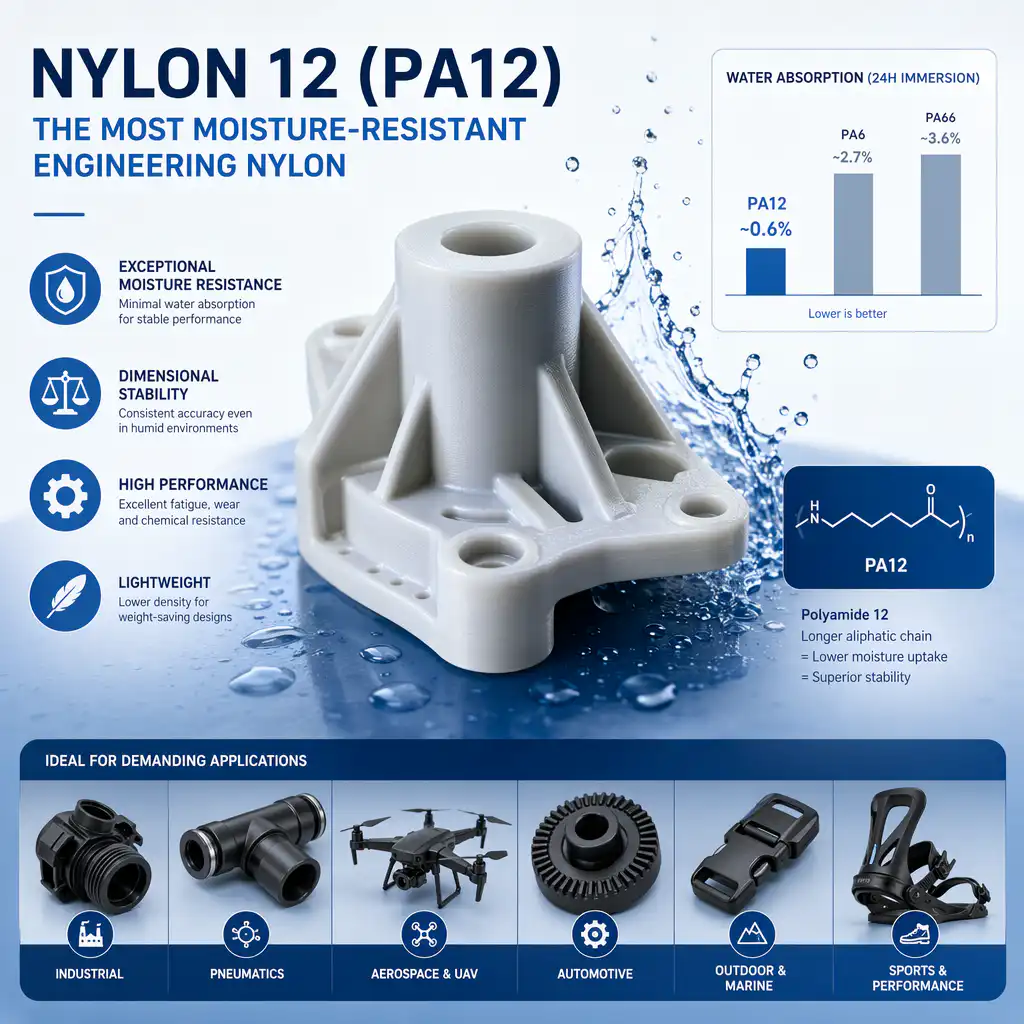
PA12 (Polyamide 12), commonly known as Nylon 12, is distinguished by its exceptionally low moisture absorption. While PA6 absorbs up to 9% and PA66 absorbs 8-9% moisture at saturation, PA12 absorbs only 0.9% maximum—making it the premier choice for applications requiring dimensional stability in humid, wet, or underwater environments.
Key Properties of PA12
PA12’s moisture absorption is only 0.9% maximum (10x lower than PA6/PA66), with melting point of 178-180°C and continuous service temperature up to 130°C short-term. Impact strength reaches 30-40 kJ/m² retaining toughness at -40°C. Chemical resistance is excellent against fuels, oils, and brake fluids. Our PA12-CF30 provides enhanced mechanical properties.
Applications
PA12 is used in automotive fuel systems (SAE J844, ISO 13775 compliant), marine hardware and underwater cables, pneumatic systems, medical devices, and cryogenic applications.
PA12 vs PA6 and PA66: Selection Boundaries
PA12 is a long-chain polyamide with fewer amide groups per unit length than PA6 or PA66. That molecular structure reduces water uptake and gives PA12 better dimensional stability, chemical resistance and low-temperature toughness, but it also lowers stiffness and heat capability compared with many PA66 grades. The correct choice depends on the conditioned part, not only the dry datasheet.
| Decision factor | PA12 | PA6 / PA66 | Selection implication |
|---|---|---|---|
| Moisture response | Low for a nylon; dimensions and properties change less in humidity | Higher absorption, especially PA6 | Favor PA12 for tubing, seals and precision parts exposed to water or changing humidity |
| Stiffness and heat | Lower unfilled stiffness and melting temperature | PA66 generally offers higher heat and structural capability | Use PA6/PA66 when load and temperature dominate; consider reinforced PA12 when moisture stability must be retained |
| Low-temperature toughness | Remains flexible and impact resistant at low temperature | Grade-dependent and generally less flexible | PA12 suits pneumatic lines, cable protection and cold-service parts |
| Cost and availability | Usually higher resin cost and fewer commodity grades | Broader supply base and often lower cost | Specify PA12 only when its environmental stability creates measurable value |
Do not treat values from different suppliers as interchangeable. Water absorption, tensile properties and impact results vary with specimen thickness, conditioning, test method, reinforcement and temperature. Use supplier data to shortlist a grade, then validate the actual molded, machined or printed part under its service condition.
PA12 Processing and Manufacturing Routes
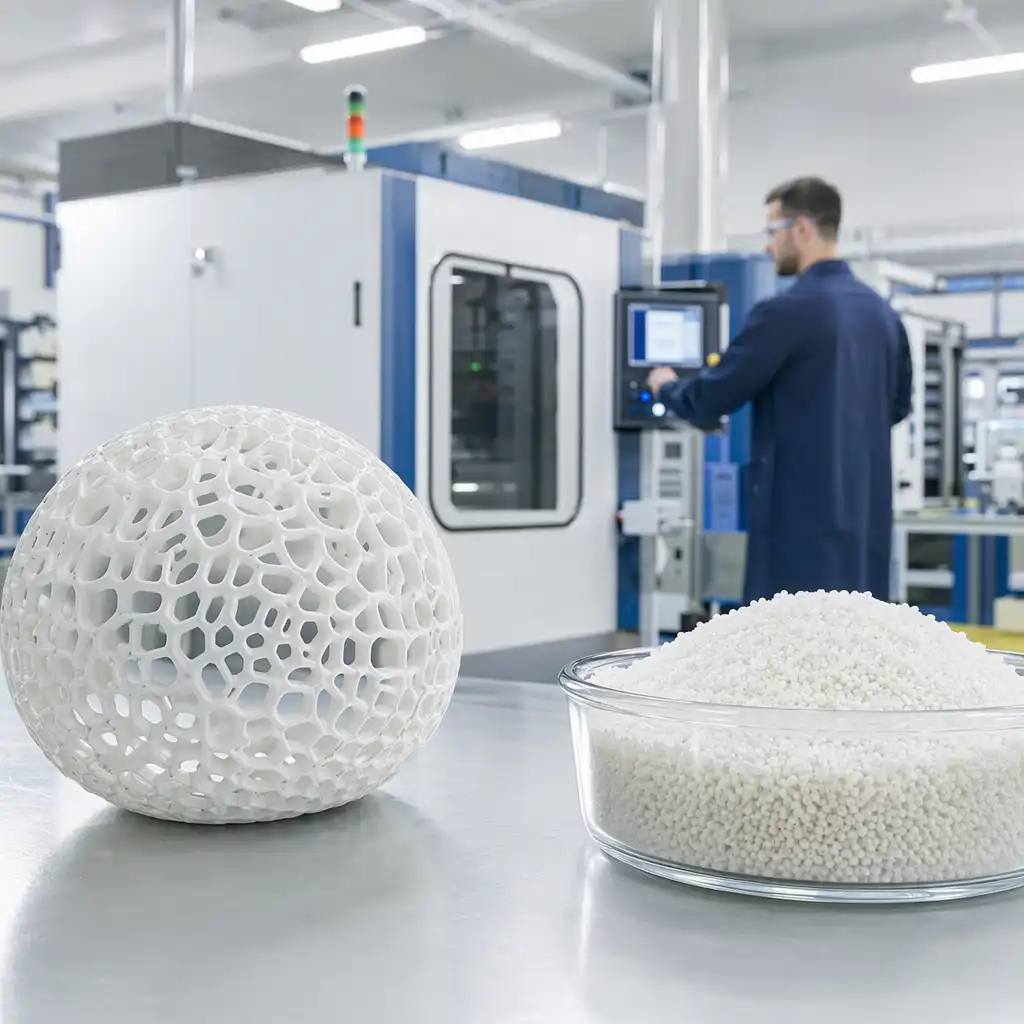
PA12 can be injection molded for repeat production, CNC machined from stock shapes for low-volume precision parts, extruded into tubing, or processed by powder-bed fusion and filament printing for prototypes and complex low-volume components. Each route produces different orientation, porosity, surface finish and dimensional behavior.
- Injection molding: control drying, melt residence time, gate location, shrinkage and cooling balance. Reinforced grades can reduce shrinkage but introduce fiber orientation and anisotropy.
- CNC machining: confirm stock condition, internal stress, workholding and free-state inspection. Thin PA12 parts can move after unclamping.
- Powder-bed fusion: define powder grade, refresh ratio, build orientation, density, surface finishing and dimensional allowance.
- Filament printing: specify drying, nozzle capability, enclosure conditions, layer orientation and whether the result is a prototype or a production-qualified part.
PA12 Grade and RFQ Specification Checklist
| RFQ item | Information to provide | Why it matters |
|---|---|---|
| Material identity | Exact PA12 grade, reinforcement, impact or UV package, color and regulatory requirements | “PA12” alone does not define mechanical, thermal or compliance performance |
| Service environment | Temperature range, fuel or chemical exposure, humidity, pressure, UV and expected life | Determines whether PA12 is preferable to PA6, PA66, PBT or another polymer |
| Functional requirements | Load, flexibility, burst pressure, wear, sealing, dielectric behavior and critical dimensions | Connects the material choice to measurable acceptance criteria |
| Manufacturing route | Molding, extrusion, machining or additive process; annual quantity and target lead time | Controls grade form, tolerances, tooling and unit economics |
| Quality evidence | Material certificate, dimensional report, conditioning state, sampling plan and functional tests | Defines how the supplier will prove conformity before shipment |
When a specification calls for fuel contact, pressure tubing or a regulated application, identify the exact standard and test condition instead of using a general claim such as “fuel resistant” or “medical grade.” Compatibility depends on fluid composition, temperature, stress, exposure time and additives. Likewise, a resin declaration does not automatically qualify the finished part: colorants, processing aids, recycled content, cleaning and manufacturing records may affect compliance. Ask the supplier to map each required document and functional test to the proposed grade and production process before tooling or batch approval.
Common failure modes include approving dimensions without a conditioning state, substituting an unverified reinforced grade, ignoring permeation or long-term chemical exposure, and applying prototype results directly to a production process. Record deviations and requalification triggers so later resin, color, tooling or process changes cannot bypass engineering review. A useful PA12 approval plan links the material certificate, processing record, dimensional inspection and service-specific functional test to the same production lot.
Source PA12 Materials
As a specialized source manufacturer, we supply PA12 in rod, sheet, and tube forms for CNC machining as well as filament for 3D printing. Contact us for PA12 samples and pricing.
FAQ
How do you know whether Nylon 12 (PA12) — The Most Moisture-Resistant Engineering Nylon fits a part?
Nylon 12 (PA12) — The Most Moisture-Resistant Engineering Nylon fits a part when its load capacity, temperature range, moisture exposure, wear behavior, and processing method match the real service conditions.
What properties should be checked for Nylon 12 (PA12) — The Most Moisture-Resistant Engineering Nylon?
Check strength, stiffness, impact resistance, heat resistance, moisture absorption, dimensional stability, friction, wear, and chemical compatibility.
What is the biggest selection risk for Nylon 12 (PA12) — The Most Moisture-Resistant Engineering Nylon?
The biggest risk is choosing from a datasheet value without considering actual environment, processing method, part geometry, and long-term use.
When should Nylon 12 (PA12) — The Most Moisture-Resistant Engineering Nylon be tested before production?
Testing is recommended when the part faces load, heat, chemicals, moisture, tight tolerances, regulatory requirements, or a new operating environment.

