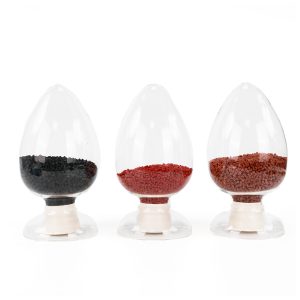
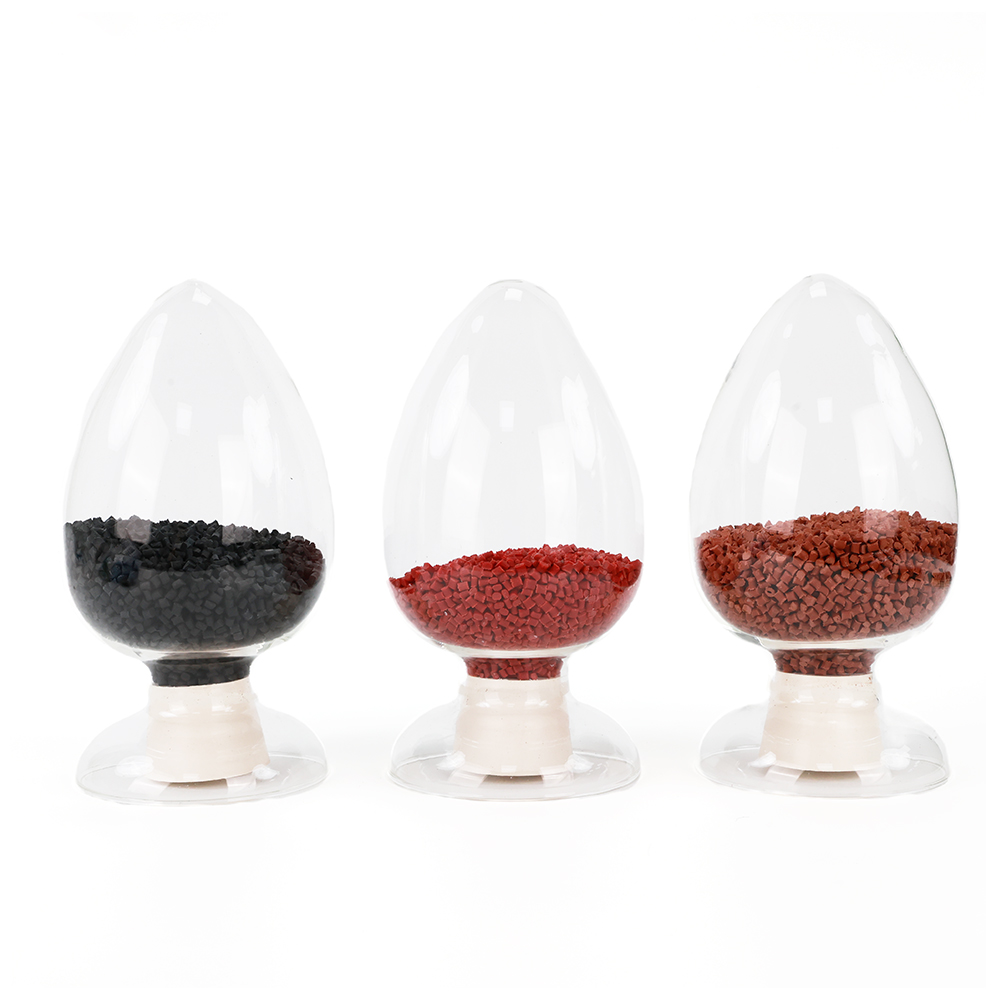


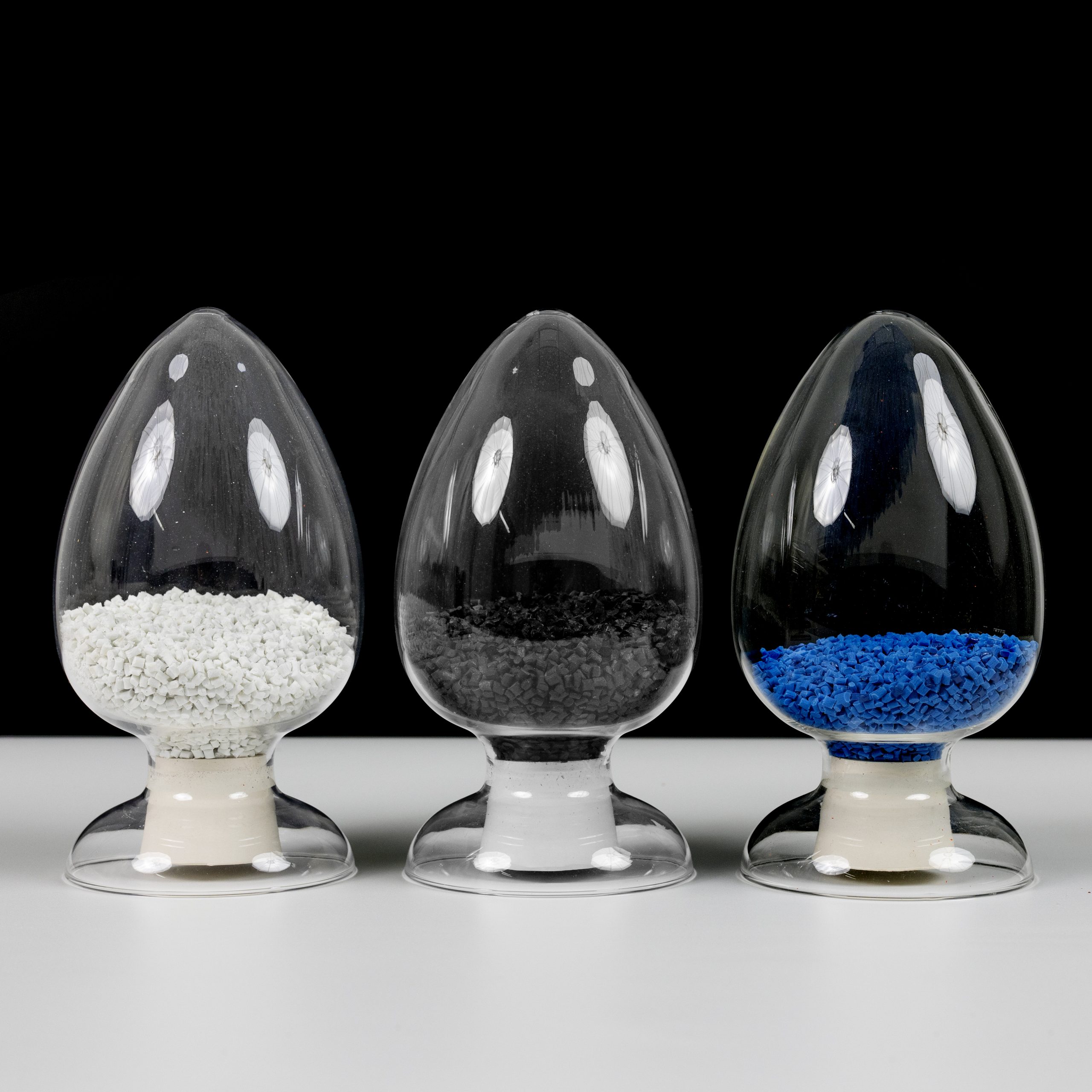
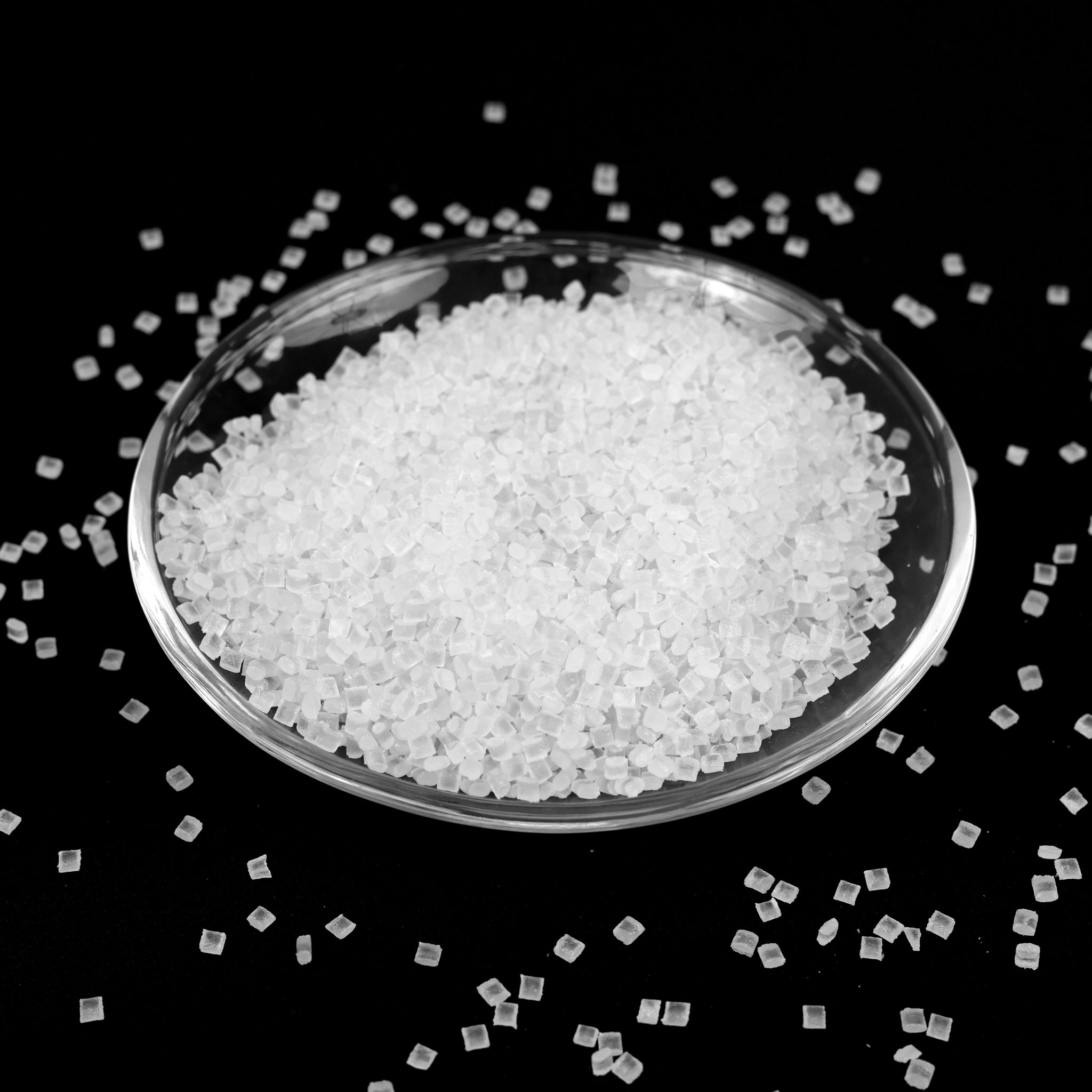
PA12 CF10 Technical Data (Estimated Typical Values)
| Property | Value | Test Standard |
|---|---|---|
| Carbon Fiber Content | 10% | ISO 1172 |
| Tensile Strength | 110 – 130 MPa | ISO 527 |
| Flexural Modulus | 7,000 – 8,500 MPa | ISO 178 |
| Notched Impact Strength | 9 – 12 kJ/m² | ISO 180 |
| HDT @1.8 MPa | 150 – 160 °C | ISO 75 |
| Water Absorption (24h) | ~0.7% | ISO 62 |
| Volume Resistivity | 10^4 – 10^6 Ω·cm | IEC 60093 |
PA12 CF Series Performance Comparison Table (Estimated Typical Values)
| Property | PA12 CF10 | PA12 CF20 | PA12 CF30 | PA12 CF40 | PA12 CF50 |
|---|---|---|---|---|---|
| Carbon Fiber Content | 10% | 20% | 30% | 40% | 50% |
| Tensile Strength | 110 – 130 MPa | 140 – 160 MPa | 160 – 180 MPa | 175 – 195 MPa | 190 – 210 MPa |
| Flexural Modulus | 7,000 – 8,500 MPa | 10,000 – 12,000 MPa | 13,000 – 15,000 MPa | 16,000 – 18,000 MPa | 19,000 – 22,000 MPa |
| Notched Impact Strength | 9 – 12 kJ/m² | 8 – 11 kJ/m² | 7 – 10 kJ/m² | 6 – 9 kJ/m² | 5 – 8 kJ/m² |
| HDT @1.8 MPa | 150 – 160 °C | 155 – 165 °C | 160 – 170 °C | 165 – 175 °C | 170 – 180 °C |
| Water Absorption (24h) | ~0.7% | ~0.65% | ~0.6% | ~0.55% | ~0.5% |
| Volume Resistivity | 10^4 – 10^6 Ω·cm | 10^3 – 10^5 Ω·cm | 10^2 – 10^4 Ω·cm | 10^1 – 10^3 Ω·cm | 10^0 – 10^2 Ω·cm |
| Key Profile | Stiffness & stability upgrade | Balanced performance | Structural benchmark in harsh env. | High rigidity & precision | Maximum performance |
Note: All data are estimated typical values for comparison. Exact properties must be verified with the official datasheet.
PA12 CF10 Key Advantages
✅ Enhanced Stiffness with Minimal Moisture Impact: Offers a significant boost in rigidity while benefiting from PA12’s inherently very low water absorption, ensuring stable properties in humid conditions.
✅ Retained Excellent Chemical & Hydrolysis Resistance: Maintains the outstanding resistance of PA12 to a wide range of chemicals, fuels, and hydrolysis, making it ideal for demanding fluid environments.
✅ Good Low-Temperature Toughness & Processability: Preserves good impact strength at low temperatures and the relatively broad processing window of PA12, facilitating easier manufacturing.
Industry Applications:

Explore the PA12 Carbon Fiber Series in Detail
Click on the links below to view comprehensive technical data, key advantages, and application details for each specific grade.
| Grade | Best For | Overview | Full Details |
|---|---|---|---|
| PA12 CF10 | Cost-effective enhancement of stiffness & dimensional stability for parts in wet or chemical environments. | The most accessible CF grade for PA12, offering a sustainable upgrade with enhanced stiffness while retaining exceptional low moisture absorption and chemical resistance. | View PA12 CF10 Full Data Sheet → |
| PA12 CF20 | Components requiring a balance of rigidity, impact strength at low temperatures, and resistance to hydrolysis. | A balanced performer, excelling in damp or chemically aggressive environments where dimensional stability and durability are key. | View PA12 CF20 Full Data Sheet → |
| PA12 CF30 | Structural parts exposed to moisture, chemicals, or requiring consistent performance over a wide temperature range. | The performance benchmark, providing an optimal balance of high stiffness, superior low-temperature toughness, and outstanding environmental resistance. | View PA12 CF30 Full Data Sheet → |
| PA12 CF40 | High-precision, rigid parts where maximum dimensional stability in humid or variable conditions is critical. | Engineered for extreme rigidity and exceptional dimensional stability from a polymer with inherently low water uptake, for the most demanding technical applications. | View PA12 CF40 Full Data Sheet → |
| PA12 CF50 | Mission-critical applications demanding peak performance in harsh environments with minimal moisture sensitivity. | The pinnacle grade, delivering top stiffness and functional performance from a material known for its stability and resistance in challenging conditions. | View PA12 CF50 Full Data Sheet → |
Need expert advice? Contact our engineering team to discuss your specific application and material requirements.
Powering Innovation Across Industries (PA12 CF Series)
| Industry | Key Applications |
|---|---|
| Automotive & Fluid Systems | Fuel line quick connectors, structural brackets in wet underbody areas, sensor housings exposed to road spray, charge air cooler components requiring chemical resistance. Explore Automotive Solutions → |
| Energy, Oil & Gas | Components for downhole tools, sensor and connector protectors in subsea environments, valve and manifold parts resistant to sour gas and chemicals. See Industrial Uses → |
| Industrial & Precision Equipment | Gears, bearings, and pump housings in lubricated or humid environments, robotic components for wash-down areas, high-precision parts for medical and fluid handling devices. Inquire About Specialty Uses → |
| Electrical & Specialized | Connectors and enclosures for harsh outdoor or industrial environments, cable management systems in high-humidity settings, components requiring stable dielectric properties in varying climates. Contact for Electrical Solutions → |

How to Choose the Right PA12 CF Grade?
In simple terms:
For a cost-effective upgrade into a dimensionally stable, chemical-resistant carbon fiber composite, consider PA12 CF10.
For the optimal balance of enhanced stiffness, excellent low-temperature impact strength, and unwavering resistance to moisture and chemicals, choose PA12 CF30. It is the performance benchmark for most demanding applications in harsh environments.
For the ultimate stiffness and dimensional precision from a material with minimal hygroscopicity, consider PA12 CF50.
Unsure which is perfect for your part? Describe your application to our engineers for a tailored recommendation.
Why Choose Us?


PA12 CF10 FAQ
Q1: What is the main advantage of PA12 CF over PA6 or PA66 CF?
The primary advantage is dramatically lower moisture absorption. PA12 CF grades maintain their stiffness and dimensional tolerances much better in humid or wet environments compared to PA6/PA66 CF. They also offer better inherent hydrolysis resistance and excellent low-temperature flexibility.
Q2: Is PA12 CF10 suitable for underwater or continuously wet applications?
Yes, it is an excellent candidate. Due to PA12’s very low water absorption and excellent hydrolysis resistance, PA12 CF10 is well-suited for components in water meters, underwater connectors, marine equipment, and parts subjected to continuous condensation or wash-downs.
Q3: What are the key processing parameters for PA12 CF10?
Processing is similar to other polyamides but with specific ranges: Drying: Recommended at 80-90°C for 3-4 hours (less critical than PA6 but still advisable). Melt Temperature: 230-260°C is typical. Mold Temperature: 60-90°C. Cooling: PA12 crystallizes slower than PA6; adequate cooling time is necessary.