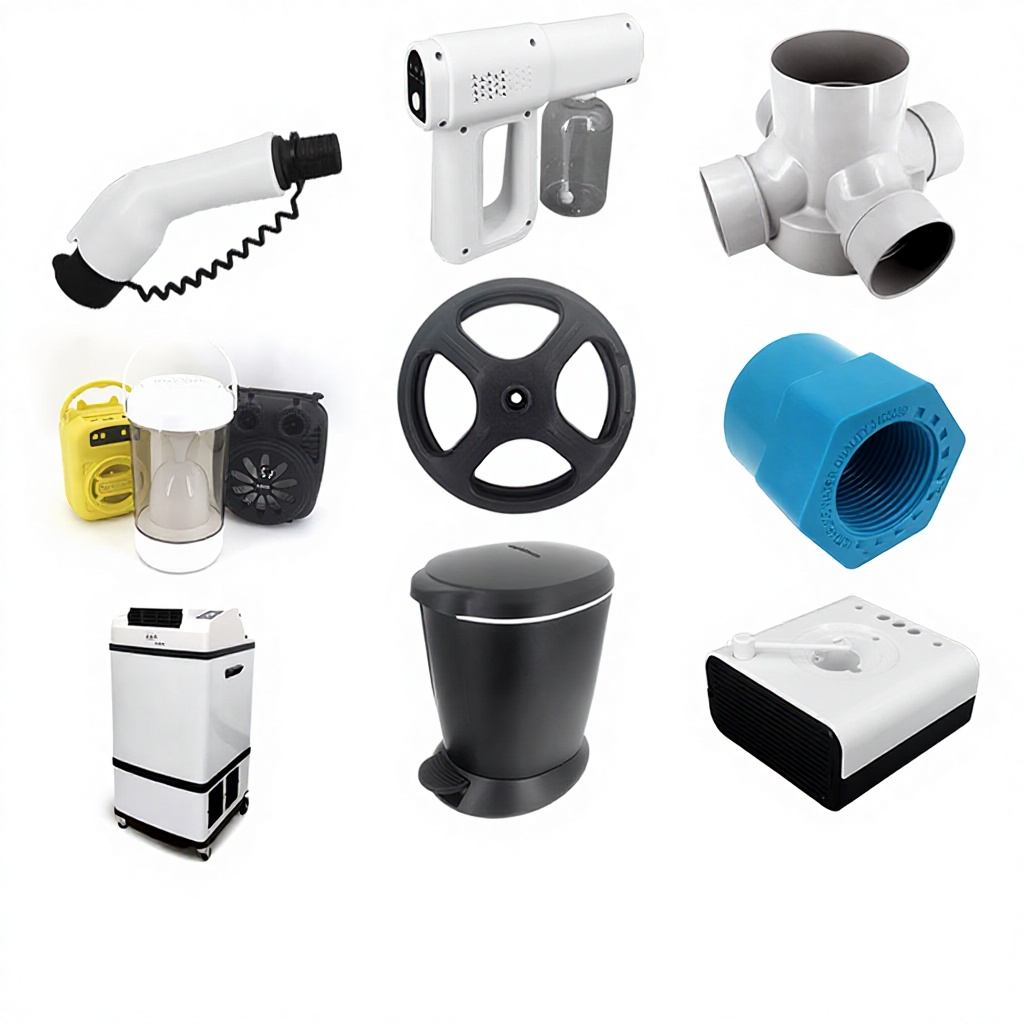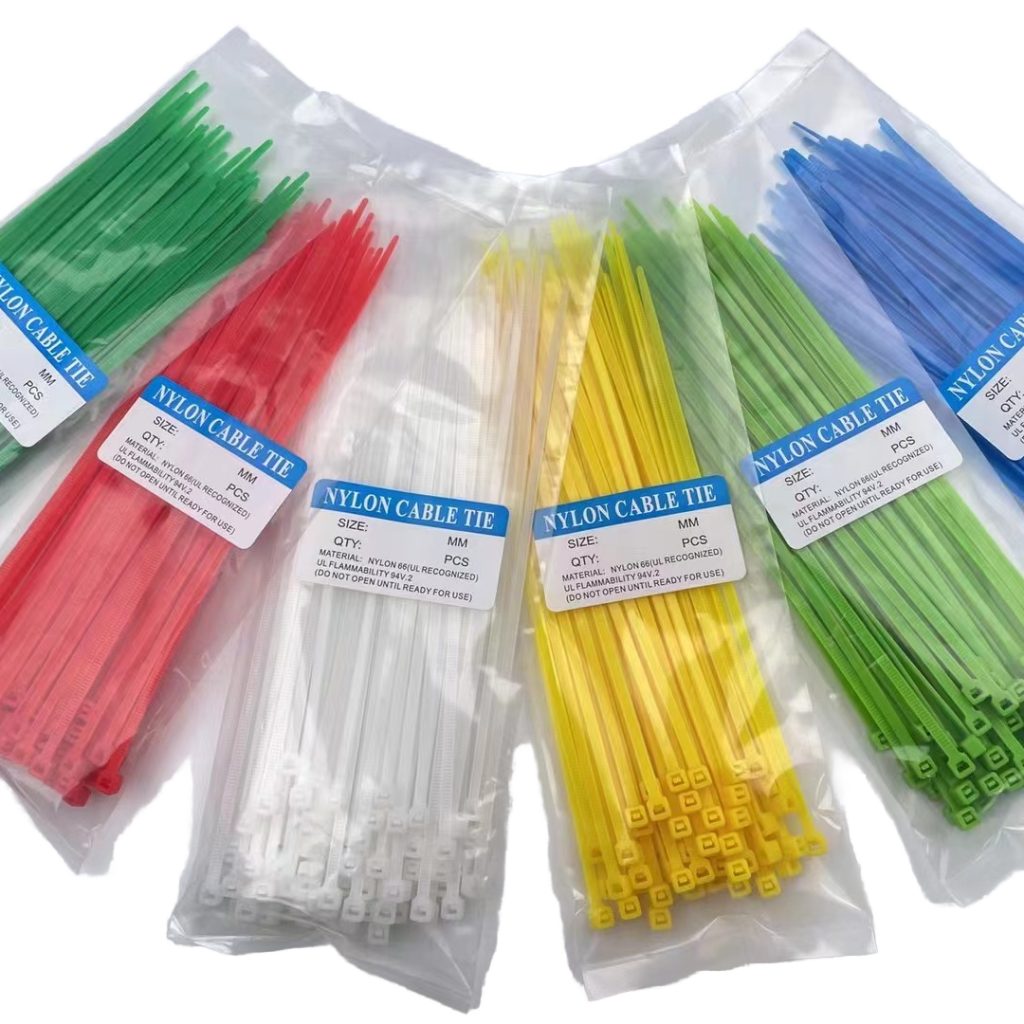
UL94 is the global benchmark for classifying the flammability of plastic materials. Developed by Underwriters Laboratories, this standard determines how a plastic specimen responds to an open flame — whether it self-extinguishes, drips flaming particles, or burns through entirely. For engineers selecting materials for electrical enclosures, automotive components, and consumer electronics, understanding UL94 ratings is not optional — it is a compliance requirement.
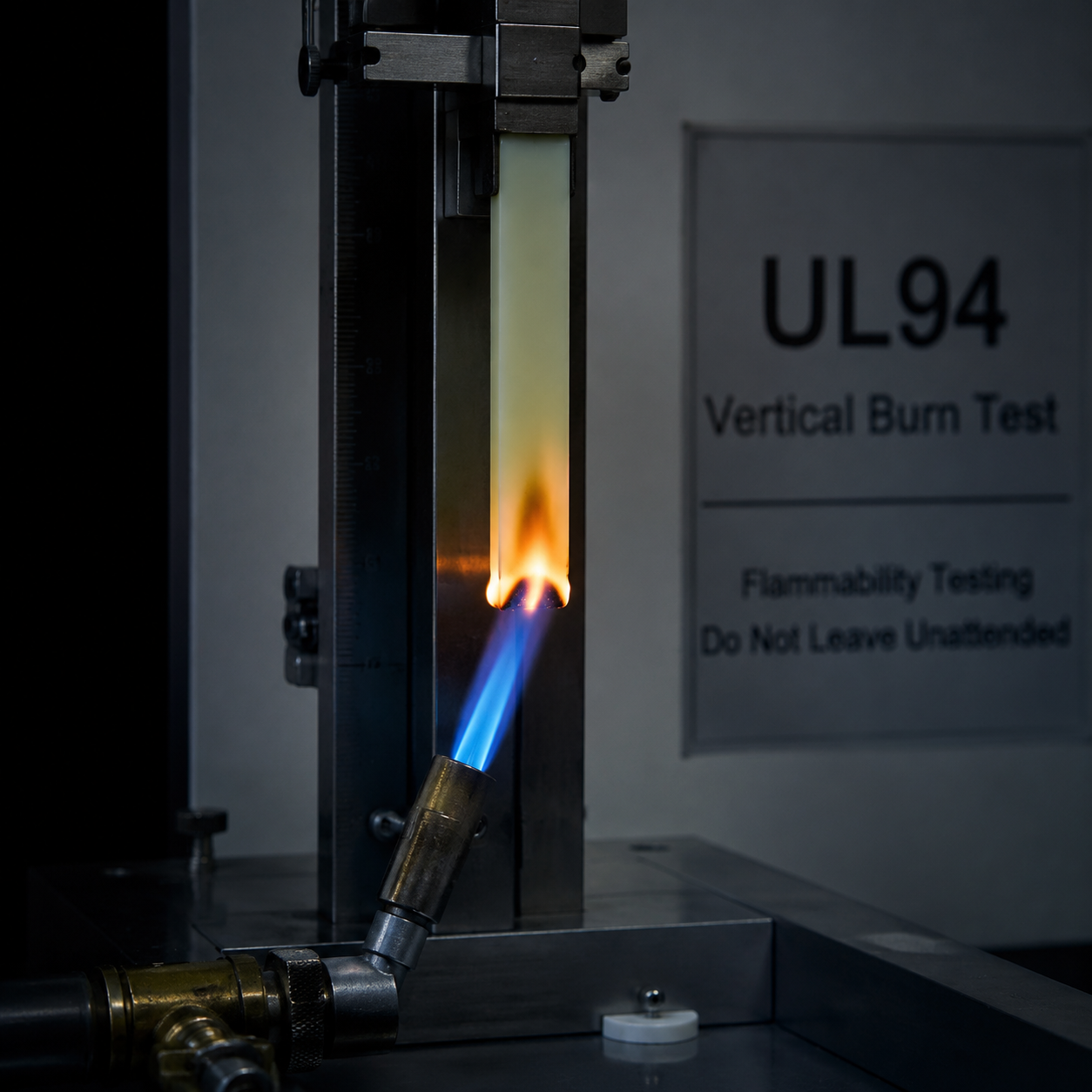
UL94 Test Methods
The UL94 standard defines three primary test orientations. Each simulates different fire exposure scenarios encountered in real-world applications.
Horizontal Burn (HB)
The horizontal burn test is the least stringent. A specimen is held horizontally, and a flame is applied to the free end for 30 seconds. To achieve an HB rating, the material must either burn at a rate below a specified threshold (typically 75 mm/min for specimens under 3 mm thickness) or stop burning before reaching the 100 mm reference mark.
HB-rated materials are acceptable for applications where fire risk is low and regulatory requirements are minimal. Consumer products with internal, non-current-carrying components often use HB-rated materials.
Vertical Burn (V-0, V-1, V-2)
The vertical burn test is significantly more demanding. A specimen is held vertically, and a 20 mm flame is applied twice to its bottom edge for 10 seconds each time. The rating is determined by afterflame time, afterglow time, and whether flaming particles are produced.
- V-0: Afterflame ≤ 10 seconds per application, total afterflame ≤ 50 seconds across 5 specimens, no flaming drips
- V-1: Afterflame ≤ 30 seconds per application, total afterflame ≤ 250 seconds across 5 specimens, no flaming drips
- V-2: Same afterflame criteria as V-1, but flaming drips are permitted
5V Test (5VA, 5VB)
The 5V test represents the highest severity in the UL94 standard. Instead of a small burner flame, a 125 mm flame is applied five times for 5 seconds each to both bar and plaque specimens. This simulates a more intense, sustained fire exposure.
- 5VA: Afterflame ≤ 60 seconds, no burn-through (no hole) in the plaque specimen
- 5VB: Afterflame ≤ 60 seconds, burn-through (hole formation) is permitted in the plaque specimen
UL94 Rating Definitions Table
| Rating | Test Orientation | Flame Application | Afterflame Limit (per application) | Flaming Drips | Burn-Through |
|---|---|---|---|---|---|
| HB | Horizontal | 30 s (single) | N/A (burn rate limit) | Permitted | N/A |
| V-2 | Vertical | 2 x 10 s | ≤ 30 s | Permitted | N/A |
| V-1 | Vertical | 2 x 10 s | ≤ 30 s | Not permitted | N/A |
| V-0 | Vertical | 2 x 10 s | ≤ 10 s | Not permitted | N/A |
| 5VB | Vertical bar + plaque | 5 x 5 s (125 mm flame) | ≤ 60 s | Not permitted | Permitted |
| 5VA | Vertical bar + plaque | 5 x 5 s (125 mm flame) | ≤ 60 s | Not permitted | Not permitted |
Flame Retardant Additive Types
Achieving UL94 ratings requires incorporating flame retardant (FR) additives into the polymer matrix. The choice of FR chemistry has significant implications for performance, cost, and environmental compliance.
Halogenated FR Additives
Brominated and chlorinated compounds are highly effective at interrupting the combustion chain reaction. They work primarily in the gas phase by scavenging free radicals. Halogenated systems achieve UL94 V-0 at relatively low loadings (10-20%) and are cost-effective. However, they release corrosive and toxic gases during combustion, leading to increasing regulatory restrictions under RoHS and WEEE directives.
Halogen-Free FR Additives (Phosphorus-Based)
Phosphorus-based flame retardants — including organophosphates, phosphonates, and red phosphorus — function primarily in the condensed phase by promoting char formation. This char layer acts as a barrier, insulating the underlying polymer from heat and oxygen. These systems are the dominant choice for halogen-free formulations, particularly in electronics where environmental compliance is mandatory.
Nitrogen-Based FR Additives
Melamine and its derivatives (melamine cyanurate, melamine polyphosphate) release inert nitrogen gases upon decomposition, diluting combustible gases and cooling the flame zone. They are often used synergistically with phosphorus-based FRs to achieve V-0 ratings in polyamides and polyurethanes.
Inorganic FR Additives
Aluminum trihydrate (ATH) and magnesium hydroxide (MDH) decompose endothermically, absorbing heat and releasing water vapor. They require high loadings (often 40-65%) to be effective, which can severely impact mechanical properties. These fillers are widely used in wire and cable insulation and low-smoke halogen-free applications.

Physical Property Trade-Offs
Adding flame retardants inevitably compromises mechanical performance. The degree of impact depends on the FR chemistry, loading level, and base polymer.
- Tensile strength reduction: 10-25% depending on FR type and loading
- Impact strength reduction: 15-30%, particularly with inorganic fillers
- Elongation at break: May decrease by 30-50% in FR-modified grades
- Density increase: FR additives typically increase material density by 5-15%
- Processing window: Some FR additives narrow the processing temperature range, increasing the risk of thermal degradation during molding
Halogen-free phosphorus-based systems generally preserve mechanical properties better than inorganic alternatives at equivalent UL94 ratings. Glass fiber reinforcement (typically 15-30%) is often combined with FR additives to recover lost strength and stiffness.
Common Flame Retardant Plastic Grades
| Material Grade | UL94 Rating | Tensile Strength (MPa) | HDT (1.82 MPa) (°C) | Key Features |
|---|---|---|---|---|
| PA66 FR V-0 (GF25) | V-0 at 0.8 mm | 140-160 | 235-245 | Excellent thermal stability, good flow |
| PC/ABS FR V-0 | V-0 at 1.5 mm | 55-65 | 95-110 | Good impact, cost-effective |
| PBT FR V-0 (GF30) | V-0 at 0.8 mm | 120-140 | 200-215 | Fast crystallization, dimensional stability |
| PPO FR V-0 | V-0 at 1.5 mm | 55-70 | 120-140 | Low density, excellent dielectric properties |
| PEI (Ultem) | V-0 (inherent) | 100-110 | 195-210 | Inherent FR, no additives needed |
Key Applications

Electrical Enclosures
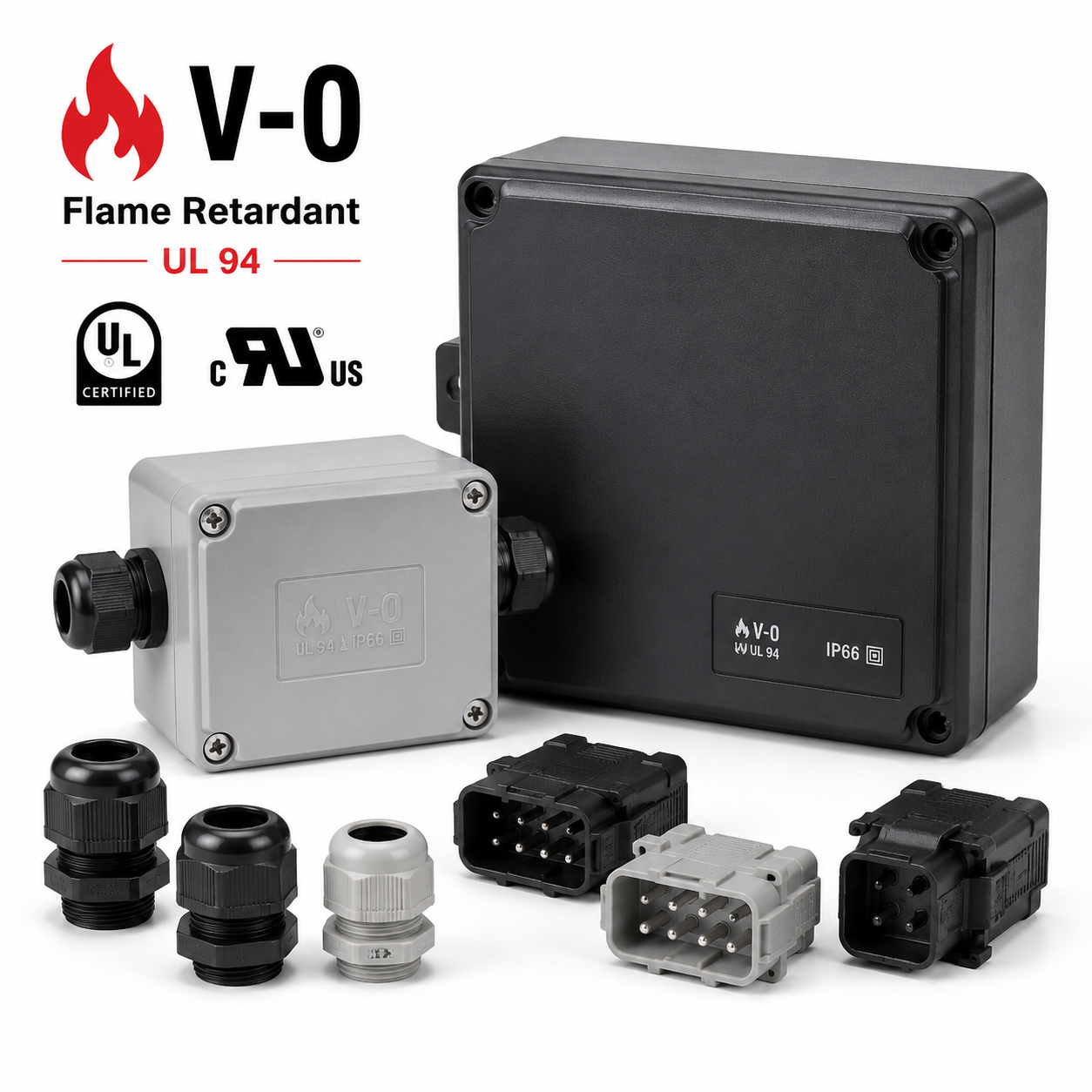
Circuit breakers, switchgear housings, and junction boxes require V-0 rated materials by regulatory mandate. These enclosures must contain any internal arc or short-circuit fire, preventing propagation to surrounding structures. PC/ABS FR V-0 and PA66 FR V-0 are commonly specified for these applications.
Connectors and Terminal Blocks
High-voltage connectors in industrial equipment and automotive systems require thin-wall V-0 performance. PBT FR V-0 GF30 is widely used for its excellent flow characteristics, enabling thin-wall molding down to 0.4 mm while maintaining V-0 compliance.
Electric Vehicle Battery Components
Battery module housings, cell holders, busbar supports, and high-voltage connectors in EVs demand exceptional flame retardancy. 5VA-rated materials are increasingly specified for critical battery enclosure components to meet the most stringent safety standards. PA66 FR and PBT FR grades dominate this segment.
Consumer Electronics
Charger housings, power adapter shells, and internal insulating barriers in laptops and smartphones require V-0 or V-1 ratings. Halogen-free FR grades are preferred in this segment due to brand sustainability commitments and consumer-facing environmental messaging.
RoHS and WEEE Impact on FR Selection

The Restriction of Hazardous Substances (RoHS) directive prohibits certain brominated flame retardants — specifically polybrominated biphenyls (PBB) and polybrominated diphenyl ethers (PBDE) — in electrical and electronic equipment sold in the EU. The Waste Electrical and Electronic Equipment (WEEE) directive further encourages the use of halogen-free materials to facilitate end-of-life recycling.
As a result, the industry has shifted significantly toward phosphorus-based and nitrogen-based halogen-free FR systems. While these alternatives are generally more expensive on a per-kilogram basis, they often require lower loadings to achieve equivalent UL94 ratings, partially offsetting the cost differential. Additionally, halogen-free grades have become a marketing advantage, with many OEMs now explicitly requiring “HF” (halogen-free) designations in material specifications.
UL94 Rating Selection Checks
| Question | What to confirm |
|---|---|
| Rating | V-0, V-1, V-2, 5VA or 5VB at the specified thickness |
| Specimen | Material grade, color, thickness, conditioning and test method |
| Part design | Wall transitions, vents, connectors, ignition source and enclosure geometry |
| Documentation | Current certificate or test report tied to the purchased resin lot |
UL94 flame retardant plastics must be checked at the exact grade and thickness used in the part. A classification is not a blanket guarantee for every finished assembly; review electrical, thermal and regulatory requirements together.
Frequently Asked Questions
What is the difference between UL94 V-0 and 5VA?
The primary differences are flame severity and the burn-through requirement. V-0 uses a 20 mm flame applied twice for 10 seconds each to bar specimens only. 5VA uses a 125 mm flame applied five times for 5 seconds each to both bar and plaque specimens. More critically, 5VA requires that the plaque specimen must not develop any hole (burn-through) during the test, while V-0 has no plaque test at all. A material that passes V-0 may fail 5VA if it cannot resist burn-through under the more intense 5V flame conditions. 5VA is approximately one to two UL94 severity levels above V-0.
Which is better for environmental compliance: halogenated or halogen-free FR?
Halogen-free flame retardants (phosphorus-based, nitrogen-based, and inorganic) are the preferred choice for environmental compliance. Key reasons include: (a) compliance with RoHS restrictions on PBB and PBDE brominated flame retardants, (b) avoidance of corrosive hydrogen halide gas emissions during combustion, (c) improved recyclability under WEEE directive requirements, and (d) alignment with OEM sustainability mandates and eco-label certifications. While halogenated systems offer lower cost and high efficiency at low loadings, the regulatory trend is firmly toward halogen-free alternatives, particularly for consumer-facing electronics and automotive interiors.
How much does adding flame retardant reduce PA66 mechanical properties?
Typical mechanical property reductions for PA66 FR V-0 (25% glass fiber reinforced) compared to non-FR PA66 GF25 are: tensile strength reduction of approximately 10-15% (from 160-180 MPa to 140-160 MPa), impact strength reduction of 15-25%, and elongation at break reduction of 30-50%. Halogen-free phosphorus-based FR systems generally preserve mechanical properties better than brominated systems at equivalent UL94 ratings. The glass fiber reinforcement plays a critical role in recovering stiffness and strength; unreinforced FR PA66 can see tensile strength drops exceeding 25% relative to unreinforced PA66. For critical structural applications, glass fiber loadings of 25-35% are standard practice to compensate for FR-induced property losses.
Does adding flame retardant affect injection molding processability?
Yes, flame retardant additives can significantly impact moldability. Key processing considerations include: (a) narrower processing window — many FR additives begin to degrade at temperatures only 10-20 degrees C above the recommended melt temperature, requiring tighter temperature control; (b) increased melt viscosity — some FR additives (particularly inorganic types like MDH and ATH) increase melt viscosity, reducing flow length and potentially causing short shots in thin-wall sections; (c) mold corrosion — halogenated FRs can release acidic byproducts at processing temperatures, requiring corrosion-resistant mold steels and regular mold maintenance; (d) screw and barrel wear — inorganic FR fillers are abrasive and accelerate wear on screws, barrels, and check rings. Proper mold design (wider gates, optimized runner systems) and processing parameters (moderate screw speeds, back pressure control) can mitigate most of these challenges.