
What is a practical engineering topic when you need to compare options, check limits, and choose a process with less risk.
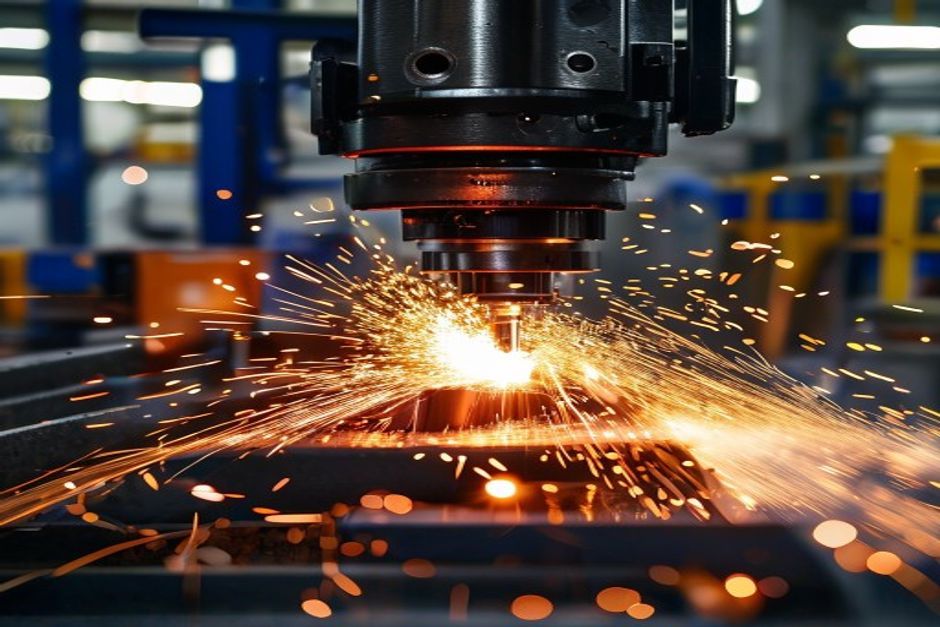
Wire Electrical Discharge Machining (Wire EDM) is a precise, non-contact subtractive manufacturing process that uses electrical sparks to erode electrically conductive materials. Unlike traditional CNC machining that relies on physical cutting tools, Wire EDM employs a continuously moving thin brass or coated wire as an electrode. As the wire approaches the workpiece, controlled electrical discharges vaporize microscopic particles of material, creating intricate geometries with tolerances as tight as ±0.0001 inches. Wire EDM has become indispensable for producing complex tooling, aerospace components, and medical device parts where conventional machining reaches its limits.
How Wire EDM Works
The Wire EDM process operates on a deceptively simple principle: electrical discharge. The machine positions a thin wire electrode (typically 0.004 to 0.012 inches in diameter) above the workpiece, which is submerged in deionized water — a dielectric fluid. When voltage is applied between the wire and workpiece, a controlled spark gap forms. Each discharge generates temperatures reaching 8,000°C to 12,000°C at the discharge point, enough to melt and vaporize microscopic amounts of material.
Key Process Parameters
- Spark Gap: The distance between the wire and workpiece — typically 0.001 to 0.002 inches — is precisely maintained by servo-controlled positioning systems. If the gap is too large, no spark forms; too small, and the wire shorts against the material.
- Dielectric Fluid: Deionized water serves multiple functions: it acts as an insulator until the spark initiates, flushes away eroded particles (debris), cools the workpiece and wire, and prevents re-welding of removed material.
- Wire Feed: Fresh wire continuously advances through the cutting zone to prevent wire wear from affecting precision. Used wire is collected and recycled — it never contacts the material with the same surface twice.
- Pulse Control: The power supply delivers precisely timed electrical pulses. On-time controls spark duration, off-time allows the dielectric to deionize, and peak current determines the erosion rate.
Wire EDM Machine Components
A modern CNC Wire EDM system consists of several critical subsystems:
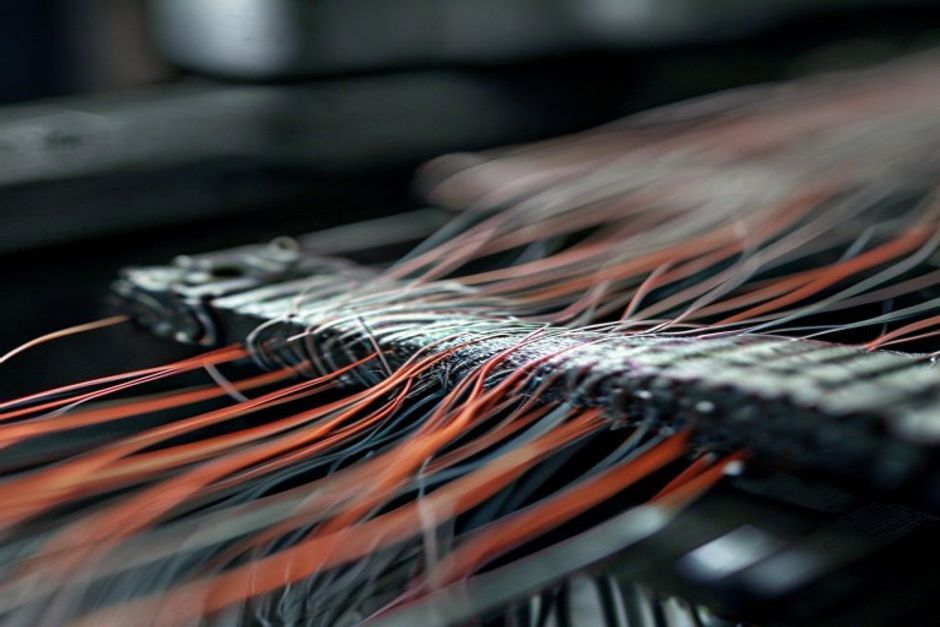
- Wire Drive System: Controls wire tension, speed, and guidance through upper and lower guides. Automatic wire threading (AWT) systems allow unattended operation by re-threading broken wire.
- Work Tank and Dielectric System: Houses the workpiece submerged in deionized water with pumps, filters, and chillers maintaining fluid quality and temperature within ±1°C.
- CNC Controller: Executes G-code s that define the , allowing complex 2D profiles as well as tapered and 4-axis cuts.
- Power Supply: Generates high-frequency DC pulses — modern machines use transistor-controlled circuits capable of thousands of discharges per second.
Wire EDM vs Sinker EDM vs Conventional Machining
| Feature | Wire EDM | Conventional CNC |
|---|---|---|
| Cutting Force | Zero — no physical contact | High — tool presses into material |
| Minimum Internal Radius | ~0.004 inches (wire radius + gap) | Tool radius (typically 0.015+) |
| Material Hardness Limit | None — cuts hardened tool steel | Must be softer than cutting tool |
| Material Conductivity | Must be electrically conductive | No conductivity requirement |
| Surface Finish | 16–32 Ra (single pass) | 32–125 Ra (typical) |
Materials Suitable for Wire EDM
Wire EDM requires electrically conductive materials. Common machined metals include:
- Tool Steels: D2, A2, H13, M2 — the most frequent applications
- Stainless Steels: 304, 316, 17-4 PH
- Titanium Alloys: Ti-6Al-4V for aerospace and medical
- Carbide: Tungsten carbide for tooling and wear components
- Copper and Brass: Electrical components
- Exotic Alloys: Inconel, Hastelloy, Waspaloy for high-temperature applications
Non-conductive materials — such as most engineering plastics including Nylon, POM, and PEEK — cannot be directly processed by Wire EDM. However, plastic components can still benefit from EDM-produced tooling, such as injection mold cavities and extrusion dies.
Key Applications Across Industries
Wire EDM excels where conventional machining is limited by tool hardness, part geometry, or material properties:
- Tool and Die Production: Stamp dies, extrusion dies, injection mold cavities, and progressive die components requiring sharp internal corners and hardened material
- Aerospace: Turbine blade root forms, honeycomb seal rings, and structural bracket profiles in nickel-based superalloys
- Medical Devices: Surgical instrument profiles, implant geometries, and micro-components smaller than conventional tooling can reach
- Automotive: Transmission gear profiles, fuel injector components, and sensor housings with tight tolerances
- Electronics: Heat sinks, connector pins, and semiconductor tooling
Advantages and Limitations
Advantages
- Cutting Hardened Materials: EDM can cut any conductive material regardless of hardness — a 60 HRC hardened die steel cuts as easily as mild steel
- No Cutting Forces: The absence of mechanical force means delicate, thin-walled, or easily distorted workpieces can be safely machined
- Exceptional Accuracy: Achievable tolerances of ±0.0001 to ±0.0005 inches, with surface finishes down to 4 Ra after skim passes
- Complex Geometry: Sharp internal corners, narrow slots, and intricate profiles impossible with rotating cutting tools
Limitations
- Conductivity Requirement: Only electrically conductive materials can be processed; plastics and ceramics typically require conductive coatings
- Speed: rates are slower than aggressive milling — typically 10-20 cubic inches per hour
- Recast Layer: The heat-affected zone creates a thin recast surface layer that may require post-processing for fatigue-critical applications
- Wire Consumption: Wire is a consumable cost — approximately $5-15 per hour depending on wire type and utilization rate
FAQ
When is What Is Wire EDM? Complete Guide to Electrical Discharge Machining the right choice?
What Is Wire EDM? Complete Guide to Electrical Discharge Machining is the right choice when the part requires machined accuracy, controlled surfaces, repeatable features, and a material that can be cut reliably.
What should be confirmed before ordering What Is Wire EDM? Complete Guide to Electrical Discharge Machining?
Confirm the drawing version, material grade, tolerances, quantity, critical dimensions, surface finish, and inspection requirements before production starts.
What usually drives cost in What Is Wire EDM? Complete Guide to Electrical Discharge Machining?
Cost is usually driven by material, setup time, machine time, tolerance difficulty, fixturing, tool access, finishing, inspection, and order quantity.
How can quality risk be reduced in What Is Wire EDM? Complete Guide to Electrical Discharge Machining?
Quality risk is reduced by marking critical features clearly, avoiding unnecessary tight tolerances, confirming manufacturability early, and using inspection data for important dimensions.

