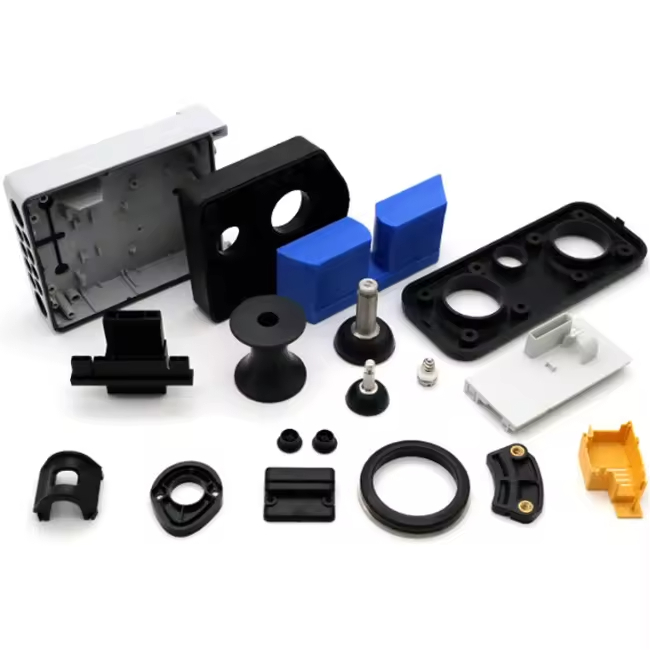
Designing parts that fit together is one of the biggest challenges in functional 3D printing. This guide covers tolerance principles, testing methods, and design strategies for perfect assemblies.
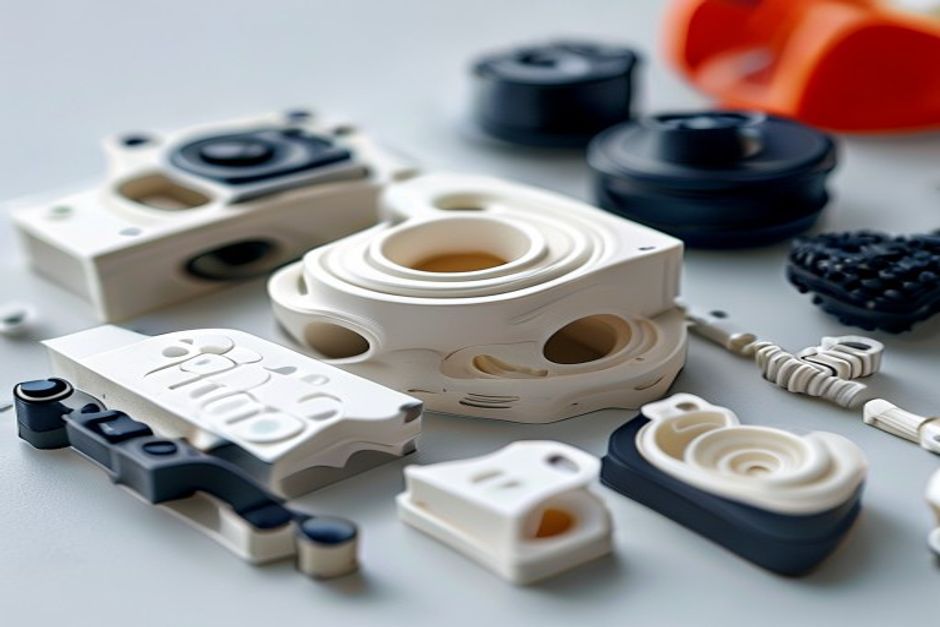
Understanding Tolerances
Tolerance is the intentional dimensional deviation from nominal size that allows parts to fit together. In 3D printing, tolerances account for:
- Material shrinkage: ABS shrinks more than PLA
- Nozzle size: Wider nozzles = larger minimum features
- Layer height: Affects vertical dimensions
- Machine accuracy: Varies between printers
Production applications require consistent tolerances.
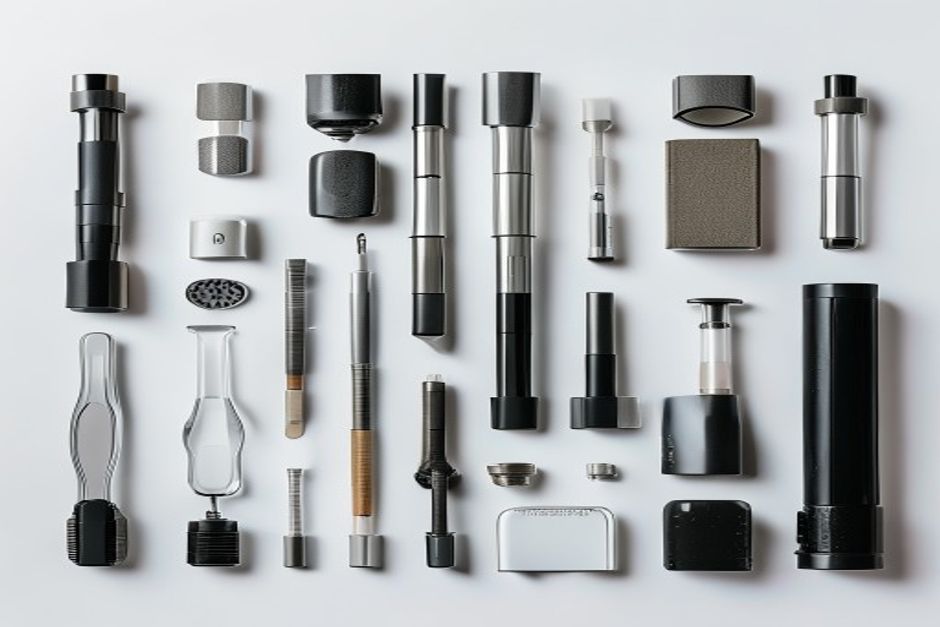
Standard Tolerances by Fit Type
Press Fit (Interference)
Purpose: Permanent or semi-permanent connection
| Material | Recommended |
|---|---|
| PLA | -0.15 to -0.25mm |
| PETG | -0.20 to -0.30mm |
| ABS/ASA | -0.25 to -0.35mm |
| Nylon | -0.30 to -0.40mm |
| TPU | -0.40 to -0.60mm |
Sliding Fit (Clearance)
Purpose: Parts that move relative to each other
| Application | Clearance |
|---|---|
| Light slide | +0.10 to +0.15mm |
| Free slide | +0.20 to +0.30mm |
| Loose fit | +0.30 to +0.50mm |
Wrench/Screw Fit
Purpose: Tool engagement
| Tool Size | Recommended |
|---|---|
| <5mm | +0.20mm |
| 5-10mm | +0.30mm |
| >10mm | +0.40mm |
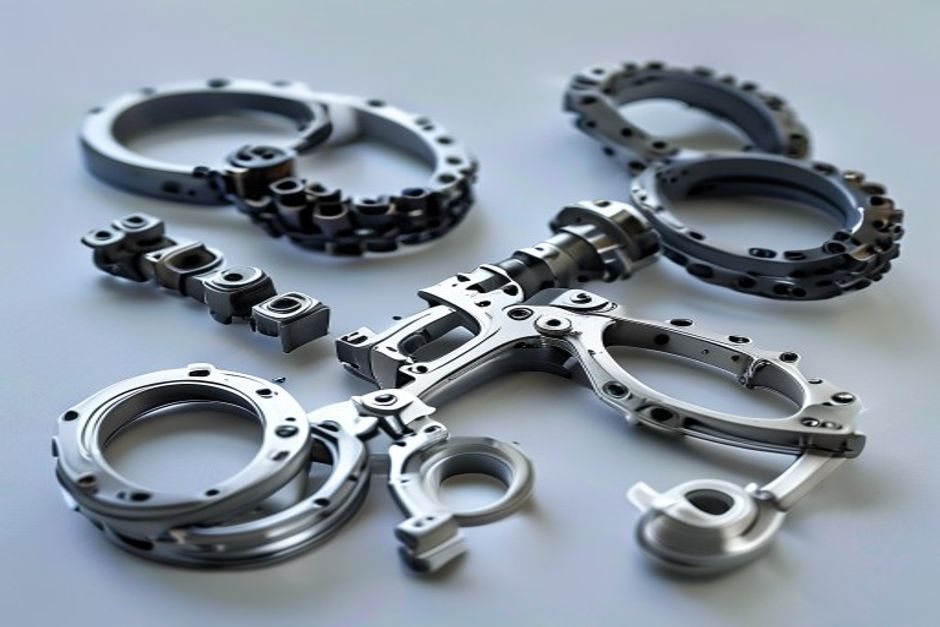
Tolerance Testing
Calibration Cube Method
Print a standard tolerance test:
1. Download a tolerance test model (multiple size holes/pins)
2. Print with your standard settings
3. Test fit with go/no-go gauges
4. Adjust design based on results
Temperature affects tolerances — calibrate at working temperature.
Material-Specific Testing
Different materials require different approaches:
PLA/PETG: Stable, consistent tolerances
ABS/ASA: Account for shrinkage (0.3-0.5%)
Nylon: Largest variance, test thoroughly
TPU: Compression affects measurements
Design Strategies
Horizontal Holes
- Standard holes print undersized
- Add +0.2 to +0.4mm to nominal
- Consider vertical orientation for accuracy
Vertical Holes
- More accurate than horizontal
- Add +0.1 to +0.2mm to nominal
- Top layers affect diameter
Pins and Shafts
- Print at nominal or slightly undersized
- Vertical orientation most accurate
- Sand to final dimension if needed
Higher infill improves dimensional stability.
Assembly Techniques
Snap Fit Design
Parameters:
- Cantilever length: 4-6x thickness
- Thickness: 1-2mm typical
- Engagement: 0.5-1.0mm
Thread Design
- Avoid printed threads for strength applications
- Use threaded inserts for better holding power
- Design holes for insert interference fit
Living Hinges
- Works best with flexible materials (TPU, PETG)
- Minimum thickness: 0.4mm
- Hinge length affects flexibility
Frequently Asked Questions
Why are my holes too small?
PLA shrinks ~0.3%. Add 0.2-0.4mm to hole diameters.
How do I design for multiple printers?
Test on each printer and use conservative tolerances that work across all.
Should I design tight and sand to fit?
For critical fits, yes. For production, dial in tolerances precisely.
Frequently Asked Questions
Q: What dimensional accuracy can I expect from 3D printed parts?
Well-calibrated FDM printers achieve dimensional tolerances of plus/minus 0.1-0.2mm on the XY axes and plus/minus 0.05-0.1mm on the Z axis under ideal conditions. Actual tolerances depend on: printer quality and calibration, material (PLA is most stable, Nylon most variable), part geometry and orientation, and ambient temperature.
Q: How does print orientation affect dimensional accuracy?
Orientation dramatically affects accuracy. XY axis prints (horizontal layers) are generally more accurate than Z axis (vertical). Tall, narrow parts warp less when printed vertically; wide, flat parts are better printed on their edge.
Q: What is the difference between dimensional accuracy and repeatability?
Dimensional accuracy is how close a printed part is to the intended CAD dimensions. Repeatability is how consistently you can print the same part multiple times. A well-calibrated printer may have excellent repeatability (plus/minus 0.05mm) but poor absolute accuracy (plus/minus 0.3mm from CAD).
Q: How does material shrinkage affect dimensional accuracy?
All thermoplastics shrink as they cool from extrusion temperature to ambient. PLA shrinks approximately 0.2-0.4%, ABS approximately 0.5-0.8%, Nylon approximately 1.0-1.5%. This shrinkage must be compensated for in the slicer (scale adjustment) or CAD design.
Q: What tolerance should I use for press-fit (snap-fit) joints?
For press-fit joints in 3D printed parts, design with a clearance of 0.1-0.2mm for PLA/PETG and 0.15-0.25mm for Nylon (which has more flexibility). Test fit first and adjust clearance based on results.
Q: How does layer height affect dimensional accuracy?
Lower layer heights (0.05-0.1mm) produce smoother surfaces and slightly better Z-axis accuracy. However, layer height has minimal effect on XY accuracy. For highest accuracy, use 0.1mm layer height and 0.4mm minimum wall thickness to minimise the visible stepping effect.
Q: What causes dimensional differences between X, Y, and Z axes?
Axis-specific differences arise from: X/Y inaccuracies (belt tension, motor steps, mechanical flex), Z inaccuracy (lead screw precision), and different shrinkage rates. Printer calibration and mechanical maintenance are the primary fixes.
Q: How do I calibrate for tight tolerances on FDM prints?
To calibrate for tight tolerances: (1) Print a test cube (20x20x20mm) and measure all axes; (2) Calculate shrinkage rate and adjust slicer scale; (3) Print a tolerance test (concentric circles or slot-and-pin tests); (4) Adjust XY steps/mm in firmware if measurements consistently deviate.
Q: What causes parts to be undersize vs oversize in 3D printing?
Undersize parts usually indicate over-extrusion compensation too high. Oversize parts indicate under-extrusion or esteps too low. Other causes: incorrect material diameter settings in slicer, thermal expansion, and in Nylon/ABS, moisture-induced swelling.
Q: Are 3D printed parts isotropic (same properties in all directions)?
Standard FDM printed parts are anisotropic – they are stronger and stiffer along the print layers (Z axis) than across them (XY plane). Layer bonds are weaker than the extruded filament itself. For isotropic properties, increase perimeters, increase infill density, or consider injection molding or CNC for load-bearing applications.