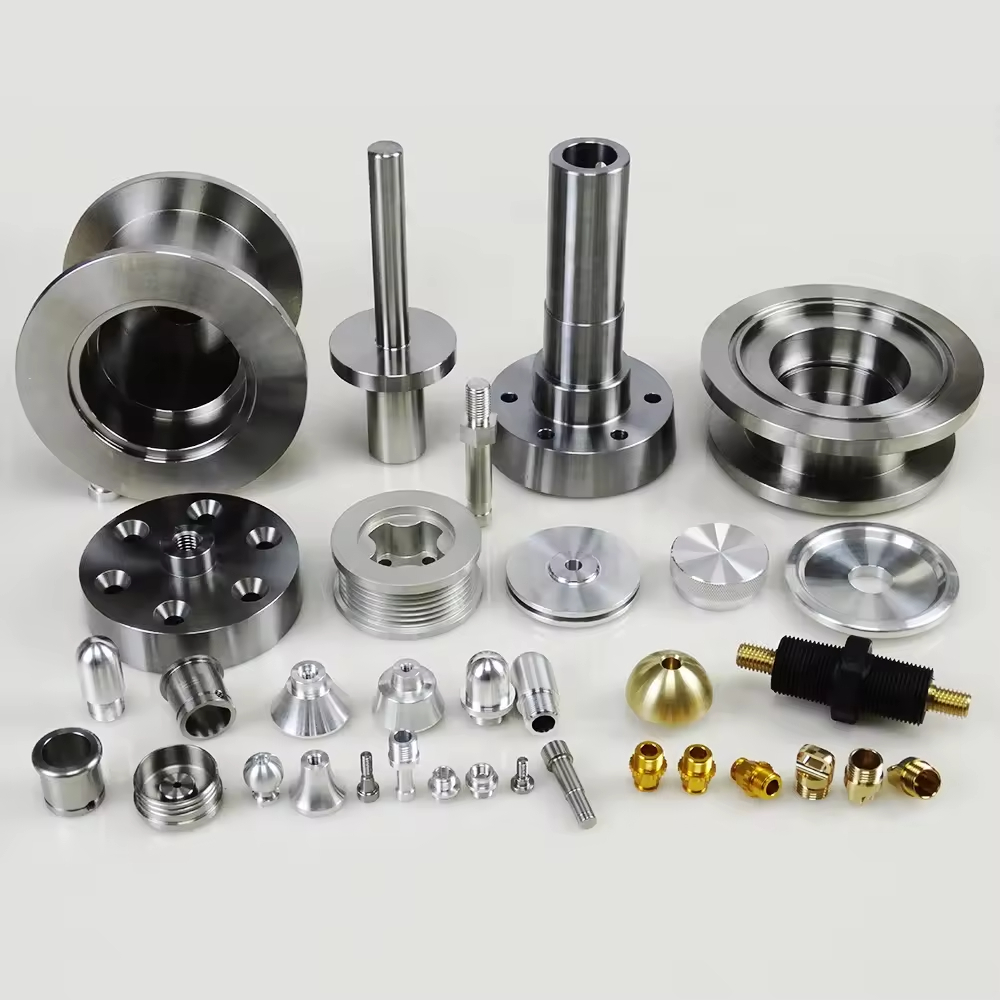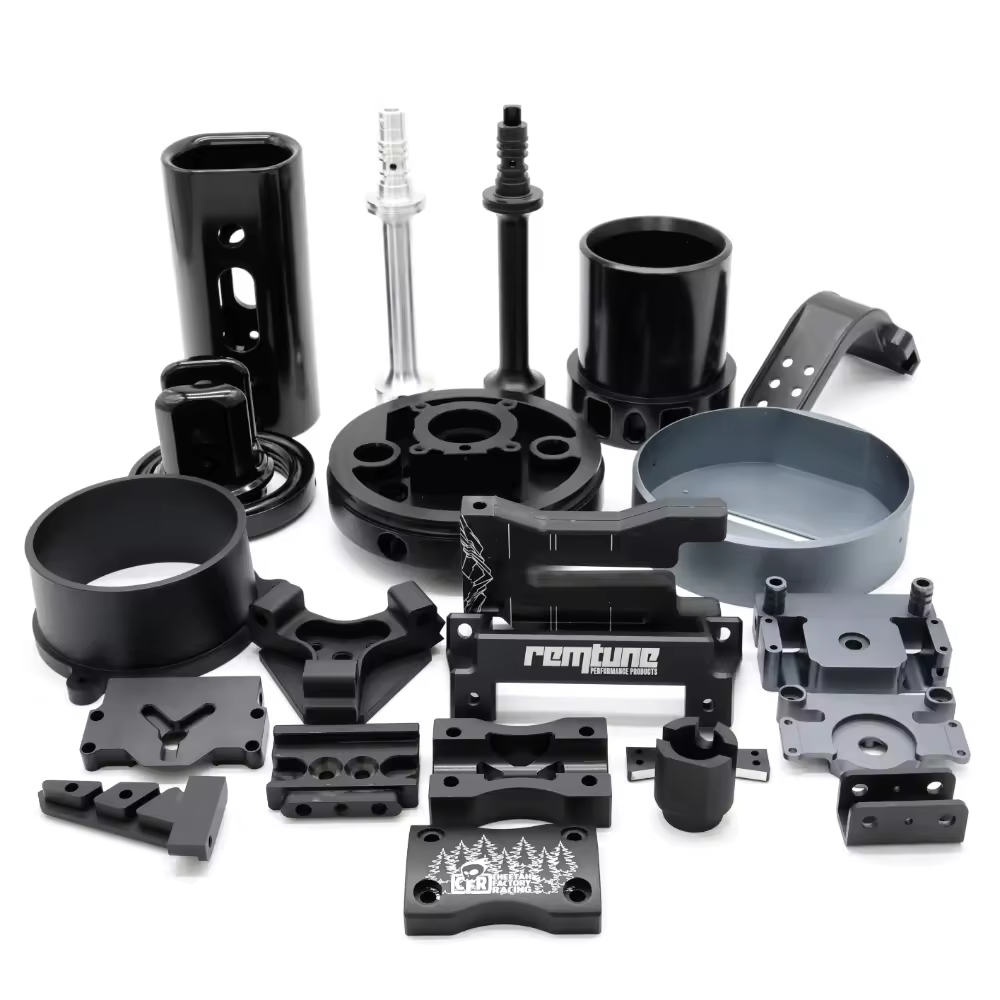
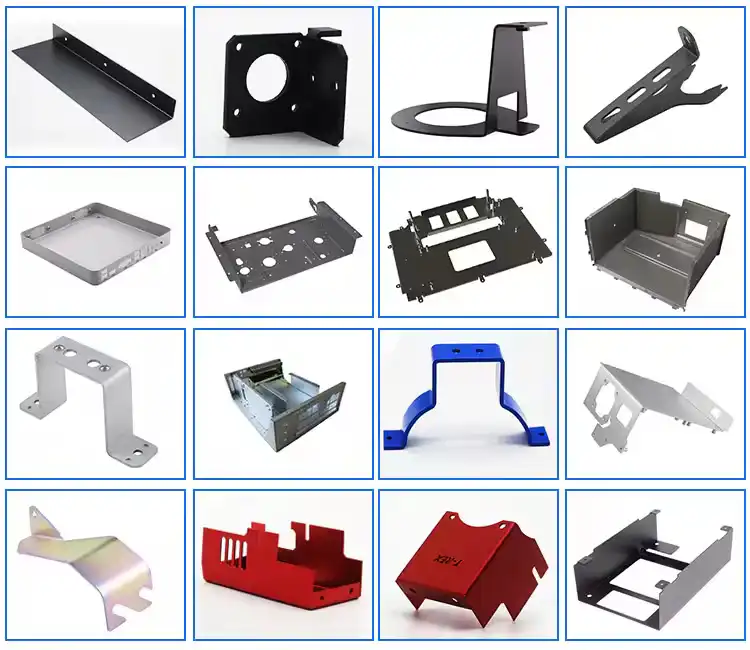
Custom Sheet Metal Fabrication is the backbone of countless industrial and commercial products, transforming flat metal sheets into precision-engineered components, enclosures, brackets, and structural parts. Through processes like laser cutting, bending, stamping, and welding, manufacturers create durable, high-tolerance parts from materials including stainless steel 304, aluminum, brass, and bronze. Whether you need a single prototype bracket or thousands of production components for medical, telecommunications, or construction applications, professional sheet metal services deliver the strength, precision, and finish quality that demanding industries require. At Nylon Plastic , we integrate advanced sheet metal fabrication with our comprehensive manufacturing ecosystem to deliver seamless solutions from concept to completion.

The Custom Sheet Metal Advantage: Strength, Precision, and Versatility
Sheet metal fabrication offers unique benefits that make it indispensable across virtually every industry.
- Superior Strength-to-Weight Ratio: Sheet metal parts provide exceptional structural strength while remaining relatively lightweight. Materials like aluminum offer excellent strength-to-weight performance, while stainless steel 304 delivers maximum durability and corrosion resistance.
- Design Flexibility for Complex Geometries: Modern fabrication processes enable complex shapes, precise cutouts, bends, and formed features. From simple brackets to intricate enclosures with multiple bends and cutouts, sheet metal accommodates diverse design requirements.
- Scalability from Prototype to Production: Whether you need a single custom part for testing or thousands for production, sheet metal fabrication scales efficiently. Prototyping validates designs before committing to volume production, with consistent processes ensuring repeatability.
- Wide Material Selection: Different applications demand different materials. Stainless steel for corrosion resistance, aluminum for lightweight strength, brass for decorative appeal—custom fabrication works with them all. Our material selection hub can help you choose the optimal material for your specific application.
- Excellent Surface Finish Options: Post-fabrication finishing options—including powder coating, galvanizing, and anodizing—enhance appearance, corrosion resistance, and durability, ensuring parts meet both aesthetic and functional requirements.
- Rapid Turnaround: Modern laser cutting and CNC bending equipment enables fast production cycles, getting your parts in hand quickly for assembly or testing.
Sheet Metal Fabrication Processes: Technologies and Capabilities
Understanding the range of fabrication processes helps in selecting the right approach for your part geometry.
| Process | Description | Key Advantages | Typical Applications |
|---|---|---|---|
| Laser Cutting | High-powered laser precisely cuts sheet metal according to digital patterns. | Extreme precision, clean edges, minimal heat-affected zone, complex shapes possible, fast setup. | Brackets, enclosures, panels, intricate components, prototypes. |
| Bending / Forming | CNC press brakes apply precise force to create bends, angles, and formed features. | Accurate bend angles, repeatable results, complex formed geometries, minimal tooling cost. | Chassis, enclosures, brackets, frames, structural components. |
| Stamping | Metal is formed or cut using a stamping press and dies. | High-volume production, consistent results, cost-effective for large runs. | High-volume brackets, clips, washers, automotive components. |
| Welding | Joining metal pieces using heat (MIG, TIG, spot welding). | Strong permanent joints, assembly of complex structures, versatile. | Assemblies, frames, enclosures requiring joining, structural parts. |
| Punching | Metal is cut or formed using a punch and die. | Fast for repetitive features, cost-effective for holes and cutouts. | Perforated panels, mounting holes, repetitive features. |
| Hardware Installation | Installation of threaded inserts, standoffs, studs, and other hardware. | Integrated assembly features, reduced secondary operations. | Enclosures, panels requiring mounting points, assembled components. |

Materials for Custom Sheet Metal Fabrication
The choice of material defines the part’s strength, corrosion resistance, weight, and cost. The reference supplier offers a comprehensive range suitable for diverse applications.
| Material | Key Properties | Typical Applications | Surface Finishing Options |
|---|---|---|---|
| Stainless Steel 304 | Excellent corrosion resistance, high strength, good formability, attractive appearance, easy to clean. | Medical equipment, food processing, architectural components, marine hardware, exterior enclosures. | Polishing (mirror or brushed), passivation, powder coating. |
| Aluminum | Lightweight, good strength-to-weight ratio, natural corrosion resistance, excellent thermal conductivity, non-magnetic. | Aerospace components, electronics enclosures, heat sinks, automotive parts, lightweight structures. | Anodizing (clear or colored), powder coating, polishing, bead blasting. |
| Brass | Attractive gold-like appearance, excellent machinability, good corrosion resistance, electrical conductivity. | Decorative hardware, electrical components, fittings, architectural accents, musical instrument parts. | Polishing (high gloss), clear coating, antiquing, plating. |
| Bronze | Good wear resistance, attractive warm tone, corrosion resistant, excellent for bearings. | Bearings, bushings, decorative hardware, marine components, architectural elements. | Polishing, antiquing, clear coating. |
| Copper | Exceptional electrical and thermal conductivity, distinctive reddish appearance, develops patina. | Electrical bus bars, heat sinks, decorative elements, roofing components. | Polishing, clear coating, antiquing. |
For expert guidance on selecting the optimal material for your sheet metal project, visit our material selection hub .

Surface Finishing Options for Sheet Metal Parts
The right surface finish transforms a raw fabricated part into a finished component ready for its intended environment. The reference supplier offers multiple finishing options.
| Finish Type | Description | Benefits | Best For |
|---|---|---|---|
| Powder Coating | Electrostatic application of dry powder followed by heat curing. | Durable, uniform finish; excellent impact and corrosion resistance; wide color range; environmentally friendly. | Outdoor equipment, automotive parts, industrial machinery, consumer goods requiring durable color finishes. |
| Galvanizing | Application of a protective zinc coating to prevent rusting. | Excellent corrosion protection, long-lasting, cost-effective for steel parts. | Outdoor structures, automotive underbody parts, construction components, utility enclosures. |
| Anodizing | Electrochemical process that thickens the natural oxide layer on aluminum. | Enhanced corrosion and wear resistance, decorative colors, improved durability. | Aluminum components requiring color, corrosion resistance, and a durable finish. |
| Polishing | Mechanical process to achieve a smooth, reflective surface. | High-gloss appearance, smooth surface, easy to clean. | Decorative stainless steel and aluminum parts, architectural features, visible trim pieces. |
| Bead Blasting | Fine glass beads blasted at high pressure to create uniform matte finish. | Consistent, non-reflective matte surface, uniform appearance. | Cosmetic parts, components requiring uniform appearance, preparation for painting or coating. |
| Painting | Liquid paint application for protective or decorative coating. | Wide color selection; various sheens from matte to gloss. | Prototypes, custom colors, parts where powder coating is not suitable. |
| Plating | Deposition of a thin metal layer (chrome, nickel, zinc) onto the part surface. | Enhanced appearance, corrosion resistance, increased surface hardness. | Decorative hardware, automotive trim, corrosion-resistant fasteners. |

The Custom Sheet Metal Fabrication Process: From Design to Finished Part
A professional Custom Sheet Metal Fabrication service follows a systematic workflow to ensure quality and precision at every stage.
| Stage | Core Process & Technology | Quality & Performance Outcome |
|---|---|---|
| 1. Design & Engineering | – Customer provides 3D models (STEP, IGES, CAD) or 2D drawings (PDF, DWG) with specifications. – Engineers review design for manufacturability, considering bend radii, material thickness, tolerances, and assembly requirements. – DFM (Design for Manufacturability) feedback optimizes the design for efficient fabrication. |
A validated design optimized for cost-effective production without compromising structural or aesthetic requirements. |
| 2. Material Selection | – Optimal material is selected based on mechanical requirements, environment, cost, and finish needs. – Certified materials sourced from qualified suppliers ensure traceability and consistency. |
Guaranteed material properties meeting application demands. |
| 3. Laser Cutting / Blanking | – Advanced laser cutting machines precisely cut parts from sheet metal according to digital patterns. – Processes are optimized for minimal waste and maximum precision. |
Accurate blanks with clean edges, ready for forming and assembly. |
| 4. Bending & Forming | – CNC press brakes apply precise force to create bends, angles, and formed features. – Bend sequences are optimized for accuracy and repeatability. |
Parts with accurate bend angles and consistent dimensions across production runs. |
| 5. Secondary Operations | – Additional processes as required: stamping, punching, welding, hardware installation. – Welding (MIG, TIG, spot) for assemblies and multi-part components. |
Complete parts with all features and integrated assembly components. |
| 6. Surface Finishing | – Post-fabrication finishing as specified: powder coating, galvanizing, anodizing, polishing, painting. | Enhanced appearance, corrosion resistance, and functional performance matching design intent. |
| 7. Quality Assurance & Inspection | – Rigorous inspection ensures every part meets dimensional and visual requirements. – Inspection includes dimensional verification, visual checks, and functional testing as required. – Compliance with ISO 9001, IATF 16949, and RoHS standards. |
Guaranteed part quality with full traceability and compliance to specifications. |
| 8. Packaging & Delivery | – Parts are carefully packaged to prevent damage during transit (standard packaging: simple bags, foam, and export cartons). – Custom packaging solutions available for retail presentation. |
Secure, on-time delivery of finished components ready for use or assembly. |
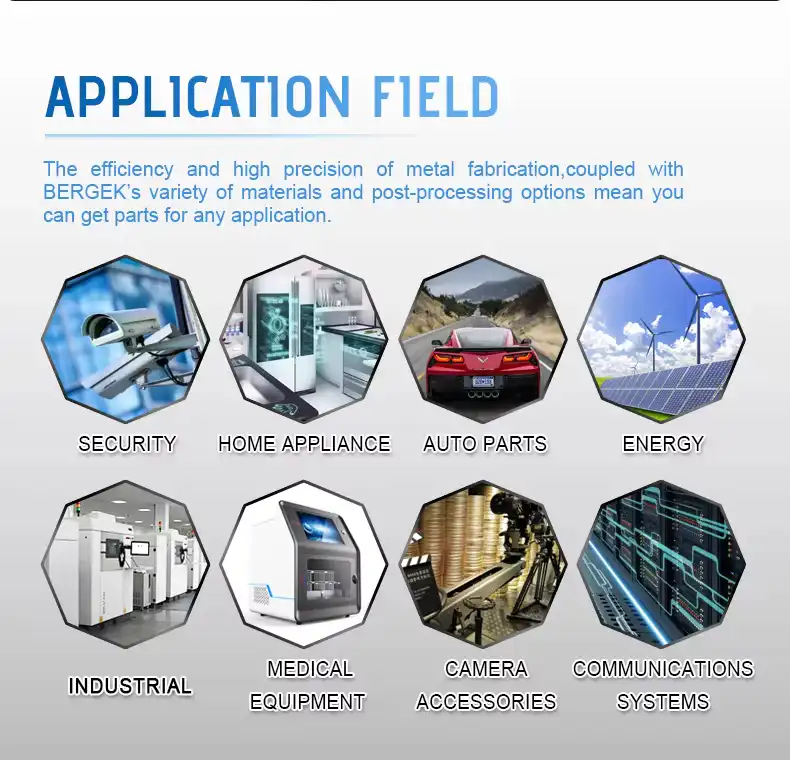
Industry Applications for Custom Sheet Metal Fabrication
Custom sheet metal components serve virtually every industry, providing structural support, enclosure, and aesthetic finish.
| Industry | Typical Applications | Key Material & Performance Requirements |
|---|---|---|
| Medical | Equipment housings, instrument panels, surgical tables, hospital bed components, diagnostic machine enclosures. | Stainless steel 304 for cleanliness and corrosion resistance; precision tolerances; smooth finishes. |
| Telecommunications | Server racks, equipment enclosures, mounting brackets, antenna mounts, cabinet panels. | Aluminum for lightweight strength; precision cutouts; EMI shielding considerations. |
| Construction & Architecture | Structural brackets, building facades, handrails, decorative elements, roofing components, signage. | Weather resistance; aesthetic finishes; structural integrity; material variety. |
| Industrial Machinery | Machine guards, enclosures, control panels, brackets, chutes, hoppers, covers. | Durability; precision fit; corrosion resistance; weldability. |
| Automotive | Brackets, mounting hardware, chassis components, heat shields, battery trays, prototype parts. For more on automotive components, see our automotive injection molding capabilities. | Strength; corrosion resistance; formability; weldability. |
| Aerospace | Brackets, enclosures, panels, prototype components, interior hardware. | Lightweight materials (aluminum); precision tolerances; material traceability. |
| Consumer Products | Appliance enclosures, custom hardware, decorative items, prototypes, small production runs. | Aesthetic finishes; cost-effectiveness; rapid turnaround. |
| Electronics | Enclosures, chassis, heat sinks, mounting brackets, faceplates, shielding components. | Thermal management; precision cutouts; EMI shielding; aesthetic finishes. |

Quality Assurance: The Foundation of Precision Fabrication
The reference supplier emphasizes ISO 9001, IATF 16949, and RoHS certifications, along with comprehensive quality controls.
| Quality Aspect | Our Commitment | Your Benefit |
|---|---|---|
| ISO 9001 Certification | Quality management system ensuring consistent processes and reliable outcomes. | Confidence in every part, backed by internationally recognized standards. |
| IATF 16949 Certification | Automotive-specific quality management system for high-volume production. | Meets stringent automotive industry requirements; suitable for Tier 1 supplier applications. |
| RoHS Compliance | Materials and processes comply with Restriction of Hazardous Substances directives. | Suitable for electronics and medical applications requiring environmental compliance. |
| Dimensional Inspection | Parts are verified against specifications using precision measurement tools. | Guaranteed dimensional accuracy for proper fit and function. |
| Material Certifications | Traceable certifications for all materials used (stainless steel, aluminum, etc.). | Assurance of material properties and compliance with industry requirements. |
| First Article Inspection (FAI) | Comprehensive report verifying all dimensions against your drawing for the first production run. | Confidence that fabrication processes are correct before volume production. |

Customization Options
The reference supplier offers extensive customization to meet specific project requirements, from prototypes to production runs.
| Customization Type | Options Available | Minimum Order Quantity |
|---|---|---|
| Custom Design | We can work from your sketches, CAD files (STEP, IGES, DWG, PDF), or existing samples. Our product design team can assist with design optimization. | 1 piece |
| Material Selection | Stainless steel 304, aluminum, brass, bronze, copper, and more. | 1 piece |
| Process Selection | Laser cutting, bending, stamping, welding, punching, hardware installation. | 1 piece |
| Surface Finish | Powder coating (wide color range), galvanizing, anodizing, polishing, painting, bead blasting. | 1 piece |
| Logo Marking | Laser engraving or printing of logos, part numbers, or specifications. | 1,000 pieces |
| Custom Packaging | Standard export cartons or custom packaging solutions for retail presentation. | 1,000 pieces |
| Color Customization | Powder coating colors matched to specific requirements. Our color customization services ensure accurate color matching. | 1 piece |

Integration with Broader Manufacturing Capabilities
Sheet metal fabrication is most powerful when integrated with other manufacturing processes. At Nylon Plastic, we combine metal fabrication with our full range of services.
| Integrated Service | How Sheet Metal Fabrication Enhances It | Benefit to You |
|---|---|---|
| Complete Enclosure Solutions | Sheet metal enclosures combined with injection molded plastic components, gaskets, and internal brackets. | Single-source accountability for complete product enclosures. |
| Prototype-to-Production Bridge | Rapid prototyped plastic parts for design validation alongside sheet metal prototypes for complete product testing. | Faster time-to-market with validated designs before committing to volume production. |
| Hybrid Metal-Plastic Assemblies | Sheet metal structural components combined with CNC machined or injection molded plastic parts for complex assemblies. | Optimal material selection for each component’s function. |
| Finished Product Solutions | Sheet metal fabrication combined with assembly, color customization , and custom packaging for complete product delivery. | Simplified supply chain, guaranteed quality across all processes. |
| Precision Hardware Integration | Sheet metal enclosures with precisely installed threaded inserts, standoffs, and mounting hardware. | Reduced assembly time, guaranteed component fit. |

FAQ: Custom Sheet Metal Fabrication
Q1: What file formats do you accept for custom sheet metal fabrication?
A: We accept all standard CAD formats, including STEP (.stp), IGES (.igs), SolidWorks (.sldprt), AutoCAD (.dwg, .dxf), and PDF files. For best results, 3D models with complete geometry are preferred. 2D drawings with critical dimensions, tolerances, and material specifications are also helpful.
Q2: What materials are available for sheet metal fabrication?
A: We offer a comprehensive range of materials including stainless steel 304, aluminum, brass, bronze, and copper. Each material can be selected based on specific requirements for strength, corrosion resistance, weight, appearance, and cost.
Q3: What is the minimum order quantity (MOQ)?
A: Our MOQ for custom sheet metal parts is 1 piece, making it ideal for prototypes, custom one-offs, and low-volume production. Volume discounts apply for larger quantities. For custom logo or packaging, MOQ is 1,000 pieces.
Q4: What are typical lead times?
A: Lead times depend on part complexity, material, and quantity. Simple prototypes can be produced in 3-5 working days. Production runs typically require 1-3 weeks depending on volume and finishing requirements.
Q5: What tolerances can you achieve for sheet metal parts?
A: Standard fabrication tolerances are typically ±0.1mm to ±0.2mm for laser cutting and ±0.5mm for bending, depending on material thickness and part geometry. Tighter tolerances may be possible—please discuss your specific requirements with our engineering team.
Q6: What surface finishes do you offer?
A: We offer a comprehensive range of finishes including powder coating (wide color range), galvanizing, anodizing (for aluminum), polishing (mirror or brushed), painting, and bead blasting. Each finish serves different aesthetic and functional requirements.
Q7: Do you offer design assistance or DFM feedback?
A: Yes. Our engineering team provides Design for Manufacturability (DFM) analysis as part of our service. We review your design and suggest modifications that can reduce cost, improve quality, or enhance manufacturability while maintaining functional requirements.
Q8: Can you produce both prototypes and production quantities?
A: Absolutely. We support projects from single prototypes for design validation through full production runs. Our scalable processes ensure consistent quality whether you need one custom bracket or thousands of production parts.
Q9: What quality certifications do you hold?
A: Our facility is ISO 9001 certified and complies with IATF 16949 and RoHS standards. This ensures consistent processes, material traceability, and reliable outcomes for all projects.
Q10: What industries do you serve for sheet metal fabrication?
A: Our industry expertise spans medical, telecommunications, construction, industrial machinery, automotive, aerospace, consumer products, and electronics. We understand the specific quality and performance requirements of each sector.

Conclusion: Precision Sheet Metal Fabrication for Your Critical Components
Custom Sheet Metal Fabrication delivers the strength, precision, and durability required for structural components, enclosures, and brackets across countless industries. Whether you need a single prototype bracket or thousands of production parts, advanced laser cutting, precision bending, and comprehensive finishing options ensure your components meet exact specifications.
Ready to bring your sheet metal design to life? Contact our engineering team today to discuss your project requirements. From DFM analysis and material selection to cutting, forming, finishing, and assembly, we provide end-to-end custom sheet metal fabrication solutions integrated with our broader product design , CNC machining , and injection molding capabilities.
Request a Quote | Contact Our Engineering Team
FAQ
How should buyers evaluate a sheet metal fabrication supplier?
Custom Sheet Metal Fabrication: Precision Manufacturing for Structural and Enclosure Solutions should be evaluated by matching strength, corrosion resistance, heat exposure, machinability, finishing requirements, and certification needs to the operating environment.
What properties matter most in sheet metal fabrication?
The most important properties usually include strength, hardness, ductility, corrosion resistance, thermal behavior, machinability, and surface treatment compatibility.
What information helps select the right metal grade?
Application load, environment, temperature, contact materials, required finish, production process, and applicable standards all help narrow the grade choice.
What is a common mistake when choosing sheet metal fabrication?
A common mistake is choosing by strength alone while ignoring corrosion, forming, machining, welding, finishing, or long-term service conditions.