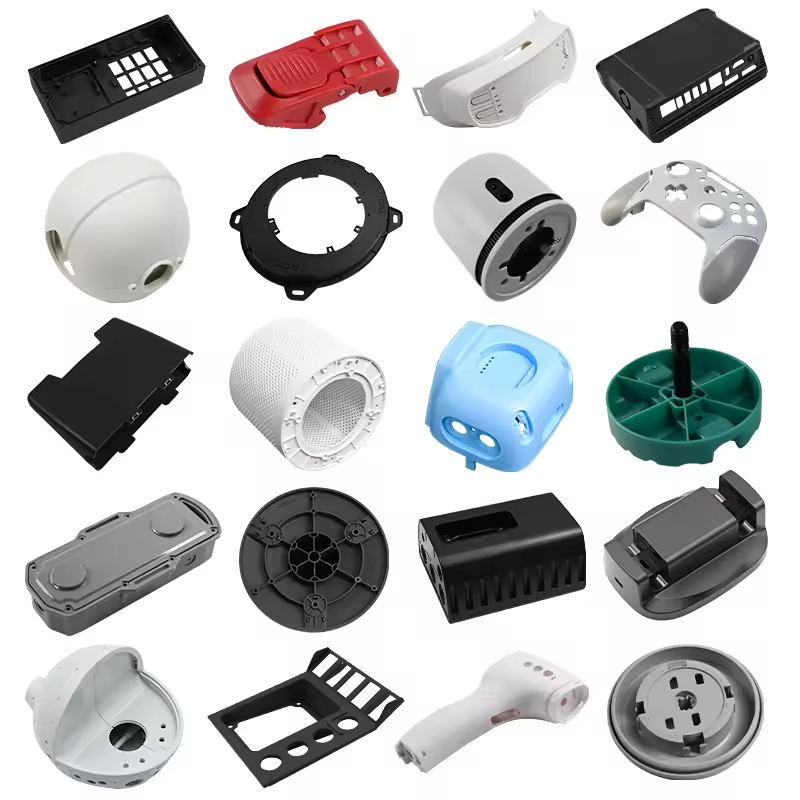
A short shot in injection molding happens when molten plastic does not completely fill the mold cavity. Common causes include low injection pressure, low melt temperature, restricted gates, poor venting, thin walls, long flow length, premature freeze-off, material viscosity or an unbalanced mold design.
Short shots are not only a machine setting problem. If the part has very thin walls, long flow paths, sharp transitions or blocked vents, raising pressure may not solve the root cause. A supplier should review the part design, mold design, resin flow behavior and process window together.
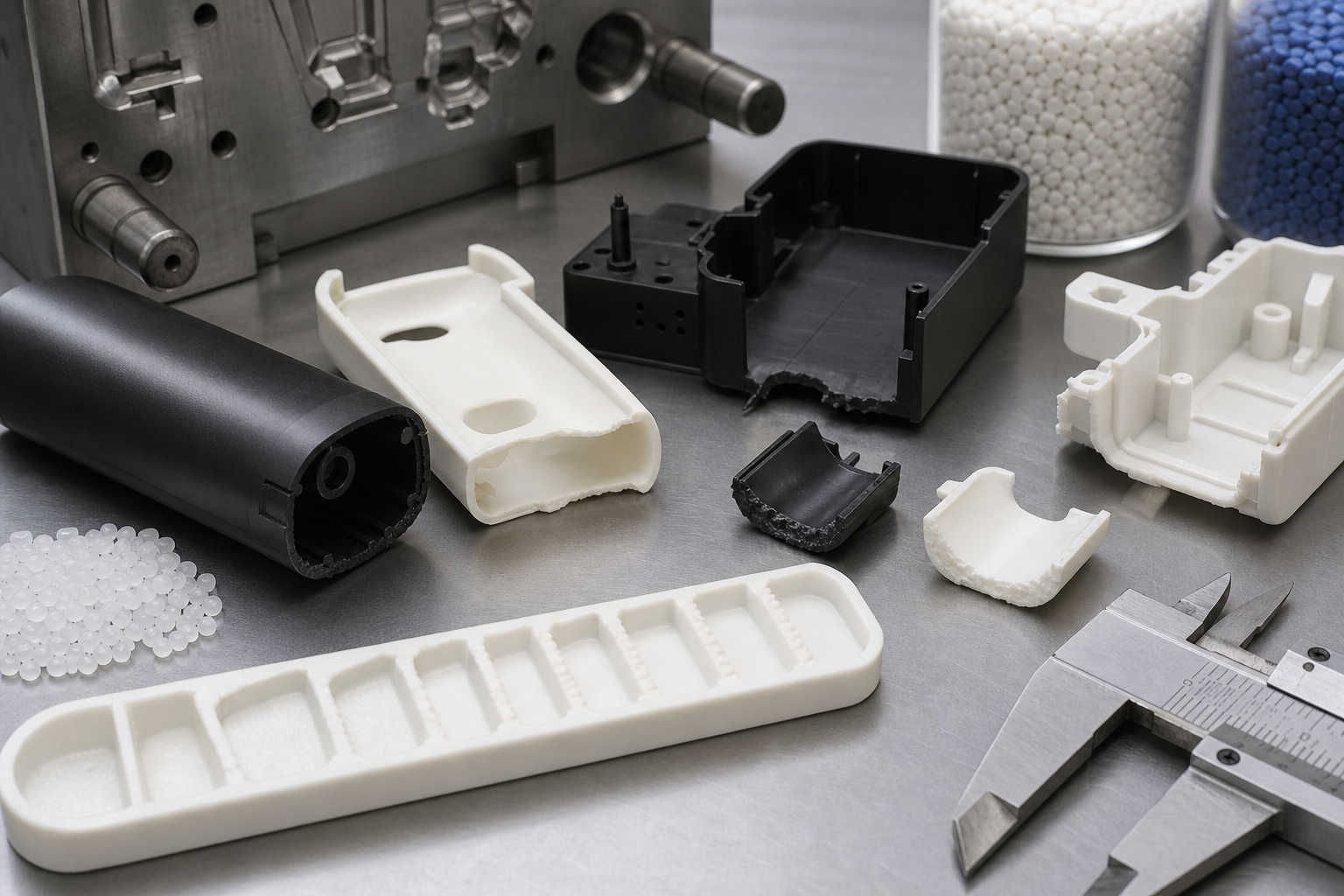
Common Causes of Short Shots
| Cause / material | Typical sign or use | Buyer or engineering action |
|---|---|---|
| Low injection pressure | Cavity not fully filled | Increase pressure within safe mold and machine limits |
| Low melt or mold temperature | Flow freezes before filling | Adjust temperatures according to resin and part geometry |
| Thin wall or long flow length | End-of-fill areas missing | Review wall thickness, gate location and resin flow |
| Poor venting | Gas blocks melt flow | Improve vents in end-of-fill or trapped air zones |
| Small or restricted gate | Material cannot enter fast enough | Review gate size, type and location |
Part Design Checks
- Check whether the thinnest wall can be filled with the selected resin.
- Avoid sudden wall reductions near the end of fill.
- Review ribs, windows and thin clips that restrict flow.
- Use flow simulation or DFM review for long, thin or complex parts.
- Confirm that the gate location supports balanced filling.
Material and Process Considerations
| Material / case | Main concern | Selection note |
|---|---|---|
| High-viscosity engineering plastics | Harder to fill thin sections | Review melt temperature and wall thickness |
| Glass-filled nylon | Flow and fiber orientation matter | Balance strength, flow and warpage |
| PC | Needs controlled heat and pressure | Avoid forcing poor flow with excessive stress |
| PP | Good flow but shrinkage risk | Balance fill, packing and warpage |
| TPE | Soft material behavior varies by grade | Confirm hardness and flow grade |
Buyer RFQ Details for Short Shot Prevention
For a useful review, send the 3D model or 2D drawing, resin grade or target material, part photos if the defect already exists, machine and mold information if available, expected annual volume, cosmetic requirements, critical dimensions, application environment and any inspection standard. Nylon Plastic can review the design, material and molding route before tooling or production changes are made.
Short Shot Triage: Find the First Constraint
| Observed Pattern | Likely Constraint | First Evidence to Check |
|---|---|---|
| Defect at the flow end | Long flow length, early freeze-off, low melt or mold temperature | Short-shot location, fill pattern, temperature records |
| One cavity is incomplete | Runner imbalance, gate restriction, vent blockage or cavity variation | Cavity comparison, gate condition, vent condition |
| Thin ribs or walls do not fill | Local flow resistance or a design that is below the process window | Wall map, gate position, fill pressure and speed profile |
| Defect changes with the resin lot | Viscosity, moisture, regrind, color or drying-history variation | Grade, lot, moisture result, dryer dew point and COA |
Do not increase pressure and melt temperature together without recording the result. A temporary fill improvement can create flash, burn marks, fiber orientation changes, degradation, or a narrower production window.
How Nylon Plastic Supports the Project
Nylon Plastic has supported material selection and finished plastic-part manufacturing since 2005. For short shot troubleshooting and prevention, the useful review connects the drawing, material, tooling or machining route, inspection state, and production plan before a quote is approved.
- Review unfilled PA, PA-GF20, or PA-CF30 against the wall, flow length, load direction, and moisture requirement.
- Connect DFM, gate and vent review with controlled machine trials instead of treating the defect as one setting problem.
- Define the defect location, cavity, material lot, dryer record, critical dimensions, and acceptance photos in the RFQ.
Related Reading
Frequently Asked Questions
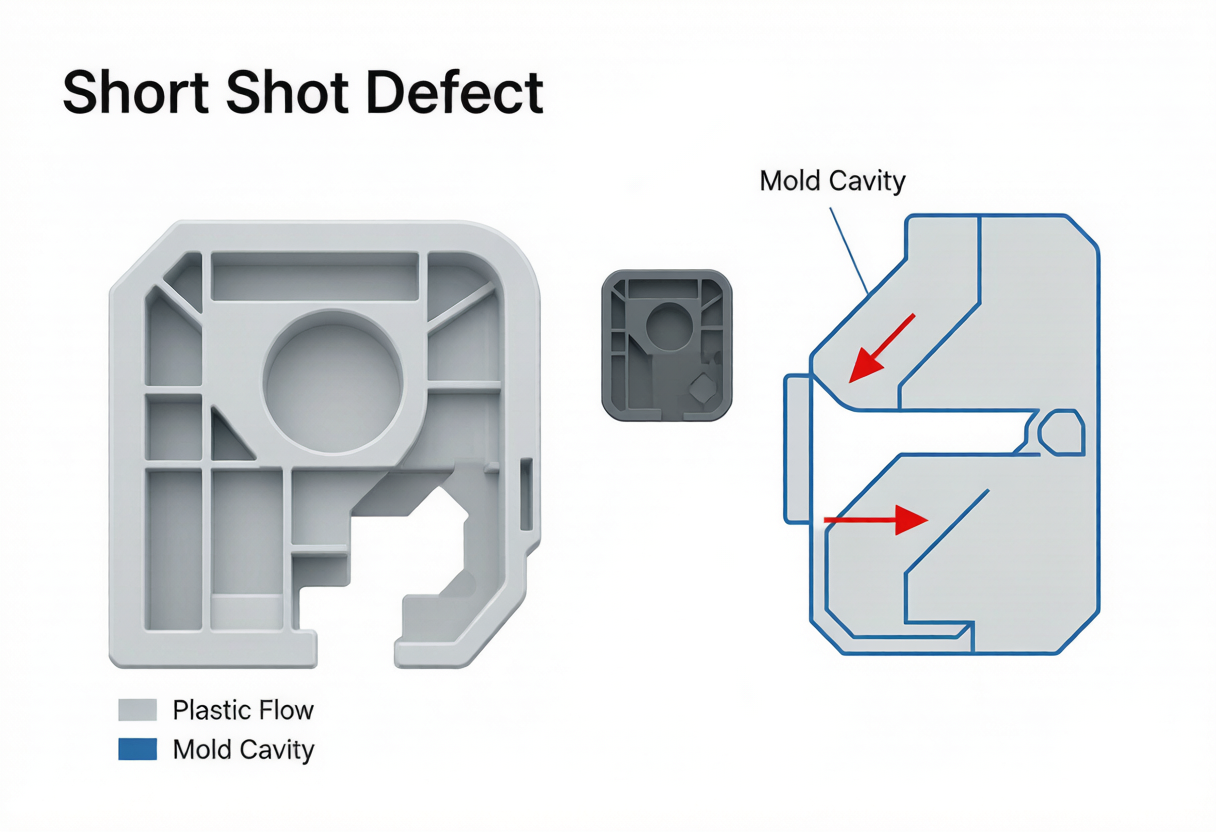
What is a short shot in injection molding?
A short shot is an incomplete molded part created when the melt does not reach every required area of the cavity before filling or packing ends. The cause may be material, mold, machine, or part design.
Can a higher injection pressure fix a short shot?
Sometimes, but pressure is only one variable. Confirm material moisture, melt and mold temperature, gate restriction, venting, flow length, clamp behavior, and the safe process window before increasing pressure.
Why do nylon parts develop short shots?
Nylon short shots can be related to moisture, viscosity, fiber orientation, thin walls, restrictive gates, long flow paths, low temperature, poor venting, or premature freeze-off. The exact grade and drying state matter.
What should be included in a short shot troubleshooting request?
Send the CAD model and drawing, resin grade and lot, wall map, defect location, cavity, gate and vent details, machine settings, dryer data, photos, quantity, and acceptance criteria.
Request a Short Shot Root-Cause Review
Send the part files, material lot, defect photos, process records, and target quantity for a DFM, material, and molding review.