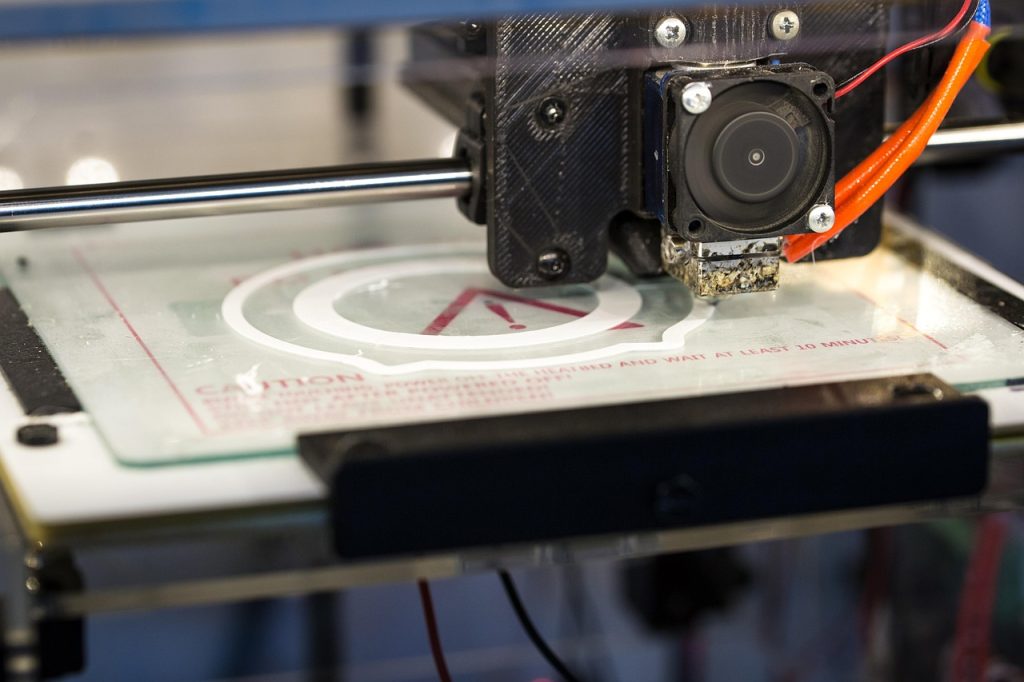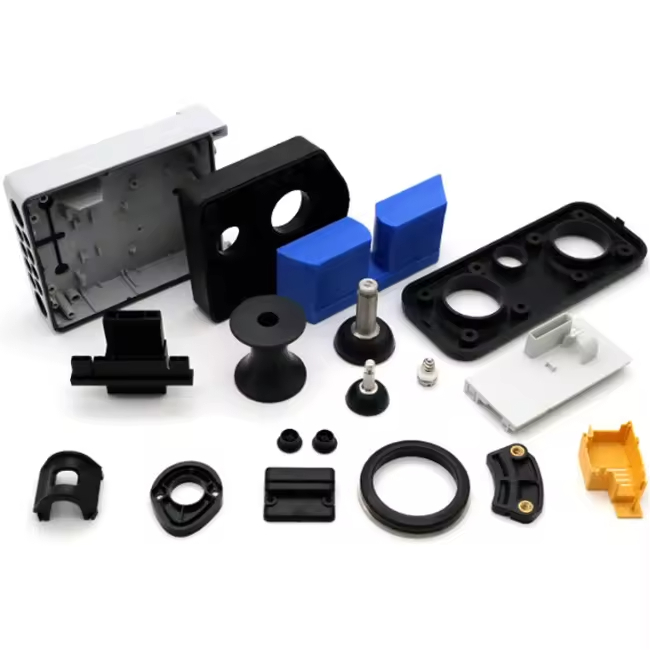

3D Printing Innovations are transforming how products are designed, prototyped, and manufactured, enabling unprecedented design freedom and accelerating time-to-market. Simultaneously, 3D Printing for Beginners has become more accessible than ever, with user-friendly technologies and materials that lower the barrier to entry. Whether you’re an engineer exploring rapid prototyping, a hobbyist creating custom models, or a business seeking to understand additive manufacturing, this guide covers the latest innovations and provides a practical roadmap for getting started. At Nylon Plastic , we integrate advanced 3D printing with our comprehensive manufacturing ecosystem to deliver seamless solutions from concept to production.
The 3D Printing Revolution: Key Innovations Shaping the Future
Additive manufacturing continues to evolve rapidly, with innovations that expand its capabilities and applications.
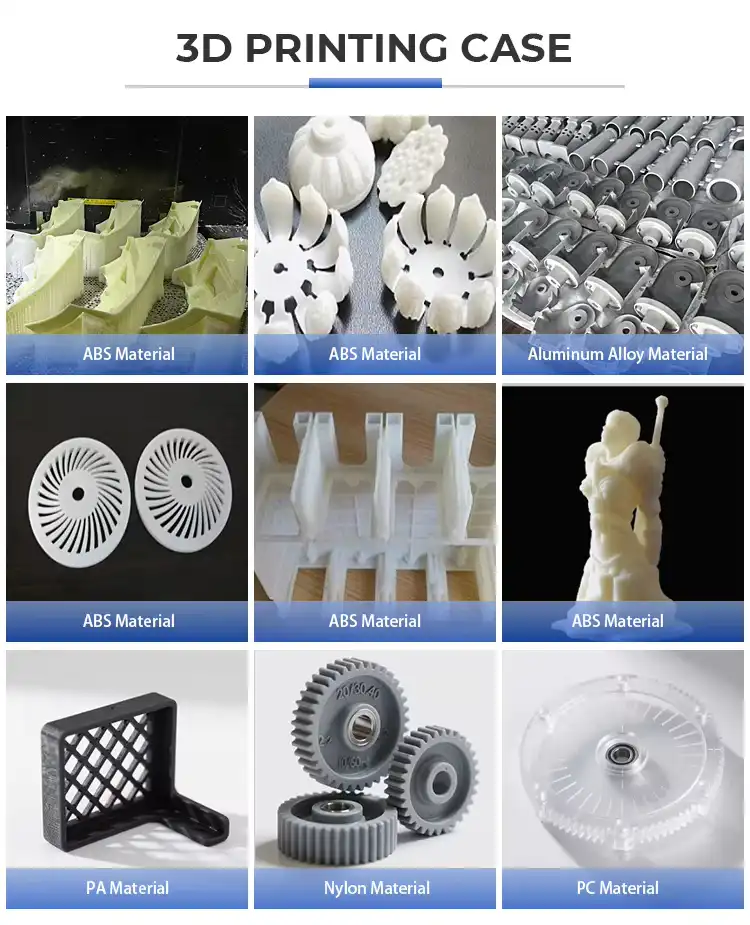
- Advanced Materials: Beyond standard plastics, 3D printing now supports engineering-grade materials including nylon, ABS, PLA, and photopolymer resins. These materials offer improved mechanical properties, temperature resistance, and surface finish, enabling functional prototypes and end-use parts. Our material selection hub can help you choose the right material for your application.
- Multi-Technology Platforms: Modern service providers offer multiple 3D printing technologies under one roof, including SLA (Stereolithography) for high-detail parts, FDM (Fused Deposition Modeling) for functional prototypes, and SLS (Selective Laser Sintering) for durable nylon components. This versatility ensures the right process for every project.
- Rapid Prototyping Acceleration: 3D printing has slashed development cycles from weeks to days. Design iterations that once required expensive tooling changes can now be tested overnight, enabling faster innovation and market responsiveness.
- Mass Customization: Additive manufacturing makes economic customization possible. Whether it’s patient-specific medical devices, custom consumer products, or low-volume production runs, 3D printing eliminates the cost penalty of uniqueness.
- Integration with Traditional Manufacturing: 3D printing is increasingly used alongside conventional processes—creating patterns for casting, jigs for assembly, and bridge tooling for injection molding—demonstrating that additive and subtractive methods are complementary, not competitive.
- Sustainability Advances: New bio-based materials and recycling initiatives are making 3D printing more environmentally friendly, reducing waste compared to subtractive manufacturing and enabling local, on-demand production that minimizes shipping impacts.
3D Printing Technologies: Choosing the Right Process
Different 3D printing technologies suit different applications. The table below compares the most common processes for beginners and professionals alike.
| Technology | Process Description | Key Advantages | Typical Applications | Beginner-Friendly? |
|---|---|---|---|---|
| SLA (Stereolithography) | Uses a laser to cure liquid photopolymer resin layer by layer, creating high-resolution parts. | Excellent surface finish, high detail, smooth surfaces. | Detailed prototypes, jewelry patterns, dental models, figurines, master patterns. | Moderate (requires post-processing, handling resin). |
| FDM (Fused Deposition Modeling) | Melts and extrudes thermoplastic filament (PLA, ABS, nylon) through a nozzle, building parts layer by layer. | Wide material choice, functional parts, low-cost machines, easy to use. | Functional prototypes, jigs, fixtures, hobbyist projects, educational use. | Excellent (most beginner-friendly, widely available). |
| SLS (Selective Laser Sintering) | Uses a laser to fuse powdered nylon or other polymers into solid parts. | No support structures needed, excellent mechanical properties, complex geometries. | Functional end-use parts, complex assemblies, small production runs. | Advanced (industrial machines, higher cost). |
| Material Jetting | Jets photopolymer droplets onto a build platform, cured layer by layer with UV light. | Multi-material and multi-color capabilities, high accuracy. | Realistic prototypes, medical models, full-color parts. | Advanced (industrial machines, higher cost). |
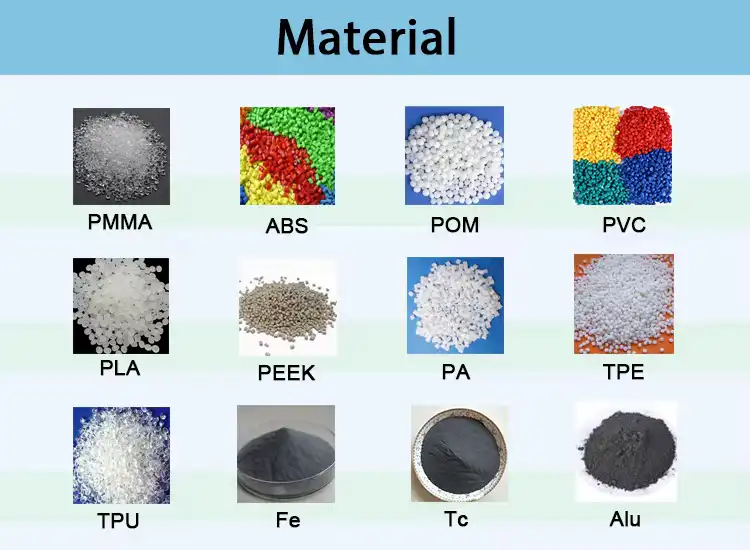
Materials for 3D Printing: A Beginner’s Guide and Innovation Overview
Understanding materials is key to successful 3D printing, whether you’re just starting or pushing the boundaries of innovation.
| Material | Key Properties | Best For | Beginner-Friendly? | Notes |
|---|---|---|---|---|
| PLA (Polylactic Acid) | Easy to print, biodegradable, low warping, available in many colors. | First prints, hobbyist projects, prototypes not requiring high strength or heat resistance. | Excellent (forgiving, low temperature, minimal warping). | The standard filament for beginners. |
| ABS (Acrylonitrile Butadiene Styrene) | Strong, durable, heat resistant, can be post-processed with acetone. | Functional prototypes, automotive parts, durable housings, jigs. | Moderate (requires heated bed, enclosure to prevent warping). | Offers better mechanical properties than PLA. |
| Nylon (PA) | Strong, flexible, durable, excellent layer adhesion. | Functional parts, living hinges, gears, wear-resistant components. | Moderate (requires high temperatures, may absorb moisture). | Ideal for engineering applications. |
| Resin (Photopolymer) | High detail, smooth surface finish, wide range of specialized formulations (tough, flexible, castable, dental). | Detailed models, jewelry, dental applications, miniatures, smooth prototypes. | Moderate (requires post-processing, handling liquid resin). | SLA technology delivers unmatched detail. |
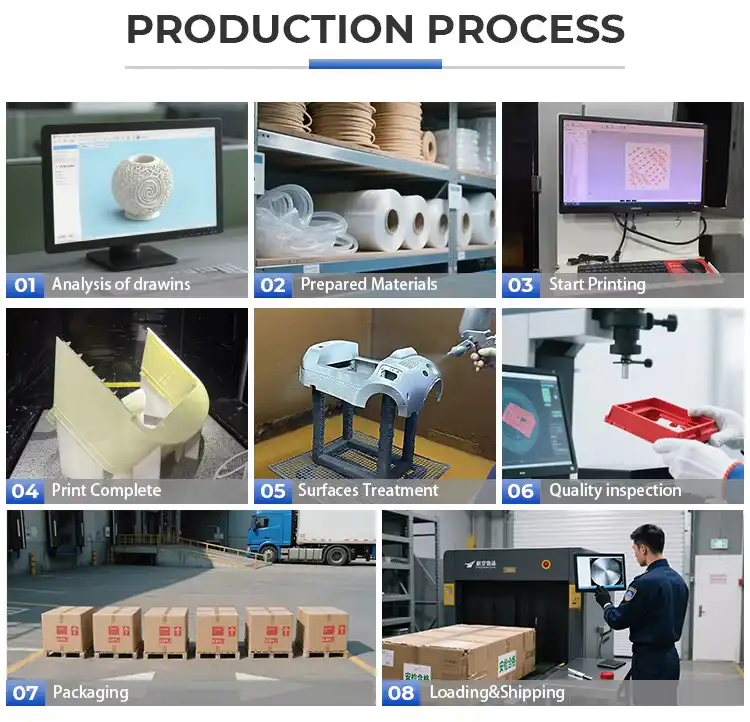
Getting Started: A Beginner’s Roadmap to 3D Printing
3D Printing for Beginners is an exciting journey. Follow this roadmap to start creating your own parts.
| Step | What to Do | Tips for Success |
|---|---|---|
| 1. Define Your Project | Identify what you want to make. Consider function, required strength, detail level, and quantity. | Start simple. A basic bracket, a custom phone stand, or a replacement knob are great first projects. |
| 2. Create or Obtain a 3D Model | Design your own using CAD software (Tinkercad, Fusion 360, SolidWorks) or download from online repositories (Thingiverse, Printables). | For beginners, Tinkercad is free and intuitive. For complex designs, consider professional product design services. |
| 3. Choose Your Technology and Material | Select the appropriate 3D printing process and material based on your project requirements. | For most beginners, FDM with PLA is the best starting point. For high-detail parts, consider SLA resin printing. |
| 4. Prepare Your File | Export your design as an STL file and use slicing software to generate printer instructions (G-code). | Slicing software (like Cura or PrusaSlicer) is free and essential. It controls layer height, infill, supports, and print speed. |
| 5. Print and Monitor | Start your print and monitor the first few layers to ensure proper adhesion and no issues. | Keep your printer in a well-ventilated area. PLA is safe, but ABS and resin require ventilation. |
| 6. Post-Process Your Part | Remove supports, clean up any imperfections, and apply finishing touches (sanding, painting, assembly). | For FDM parts, sanding and acetone smoothing (ABS only) improve appearance. SLA parts require washing and UV curing. |
| 7. Iterate and Improve | Evaluate your part, identify improvements, modify your design, and print again. | Rapid iteration is 3D printing’s superpower. Don’t be afraid to try multiple versions. |
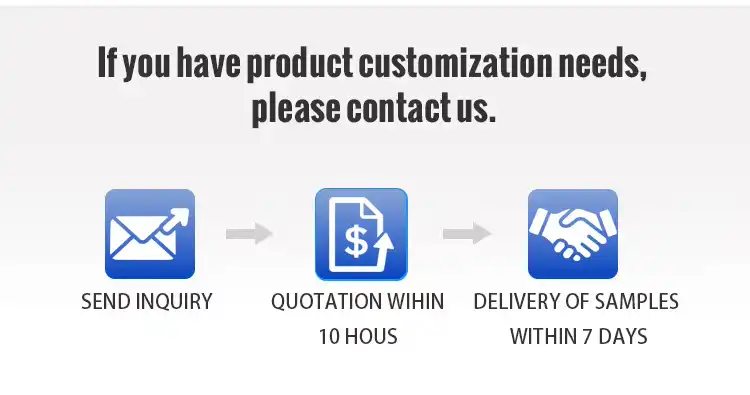
The Professional 3D Printing Service Process: From File to Finished Part
For those who prefer to leverage professional services, the process is streamlined and quality-assured.
| Stage | Core Process & Technology | Quality & Performance Outcome |
|---|---|---|
| 1. File Submission | – Customer provides 3D model in standard formats (STP, STL, OBJ, 3MF). – Specify material, finish, and quantity requirements. |
Clear specifications ensure the printed part meets your expectations. |
| 2. Design Review & DFAM Analysis | – Engineers review design for printability, orientation, and support structure needs. – Design for Additive Manufacturing (DFAM) analysis optimizes geometry for the chosen process. |
A validated digital model ready for successful printing with minimal risk of build failure. |
| 3. Material Selection | – Optimal material is selected based on application requirements (strength, flexibility, detail, heat resistance). | Guaranteed material properties meeting application demands. |
| 4. 3D Printing | – Parts are printed using the appropriate technology (SLA, FDM, SLS) with precise process controls. | Accurate parts with properties matching the intended design. |
| 5. Post-Processing | – Support removal, surface finishing, sanding, polishing, painting, or assembly as required. | A finished part meeting aesthetic and functional specifications. |
| 6. Quality Assurance & Inspection | – Dimensional verification and visual inspection ensure parts meet requirements. | Guaranteed part quality ready for use. |
| 7. Packaging & Delivery | – Parts are carefully packaged to prevent damage during transit. – Global shipping with tracking. |
Secure, on-time delivery of finished components. |

Industry Applications: From Prototypes to Production
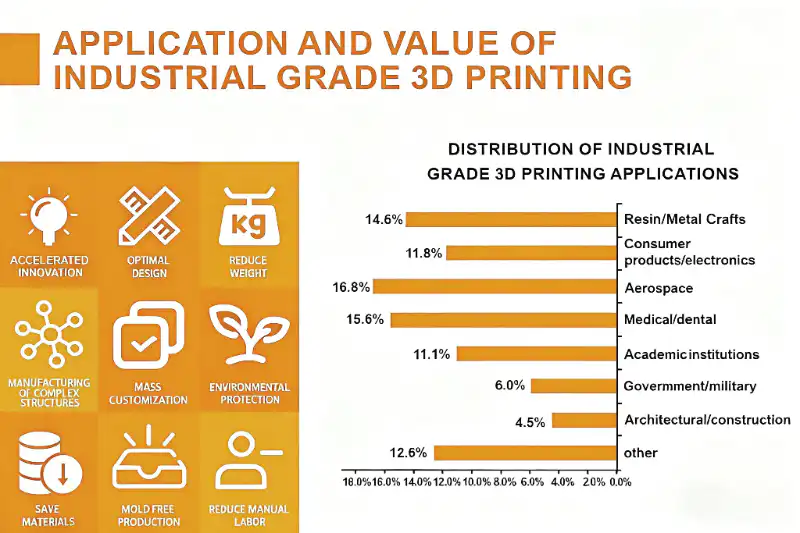
3D printing serves virtually every industry, enabling innovation at every stage of product development.
| Industry | Applications | Key Benefits Realized |
|---|---|---|
| Automotive | Functional prototypes, custom brackets, jigs and fixtures, tooling, interior components. | Rapid iteration, cost-effective customization, reduced development time. |
| Medical | Surgical guides, anatomical models, custom implants, prosthetics, dental applications. | Patient-specific customization, improved surgical outcomes, faster development. |
| Consumer Products | Design prototypes, custom accessories, hobbyist projects, replacement parts. | Design freedom, personalization, rapid market testing. |
| Industrial Machinery | Machine components, custom tooling, assembly fixtures, replacement parts. | Reduced downtime, optimized workflows, on-demand manufacturing. |
| Aerospace | Lightweight brackets, ducting, prototyping, tooling for composites. | Weight reduction, complex geometries, rapid design validation. |
| Education | Teaching aids, student projects, research prototypes, STEM education tools. | Hands-on learning, design thinking, accessible technology. |
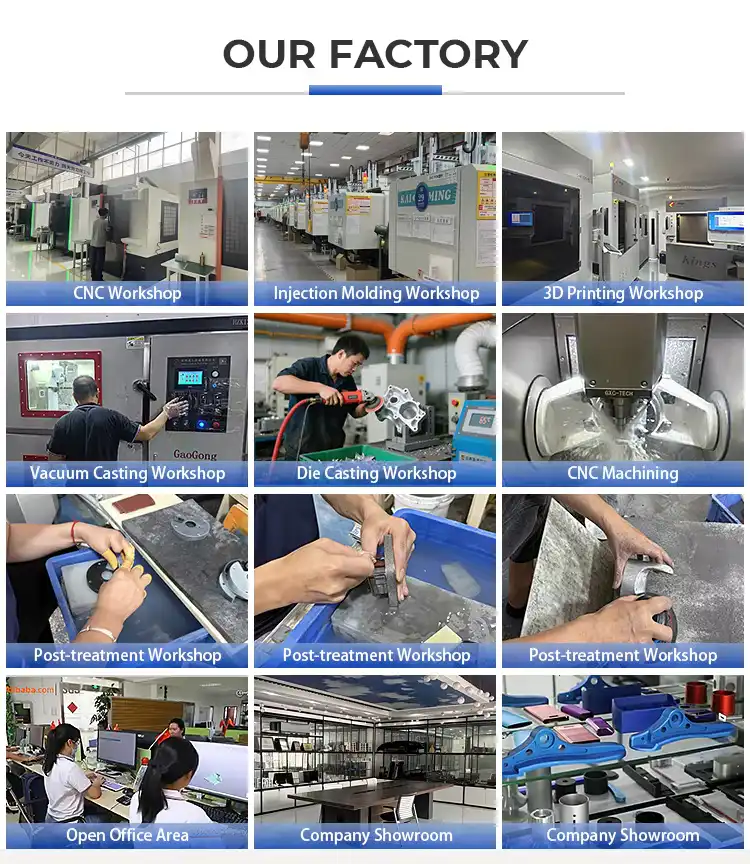
Quality Assurance: Ensuring Reliable Results
Professional 3D printing services implement rigorous quality controls to ensure every part meets specifications.
| Quality Aspect | Our Commitment | Your Benefit |
|---|---|---|
| 100% Quality Check | Every part undergoes inspection before shipping. | Guaranteed compliance with your requirements. |
| Material Verification | Certified materials from qualified suppliers ensure consistency. | Reliable material properties for every part. |
| Dimensional Accuracy | Parts are verified against your 3D model specifications. | Confidence that parts will fit and function as designed. |
| Process Documentation | Build parameters and quality records maintained for traceability. | Complete visibility into your part’s manufacturing history. |
Customization Options
Professional services offer extensive customization to meet specific project requirements.
| Customization Type | Options Available | Minimum Order Quantity |
|---|---|---|
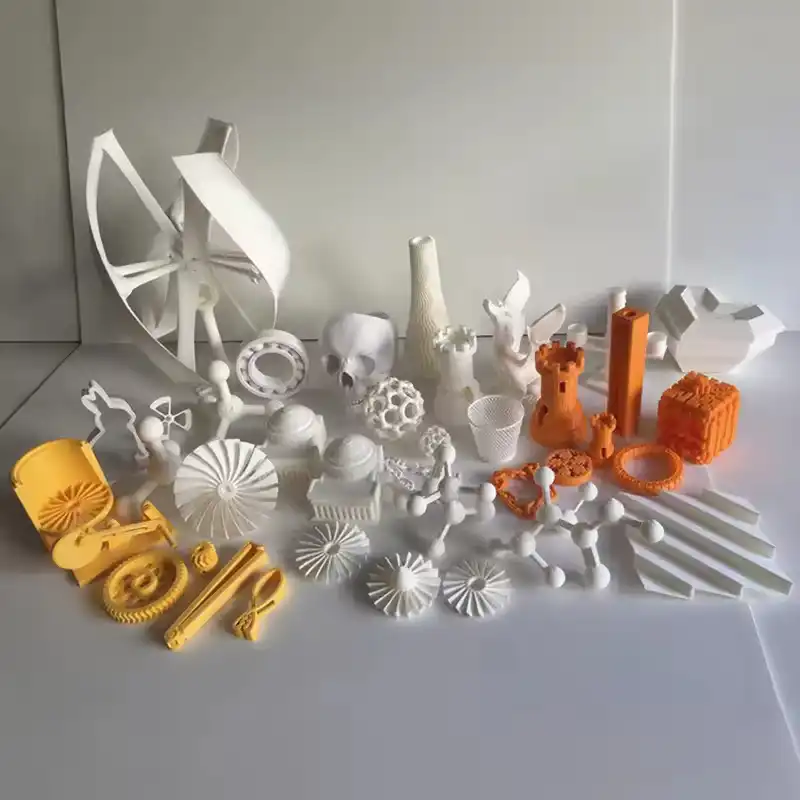
| Material Selection | Choice of resins, nylons, ABS, PLA, and specialty materials. | 1 piece |
| Color Customization | Wide range of colors available across different materials. Our color customization services can match specific needs. | 1 piece |
| Surface Finish | As-printed, sanded, polished, painted, or coated finishes. | 1 piece |
| Assembly Services | Multi-part assemblies, insertion of hardware, complete product assembly. | Varies by project |
| Custom Packaging | Branded packaging, custom inserts, retail-ready presentation. | Varies by project |
Pricing Structure
Understanding pricing helps in project planning. Actual costs depend on part size, complexity, material, and quantity.
| Order Quantity | Price per Piece (Indicative) | Best For |
|---|---|---|
| 1-499 pieces | ¥68.31 | Prototypes, custom one-offs, small-batch production. |
| 500-4,999 pieces | ¥40.31 | Medium-volume production, pilot runs, inventory stocking. |
| 5,000+ pieces | ¥6.15 | High-volume production, mass customization, large-scale projects. |
For a precise quote tailored to your specific project, contact our engineering team .
Integration with Broader Manufacturing Capabilities
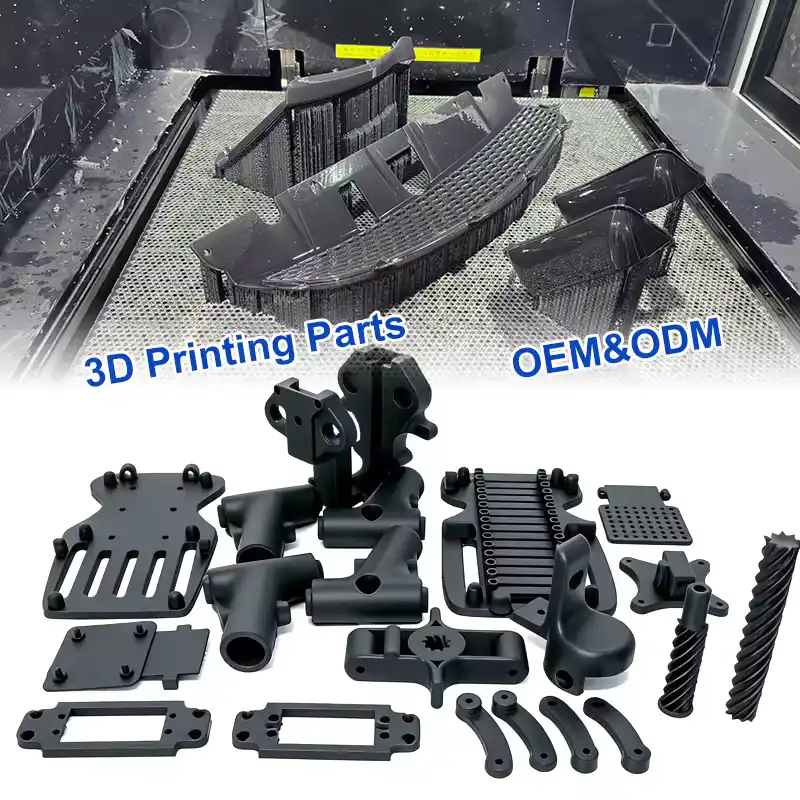
3D printing is most powerful when integrated with other manufacturing processes. At Nylon Plastic, we combine additive manufacturing with our full range of services.
| Integrated Service | How 3D Printing Enhances It | Benefit to You |
|---|---|---|
| Rapid Prototyping for Injection Molding | 3D printed prototypes validate designs before committing to expensive injection molding tooling. | Faster time-to-market, validated designs, reduced tooling risk. |
| Patterns for Casting | 3D printed patterns for investment casting or sand casting enable complex metal parts without hard tooling. | Complex geometries in metal, rapid iteration, low-volume production. |
| Jigs and Fixtures | On-demand production of custom assembly jigs, fixtures, and workholding tools. | Reduced downtime, optimized manufacturing workflows. |
| Bridge Tooling | 3D printed parts for low-volume production while hard tooling is being manufactured. | Immediate market entry, revenue generation during tooling lead time. |
| Hybrid Manufacturing | 3D printed complex cores with CNC machining of critical surfaces. | Best of both worlds: additive complexity + machined precision. |

FAQ: 3D Printing Innovations and Beginners
Q1: What is the best 3D printing technology for a beginner?
A: For most beginners, FDM (Fused Deposition Modeling) with PLA filament is the best starting point. FDM printers are affordable, widely available, and easy to use. PLA is forgiving, prints at lower temperatures, and doesn’t require a heated bed. Once you’re comfortable, you can explore more advanced materials like ABS or move to SLA for higher detail.
Q2: What software do I need to start 3D printing?
A: You’ll need two types of software: CAD software to create or modify 3D models (beginner-friendly options include Tinkercad, Fusion 360 for hobbyists, or professional tools like SolidWorks), and slicing software to convert your model into printer instructions (popular free options include Cura, PrusaSlicer, and Simplify3D).
Q3: How much does 3D printing cost for beginners?
A: Entry-level FDM printers start around $200-$500. Filament costs $20-$50 per kilogram, enough for many small projects. If you prefer not to invest in a printer, professional 3D printing services offer affordable options starting from around ¥68.31 per part, depending on size and complexity.
Q4: What is the difference between SLA and FDM?
A: FDM melts and extrudes plastic filament, building parts layer by layer. It’s great for functional parts and is beginner-friendly. SLA uses a laser to cure liquid resin, producing parts with much higher detail and smoother surfaces, ideal for models, jewelry, and applications where appearance matters. SLA requires more post-processing and handling of liquid resin.
Q5: Can 3D printed parts be used for functional applications?
A: Absolutely. With engineering-grade materials like nylon, ABS, and advanced resins, 3D printed parts can be fully functional. They’re used for end-use parts in automotive, medical, and industrial applications. The key is selecting the right technology and material for your specific requirements.
Q6: Do you offer design assistance for 3D printing?
A: Yes. Our engineering team provides Design for Additive Manufacturing (DFAM) support, helping optimize your designs for printability, strength, and cost-effectiveness while maintaining functionality. Contact us for assistance.
Q7: What industries use 3D printing most extensively?
A: 3D printing serves virtually every industry. Key sectors include automotive (prototypes, jigs), medical (surgical guides, implants), consumer products (prototypes, custom goods), aerospace (lightweight brackets, ducting), and industrial machinery (tooling, replacement parts). Our industry expertise spans all these sectors.
Q8: How do I choose between DIY printing and using a service?
A: Consider your volume, complexity, and goals. DIY printing offers hands-on learning, unlimited iterations, and long-term cost savings for frequent printing. Professional services provide access to industrial-grade machines, multiple technologies, and expert support without upfront investment—ideal for high-quality parts, complex geometries, or when you need to focus on your core business.

Conclusion: Embrace the 3D Printing Revolution
3D Printing Innovations continue to expand what’s possible in design and manufacturing, while 3D Printing for Beginners has never been more accessible. Whether you’re taking your first steps into additive manufacturing or leveraging cutting-edge technologies for professional applications, understanding the fundamentals and possibilities is key to success.
Ready to start your 3D printing journey? Contact our engineering team today to discuss your project requirements. From beginner guidance and material selection to professional prototyping and production, we provide comprehensive 3D printing solutions integrated with our broader product design , CNC machining , and injection molding capabilities.
Request a Quote | Contact Our Engineering Team
FAQ
When is 3D Printing Innovations and Beginner’s Guide: From Rapid Prototyping to First Prints a good option?
3D Printing Innovations and Beginner’s Guide: From Rapid Prototyping to First Prints is a good option when fast iteration, complex geometry, low tooling cost, or low-volume production is more important than molded-part unit cost.
What should be checked before choosing 3D Printing Innovations and Beginner’s Guide: From Rapid Prototyping to First Prints?
Check part size, material properties, surface finish, dimensional tolerance, heat exposure, load direction, and whether post-processing is required.
How does 3D Printing Innovations and Beginner’s Guide: From Rapid Prototyping to First Prints compare with CNC machining?
3D printing can create complex shapes quickly, while CNC machining is often stronger for precise surfaces, tighter tolerances, and production-grade materials.
What affects the cost of 3D Printing Innovations and Beginner’s Guide: From Rapid Prototyping to First Prints?
Cost depends on material, build volume, print time, layer height, support removal, finishing, inspection, and the number of parts in the build.