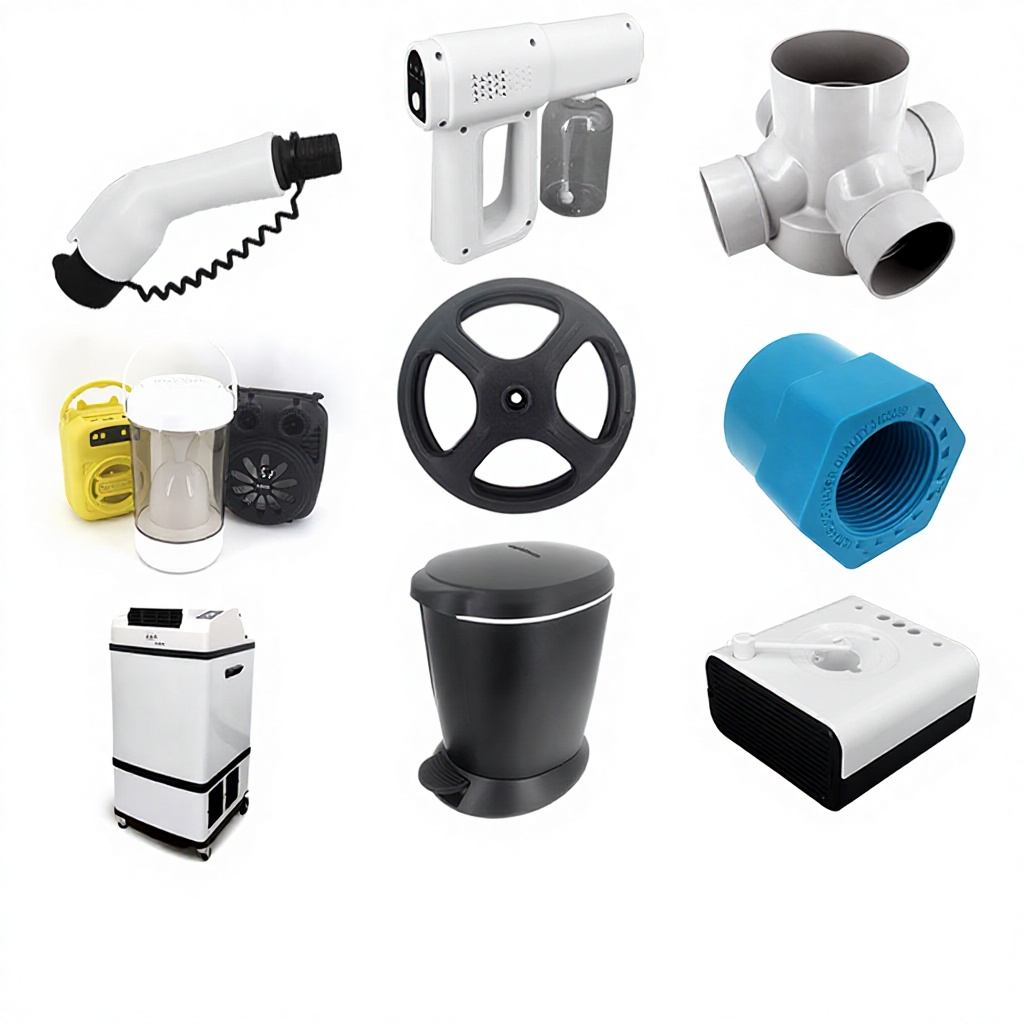
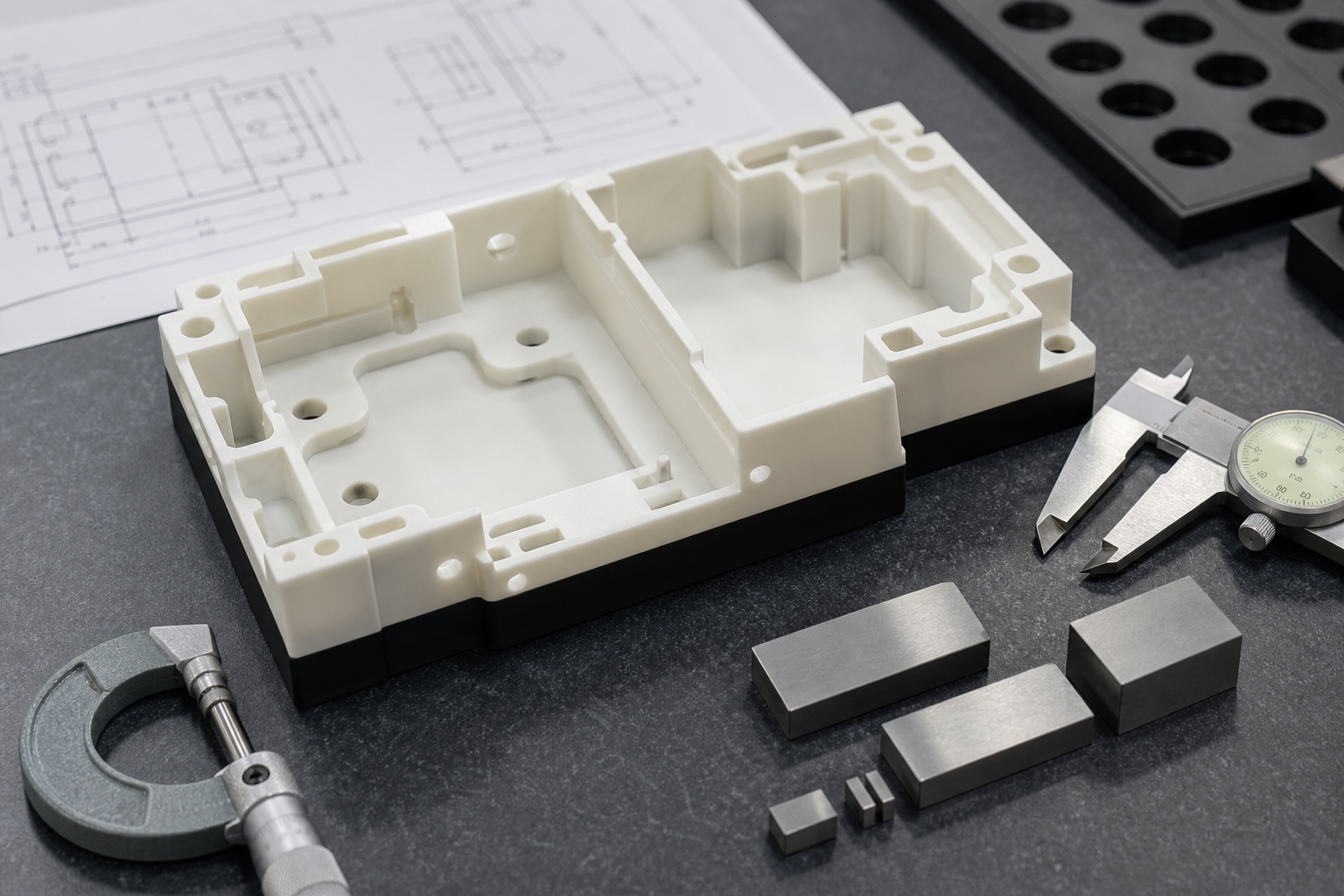
CNC plastic milling services are used for custom flat, prismatic and multi-face plastic components that need better accuracy, cleaner edges or faster iteration than molded parts can provide. Buyers usually compare plastic milling with turning, 3D printing and injection molding depending on geometry and quantity.
The best result comes from matching the part to the right plastic, fixture strategy and tolerance plan. A milling supplier that treats plastic like aluminum will often create heat, burr or distortion problems that should have been avoided in the quote stage.
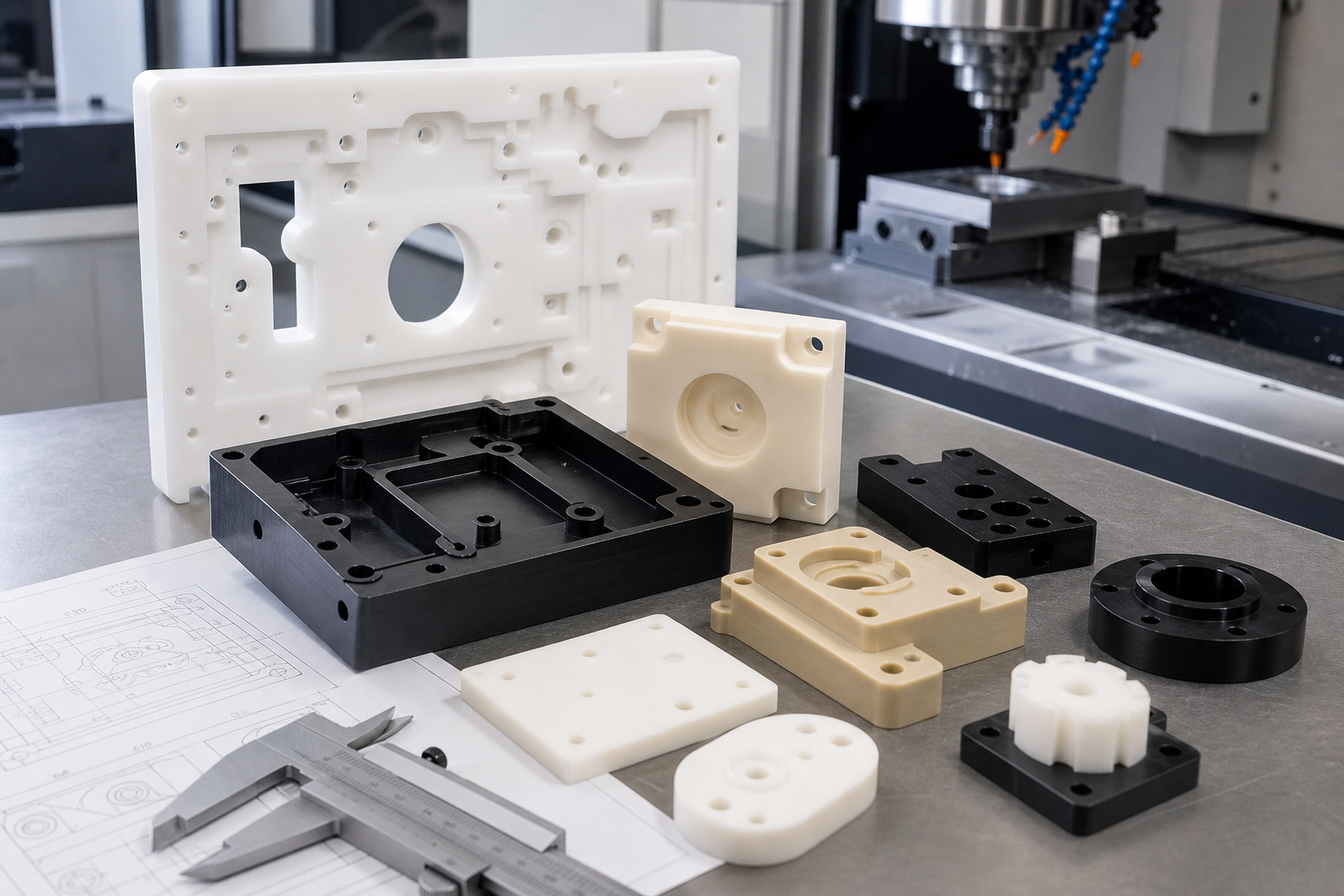
For custom milled plastic components
When Milling Is the Right Route
Choose milling when the part is plate-like, multi-face, prototype-heavy or low-volume and does not justify a mold. Compare milling with turning for round parts and with molding when the annual volume grows.
- Good fit for fixtures, manifolds, covers, electrical plates and structural plastic blocks
- Use material-specific strategy for POM, nylon, PTFE, PEEK and acrylic
- Set tolerance by function rather than default tight machining numbers
At a Glance
| Decision Point | Milling Takeaway | Buyer Note |
|---|---|---|
| Geometry | Best for prismatic and multi-face parts | Large flat or pocketed parts are common |
| Volume | Strong for prototypes to recurring low volume | Check molding when annual quantity rises |
| Material choice | Plastic type changes heat, burr and fixture behavior | Do not quote all plastics as if they cut the same way |
| Tolerance | Can be precise, but depends on geometry and material | Humidity and stress state still matter on some plastics |
| Best fit | Functional custom parts without tooling lead time | Useful for pilot builds and engineering changes |
Material Selection for Plastic Milling
POM, nylon, PTFE, PEEK, acrylic, HDPE and UHMW all machine differently. Some cut cleanly and hold shape well. Others move under heat, burr easily or respond poorly to clamping. Good suppliers choose the plastic and workholding strategy together rather than treating material selection as a separate question.
For example, nylon may need more attention to moisture and dimensional timing, acrylic needs crack-avoidance discipline, PTFE needs softer clamping logic and PEEK needs stronger cost justification.
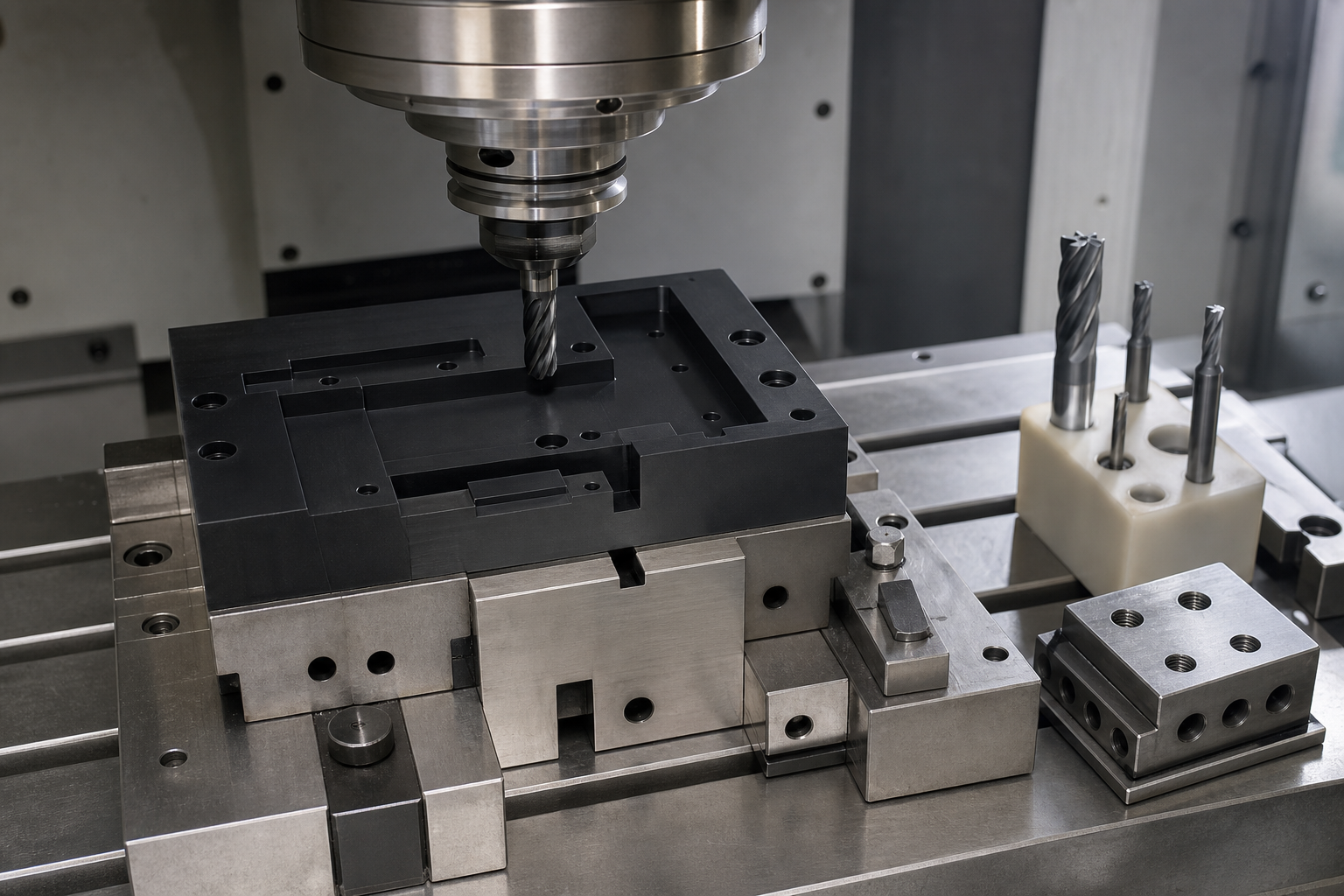
RFQ Checklist for CNC Plastic Milling Services
- Share the 3D model and 2D critical features: complex pockets and thin walls change process choice.
- Define what tolerance truly matters: a selective tolerance strategy lowers cost and improves quoting accuracy.
- State the material and approved substitutes: this prevents late changes in machinability and price.
- Clarify end use and environment: heat, fluids and assembly fit affect material screening.
- Tell the supplier whether this is prototype, pilot or recurring production: the recommended route may change.
Common Plastic Milling Risks and Practical Fixes
| Risk | Why It Happens | Practical Fix |
|---|---|---|
| Melted edge or poor finish | Heat buildup from wrong feeds or tooling | Use plastic-specific tooling and chip evacuation strategy |
| Part distortion | Thin walls or clamp pressure move the part | Improve workholding and machining sequence |
| Unexpected tolerance miss | Material movement or over-tight quote assumptions | Define critical dimensions by function and material behavior |
| Wrong process chosen | Milling used for geometry better suited to turning or molding | Screen the part against alternative manufacturing routes early |
Milling vs Turning vs Molding for Plastic Parts
Milling is usually better for plates, housings, pockets and irregular prismatic features. Turning is more efficient for rotational parts. Molding wins when volume is high enough and the design is stable enough to justify tooling. The supplier should help compare these routes instead of forcing a single process answer.
Need a fast route recommendation?
Send the model, material idea, quantity and critical dimensions. We can tell you whether the part should be milled, turned, molded or printed before you spend time on the wrong quote path.
Why Choose Nylon Plastic
Nylon Plastic helps buyers connect plastic selection, milling strategy and alternative process choice in one review. That reduces the risk of quoting a part under the wrong assumptions and improves conversion from prototype to repeat production.
What Makes a Plastic Milling RFQ Comparable
| RFQ Input | Why It Changes the Result | What to Provide |
|---|---|---|
| Material and stock form | Plastic stiffness, moisture, grain, and stock size affect tool load and deformation | Exact grade, plate or rod size, color, and backup material |
| Critical geometry | Thin walls, deep pockets, bores and small radii affect access and fixturing | Controlled drawing, datums, tolerances, and surface zones |
| Quantity and repeat plan | Setup, inspection, nesting and tooling decisions change with volume | Prototype quantity, annual demand, and reorder pattern |
| Inspection and finish | Measurement method and edge treatment must match the functional requirement | FAI or report needs, appearance standard, deburring, and packaging |
Plastic milling quotes are difficult to compare when one supplier includes soft jaws, inspection, deburring, and packaging while another quotes machining only. Put the same scope and acceptance state in every RFQ.
How Nylon Plastic Supports the Project
Nylon Plastic has supported material selection and finished plastic-part manufacturing since 2005. For custom CNC plastic milling, the useful review connects the drawing, material, tooling or machining route, inspection state, and production plan before a quote is approved.
- Review nylon, PA-GF20, PA-CF30, POM, PEEK, PTFE, UHMW, and other plastics against the load, friction, moisture, and tolerance requirement.
- Plan workholding, toolpath sequence, rest time, edge treatment, and inspection around the part’s actual deformation risk.
- Compare CNC milling with turning, 3D printing, and injection molding when quantity or geometry changes the commercial route.
Related Reading
Frequently Asked Questions
When is CNC milling the right route for plastic parts?
Milling is often suitable for prismatic, multi-face, pocketed, or low-volume parts that need controlled features without injection mold tooling. Quantity, geometry, material, and tolerance decide the route.
How do I avoid deformation during plastic milling?
Control workholding force, use suitable soft jaws or nests, keep tool engagement stable, allow rest or conditioning where needed, and inspect the part in a defined state.
Can reinforced nylon be CNC milled?
Yes, but PA-GF20 and PA-CF30 may increase tool wear, anisotropy, dust, and edge or surface considerations. Confirm the exact grade, stock condition, tooling, and inspection method.
What should be included in a plastic milling RFQ?
Send the CAD model, controlled drawing, exact material, quantity, critical dimensions, surface finish, deburring, inspection report, packaging, and end-use environment.
Request a CNC Plastic Milling Review
Send the model, drawing, material, quantity, and critical dimensions for a workholding, process, and quotation review.