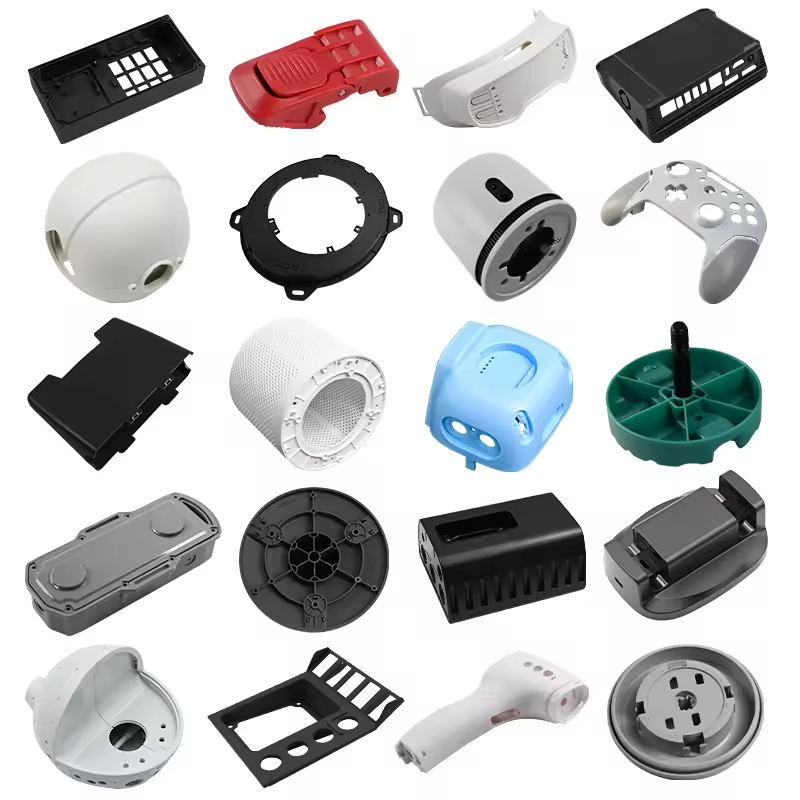
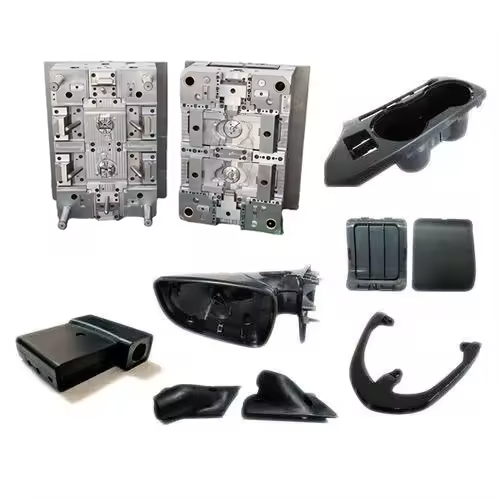
Custom Plastic Parts produced through Automotive Injection Molding are fundamental to modern vehicle design, enabling the production of lightweight, durable, and complex components that meet the stringent demands of the automotive industry. From intricate interior trim pieces and robust dashboard components to functional exterior parts like bumpers and grilles, injection molding delivers the precision, repeatability, and material performance required for both structural and aesthetic applications. This guide explores the capabilities, materials, quality standards, and processes involved in manufacturing custom plastic parts for the automotive sector. At Nylon Plastic , we integrate over 15 years of OEM experience with our comprehensive manufacturing ecosystem to deliver seamless solutions for automotive clients worldwide.

The Automotive Injection Molding Advantage
Injection molding is the preferred manufacturing process for automotive plastic parts due to its unique combination of capabilities.
- High-Volume Production Efficiency: Once the mold is created, injection molding machines can produce thousands or even millions of identical parts with remarkable speed. This efficiency is critical for automotive OEMs requiring consistent, high-volume supply.
- Exceptional Precision and Repeatability: Modern injection molding, combined with precision-machined molds, holds tight tolerances part after part. This ensures that every component in a production run is identical, critical for assembly line efficiency and vehicle quality.
- Design Flexibility for Complex Geometries: Injection molding can produce parts with intricate geometries, complex internal features, thin walls, and fine details. This design freedom allows engineers to consolidate multiple parts into single components, reducing assembly costs and weight.
- Broad Material Selection: The process supports a vast range of thermoplastics engineered for automotive applications, from interior-grade materials with excellent surface finish to under-hood compounds requiring high heat and chemical resistance. Our material selection hub provides deeper guidance on matching polymers to specific automotive requirements.
- Consistent Quality with Full Traceability: With IATF 16949 certification and rigorous quality controls, automotive injection molding ensures every part meets industry standards for safety, performance, and reliability.
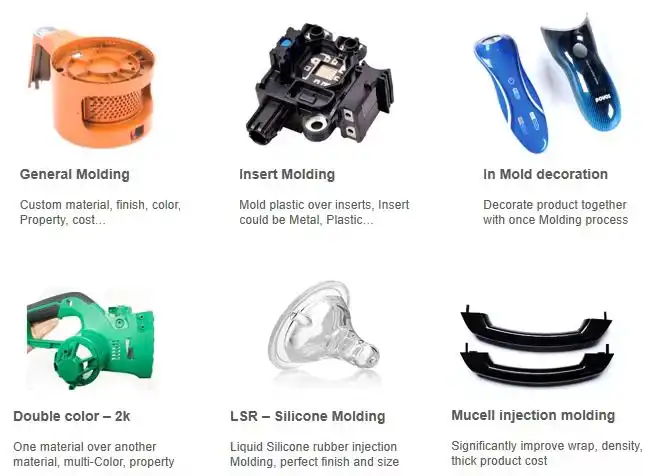
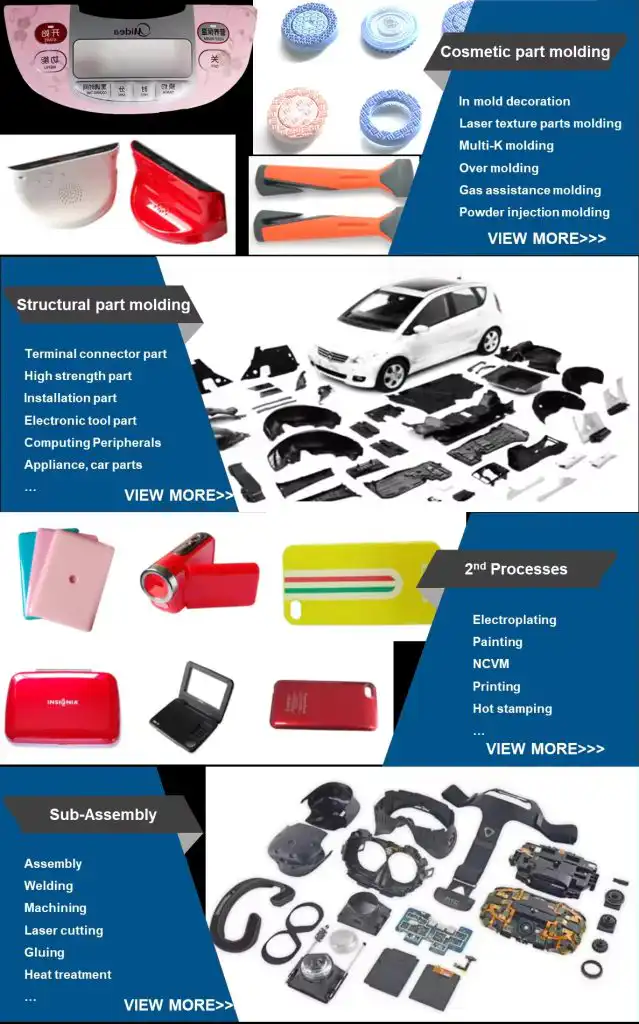
- Integrated Functionality: Advanced techniques like insert molding and overmolding allow for the integration of metal components, soft-touch grips, or multi-material constructions in a single manufacturing step.
Materials for Automotive Injection Molded Parts
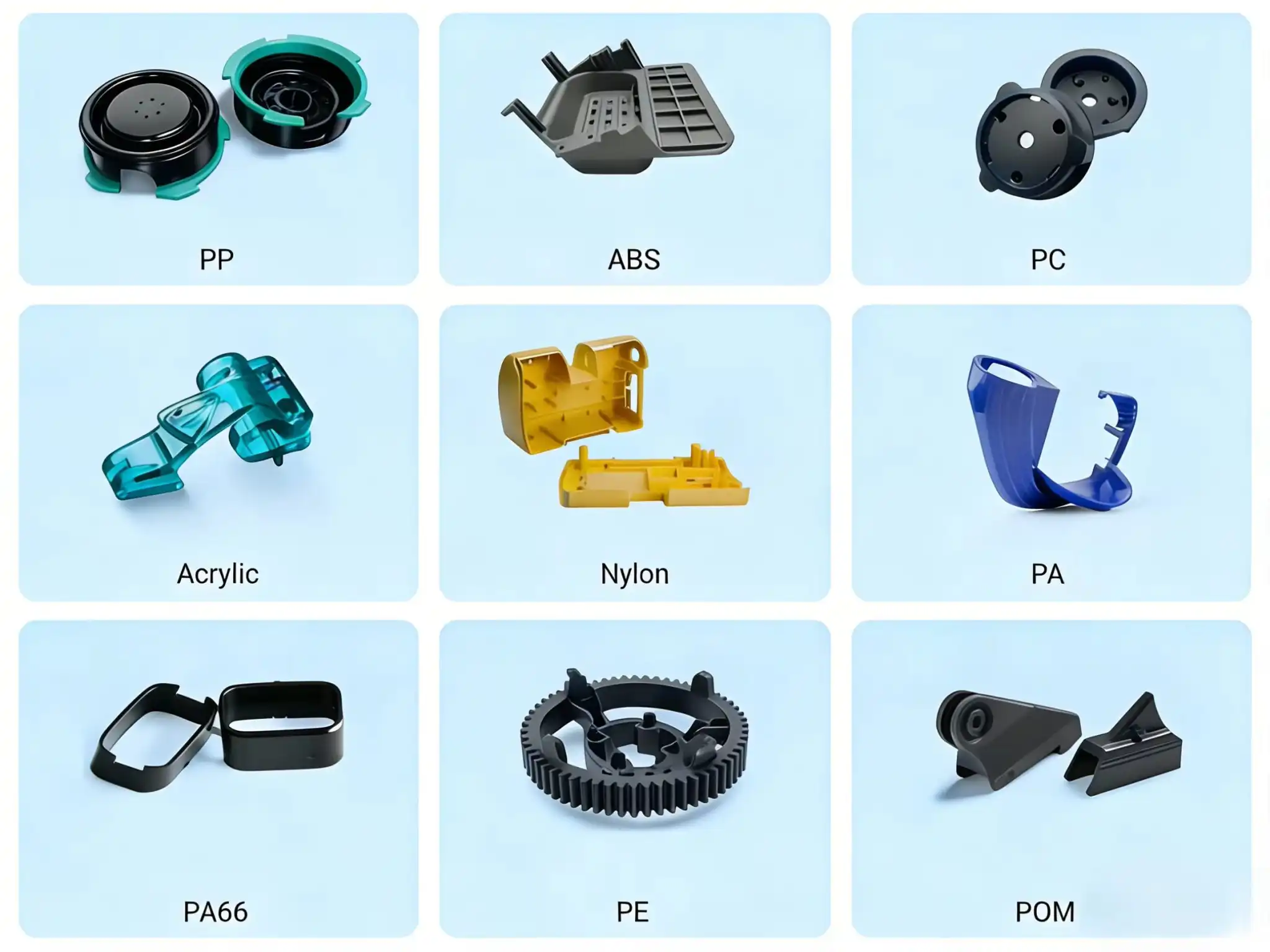
The choice of material defines the part’s performance, appearance, and durability. The reference supplier offers a comprehensive range of engineering plastics suitable for various automotive applications.
| Material | Key Properties | Typical Automotive Applications |
|---|---|---|
| PP (Polypropylene) | Lightweight, good chemical resistance, fatigue resistance (living hinges), low cost, available in impact-modified grades. | Interior trim, door panels, air ducts, battery cases, fender liners, underbody shields. |
| ABS (Acrylonitrile Butadiene Styrene) | Good impact strength, rigidity, excellent surface finish, easy to paint and plate. | Dashboard components, interior trim, grilles, mirror housings, center console parts. |
| PC/ABS (Polycarbonate/ABS Blend) | High impact strength, heat resistance, good processability, excellent surface finish. | Interior and exterior trim, instrument panel components, pillar covers, bezels. |
| PA6 (Nylon 6) | High strength, good toughness, wear resistance, chemical resistance. Often glass-reinforced. | Under-hood components, engine covers, connectors, brackets, housings. |
| PA66 (Nylon 66) | Higher strength and heat resistance than PA6, excellent chemical resistance, good wear properties. | Under-hood components requiring higher temperature resistance, intake manifolds, radiator end tanks, electrical connectors. |
| PBT (Polybutylene Terephthalate) | Good electrical properties, chemical resistance, dimensional stability, often glass-reinforced. | Electrical connectors, sensor housings, ignition components, exterior trim. |
For expert guidance on selecting the optimal material for your specific automotive part, visit our material selection hub .

Performance Specifications for Automotive Parts
Automotive components must meet rigorous performance standards. The reference supplier specifies key performance parameters.
| Performance Parameter | Specification / Capability | Importance |
|---|---|---|
| Heat Resistance | Up to 150°C (302°F) | Ensures parts maintain dimensional stability and mechanical properties under under-hood temperatures and in hot climates. |
| Impact Strength (Izod) | 10-15 kJ/m² | Provides resistance to breakage from impacts during assembly, use, and in crash situations. |
| Surface Finish Options | Textured, glossy, matte, grained | Allows matching of interior aesthetics, from soft-touch grains to high-gloss trim finishes. |
| Dimensional Stability | Tight tolerances maintained across production runs | Ensures consistent fit and function in assemblies, critical for safety and quality. |
| Chemical Resistance | Resistance to oils, fuels, cleaning agents, and environmental exposure | Essential for long-term durability, especially for exterior and under-hood components. |

The Automotive Injection Molding Process: From Concept to Component
Producing high-quality automotive parts requires a seamless, end-to-end process, from design and material selection through precision molding and quality control. The reference supplier emphasizes 15+ years of OEM experience and IATF 16949 certification .
| Stage | Core Process & Technology | Quality & Performance Outcome |
|---|---|---|
| 1. Part Design & Engineering | – Collaborative design based on customer specifications, drawings, or samples. – DFM (Design for Manufacturability) analysis to optimize part design for injection molding. |
A part design optimized for function, manufacturability, and cost, meeting all automotive requirements. |
| 2. Material Selection | – Optimal engineering plastic selected based on performance needs (temperature, impact, chemical, aesthetic). – Sourcing of certified, traceable materials from qualified suppliers. |
Guaranteed material performance, consistency, and compliance with automotive specifications. |
| 3. Precision Mold Design & Fabrication | – Mold design using advanced CAD software, incorporating gating, cooling, and ejection systems optimized for automotive volumes. – Fabrication from high-grade tool steel using high-precision CNC machining. |
A durable, high-precision tool capable of producing millions of consistent, high-quality parts. |
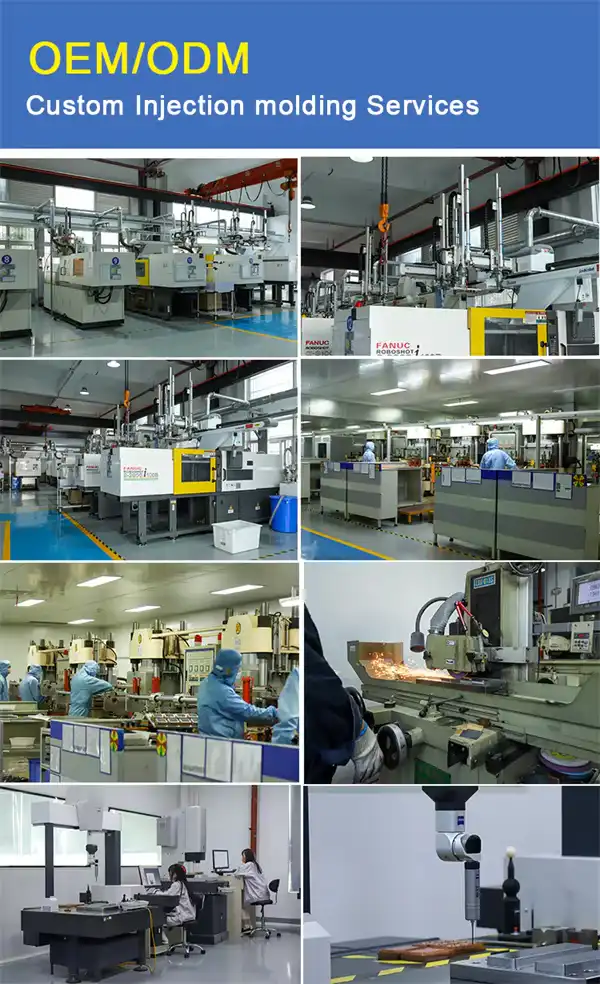
| 4. Injection Molding Production | – Precision molds installed in state-of-the-art injection molding machines. – Process parameters (temperature, pressure, cooling time) strictly monitored and controlled. |
Consistent, repeatable production of parts meeting tight dimensional and performance specifications. |
| 5. Secondary Operations & Assembly | – Post-molding operations as required: ultrasonic welding, heat staking, hot riveting. – Surface finishing: texturing, painting, plating, or laser marking. |
Fully finished, ready-to-assemble components with integrated features and specified appearance. |
| 6. Quality Assurance & Inspection | – Rigorous inspection using CMM (Coordinate Measuring Machines), impact testers, and heat deflection testers. – In-process and final inspection ensures every part meets specifications. – Compliance with IATF 16949 and ISO 9001 standards. |
Guaranteed part quality, traceability, and compliance with rigorous automotive industry standards. |
| 7. Packaging & Delivery | – Parts are carefully packaged to prevent damage during transit. – Just-in-time delivery options available for automotive assembly lines. |
Secure, on-time delivery of finished components ready for integration into vehicle production. |

Quality Assurance: The Foundation of Automotive Excellence
The reference supplier emphasizes IATF 16949 and ISO 9001 certifications, along with comprehensive testing capabilities. Here’s what that means for your custom plastic parts.
| Quality Aspect | Our Commitment | Your Benefit |
|---|---|---|
| IATF 16949 Certification | Quality management system specifically for automotive production. | Meets global automotive supplier requirements; ensures consistent quality and continuous improvement. |
| ISO 9001 Certification | Foundational quality management system certification. | Reliable processes, documented procedures, customer focus. |
| CMM (Coordinate Measuring Machine) Inspection | Precision dimensional verification of parts against CAD models. | Guaranteed dimensional accuracy for perfect fit in assemblies. |
| Impact Testing | Verification of impact strength (Izod: 10-15 kJ/m²) to ensure durability. | Parts withstand real-world impacts during vehicle use and assembly. |
| Heat Deflection Testing | Verification of heat resistance up to 150°C. | Parts maintain properties under under-hood temperatures and in hot climates. |
| First Article Inspection (FAI) | Comprehensive report verifying all dimensions and properties against specifications. | Confidence that production processes are correct before volume manufacturing. |
| Material Certifications | Traceable certifications for all materials used. | Assurance of material properties and compliance with automotive requirements. |
Industry Applications: Custom Plastic Parts for Every Vehicle System
Injection molded plastic parts serve virtually every system in modern vehicles.
| Vehicle System | Typical Custom Plastic Parts | Key Material & Performance Requirements |
|---|---|---|
| Interior Trim | Dashboard components, door panels, center consoles, pillar covers, glove boxes, trim bezels. | Aesthetic surface finish (textured, glossy, grained), color matching, UV stability, impact resistance. |
| Exterior Components | Grilles, light housings, mirror housings, bumper components, trim strips, emblems. | Weather resistance, UV stability, impact resistance at low temperatures, Class A surface finish. |
| Under-Hood & Powertrain | Engine covers, intake manifolds, radiator end tanks, cooling fans, fluid reservoirs, housings. | High heat resistance (up to 150°C), chemical resistance (oils, coolants), dimensional stability, creep resistance. |
| Electrical & Electronic Systems | Connectors, sensor housings, fuse boxes, wire harness clips, ECU enclosures, relay boxes. | Excellent electrical insulation, flame retardancy, precision tolerances, resistance to thermal cycling. |
| HVAC Systems | Vent housings, air ducting, blower wheels, temperature control panels, air distribution components. | Dimensional stability, temperature resistance, low noise, compatibility with air flow. |
| Lighting | Headlamp bezels, reflector housings, tail light components, lens holders, mounting brackets. | Heat resistance (for LED components), optical clarity for lenses, dimensional stability, weatherability. |
| Fasteners & Clips | Push clips, retainers, wire harness clips, panel fasteners, trim clips. | Flexibility, holding power, resistance to vibration, ease of assembly. For more on this category, see our guide to plastic fasteners for cars . |

Customization Options
The reference supplier offers extensive customization to meet specific automotive project requirements.
| Customization Type | Options Available | Minimum Order Quantity |
|---|---|---|
| Custom Design | We can work from your sketches, CAD files, or existing samples. Our product design team can assist with design optimization. | 1 set |
| Material Selection | Wide range of automotive-grade materials: PP, ABS, PC/ABS, PA6, PA66, PBT, and more. | 1 set |
| Surface Finish | Textured, glossy, matte, grained finishes to match interior or exterior specifications. | 1 set |
| Color Customization | Custom colors matched to automotive specifications. Our color customization services ensure precise color matching. | 1 set |
| Logo Marking | Laser engraving, hot stamping, or in-mold labeling of logos and part numbers. | 1 set |
| Assembly Services | Ultrasonic welding, heat staking, hot riveting, and component assembly. | 1 set |
| Custom Packaging | Packaging designed to protect parts during transit and meet automotive just-in-time delivery requirements. | 1 set |

Integration with Broader Manufacturing Capabilities
Injection molding is most powerful when integrated with other manufacturing processes. At Nylon Plastic, we combine precision molding with our full range of services.
| Integrated Service | How Injection Molding Enhances It | Benefit to You |
|---|---|---|
| Complete Assembly Solutions | Molded components combined with CNC machined metal inserts or brackets for complete assemblies. | Single-source accountability for entire vehicle subsystems. |
| Multi-Process Manufacturing | Plastic injection molded parts combined with metal 3D printed prototypes or CNC turned components for hybrid assemblies. | Optimal process selection for each component in an assembly. |
| Prototype-to-Production Bridge | 3D printed prototypes for design validation, then transition to injection molding for high-volume production. | Faster time-to-market with validated designs before committing to production tooling. |
| Insert Molding & Overmolding | Integration of metal inserts, threaded components, or soft-touch materials into molded parts. | Reduced assembly steps, improved part performance, enhanced functionality. |
| Finished Product Solutions | Injection molding combined with assembly, color customization , and custom packaging for complete product delivery. | Simplified supply chain, guaranteed quality across all processes. |
FAQ: Custom Plastic Parts for Automotive Injection Molding
Q1: What automotive industry certifications do you hold?
A: We are IATF 16949 and ISO 9001 certified, meeting the stringent quality management requirements of the global automotive industry. This certification ensures consistent processes, continuous improvement, and reliable outcomes for all automotive components.
Q2: What materials are available for automotive injection molded parts?
A: We offer a comprehensive range of automotive-grade engineering plastics, including PP, ABS, PC/ABS, PA6, PA66, PBT, and more. Materials can be selected based on specific requirements for heat resistance (up to 150°C), impact strength (10-15 kJ/m²), chemical resistance, and surface finish.
Q3: Can you produce both interior and exterior automotive parts?
A: Absolutely. We specialize in both interior and exterior components, from dashboard trim and door panels to grilles, light housings, and under-hood parts. Each application requires different material properties and quality standards, which we fully support.
Q4: What is the minimum order quantity (MOQ)?
A: Our MOQ is 1 set for prototypes and initial sampling. Production MOQs are flexible and depend on part size, complexity, and material. We support everything from low-volume pilot runs to high-volume mass production for automotive OEMs and Tier 1 suppliers.
Q5: What surface finishes can you achieve?
A: We offer a wide range of surface finishes including textured, glossy, matte, and grained finishes. These can match specific automotive interior and exterior specifications, from soft-touch grains to high-gloss trim appearances.
Q6: Do you offer assembly services like ultrasonic welding or heat staking?
A: Yes. We provide comprehensive assembly services including ultrasonic welding, heat staking, and hot riveting. This allows us to deliver fully assembled components ready for integration into vehicle production lines.
Q7: How do you ensure parts meet heat resistance requirements up to 150°C?
A: We verify material properties through rigorous testing using heat deflection testers. Material certifications and in-process testing ensure that every production batch meets the specified temperature resistance requirements for under-hood and other high-temperature applications.
Q8: What file formats do you need to provide a quote?
A: To provide an accurate quote and DFM feedback, we typically need 3D CAD files in formats like STEP (.stp), IGES (.igs), SolidWorks (.sldprt), or AutoCAD (.dwg, .dxf) . 2D drawings with critical tolerances and specifications are also helpful.
Q9: Do you offer design assistance for manufacturability?
A: Yes. Our engineering team provides Design for Manufacturability (DFM) analysis as part of our service. We review your design and suggest modifications that can reduce cost, improve quality, or enhance manufacturability while maintaining functional requirements. Our product design team can also assist with design optimization.
Q10: Can you integrate metal components into plastic parts (insert molding)?
A: Yes. We specialize in insert molding and overmolding processes that integrate metal components, threaded inserts, or soft-touch materials directly into molded parts during the injection molding process, reducing secondary assembly operations.
Conclusion: Your Partner for Automotive Injection Molding Excellence
Custom Plastic Parts produced through Automotive Injection Molding are essential to modern vehicle design, offering the perfect balance of lightweight construction, design flexibility, and reliable performance. With over 15 years of OEM experience, IATF 16949 certification, and comprehensive in-house capabilities from material selection to assembly, we are your complete partner for automotive component manufacturing.
Ready to start your next automotive project? Contact our engineering team today to discuss your requirements. From DFM analysis and material selection to precision molding and assembly, we provide end-to-end solutions integrated with our broader product design , CNC machining , and color customization capabilities.