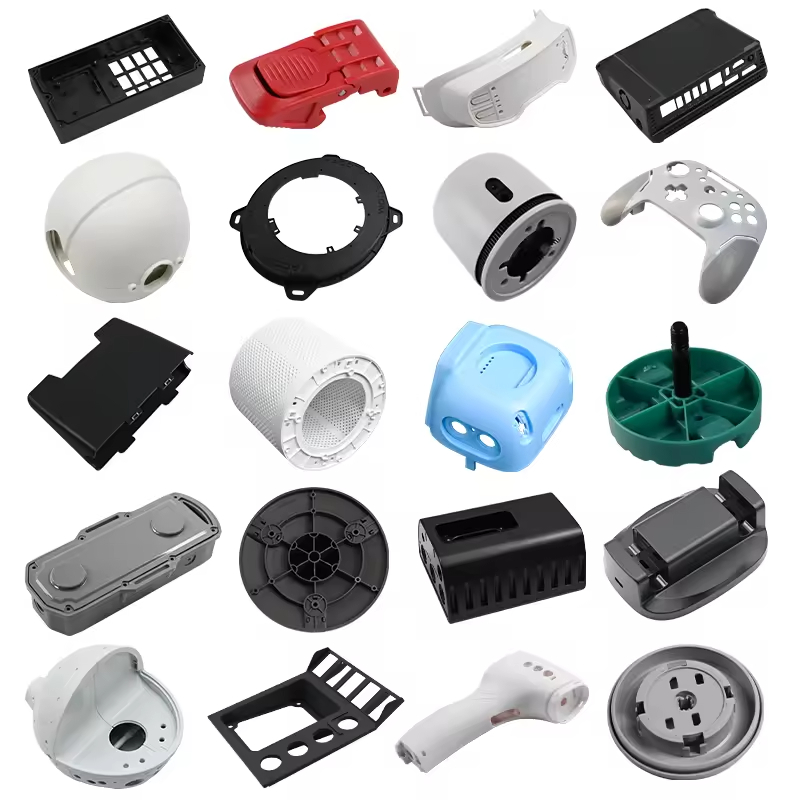
A nylon parts manufacturer should match the material, manufacturing route and inspection plan to your component. For custom gears, bushings, brackets or housings, compare suppliers on the controlled drawing, service conditions and repeat-order requirements.
For parts with chemical or humidity exposure, the nylon chemical compatibility chart and nylon moisture absorption guide are useful early screens.
When choosing a nylon molding company, confirm how the resin, mold, samples and recurring production will be controlled. Prototype and production quotes should identify the same critical functions, even when the manufacturing route changes.
At a Glance
| Supplier Check | What to Ask For | Red Flag |
|---|---|---|
| Material traceability | Datasheets, batch records and compliance proof | Only verbal confirmation |
| Process capability | CNC, molding or printing capability tied to the part | One process for every job |
| Inspection | FAI, CMM, gauge plan and critical dimensions | No measurement plan |
| Capacity | Lead time, shift plan and production slots | Cannot confirm schedule |
| Engineering support | DFM and route recommendation | Quote only, no review |
What a Nylon Parts Manufacturer Should Prove
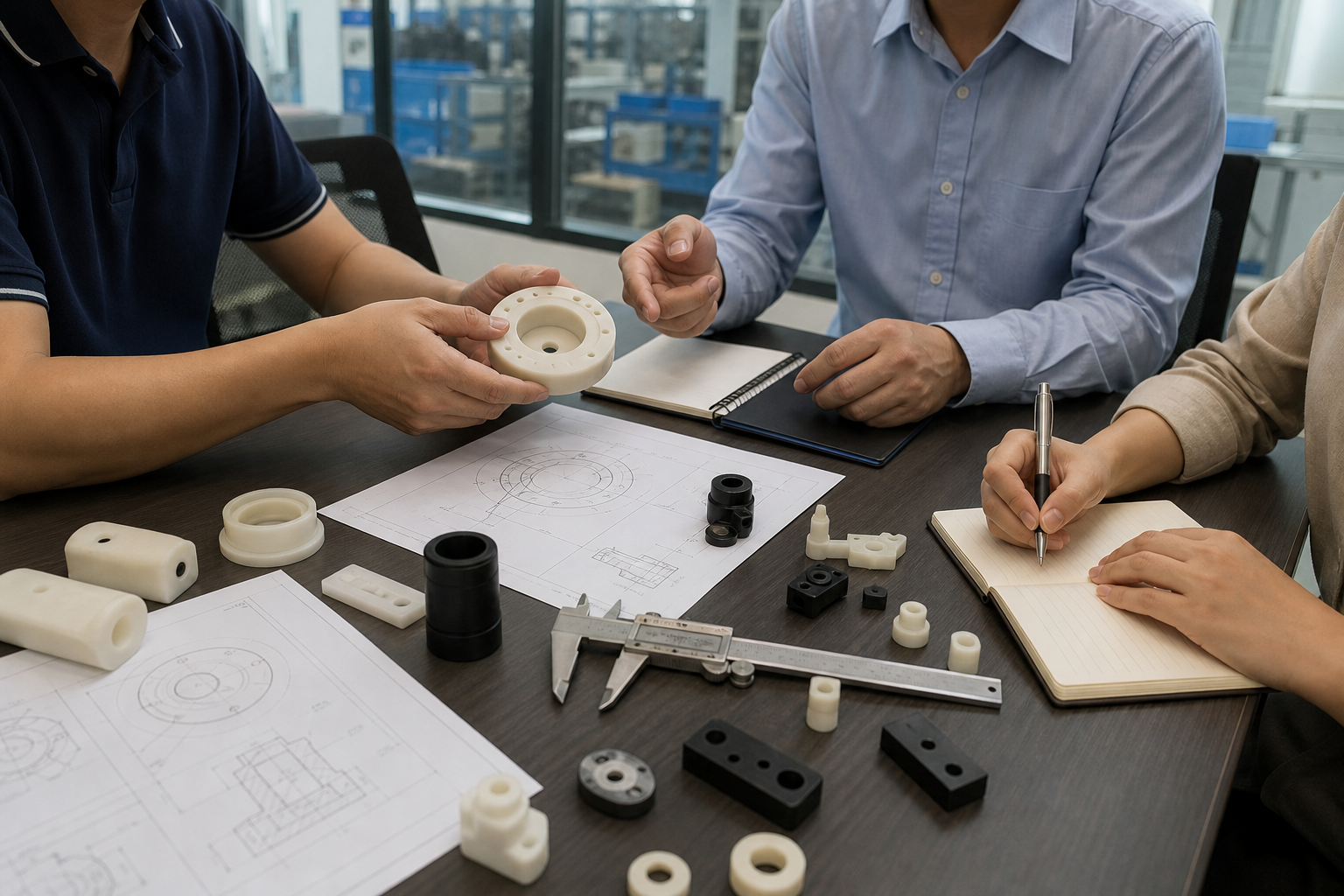
A good supplier should not only say that they can make nylon parts. They should explain how they will handle material drying, shrinkage, tolerance control and final inspection for the actual application.
If the project is a molded part, ask for tooling and sample control. If the project is a machined or printed part, ask how the supplier will hold dimensions after finishing and assembly.
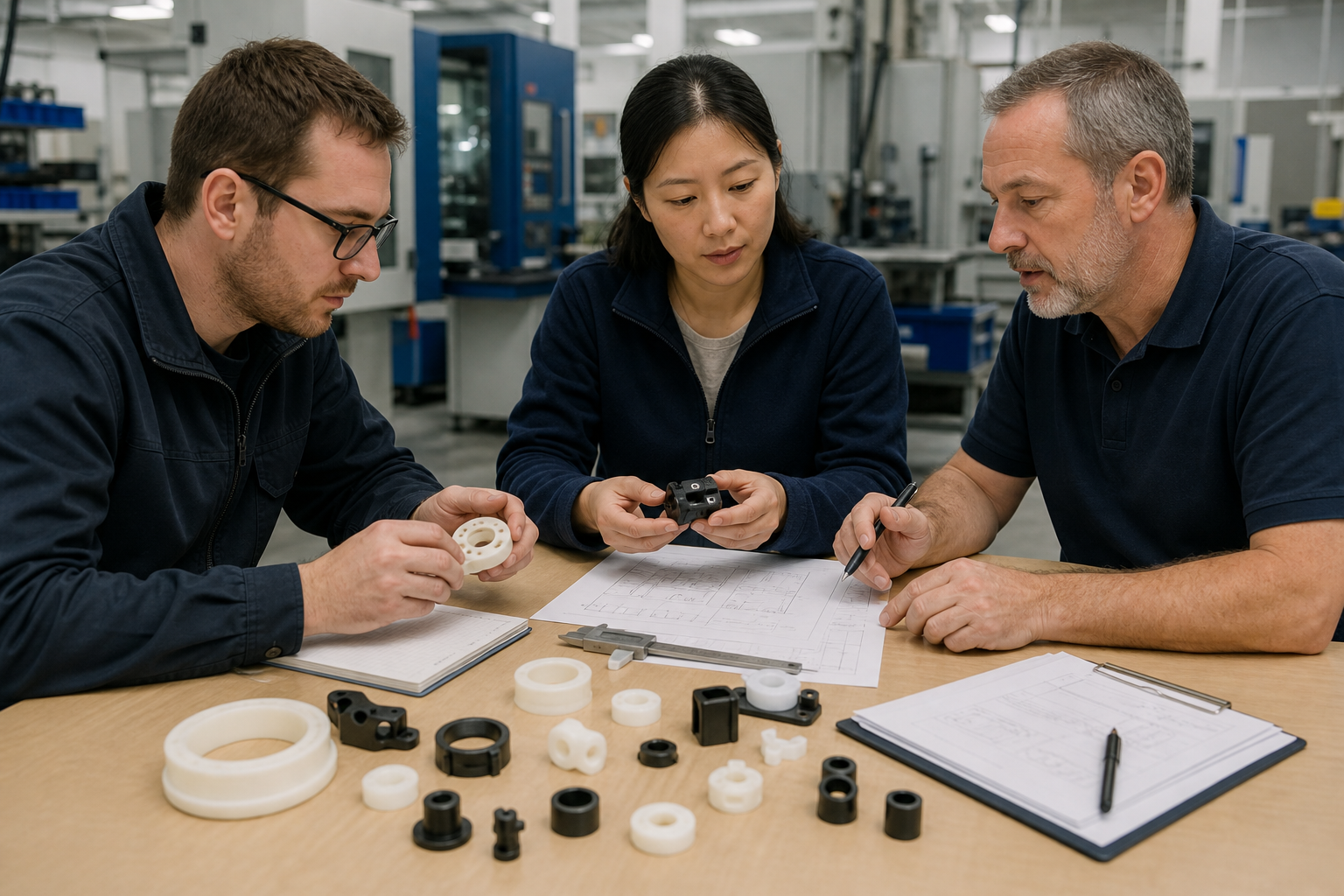
For machined components, use the plastic CNC supplier selection guide to review workholding, material condition and critical-feature inspection.
Buyer Questions That Separate Real Suppliers From Generic Ones
- Which nylon grades do you support and how do you confirm the right one?
- What inspection method do you use for critical dimensions?
- Can you support low-volume builds before production tooling?
- How do you manage moisture, storage and handling for nylon materials?
- Can you provide sample approval, certificates or dimensional reports?
Common Supplier Selection Mistakes
| Mistake | Risk | Better Approach |
|---|---|---|
| Choosing only by price | Late quality problems | Review material, inspection and delivery proof |
| Ignoring the actual use case | Wrong nylon grade or process | Share load, heat, moisture and assembly info |
| Skipping early DFM | Change orders and rework | Ask for route review before release |
| No volume plan | Lead time and capacity issues | Discuss ramp-up and reorder expectations |
Manufacturer, Trading Company or General Plastic Shop?
A manufacturer, sourcing company or general plastic shop should identify the production site, material source, inspection owner and responsibility for nonconforming parts. Ask for evidence for your exact grade and process, rather than relying on the business label alone.

Use the plastic parts supplier guide to compare the proposed manufacturing, inspection and delivery responsibilities.
Related Reading
Frequently Asked Questions
What does nylon parts manufacturer mean?
It means a supplier that can make custom nylon components using the right process and quality control.
How do I choose a nylon molding company?
Ask for material proof, inspection data, capacity and DFM support before you place the order.
Should I choose a specialist or general shop?
A specialist is usually safer when the nylon grade, tolerance or use condition is demanding.
What should I send for a supplier quote?
Send the CAD model, drawing, quantity, nylon grade target and the part’s working environment.
Can a supplier help choose the process?
Yes. A good supplier should recommend molding, CNC or printing based on the part, not just the machine available.
Request a Custom Nylon Parts Quote
For drawing-controlled nylon components, share the complete part and order requirements. Nylon Plastic can compare material selection, printing, CNC machining and injection molding, then review the production and inspection scope for the selected route.
What to include and agree before quotation
- Send CAD, drawing revision, exact nylon grade or permitted alternatives, color, critical dimensions and mating parts.
- State load, temperature, moisture, wear, flame-rating or chemical requirements, together with inserts, finishing and assembly work.
- Include prototype and production quantities, annual demand, destination and target timing; identify sample approval, dimensional reports, material certificates and batch checks.
Compare the routes for your component: nylon injection molding, nylon CNC machining and nylon 3D printing. The review includes wall thickness, critical fits, tolerance assumptions, draft, gates and assembly points where relevant.
Compare quotations for the same drawing, material condition, tooling or fixture work, finishing, inspection and delivery scope. Ask who controls each operation and releases samples and repeat orders; the supplier label alone does not establish these responsibilities.