PA6 CF vs ASA CF is a choice between a tougher nylon-carbon route and a more weather-oriented carbon-filled ASA option. Buyers usually compare them for outdoor housings, fixtures, brackets and exposed functional parts that need more stiffness than standard polymers can provide.
The key question is whether the project needs outdoor weather resistance first, or whether it needs stronger engineering toughness and a nylon-like mechanical profile.
This page is for an outdoor-specific two-material decision. If the team is still comparing PA6-CF, PET-CF and PC-CF as a broader carbon-fiber stiffness choice, start with the parent hub: PA6-CF vs PET-CF vs PC-CF.
At a Glance
| Decision Area | PA6-CF | ASA-CF | Buyer Note |
|---|---|---|---|
| Toughness | Usually stronger | Moderate | PA6-CF is often better for more demanding structural use |
| Outdoor weather resistance | Needs more caution | Usually stronger | ASA-CF is often chosen for UV-exposed parts |
| Moisture control | Higher process risk | Lower | PA6-CF still needs disciplined drying |
| Surface and dimensional stability | Engineering-focused | Often easier for exterior parts | ASA-CF can be easier for visible outdoor components |
| Best fit | Tougher engineering parts | Outdoor-use covers and fixtures | Decide whether exposure or load is the real priority |
When PA6-CF Is the Better Engineering Choice
PA6-CF is often selected for stiffer engineering parts, load-bearing fixtures and prototypes that need a more serious nylon-based mechanical behavior. It is usually the better option when the part will see repeated stress, more demanding fit requirements or downstream movement toward reinforced nylon production.
When ASA-CF Is the Better Outdoor Choice
- UV and weather exposure dominate the decision: ASA-CF is often the more natural route.
- The part is visible outdoors: ASA-based materials are often preferred for exterior stability.
- The team wants lower moisture-handling risk: ASA-CF is simpler than nylon-carbon workflows.
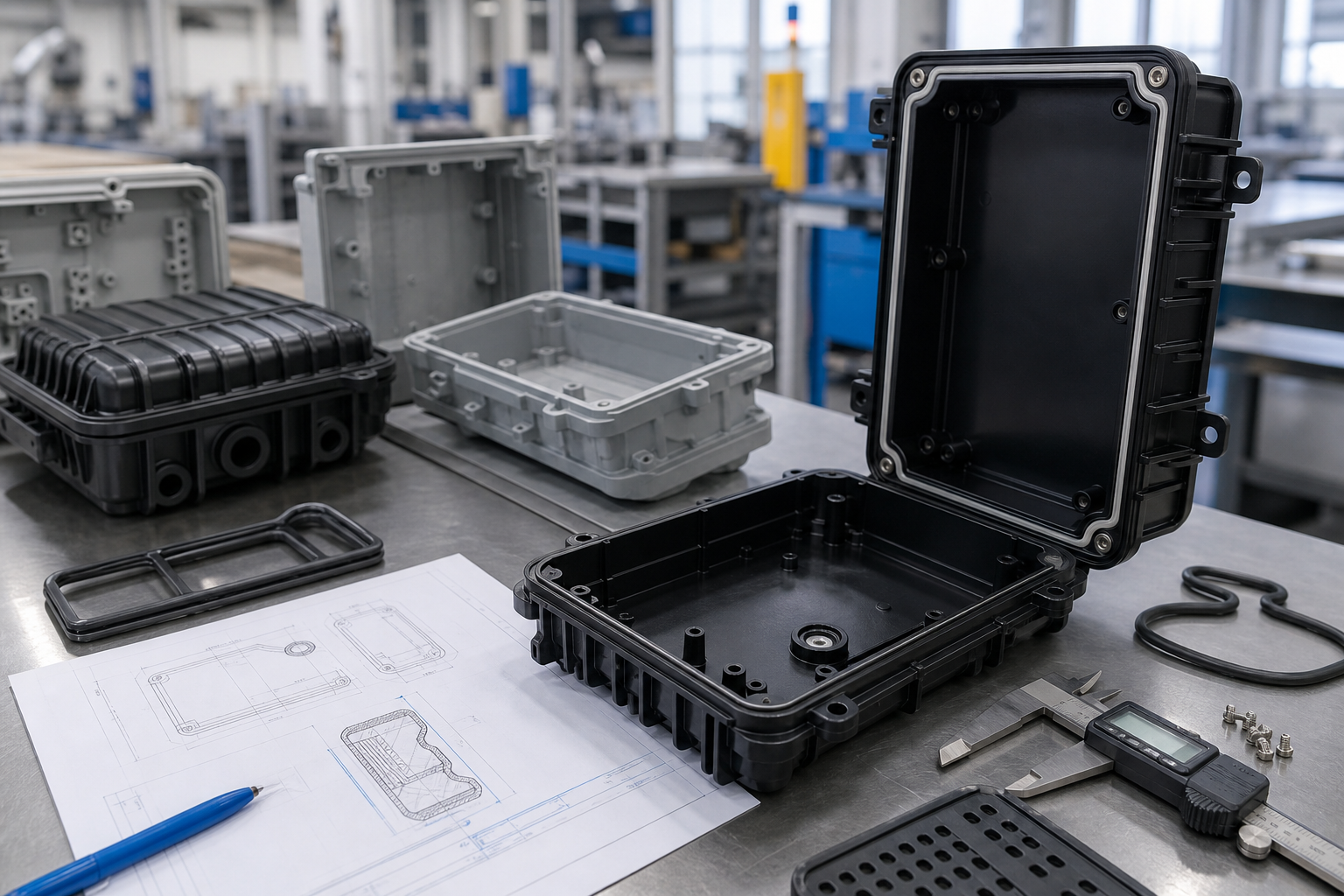
- The application is an outdoor bracket, cover or fixture: weather performance may matter more than tougher nylon behavior.
Common PA6-CF vs ASA-CF Mistakes
| Mistake | Risk | Fix |
|---|---|---|
| Using PA6-CF outdoors without weather review | Field durability mismatch | Check UV, moisture and real exposure before approval |
| Using ASA-CF for a higher-load engineering part | Prototype underperforms in structural use | Confirm whether outdoor exposure or mechanical duty is the top constraint |
| Choosing by carbon fiber label only | Wrong polymer family for the application | Select the base polymer first, filler second |
| Ignoring drying on PA6-CF | Print inconsistency and weaker results | Define storage and drying control early |
PA6-CF vs ASA-CF for Outdoor B2B Parts
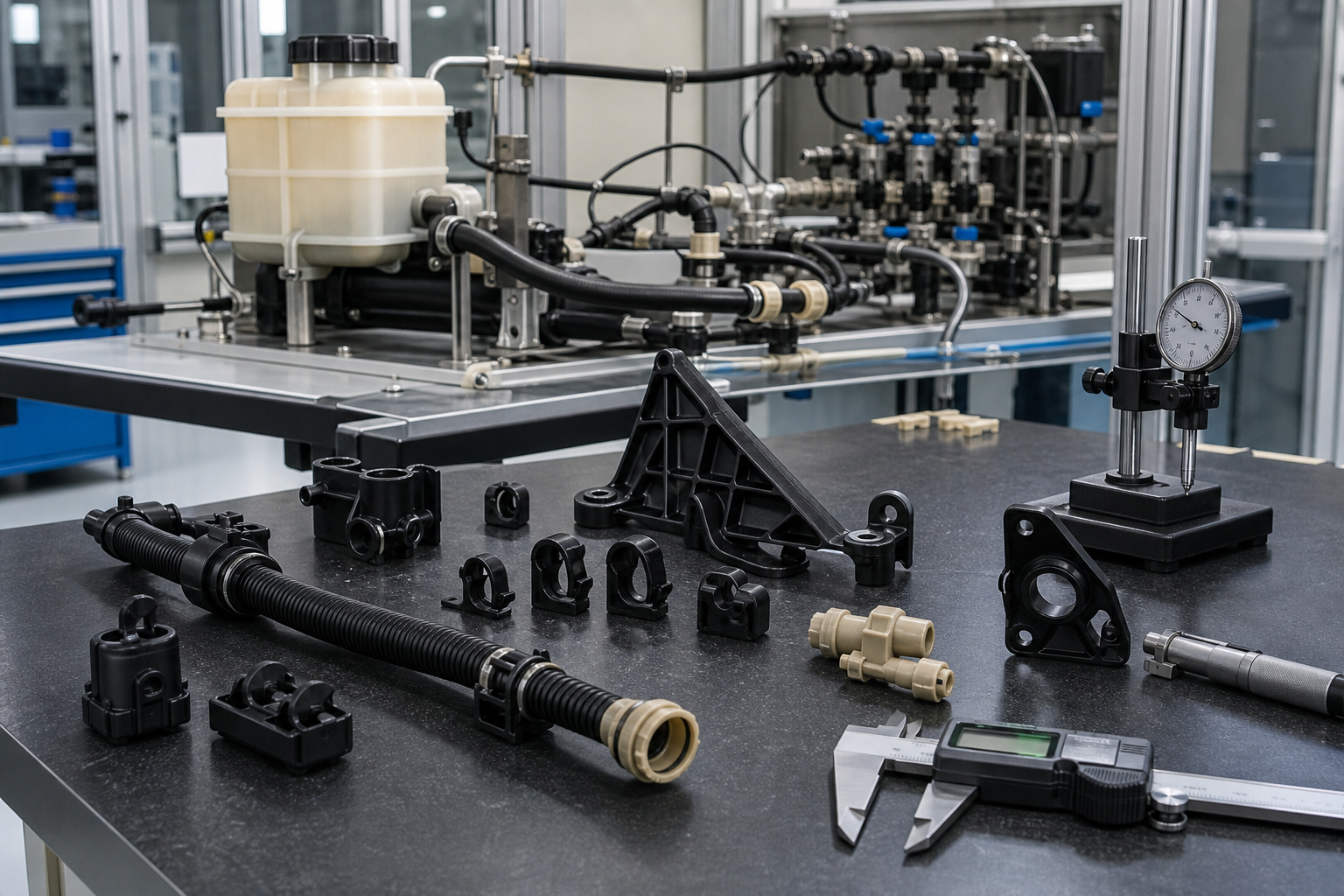
If the part is exposed and visually or dimensionally sensitive outdoors, ASA-CF is often the safer choice. If the part must act like a tougher engineering component under more demanding mechanical use, PA6-CF is usually the better route.
Why Choose Nylon Plastic
Nylon Plastic helps buyers decide whether an outdoor part should optimize for weather resistance or for stronger engineering nylon behavior before the prototype path is locked.
Related Reading
- PA6-CF vs PET-CF vs PC-CF
- ASA vs ABS vs PETG
- UV Stabilizer for Nylon
- Plastic 3D Printing Services
- Carbon Fiber Reinforced Nylon 66
- Nylon 3D Printing Service
Long-Term Outdoor Aging: What 12 Months of Exposure Actually Does
After 12 months of outdoor exposure, PA6-CF parts typically show visible surface degradation including yellowing, chalking, and micro-cracking of the resin-rich surface layer, even with UV-stabilized grades. ASA-CF parts under the same conditions maintain substantially better surface appearance and mechanical property retention, often keeping 85-90 percent of their initial tensile strength after one year outdoors versus 60-70 percent for PA6-CF. The carbon fiber itself does not degrade, but the polymer matrix that holds the fibers together is the weak link. If the part is cosmetic or customer-facing outdoors, the surface stability difference alone often decides the material choice before mechanical properties enter the conversation.
Chemical Exposure in Outdoor Service: Beyond UV
Outdoor parts face more than sunlight. Road salt spray, industrial fallout, cleaning chemicals, and bird droppings all create localized chemical exposure that can accelerate degradation. PA6-CF’s hygroscopic nature means it absorbs moisture that carries dissolved contaminants into the polymer matrix, while ASA-CF’s lower moisture uptake provides a natural barrier. For parts mounted near roads, industrial facilities, or coastal environments, the combined UV-plus-chemical exposure should be tested, not assumed. A six-month outdoor exposure test at the actual installation site provides more relevant data than accelerated laboratory UV testing alone.
Hybrid Approach: ASA-CF for the Shell, PA6-CF for the Structure
When a single material cannot satisfy all requirements, a hybrid design can work: ASA-CF for the outer housing or cover that faces weather, and PA6-CF for the internal structural elements that carry load and resist impact. This approach increases design complexity but can resolve the fundamental tension between weather resistance and mechanical toughness. The assembly method – snap fits, threaded inserts, or adhesive bonding – becomes the critical design decision in a hybrid build, as the different thermal expansion rates of the two materials must be accounted for in the joint design.
Frequently Asked Questions
Is ASA-CF better for outdoor use than PA6-CF?
Usually yes, when UV and weather exposure are the main concern. ASA-CF is often chosen for more stable outdoor performance.
Is PA6-CF stronger than ASA-CF?
PA6-CF is usually the better engineering choice when the part needs tougher nylon-like mechanical behavior.
When should I choose PA6-CF?
Choose PA6-CF when structural function and reinforced nylon behavior matter more than exterior weather resistance.
When should I choose ASA-CF?
Choose ASA-CF when the part is exposed outdoors and weather stability is the leading requirement.
What should I send for an outdoor filament recommendation?
Send the part model, exposure condition, load requirement and whether the part is a prototype or a low-volume end-use component.
Send the outdoor part drawing if you want help deciding between PA6-CF and ASA-CF.