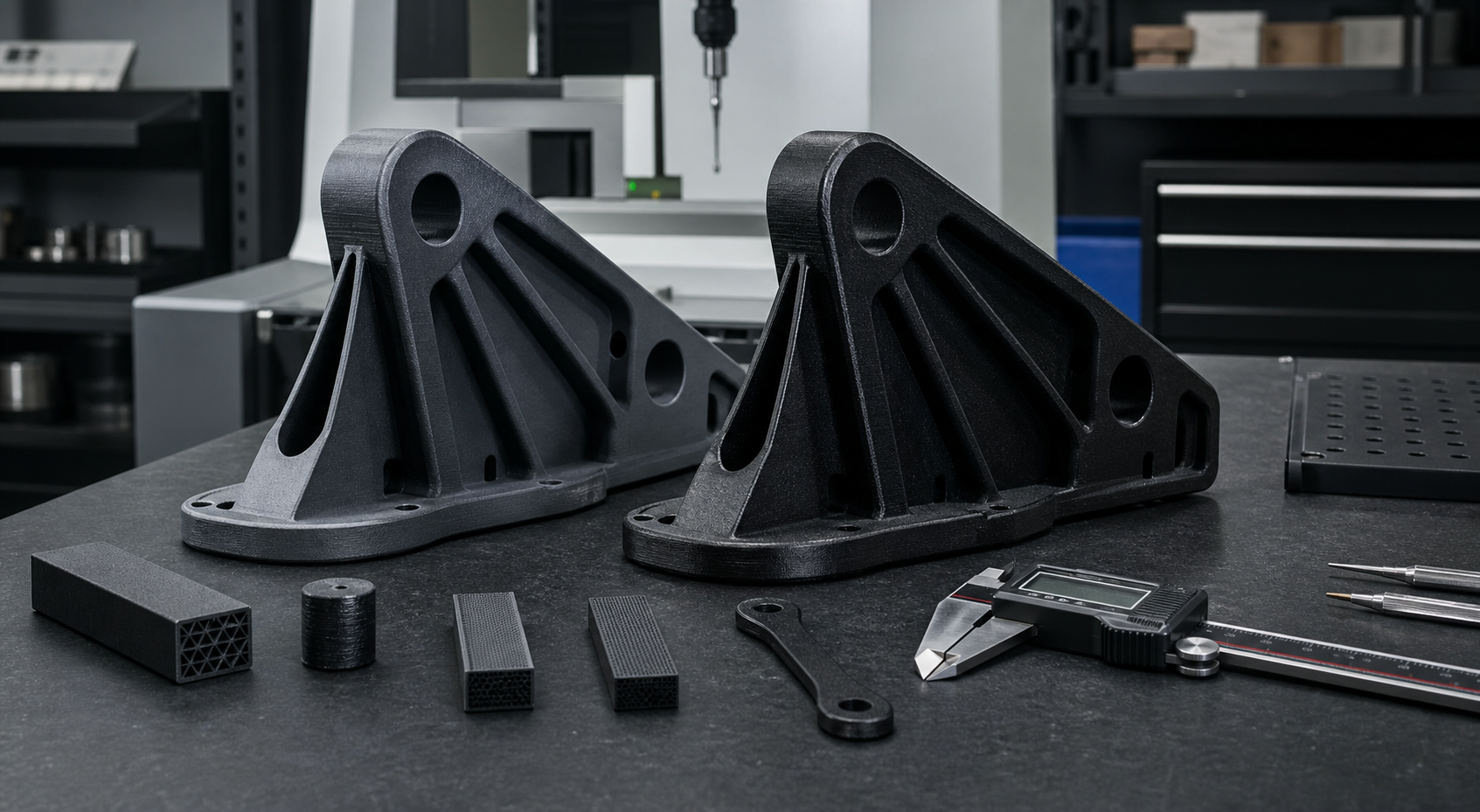
PET-GF vs PA6-GF is a comparison between easier dimensional control and a tougher nylon-based engineering route. Buyers usually reach this choice when a standard filament is no longer stiff enough and the part needs a reinforced material for fixtures, housings or structural prototype work.
For tougher service conditions, use the nylon chemical compatibility chart and nylon moisture absorption guide alongside this comparison.
Both materials can improve rigidity, but they do not behave the same in moisture control, toughness, long-term fit and print workflow. The correct choice depends on how the part will actually be used after it leaves the printer.
At a Glance
| Selection Point | PET-GF | PA6-GF | Buyer Note |
|---|---|---|---|
| Dimensional stability | Usually easier | More humidity sensitive | PET-GF often behaves more predictably after printing |
| Toughness | Moderate | Usually stronger for engineering abuse | PA6-GF is often chosen for harder-use parts |
| Moisture control | Lower risk | Higher risk | PA6-GF still needs strong drying discipline |
| Stiffness | High | High | Both can serve rigid fixture and bracket roles |
| Best fit | Stable reinforced prototypes | Tougher reinforced engineering parts | Choose by service behavior, not filler percentage alone |
When PET-GF Is the Better Fit
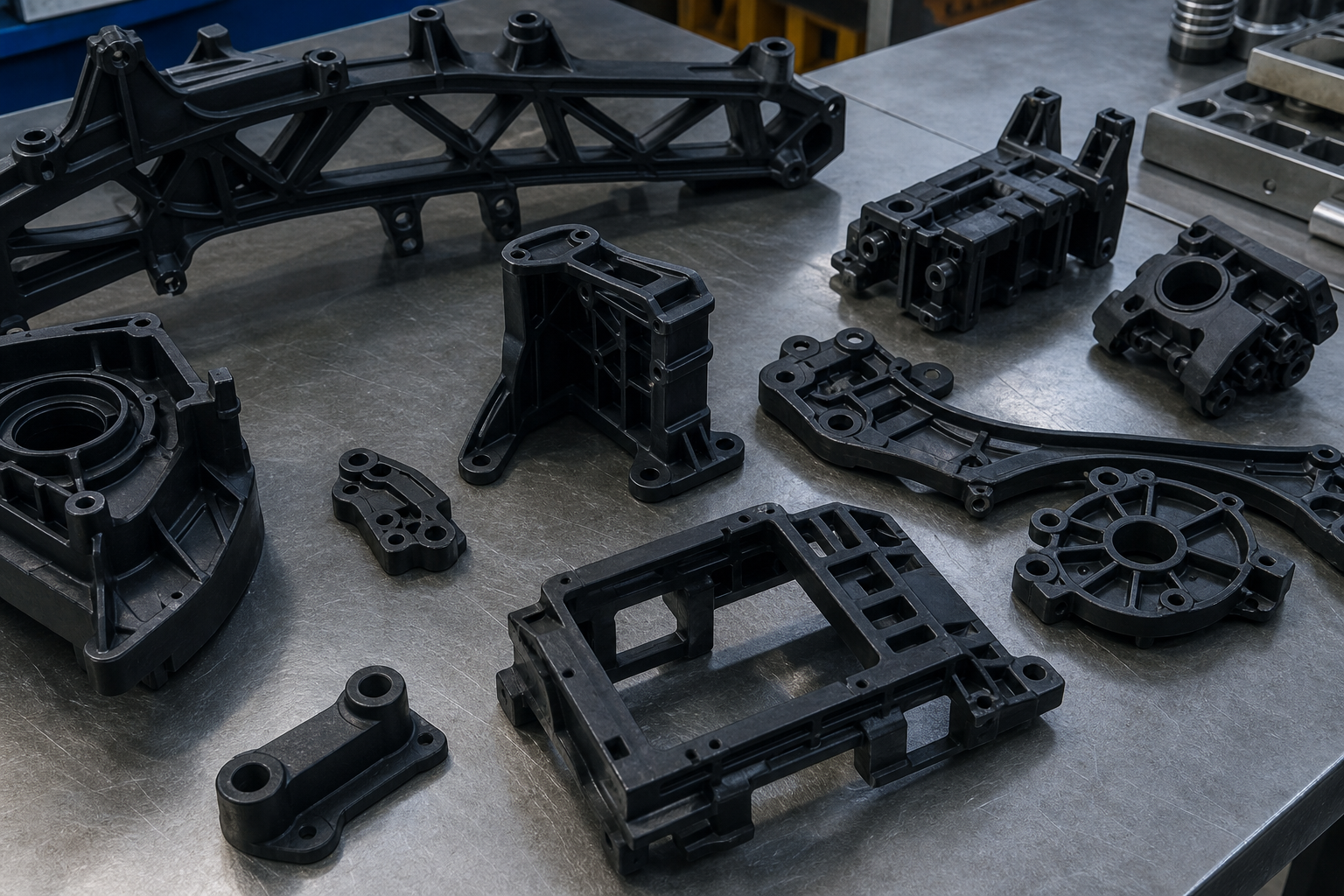
PET-GF is often selected for reinforced prototypes, covers, supports and tooling aids where stiffness matters but humidity-driven variation must stay manageable. It can be attractive when the team wants a reinforced material without taking on the full moisture-management burden of nylon.
When PA6-GF Is the Better Fit
- The part sees more demanding mechanical use: PA6-GF is often the more credible engineering route.
- The final production material is reinforced nylon: PA6-GF can better represent the downstream part direction.
- Wear and load matter more than print convenience: nylon reinforcement often performs better in harder use.
- The team can manage drying and storage correctly: process discipline is critical.
Common PET-GF vs PA6-GF Risks
| Risk | Why It Happens | Practical Fix |
|---|---|---|
| Using PET-GF for a part that really needs tougher nylon behavior | Selection driven by print ease rather than use condition | Match the reinforced filament to the expected service load |
| Using PA6-GF without moisture control | Reinforced nylon is still moisture sensitive | Lock drying, storage and print timing rules early |
| Over-trusting stiffness numbers | Failure mode is often impact or fit drift, not only bending | Review assembly and environment with stiffness together |
| Assuming all glass-filled grades behave the same | Base polymer still changes the result | Compare the polymer family before comparing filler only |
PET-GF vs PA6-GF for Supplier Decisions
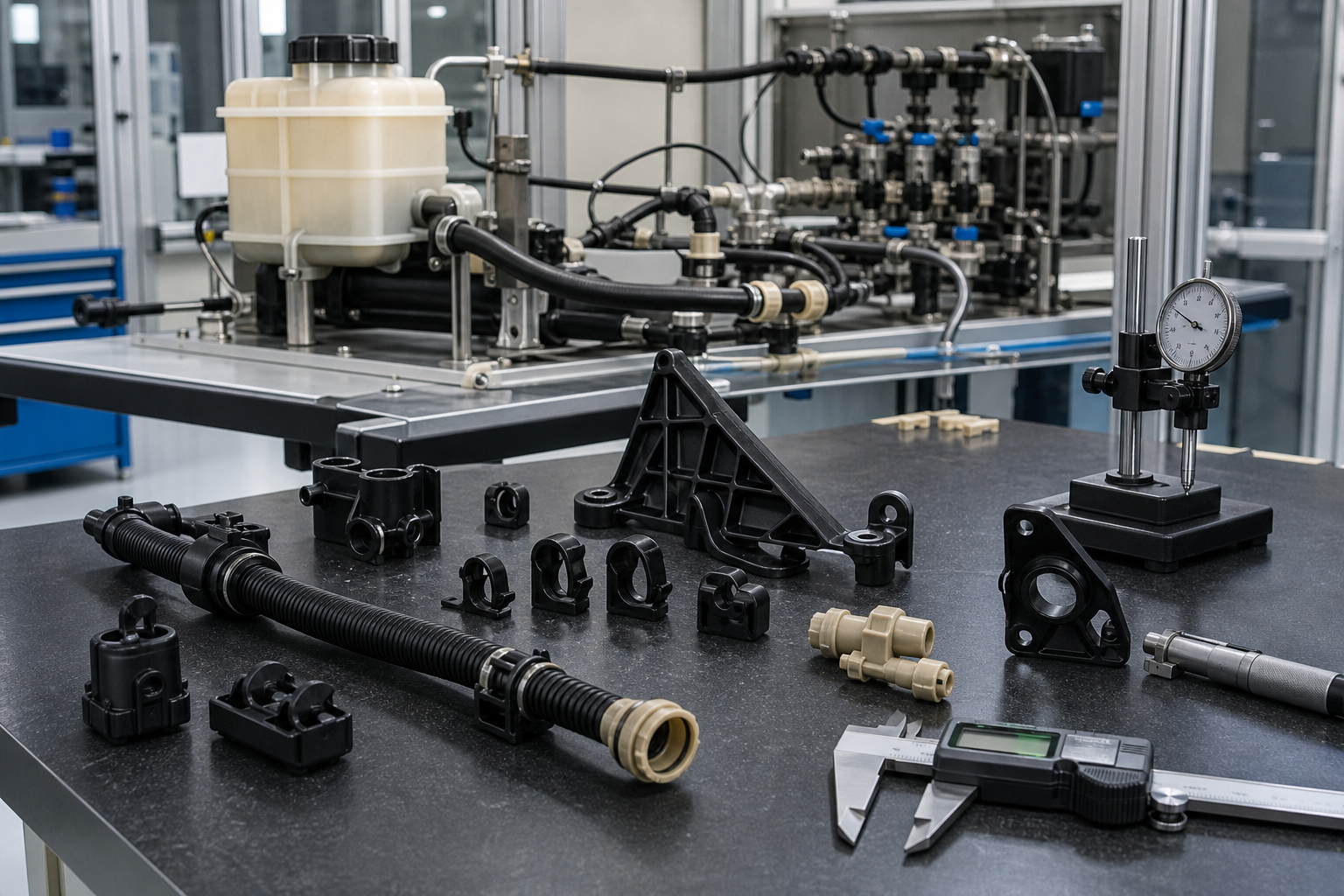
PET-GF is often better when the project needs a reinforced prototype with lower process risk. PA6-GF is better when the application needs a stronger nylon-based engineering proxy or a tougher reinforced part behavior.
Why Choose Nylon Plastic
Nylon Plastic helps teams compare reinforced filaments against the expected production material path so the prototype material does not mislead the sourcing or engineering decision.
Related Reading
- Glass-Filled Nylon Guide
- PA12 GF30 Material Guide
- Plastic 3D Printing Services
- PA66 GF15 vs GF30 vs GF60
- Nylon Moisture Absorption
Frequently Asked Questions
Is PET-GF easier to manage than PA6-GF?
Usually yes. PET-GF often creates less moisture-related printing risk than PA6-GF.
Is PA6-GF stronger than PET-GF?
PA6-GF is often the better engineering choice when the part needs tougher nylon-like functional behavior under more demanding use.
Which is better for dimensionally stable prototypes?
PET-GF is often the safer option when dimensional stability and lower process sensitivity matter most.
When should I use PA6-GF?
Use PA6-GF when the part needs a reinforced nylon behavior that better matches engineering load, wear or a future nylon production route.
What should I send for a reinforced material review?
Send the part geometry, service load, environment and whether the prototype is intended to predict a future reinforced production material.
Send the part and use case if you want help comparing PET-GF and PA6-GF before sampling.